Startup Funding News Today, November 4, 2026: Fal, Journify, Traversal, Lazarus AI, Lingchuan Technology & More
 Nickie Louise
Posted On November 4, 2026
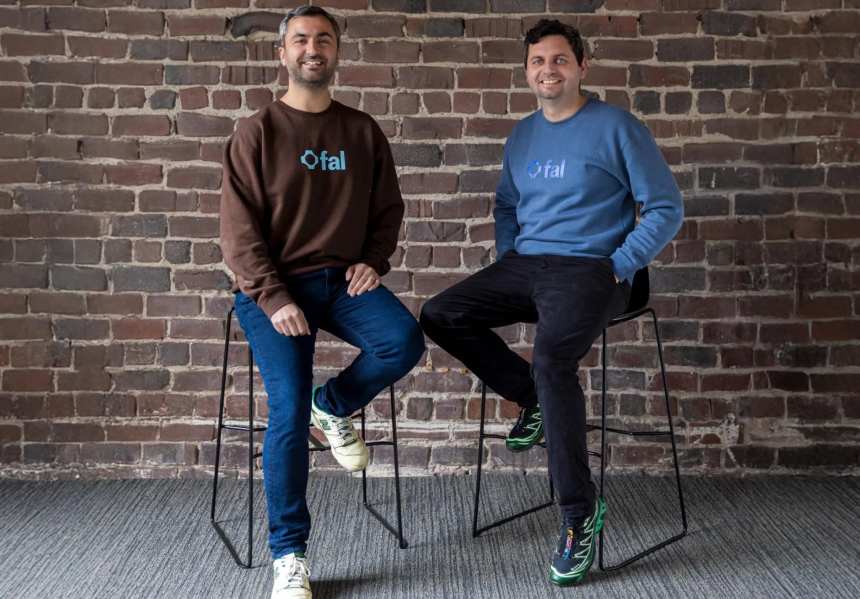
The AI funding boom shows no signs of slowing, but investors are increasingly betting on the companies supplying the infrastructure rather than just building the models. Fal emerged as the standout, raising $1.3 billion at a $16 billion valuation as demand for AI inference continues to drive massive capital commitments.
But the day’s funding announcements reveal a more interesting development than another billion-dollar AI investment: investors are backing companies that can make AI cheaper to operate, keep enterprise systems running, and turn increasingly sophisticated technology into commercially useful products.
Fal’s funding was the largest disclosed round in today’s report. New York-based Traversal secured $120 million to develop AI systems that diagnose and resolve software outages. In China, Lingchuan Technology, a chipmaker spun out of Kuaishou, raised RMB 1 billion to develop processors for video generation and other demanding computing workloads. All three are addressing different constraints created by growing AI adoption.
The investment activity extended beyond computing infrastructure. India’s EloElo Group raised $80 million, backed by NBCUniversal, to expand its mobile entertainment business. Boston-based Lazarus AI secured $43 million for AI systems that organizations can operate under their own control. Defense startup Corridian raised $38 million to develop autonomous underwater vehicles, while Chinese biotechnology company Sigma Biotech announced the first closing of a substantial Series A+ financing for its drug development programs.
Three additional transactions highlight investor interest in technologies closer to everyday commercial use. Guava raised $12.5 million for enterprise voice AI, Journify secured $12 million to improve advertising data infrastructure, and SYNCERE raised $11 million to manufacture robotic systems designed for household tasks.
The eight dollar-denominated rounds represent approximately $1.62 billion in announced financing. Fal accounts for roughly 80% of that figure. The two Chinese transactions add RMB 1 billion in disclosed financing and a separate Series A+ first closing described as several hundred million yuan.
The dollar figure measures announced transaction sizes, not necessarily money newly received by operating companies. EloElo’s financing includes a small secondary component, while some other transactions were completed before their public announcement. A precise global total cannot be calculated without making assumptions about the undisclosed Chinese financing amount.
The larger takeaway is that investors are funding companies with clear positions in the AI supply chain while continuing to support specialized opportunities in defense, biotechnology, robotics, and consumer technology.
The Macro Environment: AI Investors Are Looking Beyond Model Development
The most significant funding activity today centers on AI cost and reliability. Fal provides the computing infrastructure that developers use to run image, video, and audio models. Lingchuan is designing specialized processors that could make some of those workloads more efficient. Traversal is building AI software to help prevent the operational failures that can interrupt digital services.
These businesses illustrate how AI investment is spreading across the technology supply chain. Building an advanced model is only one part of delivering a useful AI product. Companies also need computing capacity, dependable infrastructure, monitoring systems, and ways to control operating expenses.
Fal’s $1.3 billion Series F demonstrates how much capital the inference business can require. Its chief executive said the company had to restrict customer usage during the summer because demand exceeded its available computing capacity. The financing will support additional infrastructure, but expensive computing equipment also creates financial pressure. Revenue growth does not automatically establish attractive margins.
China’s Lingchuan Technology is approaching the same market from a hardware perspective. Rather than competing as a general-purpose cloud provider, the company is developing specialized chips and software for video processing. Its relationship with Kuaishou gives it experience with substantial real-world workloads, although that connection also raises questions about customer concentration and the company’s ability to attract business elsewhere.
Other rounds show investors pursuing opportunities outside the largest AI infrastructure transactions. EloElo combines content production, distribution, and AI-assisted creative tools. Corridian is developing defense equipment for contested maritime environments. Sigma Biotech is using laboratory models and AI to support drug discovery.
Those investments involve different levels of technical and commercial risk.
A media company can measure subscriber spending and content economics relatively quickly. A defense hardware manufacturer must demonstrate reliability and win procurement contracts. A biotechnology company may require years of clinical development before a treatment reaches patients.
Today’s pattern suggests investors are willing to finance expensive technology development when companies can demonstrate a credible path to customers, cost advantages, or proprietary capabilities. It does not establish that financing conditions have improved across the broader startup market.
Fal raises $1.3B in funding to expand AI inference infrastructure
San Francisco-based Fal raised $1.3 billion in a Series F financing led by Bessemer Venture Partners, with participation from Nvidia, Sound Ventures, HOF Capital, and T. Rowe Price. The financing values Fal at about $16 billion, double the $8 billion valuation from its previous round in April.
Fal announced the Series F on November 3 alongside a previously completed $350 million Series E led by Sequoia Capital. The company said the two rounds totaled $1.65 billion. Today’s report counts only the newly disclosed $1.3 billion Series F; it excludes the April financing.
Founded in 2021 by Burkay Gur and Gorkem Yurtseven, Fal provides infrastructure for running generative AI models. Developers use its platform to access image, video, and audio generation systems without building and maintaining their own computing infrastructure.
The company works with model developers and makes their systems accessible through application programming interfaces. That allows customers to incorporate generative media into products, advertising workflows, entertainment production, and other applications.
Fal’s business depends on inference: the computational work required to produce an output after an AI model has been trained. As more businesses adopt generative media, demand for inference capacity can rise substantially.
Bloomberg reported that Fal had exceeded $800 million in annualized revenue earlier in 2026, citing a person familiar with the matter. The figure is not an audited annual revenue total. The company’s chief executive, Burkay Gur, said Fal had to limit customer usage during the summer because it could not meet demand.
Why investors are committing so much capital
Fal’s financing reflects investor expectations that demand for generative media will continue growing. Its competitive position depends on offering developers dependable access to models, competitive pricing, and high processing performance. However, the company operates in an expensive market.
Buying or leasing computing capacity requires substantial capital, and inference providers face pressure to reduce prices as competitors add infrastructure. Fal must also manage relationships with model developers, some of which may distribute their technology directly.
Nvidia’s participation is particularly significant because the chipmaker supplies hardware used throughout the AI computing industry. That strategic connection could benefit Fal, but it does not eliminate its exposure to hardware costs or competition. The company’s $16 billion valuation creates high expectations for future revenue growth and profitability.
Funding Details
Startup: Fal
Investors: Bessemer Venture Partners, Nvidia, Sound Ventures, HOF Capital, T. Rowe Price
Amount Raised: $1.3 billion
Total Raised: More than $1.9 billion in reported cumulative financing
Funding Stage: Series F
Funding Date: November 3, 2026, public announcement; financing reportedly closed in October
Headquarters: San Francisco, California, United States
Sector: AI infrastructure / generative media inference
Valuation: Approximately $16 billion
Lingchuan Technology raises RMB 1B to develop specialized AI video chips
Chinese semiconductor startup Lingchuan Technology raised RMB 1 billion in Series B financing, co-led by E-Town Capital’s Yitang Shenghe Fund, Qiming Venture Partners, and Zhaohui Capital. Other participants included Cathay Haitong Kaiyuan, Huakong Investment, a China Life-affiliated technology fund, and several industrial investors.
The company plans to use the proceeds for next-generation chip development, manufacturing, and international expansion. Lingchuan originated within the Chinese internet company Kuaishou. Its predecessor was Kuaishou’s internal heterogeneous computing and chip development operation.
The business became an independent company in March 2024, building on earlier engineering work involving video processing and specialized computing. Lingchuan develops processors for applications including video transcoding, video analysis, and generative video. These workloads demand significant memory bandwidth, processing performance, and energy efficiency.
The company is developing a specialized architecture designed to improve efficiency for particular types of AI computation. According to its announcement, Lingchuan has sold nearly 100,000 SL200 chips. Kuaishou, Alibaba Cloud, Baidu Cloud, and Bilibili have reportedly deployed its processors.
The company also says its technology supports 99.7% of Kuaishou’s live-stream transcoding operations. Those deployment figures are company-reported.
A different approach to the AI chip market
Lingchuan is not attempting to reproduce every capability of a general-purpose GPU. Instead, it is targeting specific workloads where specialized hardware may offer advantages in performance, energy consumption, or cost. That strategy could become increasingly relevant as video generation and other multimodal applications require more computing resources.
The company says its next-generation processor uses three-dimensional chip integration and advanced packaging. It expects larger-scale shipments in 2027. However, the next-generation chip remains at an earlier commercialization stage than Lingchuan’s existing products.
Investors must evaluate whether its proposed efficiency improvements hold up in customer deployments and whether the company can manufacture the hardware economically. Its relationship with Kuaishou provides valuable technical experience and demand. The challenge is establishing a business that can compete beyond that original ecosystem.
Funding Details
Startup: Lingchuan Technology
Investors: E-Town Capital Yitang Shenghe Fund, Qiming Venture Partners, Zhaohui Capital, Cathay Haitong Kaiyuan, Huakong Investment, China Life-affiliated investors, and others
Amount Raised: RMB 1 billion
Total Raised: Not disclosed
Funding Stage: Series B
Funding Date: November 4, 2026
Headquarters: Beijing, China
Sector: AI semiconductors/video processing/inference infrastructure
Valuation: Not disclosed
Traversal raises $120M to develop AI agents that prevent software outages
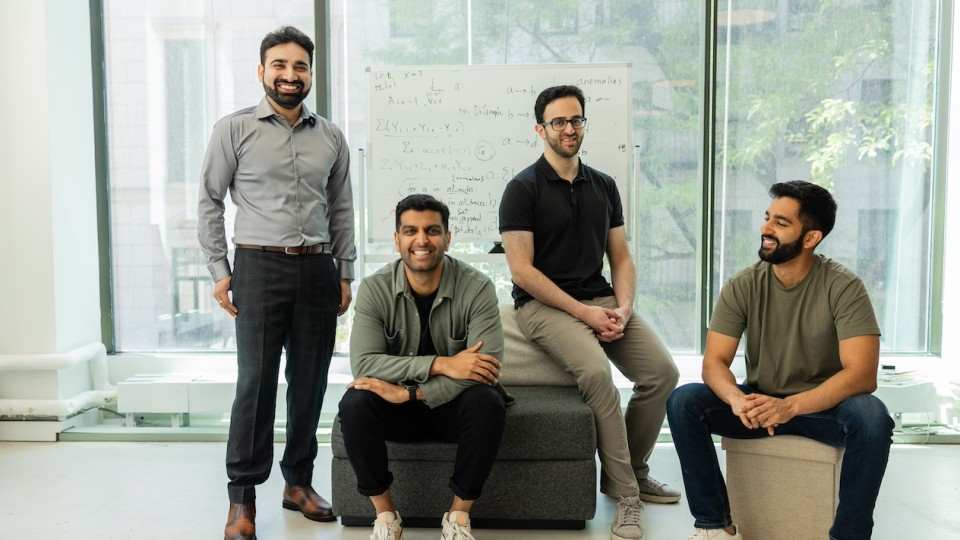
New York-based Traversal raised $120 million in Series B funding at a $1 billion valuation. Kleiner Perkins, Redpoint Ventures, and Khosla Ventures co-led the round. Backers also include Sequoia Capital, Battery Ventures, and Amex Ventures. The investment brings Traversal’s reported cumulative funding to $173 million.
Traversal develops AI agents for site reliability engineering. Site reliability engineers keep software systems available and diagnose failures when services stop working.
Large companies generate enormous volumes of technical information through logs, monitoring systems, infrastructure components, and applications. When something breaks, engineers must identify the cause, determine which systems are affected, and restore service. Traversal is attempting to automate parts of that process. Its software examines technical signals, investigates possible causes, and recommends or performs corrective actions within configured operating limits.
The company uses causal machine learning to distinguish underlying problems from symptoms that appear elsewhere in a system. Traversal reports customers including Nubank, Harvey, DigitalOcean, and PepsiCo. It also claims ninefold growth in annual recurring revenue during 2026. Those growth figures have not been independently audited.
Why investors see a substantial opportunity
AI-assisted software development is increasing the amount of code organizations can produce. That creates a corresponding need to test, monitor, and operate the resulting systems. Software outages can interrupt customer transactions, financial services, and internal business operations.
Traversal’s commercial proposition is therefore connected to measurable financial losses. If its technology can reduce the time engineers spend investigating incidents, customers may realize direct productivity benefits. However, diagnosing production failures is technically demanding.
AI systems can make incorrect assumptions about outage causes, and automatically applying an unsuitable fix could make a problem worse. Traversal’s long-term advantage will depend on accuracy, safe execution, and integration with existing engineering systems. Its valuation reflects substantial expectations for that technology.
Funding Details
Startup: Traversal
Investors: Kleiner Perkins, Redpoint Ventures, Khosla Ventures, Sequoia Capital, Battery Ventures, Amex Ventures
Amount Raised: $120 million
Total Raised: $173 million
Funding Stage: Series B
Funding Date: November 3, 2026
Headquarters: New York, United States
Sector: Enterprise AI/developer tools/site reliability engineering
Valuation: Approximately $1 billion
EloElo Group raises $80M to expand AI-assisted mobile entertainment
Bengaluru-based EloElo Group raised $80 million in Series C funding led by Hornbill Capital and NBCUniversal. MIT Investment Management Company and existing investors Play Ventures, Kalaari Capital, WaterBridge Ventures, and Griffin Gaming Partners also participated. The transaction brings EloElo’s cumulative funding to approximately $130 million.
Mint reported that the round values the company at approximately $500 million, citing a person familiar with the transaction. EloElo did not disclose the valuation directly. Founder Saurabh Pandey said more than 95% of the financing consists of primary capital, with a smaller portion providing liquidity to early angel investors.
Founded in 2020, EloElo operates consumer entertainment and AI products. Its best-known service is Story TV, a mobile platform specializing in short-form dramatic entertainment.
The company also develops Dolphin AI, a collection of tools intended to support creative production. EloElo’s business combines content creation, distribution, and technology. Its strategy is to use audience preference data to guide production while reducing costs through AI-assisted workflows.
The company reports more than 40 million monthly active users across its applications. It also says Story TV offers more than 5,000 microdramas across six languages. The company provides these operating figures.
Why NBCUniversal’s involvement matters
EloElo’s financing matters because it combines traditional entertainment investment with an interest in AI-assisted content production. NBCUniversal brings experience in international media production and distribution.
EloElo is developing a business model focused on mobile viewing habits, relatively short content formats, and frequent releases.
The company plans to expand into international markets, including the United States. However, the business faces several commercial challenges. Producing large volumes of content does not guarantee that viewers will continue paying for it.
Customer acquisition costs, subscriber retention, production spending, and competition will determine whether its economics remain attractive. EloElo says it has improved its unit economics, but the reviewed reporting did not include its latest audited financial results. Its strategic advantage will depend on combining efficient production with content that audiences consistently value.
Funding Details
Startup: EloElo Group
Investors: Hornbill Capital, NBCUniversal, MIT Investment Management Company, Play Ventures, Kalaari Capital, WaterBridge Ventures, Griffin Gaming Partners, and others
Amount Raised: $80 million, including a small secondary component
Total Raised: Approximately $130 million
Funding Stage: Series C
Funding Date: November 4, 2026
Headquarters: Bengaluru, India
Sector: Consumer technology / digital entertainment / AI-assisted media production
Valuation: Approximately $500 million, according to an unnamed source cited by Mint
Lazarus AI raises $43M in funding to give enterprises greater control over AI systems
Boston-based Lazarus AI announced $43 million in financing from institutional and strategic investors. Participants included QBE, Mucker Capital, Motivate Ventures, State Farm Ventures, Wave Function Ventures, Indelible Solutions, Joyance Partners, AllegisNL Capital, One Way Ventures, AngelList, Techstars, and Plug and Play. The company did not identify a lead investor or specify the financing stage.
Lazarus develops AI technology for organizations that need greater control over their systems and information. Its products address complex document processing, cybersecurity, and legacy software modernization.
The company supports deployments within a customer’s own infrastructure, including on-premises and sovereign computing environments. That approach is particularly relevant to organizations operating under strict data-security and regulatory requirements.
Lazarus says its document-processing technology links extracted information to supporting source material. Its cybersecurity product, Clearwing, is designed to identify vulnerabilities and generate evidence that engineers can evaluate. Another product, Constructor, helps organizations recover business logic from legacy software systems.
Control and operating costs as competitive advantages
Many enterprise customers depend on third-party AI providers for models and computing services. That can introduce concerns about data handling, long-term costs, system availability, and dependence on a single supplier.
Lazarus is offering an alternative built around customer control. Its technology lets organizations choose deployment environments and retain control over model changes.
The company also argues that its approach can reduce operating expenses compared with usage-based AI services. It claims that a modeled high-volume deployment produced a 78% reduction in annual operating costs. That figure is based on a modeled scenario rather than independently verified results across the customer base.
For investors, the opportunity depends on whether Lazarus can deliver the required accuracy and reliability while remaining competitive with established enterprise software providers and major cloud platforms. Its financing reflects interest in AI products where security, auditability, and customer control influence purchasing decisions.
Funding Details
Startup: Lazarus AI
Investors: QBE, Mucker Capital, Motivate Ventures, State Farm Ventures, Wave Function Ventures, Indelible Solutions, Joyance Partners, AllegisNL Capital, One Way Ventures, AngelList, Techstars, Plug and Play, and others
Amount Raised: $43 million
Total Raised: Not disclosed
Funding Stage: Not disclosed
Funding Date: November 3, 2026
Headquarters: Boston, Massachusetts, United States
Sector: Enterprise AI/cybersecurity/legacy software modernization
Valuation: Not disclosed
Corridian raises $38M in funding to develop autonomous underwater defense systems
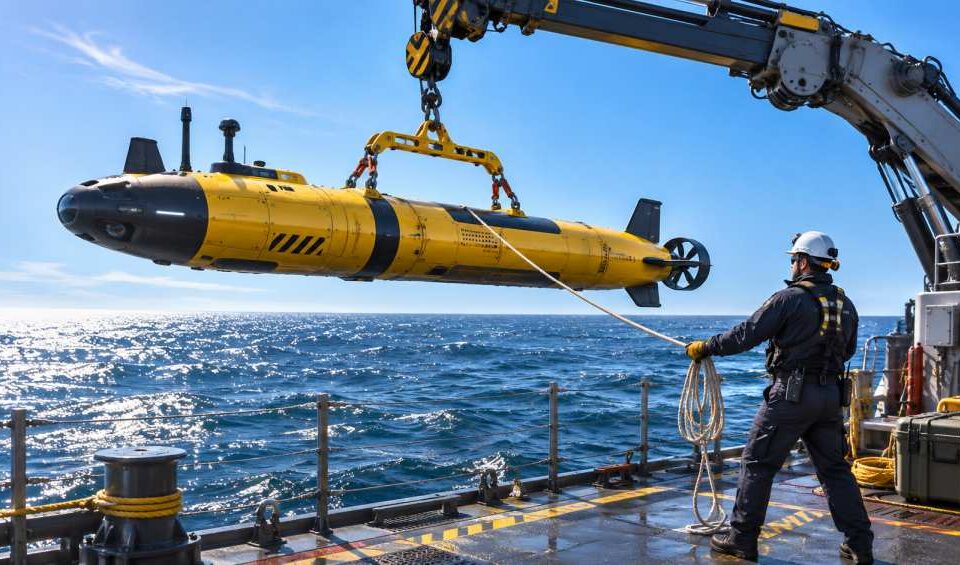
Boston-area defense technology startup Corridian emerged from stealth with $38 million in seed financing led by Point72 Ventures. Other participants included Balerion Space Ventures, Harpoon Ventures, DCVC, and Marlinspike.
Corridian plans to use the capital to expand engineering operations and develop its first ultra-large autonomous underwater vehicle. Corridian is developing unmanned underwater vehicles designed to transport equipment and supplies through contested maritime environments. Its central investment proposition is connected to a changing military problem.
Surface ships and aircraft can be vulnerable to missiles, drones, surveillance systems, and other threats. Moving supplies through underwater routes could provide an alternative in selected situations. Corridian is attempting to build autonomous systems with sufficient capacity to transport substantial payloads. The company plans to reveal its flagship vehicle in 2027. That timeline is an objective, not confirmation of an operational system.
Why investors are backing underwater autonomy
Autonomous underwater vehicles are already used in research, inspection, surveillance, and military applications. Corridian is pursuing a larger logistics-oriented system.
Its potential advantage would come from combining payload capacity with autonomous operation and a lower-risk alternative to certain surface transportation missions. However, underwater operations create difficult engineering requirements.
Vehicles must navigate without dependable satellite positioning, communicate through water, manage energy consumption, and operate reliably over long distances. Defense procurement introduces additional uncertainty. Military interest does not necessarily result in production contracts, and development programs may require extensive testing.
Corridian’s seed financing provides a substantial development budget, but investors will need evidence that its systems can complete demanding missions at acceptable costs.
Funding Details
Startup: Corridian
Investors: Point72 Ventures, Balerion Space Ventures, Harpoon Ventures, DCVC, Marlinspike, and others
Amount Raised: $38 million
Total Raised: $38 million in disclosed financing
Funding Stage: Seed
Funding Date: November 3, 2026
Headquarters: Greater Boston, Massachusetts, United States
Sector: Defense technology / autonomous underwater vehicles / maritime logistics
Valuation: Not disclosed
Sigma Biotech raises several hundred million yuan to advance organoid-based drug discovery
Chinese biotechnology startup Sigma Biotech announced the first closing of a Series A+ financing worth several hundred million yuan. China Life Equity Investment led the investment. The company did not disclose an exact amount for the first closing or identify a complete investor syndicate in the reviewed announcement.
Founded in Shenzhen in 2020, Sigma Biotech develops treatments for difficult medical conditions using organoid models and AI-assisted research. Organoids are laboratory-grown three-dimensional structures that reproduce selected characteristics of human tissues. Researchers can use them to study disease processes and evaluate potential treatments. Sigma is particularly focused on cancers including diffuse gastric cancer, liver cancer, and lung cancer.
The company is also developing research programs involving heart and kidney diseases. Its technology combines laboratory models with computational analysis to identify potential therapeutic targets and evaluate drug candidates. The objective is to generate better information during early research and reduce some of the uncertainty associated with drug development.
Why the financing matters
Traditional drug discovery faces high failure rates, particularly when promising laboratory results do not translate into successful human trials. Organoid technology may help researchers evaluate biological responses using models that more closely resemble human tissues. Combining those experiments with AI could improve drug-candidate selection. However, organoids cannot fully reproduce the biological complexity of human patients.
Researchers must still establish safety and effectiveness through appropriate clinical development. Sigma plans to use the funding to advance its oncology programs, develop additional therapeutic candidates, and improve its research platform. Its commercial prospects will depend on scientific validation, clinical results, intellectual property, and eventual regulatory decisions.
The company’s technology is promising as a research approach, but its financing should not be interpreted as evidence that any treatment has reached commercial approval.
Funding Details
Startup: Sigma Biotech
Investors: China Life Equity Investment; other participants not fully disclosed
Amount Raised: Several hundred million yuan, approximate; first closing of Series A+
Total Raised: Not disclosed
Funding Stage: Series A+ first closing
Funding Date: November 4, 2026
Headquarters: Shenzhen, Guangdong, China
Sector: Biotechnology/drug discovery/organoids / AI-assisted research
Valuation: Not disclosed
Guava raises $12.5M in funding to develop voice AI infrastructure for enterprises
Los Angeles-based Guava raised $12.5 million in seed financing led by Acrew Capital. Flourish Ventures, WillowTree Ventures, Clocktower Ventures, and existing investor Commerce Ventures participated. Guava will use the proceeds for product development, AI model research, and commercial expansion.
Guava develops tools that allow software engineers to build and operate AI-powered voice agents. Its customers include organizations that need to automate telephone conversations while retaining control over business processes. The company focuses particularly on industries such as insurance, financial services, and healthcare.
These businesses often require customer identification, security, regulatory compliance, and transaction accuracy. Guava’s technology combines speech recognition, language processing, voice generation, and conversation management. Guava introduced its Daytona voice model in September.
The company says more than a dozen enterprise customers use its technology, which supports tens of thousands of calls daily. Those figures are company-reported.
Why investors are interested in the infrastructure layer
Automated voice systems are becoming more capable, but delivering reliable conversations remains difficult. Systems must respond quickly, handle interruptions, interpret unclear language, and complete tasks without introducing errors.
For regulated customers, compliance and information security also affect purchasing decisions. Guava is positioning itself as infrastructure that developers can integrate into their own applications. That differs from offering a single finished call-center product.
The approach could allow Guava to serve multiple industries and use cases. However, established cloud providers and other AI companies are also developing voice technologies. Guava must demonstrate that its systems provide meaningful advantages in cost, reliability, latency, security, or developer control.
For investors, commercial adoption and customer retention will be more informative than demonstrations of natural-sounding conversations.
Funding Details
Startup: Guava
Investors: Acrew Capital, Flourish Ventures, WillowTree Ventures, Clocktower Ventures, Commerce Ventures
Amount Raised: $12.5 million
Total Raised: Not disclosed
Funding Stage: Seed
Funding Date: November 3, 2026
Headquarters: Los Angeles, California, United States
Sector: Voice AI/developer infrastructure/enterprise automation
Valuation: Not disclosed
Journify raises $12M in funding to improve advertising data infrastructure
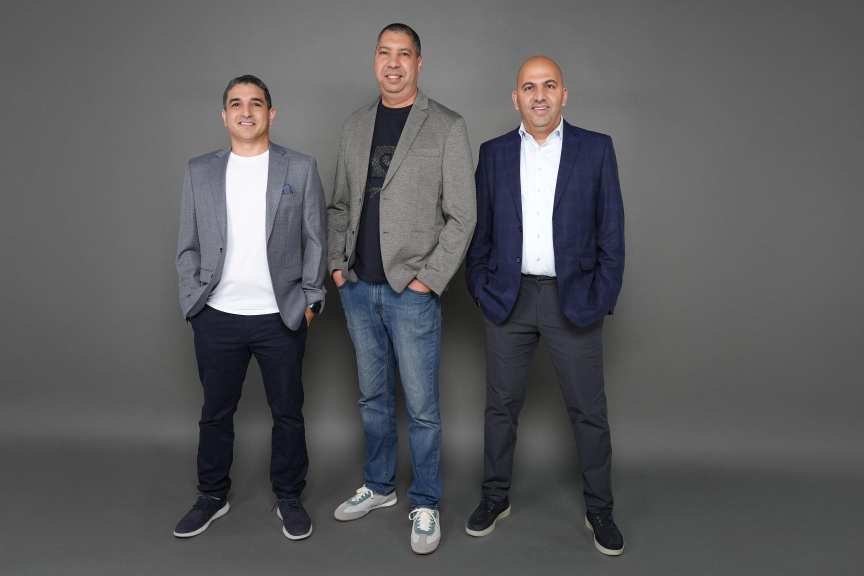
San Francisco-based Journify raised $12 million in Series A financing led by Al Mada Ventures. Silicon Badia co-led the round, with participation from Shorooq Partners, Bunat Ventures, Du Ventures, and Oraseya Capital. Journify said the financing values the company at about four times its previous valuation, though it did not disclose the absolute figure.
Founded in 2022, Journify develops infrastructure that connects customer activity with digital advertising systems. Advertising platforms use information about purchases, sign-ups, and other actions to evaluate campaigns and improve targeting. However, that information is frequently incomplete.
Customers may browse on one device, purchase through another channel, or complete transactions offline. Privacy requirements and changes in browser tracking can make attribution more difficult. Journify connects information from websites, applications, customer databases, and offline systems. Its technology then sends appropriate conversion information to advertising platforms including Google, Meta, TikTok, Snap, and Amazon Ads.
The company says more than 100 businesses use its services. It also reports substantial improvements in advertising returns for selected customers. Those results should be interpreted as customer examples rather than guaranteed outcomes.
The opportunity behind AI-driven advertising
Advertising algorithms depend on the quality of information used to train and evaluate them. If companies provide incomplete or inaccurate conversion data, automated systems may make poor spending decisions. Journify is attempting to improve that information.
The company also uses AI to monitor connections, identify data-quality problems, and support corrections. Its planned expansion into the United States and Europe will introduce new customers but also stronger competition. Privacy compliance and consent management will remain important considerations.
For investors, Journify’s potential advantage depends on improving measurable marketing performance while handling customer information responsibly. Its business shows how AI adoption can drive demand for better underlying data rather than entirely new applications.
Funding Details
Startup: Journify
Investors: Al Mada Ventures, Silicon Badia, Shorooq Partners, Bunat Ventures, Du Ventures, Oraseya Capital
Amount Raised: $12 million
Total Raised: Not disclosed
Funding Stage: Series A
Funding Date: November 3, 2026
Headquarters: San Francisco, California, United States; operations in Dubai and Riyadh
Sector: Advertising technology/data infrastructure/enterprise AI
Valuation: Not disclosed; company reports a fourfold increase from its previous valuation
SYNCERE raises $11M in funding to bring AI-powered household robots into production
Palo Alto-based SYNCERE raised $11 million in pre-seed financing led by Andreessen Horowitz’s SPEEDRUN program. Draper Associates, Physical World, Sequel, and SeaX Ventures also participated. SYNCERE will use the capital to expand manufacturing, support product deliveries, and improve the capabilities of its household robotics technology.
Founded by roboticists Aaron Tan and Angus Fung, SYNCERE is developing a different approach to domestic automation. Its first product, LUME, combines a floor lamp with robotic arms. The system is designed to perform household tasks such as folding laundry, tidying rooms, and making beds.
Rather than building a full humanoid robot, SYNCERE is focusing on a smaller device intended to fit into existing homes. The company has priced LUME at approximately $2,699.
According to the Silicon Valley Business Journal, SYNCERE has received around 1,500 paid preorders and has begun limited deliveries to customers in the San Francisco Bay Area. The company values its preorder demand at approximately $4.8 million. That amount represents orders, not necessarily collected revenue or completed deliveries.
Can household robotics become an affordable consumer product?
Home robots face different commercial challenges from industrial machines. A factory can evaluate a robot against a specific task and operating schedule. Households are less predictable, and consumers generally have lower spending limits.
SYNCERE’s strategy is to reduce the initial purchase cost by avoiding the expense of a full humanoid design. The company also expects deployed devices to generate information that can help improve its technology. However, successful consumer robotics requires more than completing selected tasks in demonstrations.
Products must operate safely, reliably, and consistently across different homes. SYNCERE must also manage manufacturing costs, warranties, repairs, customer support, and product returns. Its early preorder activity demonstrates interest, but broader commercial success remains unproven.
Funding Details
Startup: SYNCERE
Investors: Andreessen Horowitz SPEEDRUN, Draper Associates, Physical World, Sequel, SeaX Ventures
Amount Raised: $11 million
Total Raised: Not disclosed
Funding Stage: Pre-seed
Funding Date: November 3, 2026
Headquarters: Palo Alto, California, United States
Sector: Consumer robotics / embodied AI/household automation
Valuation: Not disclosed
What Today’s Funding Activity Reveals
1. AI infrastructure is attracting extraordinary amounts of capital
Fal’s $1.3 billion financing dominates the disclosed dollar-denominated total. Its investment is more than 10 times Traversal’s $120 million round. That difference reflects the capital required to build computing infrastructure, but it also means the day’s financing total is heavily influenced by one transaction.
Investors should avoid interpreting Fal’s financing as evidence that similarly large checks are available throughout the AI industry.
2. Specialized AI hardware is gaining attention
Lingchuan’s RMB 1 billion round highlights interest in processors designed for particular workloads. Its focus on video processing differs from general-purpose computing. Specialized architectures could become more attractive as companies seek lower operating costs for demanding applications. However, companies must demonstrate performance advantages through commercial deployments.
3. Enterprise AI is moving toward operational responsibility
Traversal, Lazarus, Guava, and Journify all address processes where organizations need dependable results.
Traversal diagnoses software outages.
Lazarus handles sensitive documents and technology systems.
Guava supports customer conversations.
Journify improves the information supplied to advertising algorithms.
These applications require more than impressive AI outputs. Customers need accuracy, security, integration, and measurable business benefits.
4. Data and infrastructure can be more defensible than a model interface
Companies can increasingly access capable AI models from multiple providers. That creates competitive pressure for businesses built primarily around access to those models.
Today’s funding suggests several alternative sources of defensibility.
Fal operates computing infrastructure.
Lingchuan designs specialized chips.
Traversal integrates with complex production environments.
Journify connects proprietary business information to advertising systems.
Their success will depend on whether those capabilities create advantages that competitors cannot easily reproduce.
5. Strategic investors are supporting specialized markets
Nvidia participated in Fal’s financing.
NBCUniversal backed EloElo.
Insurance-related investors participated in Lazarus.
Lingchuan attracted financial institutions and investors associated with industrial development.
These relationships may provide commercial expertise, distribution opportunities, or customer access. However, strategic participation should not be confused with guaranteed contracts or future revenue.
6. Physical technology remains an important investment category
Corridian and SYNCERE are developing hardware for very different environments.
Corridian is focused on underwater defense logistics.
SYNCERE is pursuing household automation.
Both face manufacturing and deployment challenges beyond conventional software development. Their financing reflects investor willingness to support specialized physical systems, but successful commercialization will depend on reliable engineering and manageable costs.
7. Biotechnology financing remains tied to long-term research
Sigma Biotech’s Series A+ first closing demonstrates interest in drug discovery methods that combine biological experiments and computational analysis. The company is addressing difficult medical conditions.
However, clinical development requires scientific evidence, regulatory review, and substantial additional work. The announcement is a financing milestone, not proof of therapeutic success.
8. Consumer technology is pursuing different AI economics
EloElo is using AI to support entertainment production.
SYNCERE is developing consumer robotics.
Both aim to make technology accessible through products ordinary customers will use. Yet their economics differ substantially.
Digital entertainment depends on content spending, retention, and subscriptions. Consumer robotics depends on manufacturing, hardware reliability, and product support. AI may improve both businesses, but it does not remove their underlying operating requirements.
9. The geographic distribution is concentrated
Six of the selected companies are headquartered in the United States, two in China, and one each in India and the United States with Middle Eastern operations—Journify remains counted under its U.S. headquarters.
The distribution reflects the verified announcement window and the relative significance of qualifying transactions. It should not be interpreted as a comprehensive measure of global venture capital allocation.
10. Financing disclosures still require careful interpretation
Fal disclosed its Series F alongside an older Series E.
EloElo included a small secondary transaction.
Sigma announced a first closing without an exact amount.
Lazarus did not identify a conventional funding stage.
These details matter when comparing rounds. An announcement can be financially significant without every dollar representing newly available operating capital.
Startup Funding Table
| Startup | Amount Raised | Sector | Funding Stage | Lead/Key Investors | Country |
|---|---|---|---|---|---|
| Fal | $1.3B | AI inference infrastructure | Series F | Bessemer Venture Partners, Nvidia | United States |
| Lingchuan Technology | RMB 1B | AI semiconductors | Series B | E-Town Capital, Qiming Venture Partners, Zhaohui Capital | China |
| Traversal | $120M | Enterprise AI/site reliability | Series B | Kleiner Perkins, Redpoint Ventures, Khosla Ventures | United States |
| EloElo Group | $80M | Digital entertainment/consumer AI | Series C | Hornbill Capital, NBCUniversal, MIT Investment Management | India |
| Lazarus AI | $43M | Enterprise AI/cybersecurity | Not disclosed | QBE, Mucker Capital, Motivate Ventures, State Farm Ventures | United States |
| Corridian | $38M | Defense technology / underwater autonomy | Seed | Point72 Ventures, DCVC, Harpoon Ventures | United States |
| Sigma Biotech | Several hundred million RMB; exact amount undisclosed | Biotechnology / AI drug discovery | Series A+ first closing | China Life Equity Investment | China |
| Guava | $12.5M | Voice AI infrastructure | Seed | Acrew Capital, Flourish Ventures, WillowTree Ventures | United States |
| Journify | $12M | Advertising data infrastructure | Series A | Al Mada Ventures, Silicon Badia, Shorooq Partners | United States |
| SYNCERE | $11M | Consumer robotics | Pre-seed | Andreessen Horowitz SPEEDRUN, Draper Associates | United States |
Funding note: The eight dollar-denominated transactions total approximately $1.62 billion in announced round sizes. This includes a small secondary component in EloElo’s financing and should not be interpreted as an exact measure of new operating capital. Lingchuan’s RMB 1 billion round and Sigma Biotech’s approximately disclosed financing are presented separately.
Strategic Takeaways for Founders and Investors
1. AI infrastructure companies must demonstrate the economics of scale. Fal’s financing shows that demand can require substantial investment in computing capacity. Founders building infrastructure businesses should measure gross margins, equipment utilization, customer retention, and the cost of serving additional workloads.
2. Specialized hardware needs measurable advantages. Lingchuan is developing chips for specific video-processing workloads. Its long-term position will depend on whether customers achieve meaningful improvements in performance, energy consumption, and total operating costs compared with alternatives.
3. Reliability can become a valuable enterprise AI product. Traversal is targeting an expensive operational problem: software outages. Founders should identify workflows where improved accuracy or reduced response times produce measurable financial benefits.
4. Customer control can influence purchasing decisions. Lazarus is developing AI systems that organizations can operate within their own environments. This approach may appeal to regulated customers that cannot easily move sensitive information into external services.
5. Distribution matters in consumer AI. EloElo’s combination of content production and audience distribution gives it a different starting position from companies developing AI creation tools alone. Investors should examine whether its audience relationships translate into recurring revenue and defensible acquisition economics.
6. Strategic investors can provide more than financing. NBCUniversal’s participation in EloElo and Nvidia’s investment in Fal may support commercial relationships. However, founders should distinguish an investor’s strategic interest from binding customer commitments.
7. Defense hardware must be evaluated against procurement realities. Corridian’s technology addresses a meaningful military problem, but contracts will depend on demonstrated performance, testing, procurement budgets, and deployment requirements.
8. Biotechnology startups need evidence that advances beyond laboratory models. Sigma Biotech’s organoid-based research approach may improve early drug development. Investors should focus on reproducibility, clinical progress, intellectual property, and the capital required to reach regulatory milestones.
9. Voice AI must work under real operating conditions. Guava’s opportunity depends on handling interruptions, latency, customer information, and complex conversations. Successful pilots are useful, but long-term adoption requires consistent performance across thousands of interactions.
10. Better data can create value even when the underlying AI models are widely available. Journify is addressing incomplete advertising signals. Founders developing AI applications should consider whether proprietary data, integration, and measurable results offer stronger advantages than model access alone.
11. Hardware preorders should not be confused with commercial success. SYNCERE has demonstrated initial consumer demand, but it still needs to prove it can manufacture, deliver, and support products economically. Investors should distinguish orders from recognized revenue and completed deliveries.
12. Funding size should be evaluated against each company’s development stage. Fal’s $1.3 billion financing supports a business operating substantial computing infrastructure. Corridian’s $38 million seed round funds an earlier-stage hardware development effort. Sigma’s investment supports scientific and clinical programs. The appropriate measures of progress differ across these businesses.
Conclusion
November 4’s startup funding activity underscores the importance of the technologies needed to make AI commercially useful.
Fal’s $1.3 billion financing shows the capital needed to meet demand for generative media. Lingchuan’s RMB 1 billion Series B highlights the search for more efficient computing hardware. Traversal’s $120 million investment reflects growing interest in AI systems that can solve expensive operational problems. The remaining transactions reveal opportunities beyond the largest infrastructure businesses.
EloElo is combining AI with mobile entertainment. Lazarus is addressing enterprise control and security. Corridian is developing autonomous defense systems, while Sigma Biotech is pursuing new approaches to drug discovery.
Guava, Journify, and SYNCERE are targeting more specialized applications involving customer conversations, advertising data, and household automation.
Taken together, the rounds suggest investors want companies that can translate technical progress into measurable commercial advantages. The strongest businesses will not necessarily be those with the largest models, the most ambitious product announcements, or the highest valuations.
They will be the companies that can deliver reliable products, retain customers, manage costs, and establish positions competitors cannot easily displace.