Corridian emerges from stealth with $38M to build giant autonomous underwater drones for U.S. military stealth missions
 Daniel Levi
Posted On November 3, 2026
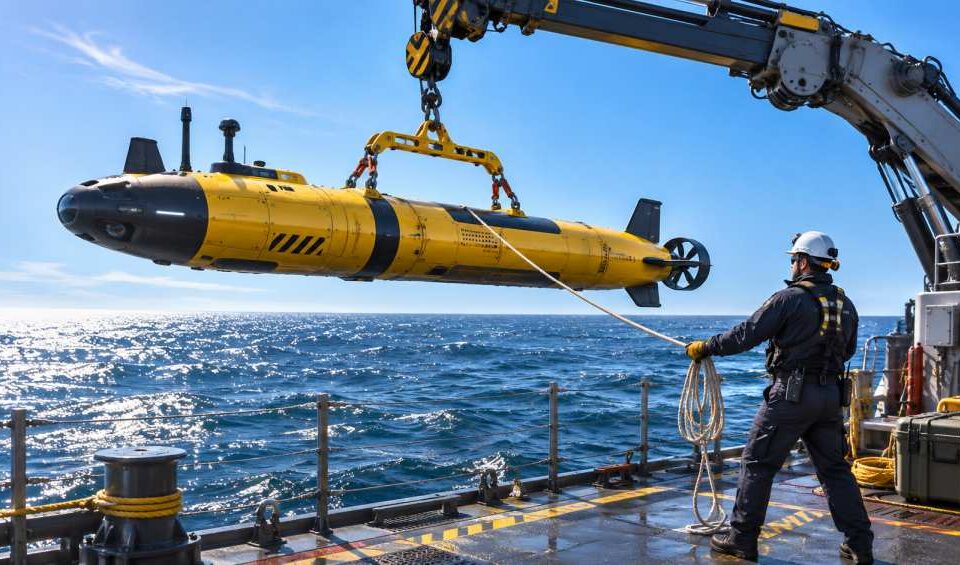
A new defense tech startup wants to move military cargo across oceans without ships, aircraft, or human crews. Corridian, a New England-based company developing giant autonomous underwater drones, emerged from stealth Tuesday with $38 million in seed funding to build underwater vehicles that can transport military supplies, sensors, and weapons thousands of miles beneath the ocean’s surface.
Point72 Ventures led the round, with participation from DCVC, Harpoon Ventures, Balerion Space Ventures, Marlinspike, and other defense technology investors. The funding will help Corridian develop its first underwater vehicle, expand its research facility, and hire engineers ahead of a planned 2027 unveiling.
The idea addresses a growing military problem. Cheap attack drones and long-range missiles have made traditional supply routes increasingly dangerous. Surface ships and military aircraft can be detected and targeted, leaving commanders with fewer options for moving equipment through hostile waters.
Corridian believes the answer lies beneath the waves.
Its proposed vehicles, known as ultra-large autonomous underwater vehicles (AUVs), are designed to transport standardized containerized cargo across thousands of nautical miles without onboard crews. The company envisions using them to deliver military payloads, collect intelligence, conduct surveillance, and transport supplies through contested waters.
Unlike conventional submarines, which require crews and complex shipbuilding infrastructure, Corridian’s autonomous platforms are intended to operate independently and draw on a broader commercial manufacturing supply chain.
“America’s dependence on the surface and air domains to move mass at scale is an acute vulnerability,” said Mike Guay, Corridian’s co-founder and CEO.
“The United States and its allies are buying drones, sensors, effects, and supplies that need a way to reach the fight, even when operating in heavily contested and denied environments. That’s stealth logistics: carrying that cargo underwater, out of sight, autonomously, thousands of nautical miles at a time. Corridian adds the undersea capacity commanders need, working alongside the submarines that operate at the tip of the spear today.”
Founded by former General Dynamics engineers with deep U.S. Navy experience
Corridian was founded in September 2025 by Guay, Greg Barrow, Kyle Arace, and Mark Bodnar. The four previously worked at General Dynamics, where they led one of the country’s largest undersea autonomy portfolios.
Their previous programs entered service with the U.S. Navy, the Royal Australian Navy, and other military partners. That experience could give Corridian an advantage in an industry where building autonomous defense hardware requires extensive testing, government relationships, and years of technical development.
The startup has attracted several former senior Navy officials to its advisory board, including retired Adm. Lisa Franchetti, who served as the 33rd Chief of Naval Operations. Other advisers include former acting Assistant Secretary of the Navy Jason Potter, retired Vice Adm. Jeff Trussler, and retired Rear Adm. Milton “Jamie” Sands III.
Franchetti sees larger autonomous underwater vehicles as a potential answer to emerging military requirements.
“The character of war is changing, and the force that adapts first will have the advantage,” Franchetti said.
“AUVs are a critical part of the solution, but only if they can operate at scale, with the ranges and payloads the theater actually demands. Corridian is addressing a real operational gap in a way that is both technically credible and scalable. The team understands both the mission and how to execute it.”
The investment arrives amid mounting pressure on America’s submarine manufacturing capacity. Building conventional submarines takes years, and the U.S. Navy continues to face production delays and industrial bottlenecks.
Corridian hopes to avoid those constraints by relying on suppliers outside the existing submarine industrial base. Guay told Axios the startup is pursuing an aerospace-style manufacturing approach rather than depending on traditional submarine shipyards.
The company has yet to publicly demonstrate its flagship vehicle. Key technical details, including its dimensions, launch method, and tested operational range, remain undisclosed. Its first public unveiling is scheduled for 2027.
That leaves a significant engineering challenge ahead. Moving heavy military cargo autonomously across thousands of miles underwater requires reliable navigation, sustained operation, and the ability to survive in hostile environments.
Corridian’s $38 million seed round gives it the capital to pursue that ambition, but the larger question remains whether autonomous underwater cargo fleets can become a practical alternative to vulnerable surface supply routes.
For the military, the appeal is straightforward: If ships and aircraft become easy targets, the safest route for critical supplies may be one the enemy cannot see.