Traversal raises $120M at $1B valuation to build AI engineers that tackle software outages
 Daniel Levi
Posted On November 3, 2026

Traversal, an AI startup building autonomous engineers to diagnose and resolve software outages, has raised $120 million in fresh funding at a $1 billion valuation, joining the growing ranks of AI unicorns. The round was co-led by Kleiner Perkins, Redpoint Ventures, and Khosla Ventures, with participation from Sequoia Capital, Battery Ventures, and Amex Ventures.
The funding comes as companies race to deploy AI coding tools that generate software faster than ever, creating a new challenge: keeping that software running once it reaches production.
Traversal wants to solve that problem with AI site reliability engineers (SREs), autonomous agents that investigate outages, identify their root causes, and help engineering teams fix problems before they spiral into costly disruptions.
The New York-based AI startup has already attracted major enterprise customers, including Nubank, Harvey, DigitalOcean, and PepsiCo. American Express is another customer and investor.
“Site reliability engineering is one of the hardest problems in applied AI because every company’s software environment is different, and with downtime costing companies as much as $600 billion a year, the stakes are enormous,” said Anish Agarwal, CEO and Co-Founder of Traversal.
The company is entering a market facing mounting pressure from AI-generated code. A 2026 report from Splunk and Oxford Economics found that downtime costs have increased 50% over two years, with engineers spending roughly seven hours each week troubleshooting problems.
That creates an opening for startups seeking to automate the less glamorous side of software development: figuring out why systems break.
AI can write code. Can it keep that code running?
AI coding assistants have changed how developers build software. Yet production environments remain difficult to manage, particularly at large enterprises running thousands of interconnected applications and services.
Traversal’s approach relies on causal machine learning, a technique that helps distinguish the underlying cause of a failure from the symptoms it produces. Its platform uses a continuously updated model of production systems to investigate incidents and recommend or execute fixes.
The company’s founders bring academic experience from MIT, UC Berkeley, Columbia University, and Cornell Tech.
Early adoption suggests enterprises see value in the technology. Traversal said its annual recurring revenue has increased ninefold since the beginning of 2026, with product usage growing nearly 100 times and monthly active users increasing almost 20 times.
Customers conducted more than 150,000 investigations last quarter, the company said. Its platform now supports over 4,000 engineers and has been involved in more than 1,000 major incidents, 50,000 minor incidents, and 5,000 significant production changes.
At Nubank, one of the world’s largest digital banking platforms, the technology is becoming part of the company’s incident response process.
“Five weeks into our Traversal rollout, and it’s already becoming part of how our on-call engineers work incidents,” said Nubank founder and CEO David Vélez. “We’re expanding it wave by wave as those results hold up. It’s early, but it’s the kind of leverage we want AI to give our engineering teams.”
Still, building AI engineers who can independently manage production systems remains an unsolved challenge.
On ORCA-bench, a benchmark developed by Traversal with Cornell Tech and Columbia University, the strongest of five frontier AI agents achieved just 25.3% accuracy on medium-difficulty incidents. Accuracy dropped to 10% when incident reports lacked detail, and hallucination rates reached 40%.
Those results expose the gap between AI coding capabilities and the reasoning needed to troubleshoot live enterprise infrastructure.
Traversal emerged from stealth in June 2025 with $48 million in funding led by Sequoia Capital and Kleiner Perkins. The latest financing brings its total funding to $173 million, the company says.
The bigger question is whether AI can take responsibility for maintaining the software it increasingly helps create.
AI is making it easier to write and ship code. Traversal is betting that keeping that code running will become an equally valuable business.
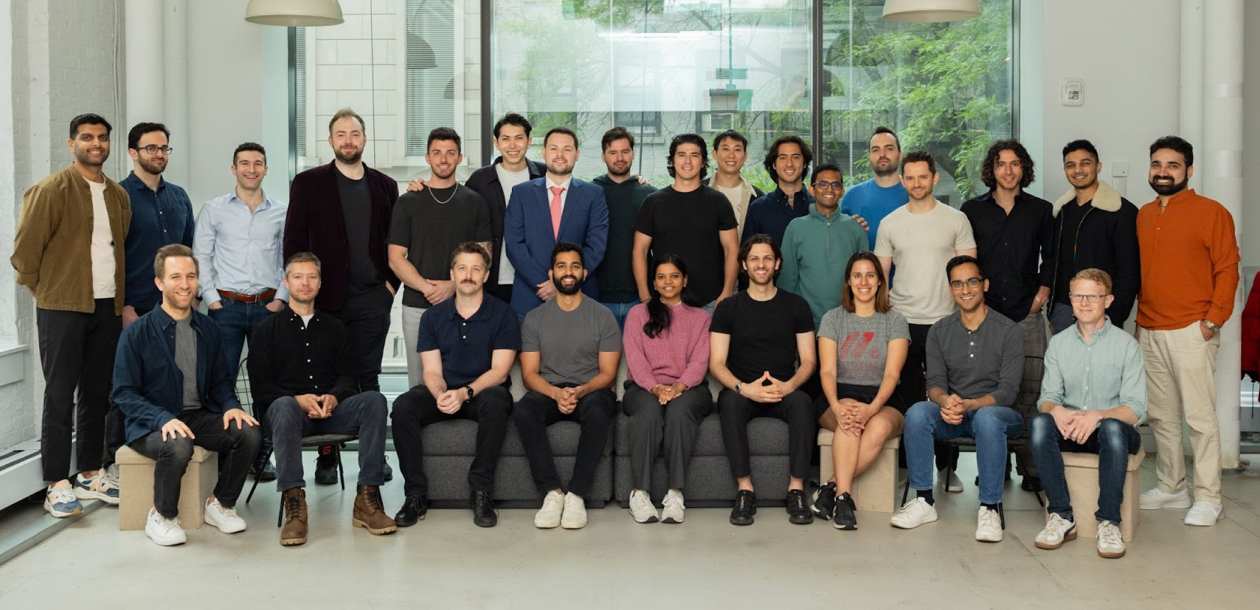
Traversal Team