Startup Funding News Today, September 15, 2026: EUCLYD, Yincheng Intelligence, Nutshell Therapeutics, Yoom & More
 Nickie Louise
Posted On September 15, 2026

The most important signal from startup funding this morning is not another frontier-model megadeal. Capital is moving into the systems underneath AI and into the physical industries where AI has to prove it can improve economics outside a chat window. Eindhoven semiconductor startup EUCLYD leads the latest 16-hour funding window with a Series A of more than €200 million, while China delivered a cluster of large rounds across humanoid-robot components, logistics robotics, semiconductor inspection, sovereign AI infrastructure and AI-driven drug discovery.
The concentration is striking. Four Chinese hardware and infrastructure companies alone — ENCOS, Yincheng Intelligence, Kangwei Vision and DeepKernel — disclosed more than RMB500 million combined, before adding Nutshell Therapeutics’ tens-of-millions-of-dollars C1 round. Hong Kong wealthtech company Starroad added an A+ round exceeding $10 million, while Tokyo automation startup Yoom raised ¥700 million in its first outside financing.
Nine of today’s 10 selected companies sit directly in semiconductors, AI, robotics, biotechnology, financial technology or enterprise infrastructure. Six are based in mainland China or Hong Kong. That geographic skew partly reflects the clock: the rolling window captures an entire Asian business day before most U.S. startups begin Tuesday announcements.
The cutoff also removes several much larger rounds still circulating prominently in news feeds. Temporal’s $550 million financing was announced around 9 a.m. ET on September 14, well outside the window, while Open Cosmos’ €300 million satellite round was also public earlier Monday. Neither is being recycled into today’s report.
The Macro Environment: The Bottleneck Trade Moves Below the Model
EUCLYD best captures where investor thinking is going. The company is not building a larger language model. It is attacking the cost of running those models — compute, memory bandwidth, electricity consumption and data-center footprint. Samsung, the Scaleup Europe Fund managed by EQT, Innovation Industries and Somerset Capital Partners are effectively betting that inference economics can support another major semiconductor platform. Former ASML CEO Peter Wennink joining as chairman adds unusual semiconductor operating weight to a Series A company.
China’s deals tell a related story from AI’s physical side. ENCOS makes robot joints and is moving into dexterous hands and wider hardware systems. Yincheng Intelligence has robots picking unpredictable packages in logistics centers. Kangwei Vision builds optical-inspection equipment for increasingly dense AI computing boards. These companies benefit from AI growth without competing directly with foundation-model labs.
The software funding is moving in the same direction. DeepKernel is trying to preserve enterprise control over data, agent trajectories, and accumulated organizational knowledge even when companies rent outside models and compute. Yoom is combining AI agents with deterministic workflow automation and hundreds of enterprise integrations. In both cases, the investment thesis is about control over AI operation, not raw model intelligence.
Biotechnology adds another dimension. Nutshell Therapeutics is not selling AI tooling to drug companies; it is using AI and physics to build its own drug pipeline against targets historically considered difficult to drug. That means investors can eventually judge the approach against clinical data rather than benchmark scores.
Today’s rounds collectively point toward a more demanding venture market. A startup increasingly needs something models alone cannot cheaply reproduce: silicon, manufacturing capability, proprietary scientific data, real-world robot operating data, licensed financial infrastructure, regulatory timing or access to customer systems.
EUCLYD raises more than €200M to attack AI’s inference-cost problem
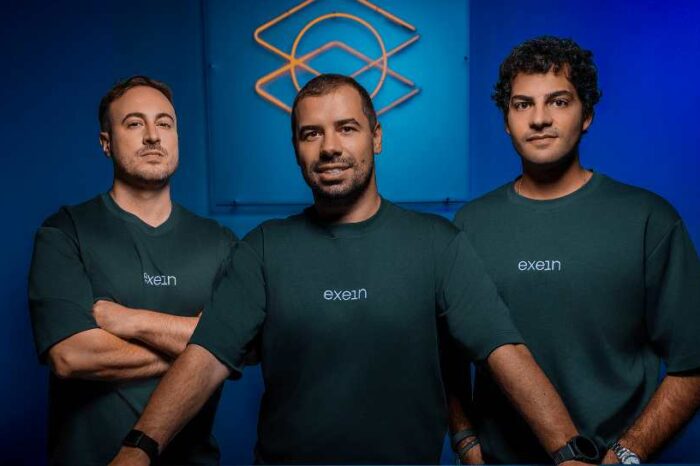
Eindhoven-based EUCLYD signed a Series A financing of more than €200 million, co-led by Samsung, Somerset Capital Partners, the Scaleup Europe Fund managed by EQT, and Innovation Industries. EIFO, imec.xpand, Brabant Development Agency and Quadri also participated. Former ASML President and CEO Peter Wennink is joining as chairman.
EUCLYD is developing an AI infrastructure platform spanning specialized compute, memory architecture, and full data-center systems. Its roadmap includes a programmable ASIC platform called craftwerk and the craftwerk station CWS system.
The investment thesis is straightforward: increasingly capable foundation models require huge amounts of memory bandwidth and electricity when serving users. If model inference becomes one of computing’s largest workloads, improving per-token economics can create a semiconductor opportunity independent of which model provider wins.
That also gives EUCLYD a geopolitical angle. The company is based in one of Europe’s strongest semiconductor clusters and intends to target enterprise, hyperscale, and sovereign-AI deployments. Its investor roster combines semiconductor strategic capital, European growth funds and regional deep-tech investors.
Funding Details
Startup: EUCLYD
Investors: Samsung, Somerset Capital Partners, Scaleup Europe Fund/EQT, Innovation Industries, EIFO, imec.xpand, BOM, Quadri
Amount Raised: More than €200 million
Total Raised: Not disclosed
Funding Stage: Series A
Funding Date: September 15, 2026
Headquarters: Eindhoven, Netherlands
Sector: Semiconductors / AI infrastructure / data-center systems
Valuation: Not disclosed
ENCOS raises more than RMB300M to build the mechanical backbone of physical AI
Nanjing-based ENCOS raised more than RMB300 million in Series B financing from investors including CITIC Goldstone, Nice Group, Suzhou Innovation Investment, Huarui Investment, Nanjing Transportation and Huarui Venture Capital. Existing investors Fosun RZ Capital, Shenzhen Capital Group, Huakong Fund, Jinqiu Fund and Puhua Capital also continued backing the company.
ENCOS develops integrated robotic joint modules — the motor, reducer, drive electronics and related systems that determine how robots actually move. The company is widening its product line into intelligent batteries, communications modules, dexterous hands and force-feedback gloves.
That makes ENCOS an example of the component strategy in humanoid robotics. Investors don’t have to know which full-robot brand will dominate if they can own components used across many platforms.
The company’s move from individual joints toward complete motion and manipulation systems could also increase the value it captures from each robot sold. The risk is that robot manufacturers increasingly bring critical hardware in-house, turning today’s supplier opportunity into tomorrow’s vertical-integration battle.
Funding Details
Startup: ENCOS
Investors: CITIC Goldstone, Nice Group, Suzhou Innovation Investment, Huarui Investment, Nanjing Transportation, Huarui Venture Capital, Fosun RZ Capital, Shenzhen Capital Group and others
Amount Raised: More than RMB 300 million
Total Raised: Not disclosed
Funding Stage: Series B
Funding Date: September 15, 2026
Headquarters: Nanjing, China
Sector: Robotics / embodied AI/robot components
Valuation: Not disclosed
Nutshell Therapeutics raises tens of millions of dollars to attack difficult drug targets with AI and physics
Shanghai-based Nutshell Therapeutics, also known as Yudao Bio, raised tens of millions of dollars in a C1 round co-led by Trustbridge Capital and Decheng Capital. Dachen Caizhi and Zhongsheng Xichuang Dingqi Fund also participated.
The company combines machine learning with physics-based modeling to study changes in protein conformation and identify druggable sites that traditional approaches can miss. Its internal AlloMatrix database and AlloStar platform support drug design across oncology, central nervous system disease, autoimmune conditions, and metabolic disease.
What sets this apart from many AI drug-discovery financings is clinical progression. Nutshell says its p53 Y220C candidate Dalretapopt is advancing through an international Phase I program and moving toward Phase II, while another program targeting NRF2 is planned for Phase I testing in China and the U.S. during the fourth quarter. Those milestones now put the company’s algorithms in contact with the test that matters most in biotech: human clinical outcomes.
The company reports nearly 20 internally developed programs. That breadth can demonstrate platform repeatability if multiple candidates progress, but biotech history also shows that computational sophistication does not eliminate biological failure.
Funding Details
Startup: Nutshell Therapeutics / Yudao Bio
Investors: Trustbridge Capital, Decheng Capital, Dachen Caizhi, Zhongsheng Xichuang Dingqi Fund
Amount Raised: Tens of millions of U.S. dollars
Total Raised: Not disclosed
Funding Stage: Series C1
Funding Date: September 15, 2026
Headquarters: Shanghai, China
Sector: AI biotechnology/drug discovery
Valuation: Not disclosed
Yincheng Intelligence raises nearly RMB100M after landing a major logistics-robot order
Shanghai-based Yincheng Intelligence raised nearly RMB100 million in Series A funding, co-led by Huamintou and Shanghai Semiconductor Industry Investment, with existing investor DT Capital increasing its position.
The company is building general-purpose picking robots for logistics environments where parcels vary widely in shape, material and condition. Founder Pu Qunyan previously studied at Fudan University and Carnegie Mellon and worked at Google and autonomous-delivery company Nuro before founding Yincheng in 2023.
The round is particularly interesting because financing arrives alongside commercial validation. Yincheng says it has signed an RMB100 million-class order with SF Express for package-feeding operations in express distribution centers and plans to deploy thousands of robots over the coming two years.
That is the kind of milestone the physical-AI sector needs. Robot demonstrations are easy to admire; operating continuously in logistics facilities with real labor economics is harder. Yincheng reports that its Starborn robot can handle 1,800 items per hour and achieve a 1-to-1.5-year payback period, although those performance figures are company claims rather than independently audited data.
Funding Details
Startup: Yincheng Intelligence
Investors: Huamintou, Shanghai Semiconductor Industry Investment, DT Capital
Amount Raised: Nearly RMB 100 million
Total Raised: Not disclosed
Funding Stage: Series A
Funding Date: September 15, 2026
Headquarters: Shanghai, China
Sector: Robotics/logistics automation / physical AI
Valuation: Not disclosed
Kangwei Vision raises nearly RMB100M as AI servers force tighter semiconductor inspection
Shenzhen-based Kangwei Vision raised nearly RMB100 million in a Pre-Series A round led by Nanjing Jingzhida Qingyuan Investment Fund. Chuanshang Fund and existing investor Qinyuan Capital also participated.
Kangwei builds optical-inspection equipment for advanced semiconductor and printed-circuit-board manufacturing. Its product line includes pure 3D automated optical inspection, hybrid 2D/3D systems, microvia inspection and final appearance inspection.
The timing of the round is closely tied to AI infrastructure. Higher-density AI computing boards use finer wiring, more layers and increasingly complex packaging. That raises quality-control requirements and shifts inspection from conventional 2D methods toward three-dimensional measurement.
Kangwei started shipping its own equipment at scale in 2024 and is using the financing to expand production capacity, engineering and its next generation of products. This is a classic second-order AI investment: more compute demand increases the need for equipment that verifies the physical hardware before it reaches a data center.
Funding Details
Startup: Kangwei Vision
Investors: Nanjing Jingzhida Qingyuan Investment Fund, Chuanshang Fund, Qinyuan Capital
Amount Raised: Nearly RMB 100 million
Total Raised: Not disclosed
Funding Stage: Pre-Series A
Funding Date: September 15, 2026 announcement; closing date not separately disclosed
Headquarters: Shenzhen, China
Sector: Semiconductor equipment / optical inspection / AI hardware supply chain
Valuation: Not disclosed
Starroad raises more than $10M as HSBC backs digital wealth infrastructure
Hong Kong-based Starroad Financial Technology raised more than $10 million in an A+ strategic financing involving HSBC and People’s Capital.
Starroad provides digital wealth-management infrastructure for banks, securities firms, family offices, fund managers, insurance intermediaries and other institutional customers. Alongside the financing, it introduced Finterprise, a treasury and investment platform aimed at Hong Kong-registered small and mid-sized companies.
HSBC’s strategic involvement is more interesting than the nominal round size. Financial infrastructure startups often struggle with distribution and institutional trust. A major bank on the cap table could potentially address both if the commercial relationship develops beyond the investment.
Starroad says it will increase spending on AI, conventional financial technology and tokenized real-world assets. That puts the company at the intersection of two trends in Hong Kong: the digitization of traditional wealth management and regulatory experimentation around tokenized financial assets.
Funding Details
Startup: Starroad Financial Technology
Investors: HSBC, People’s Capital
Amount Raised: More than $10 million
Total Raised: Not disclosed
Funding Stage: Series A+ strategic financing
Funding Date: September 15, 2026
Headquarters: Hong Kong
Sector: Fintech/wealth management/enterprise financial software
Valuation: Not disclosed
DeepKernel raises tens of millions of yuan to build sovereign AI infrastructure
Chinese AI infrastructure startup DeepKernel raised tens of millions of yuan in Seed financing led by Shunwei Capital, with L2F joining the round.
DeepKernel’s thesis is that companies should be able to use external models and rented computing infrastructure without surrendering control over proprietary data, agent activity, or the organizational knowledge generated through repeated AI use.
Its proposed architecture spans trusted compute, agent-learning infrastructure, and interoperability. The compute layer uses cryptography, trusted hardware and distributed systems to let organizations verify where and how AI workloads execute. The learning layer is intended to keep the value created from an enterprise’s agent activity under that enterprise’s control.
The idea sits directly inside the sovereign-AI debate, but at the company level rather than the national level. Enterprises increasingly want the best available models while limiting how much proprietary operational context flows back to model or cloud providers.
DeepKernel says its core engineering team works closely with Tsinghua University’s InspiringGroup and is already collaborating with cloud, data-space, and world-model companies. Those commercialization claims remain early, but Shunwei’s Seed investment shows that trusted AI infrastructure is becoming a fundable category of its own.
Funding Details
Startup: DeepKernel
Investors: Shunwei Capital, L2F
Amount Raised: Tens of millions of RMB
Total Raised: Not disclosed
Funding Stage: Seed
Funding Date: September 15, 2026
Headquarters: China; exact headquarters not disclosed in the funding announcement
Sector: Sovereign AI / trusted computing / AI infrastructure
Valuation: Not disclosed
Yoom raises ¥700M in its first outside round to automate enterprise workflows with AI agents

Image Credit: Japan Times
Tokyo-based Yoom raised ¥700 million in its first external financing from DUAL BRIDGE CAPITAL, Mizuho Capital, Shizuoka Capital, Harizury and Canon Marketing Japan’s venture fund, which is managed by Global Brain.
Yoom combines AI agents with rule-based automation so companies can connect people, software and agents inside longer business processes. The distinction matters because enterprises are discovering that an AI agent that can generate an answer differs from one trusted to complete a multi-step operational workflow.
The company says it has more than 70,000 registered users, runs more than five million automated tasks each month and connects with over 750 services. The financing will go into product development, additional integrations, hiring and go-to-market expansion.
The investor bet is effectively on orchestration. If companies deploy many AI agents, models, and SaaS systems, software that determines how those pieces interact — and where humans still have to approve a decision — may become more valuable than any one agent.
Funding Details
Startup: Yoom
Investors: DUAL BRIDGE CAPITAL, Mizuho Capital, Shizuoka Capital, Harizury, Canon Marketing Japan Future Investment Fund
Amount Raised: ¥700 million
Total Raised: ¥700 million of disclosed external capital
Funding Stage: First external financing; formal round label not disclosed
Funding Date: September 15, 2026
Headquarters: Tokyo, Japan
Sector: Enterprise AI/workflow automation / iPaaS
Valuation: Not disclosed
Circuits Integrated Hellas raises undisclosed pre-seed funding to commercialize Ka-band satellite chips
Athens-based Circuits Integrated Hellas disclosed a pre-seed investment from deep-tech investor Evercurious VC to support commercialization of its CI-ONE semiconductor family. The company announced the financing at 11 p.m. ET on September 14; it said the investment itself closed in July. Financial terms were not disclosed.
CIH’s CI-ONE products combine a power amplifier and high-speed switch into one compact module for Ka-band satellite communications. The company is transitioning from a semiconductor design-services business toward selling proprietary components.
That transition can materially change a semiconductor company’s economics. Design services produce revenue but scale with engineering capacity. A successful repeatable chip product can be sold across many satellite terminals without recreating the design from scratch for every customer.
CIH says its modules reduce component footprint and cost relative to conventional discrete configurations and is targeting commercial satellite broadband, defense communications, and emergency connectivity. Its broader portfolio also includes technology combining silicon with gallium arsenide and gallium nitride for phased-array antennas.
Funding Details
Startup: Circuits Integrated Hellas
Investors: Evercurious VC
Amount Raised: Not disclosed
Total Raised: Not disclosed
Funding Stage: Pre-seed
Funding Date: Announced September 14, 2026; investment closed in July 2026
Headquarters: Athens, Greece
Sector: Semiconductors/satellite communications / RF technology
Valuation: Not disclosed
Ocean raises Series A funding as Japan rewrites tax-free shopping
Tokyo-based Ocean completed the first close of its Series A round from existing investors Z Venture Capital, Delight Ventures and Bluefin Partners, joined by new investors ONE-JAPAN Tourism Fund and Dual Bridge Capital. The amount was not disclosed.
Ocean operates Ocean Tax Refund, infrastructure that handles tax-free shopping for international visitors. The timing matters because Japan is scheduled to switch its consumption-tax exemption system in November 2026 from tax-free sales at checkout to a refund-based model.
That forces retailers to change checkout processes, refund operations, multilingual communications and integrations with payments and point-of-sale systems at essentially the same time. Regulatory deadlines can create unusually strong startup distribution windows because customers must change an existing process whether they want to or not.
Ocean says it has already received applications from merchants around Japan and established relationships with inbound-tourism companies, financial institutions, and POS providers. It plans to use the Series A to support merchant migration and expand from refund processing into marketing and repeat-visitor services.
Funding Details
Startup: Ocean
Investors: Z Venture Capital, Delight Ventures, ONE-JAPAN Tourism Fund, Dual Bridge Capital, Bluefin Partners
Amount Raised: Not disclosed
Total Raised: Not disclosed
Funding Stage: Series A first close
Funding Date: September 15, 2026
Headquarters: Tokyo, Japan
Sector: Fintech / retail infrastructure/travel technology
Valuation: Not disclosed
What Today’s Funding Activity Reveals
The first signal is that AI infrastructure is fragmenting into specialized layers. EUCLYD addresses inference compute and memory. Kangwei Vision addresses manufacturing inspection for advanced computing boards. DeepKernel addresses trusted execution and organizational control. Yoom addresses workflow orchestration. These companies sit in very different markets, yet each benefits as AI deployment volume rises.
The second signal is physical AI moving from demonstrations toward supply chains and operating economics. ENCOS is selling the joints and manipulation components. Yincheng is putting robots into logistics operations and says it has already won an RMB100 million-class order from SF Express. The important metric for robotics is slowly changing from how impressive a machine looks on stage to how many hours it operates, how quickly customers recover the purchase price, and how much proprietary real-world data those deployments generate.
Third, China is unusually dominant in today’s qualifying set. Five mainland Chinese companies and one Hong Kong company appear among the 10. That is partly a function of this morning’s cutoff, but sector concentration matters too: mainland capital is actively financing robot components, robot applications, chip inspection, trusted AI systems and computational drug discovery at the same time.
Fourth, the semiconductor opportunity is broadening. EUCLYD wants to redesign the compute system. Kangwei Vision makes the equipment needed to inspect increasingly complicated boards. CIH is commercializing satellite RF chips. A semiconductor boom can therefore finance multiple layers simultaneously — silicon architecture, manufacturing equipment, packaging, test and end-market components.
Fifth, software investors are becoming more interested in control surfaces. Yoom controls how agents and systems execute workflows. DeepKernel wants enterprises to retain authority over what their models see and what their agents learn. Ocean controls a regulatory process retailers will soon have to redesign. Starroad sits inside institutional financial workflows. These companies become more defensible when replacing them means rebuilding integrations, permissions, and operating processes rather than switching one AI model for another.
The one deal that cuts across nearly all those themes is Nutshell Therapeutics. AI is important to its discovery engine, but ultimately its value depends on molecules, patients, and clinical outcomes. That is a healthy reminder for investors: in industries where AI interacts with the physical or biological world, the final benchmark exists outside the computer.
Comparative Funding Table
| Startup | Amount Raised | Sector | Funding Stage | Lead/Key Investors | Country |
|---|---|---|---|---|---|
| EUCLYD | €200M+ | AI semiconductors/infrastructure | Series A | Samsung, Somerset, Scaleup Europe Fund/EQT, Innovation Industries | Netherlands |
| ENCOS | RMB300M+ | Robotics / embodied AI hardware | Series B | CITIC Goldstone, Suzhou Innovation Investment, Huarui + others | China |
| Nutshell Therapeutics | Tens of millions USD | AI biotech/drug discovery | Series C1 | Trustbridge Capital, Decheng Capital | China |
| Yincheng Intelligence | ~RMB100M | Logistics robotics / physical AI | Series A | Huamintou, Shanghai Semiconductor Industry Investment, DT Capital | China |
| Kangwei Vision | ~RMB100M | Semiconductor inspection equipment | Pre-Series A | Nanjing Jingzhida Qingyuan, Chuanshang, Qinyuan | China |
| Starroad | $10M+ | Wealthtech / fintech | Series A+ | HSBC, People’s Capital | Hong Kong |
| DeepKernel | Tens of millions RMB | Sovereign AI / trusted infrastructure | Seed | Shunwei Capital, L2F | China |
| Yoom | ¥700M | Enterprise AI/workflow automation | First external round | DUAL BRIDGE, Mizuho Capital, Canon Marketing Japan + others | Japan |
| Circuits Integrated Hellas | Not disclosed | Satcom semiconductors | Pre-seed | Evercurious VC | Greece |
| Ocean | Not disclosed | Tax-refund / retail fintech | Series A first close | Z Venture Capital, Delight Ventures, ONE-JAPAN Tourism Fund + others | Japan |
Strategic Takeaways for Founders and Investors
The most attractive AI opportunities increasingly sit one layer away from the model. EUCLYD is betting on inference economics. Kangwei Vision benefits from more complicated compute hardware. Yoom benefits from more agents. DeepKernel benefits from enterprises worrying about agent control. None needs to train the industry’s best general-purpose model to win.
Physical AI needs revenue evidence now. Yincheng Intelligence’s SF Express order matters more than another robot video. If robotics companies can demonstrate labor substitution, uptime, and payback periods in real facilities, they can move from speculative deep tech toward equipment economics customers already understand.
Component suppliers may offer a cleaner robotics bet than full humanoid companies. ENCOS can potentially sell joints, hands, and related systems across many robot architectures. In emerging hardware markets, supplying several competitors can sometimes provide better risk-adjusted exposure than guessing which integrated platform becomes dominant.
AI infrastructure is becoming a sovereignty issue at both national and corporate levels. EUCLYD is positioning European semiconductor capacity for sovereign workloads. DeepKernel is applying a similar concept inside individual companies by asking who owns the data and organizational intelligence created by agents. Sovereignty is turning from policy language into software and hardware budgets.
Enterprise workflow depth still matters. Yoom already connects more than 750 services. That integration work creates switching costs that a new agent with a stronger underlying model does not automatically erase. Founders should think carefully about what remains proprietary if model quality converges.
Regulatory change can create venture-scale distribution moments. Ocean has a hard deadline in November because Japanese retailers must adapt to a redesigned tax-refund system. The best regulatory-tech opportunities often arise when compliance creates mandatory customer behavior rather than merely another software preference.
AI biotech should increasingly be judged by clinical translation. Nutshell’s fundraising becomes more interesting because programs have moved into human trials. Computational elegance matters, but investors ultimately need evidence that better modeling produces better medicines.
Semiconductor startups need ecosystems, not just chips. Samsung backing EUCLYD, Evercurious financing CIH’s transition to products, and industrial capital surrounding Kangwei all illustrate how semiconductor commercialization depends on fabrication, packaging, customers, and manufacturing relationships. Technical IP by itself is rarely enough.
Conclusion
Today’s funding cycle has a noticeably different shape from the giant software rounds that have dominated much of 2026.
EUCLYD is raising more than €200 million to redesign AI inference infrastructure. ENCOS and Yincheng Intelligence are investing in the mechanical and operational layers of physical AI. Kangwei Vision is inspecting the hardware AI servers depend on. DeepKernel is trying to make enterprise intelligence verifiable and controllable. Yoom is wiring agents into actual corporate work. Nutshell Therapeutics is forcing AI’s promises to confront clinical biology.
The capital is still following AI, but the definition of an AI investment is widening.
The strongest bets this morning are increasingly on companies that own something AI growth makes scarce: efficient compute, precision manufacturing, robot hardware, real-world operating data, scientific datasets, trusted infrastructure or deeply integrated workflows.
That may be the more durable funding signal of the next phase of the AI cycle: intelligence itself is becoming easier to obtain; the systems required to turn it into reliable economic output are not