Nvidia’s $12.9 Billion Hugging Face Acquisition Looks Expensive. It May Actually Be Cheap
 Daniel Levi
Posted On September 4, 2026
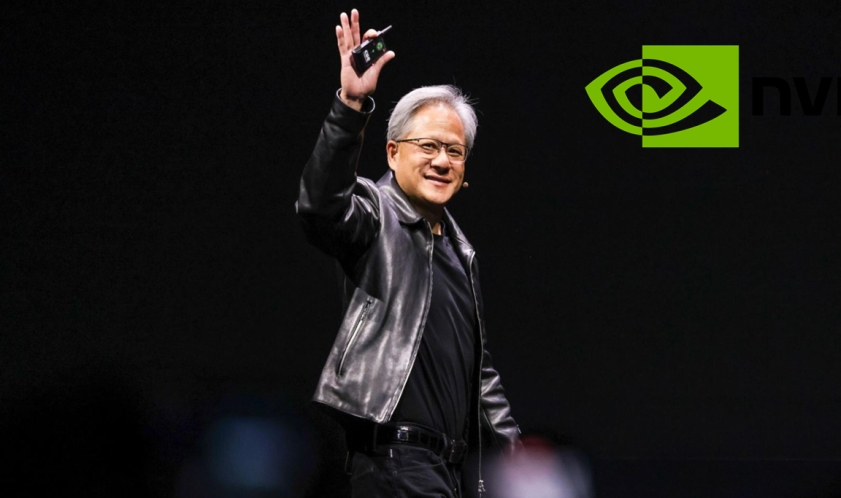
Yesterday, chip giant Nvidia confirmed it has agreed to acquire Hugging Face for $12.93 billion, making it the company’s second-largest acquisition after its $20 billion purchase of chipmaker Groq’s assets.
Nearly $13 billion is a staggering price for an AI startup reportedly generating about $150 million in annualized revenue. On that basis alone, Nvidia appears to be paying an eye-popping premium.
Nvidia CEO Jensen Huang told CNBC on Thursday that the nearly $13 billion valuation was what it took to fend off other bidders.
But that may be the wrong way to value Hugging Face.
Nvidia is not simply buying software, revenue, or a repository of AI models. It is buying access to more than 18 million users, millions of models and datasets, more than 200,000 companies, and one of the most established developer communities in artificial intelligence.
That changes the math.
Tech history has shown repeatedly that companies can spend billions building competitive products and still lose when they fail to secure the developers, users, and ecosystem around them. Microsoft learned that lesson with Windows Phone. BlackBerry learned it too. Apple and Google, meanwhile, built mobile empires around ecosystems that became extraordinarily difficult to dislodge.
Nvidia appears determined not to repeat the losers’ mistake.
Seen through that lens, $12.93 billion looks less like an extravagant acquisition price and more like the cost of buying something Nvidia could struggle to build at any price: an established AI ecosystem with its own network effect.
What Nvidia is really buying
Hugging Face has become one of the places AI developers go to build, share, discover, and run models. More than 18 million people use the platform, which hosts more than 3 million models and 500,000 datasets. More than 200,000 companies use it, according to Nvidia.
Those numbers are impressive. The relationships connecting them are worth far more attention.
The strategic connection to Nvidia is unusually direct. Huang told CNBC that half of Nvidia’s business is “really largely driven by open models.” He said Nvidia itself is the largest contributor of open models in the world “by far.”
That makes Hugging Face far more than a large developer community sitting somewhere adjacent to Nvidia’s business. It sits directly inside an ecosystem Huang says already drives a huge share of the company’s business.
Developers upload models since other developers are already there. More models attract more users. More users attract companies building AI products. Those companies create demand for tools, infrastructure, and integrations, giving developers more reasons to stay.
Each group makes the platform more useful to the next.
That is the classic network effect, and tech history offers plenty of evidence that such an advantage is hard to reproduce once it reaches scale.
Nvidia has the money and engineering talent to build a technically impressive Hugging Face competitor. It could hire thousands of engineers, subsidize hosting, offer developers cheap or free GPU access, and spend billions trying to persuade the AI community to move.
None of that guarantees the community would follow.
Technology can be built. An ecosystem has to form.
That is the part of Hugging Face Nvidia cannot simply manufacture inside a data center. Features can be replicated. Engineers can be hired. Infrastructure can be purchased.
Years of developer behavior, relationships, contributions, and habits are different.
Nvidia could build another Hugging Face platform.
What it can’t easily build is another Hugging Face ecosystem.
Microsoft figured out the value of that distinction years ago.
Microsoft had already seen this movie
In 2018, Microsoft acquired GitHub for $7.5 billion. At the time, more than 28 million developers were using the platform to share code and work together across more than 85 million repositories.
Microsoft was not paying billions for a place to store code. GitHub had become a gathering place for software developers, from independent programmers to teams inside some of the largest companies on the planet.

Microsoft CEO Satya Nadella with members of GitHub’s team in 2018, when Microsoft acquired the developer platform for $7.5 billion.
Microsoft was explicit about the community’s strategic importance.
As TechStartups reported when the acquisition was announced, Microsoft CEO Satya Nadella said:
“Microsoft is a developer-first company, and by joining forces with GitHub we strengthen our commitment to developer freedom, openness and innovation,” said Satya Nadella, CEO, Microsoft. “We recognize the community responsibility we take on with this agreement and will do our best work to empower every developer to build, innovate and solve the world’s most pressing challenges.”
That language looks striking eight years later.
Microsoft was not describing GitHub merely as a software asset. Nadella was talking about developers, openness, community and the responsibility that came with owning one of the places where millions of programmers already worked and collaborated.
GitHub gave Microsoft a direct position inside an enormous developer network that had already reached critical mass. Microsoft did not have to persuade tens of millions of developers to abandon GitHub for a new Microsoft-built alternative. It acquired the platform they were already using.
Nvidia may now be making a similar calculation with Hugging Face.
Why spend years trying to build another place for AI developers to gather when millions of them have already gathered somewhere else?
Sometimes the smarter move is to buy the place where the developers already live.
Apple and Google showed what happens next
The smartphone era offers an even bigger lesson.
When Apple opened the App Store in 2008, it turned the iPhone into far more than a piece of hardware. Developers suddenly had a direct way to put software into the hands of iPhone users. The App Store launched with more than 500 native applications. Three days later, users had downloaded more than 10 million apps.
Google saw the same opportunity with Android. Android Market, which later became Google Play, gave developers a distribution channel across a growing number of Android devices from multiple manufacturers.
The result was a self-reinforcing loop.
More users attracted more developers. More developers produced more apps. A larger selection of apps made the phones more attractive to consumers, bringing in still more users.
Apple and Google were no longer competing with phones alone. They were competing with entire ecosystems.
Once those ecosystems reached scale, any challenger had to offer more than a good operating system or an impressive device. It had to convince developers to spend time building for another platform and convince consumers that enough developers would follow.
Two famous technology companies would soon discover just how hard that was.
Windows Phone and BlackBerry learned the hard way
Microsoft had almost everything a company could want entering the smartphone fight: billions of dollars, one of the biggest software businesses on Earth, deep relationships with developers and enterprises, and a globally recognized operating system.
It still could not crack mobile.
Windows Phone earned praise for its design, and Microsoft spent heavily trying to make it a contender. The company went so far as to acquire substantially all of Nokia’s Devices and Services business in 2014, betting that tighter control over hardware and software could accelerate adoption.
By July 2015, the strategy had unraveled badly enough that Microsoft announced up to 7,800 job cuts, primarily in its phone business, and a roughly $7.6 billion impairment charge tied to the Nokia acquisition.
The financial loss tells only part of the story.
By then, developers were focusing on iOS and Android, where users already were. Consumers wanted the apps they used every day, and developers wanted the platforms with the largest audiences.
The missing piece was not simply hardware.
Apple and Google had already built powerful developer ecosystems around iOS and Android. Each side reinforced the other: more users attracted more developers, more developers produced more apps, and more apps attracted more users.
Windows Phone was fighting a network effect that money alone could not reverse.
BlackBerry ran into a similar problem.
The company had once defined the smartphone for executives and businesses, yet the market changed around it. The smartphone became less about the device itself and more about what users could do after buying it. Apps became part of the product.
BlackBerry explicitly told investors in an SEC filing that “an application-rich ecosystem is critical to succeeding in the mobile smartphone and tablet marketplace.”
BlackBerry and Microsoft made plenty of other strategic and execution mistakes, so it’s too simple to blame their decline solely on developers. The app ecosystem gap became one of the hardest problems either company had to solve.
The flywheel that helped Apple and Google worked against their challengers:
Fewer users attracted fewer developers. Fewer developers meant fewer apps. A weaker app selection made the platform less appealing to new users.
Microsoft had enough money to buy Nokia.
It could not buy its way back to the starting line once developers had chosen where they wanted to build.
Nvidia is paying to avoid the same trap
That history makes Nvidia’s $12.93 billion bet on Hugging Face look very different.
Nvidia could create its own model repository. It could build developer tools, offer cloud infrastructure and pour billions into recruiting AI researchers and startups.
The harder question is whether millions of developers would move there.
Hugging Face has already crossed that bridge. Its users have spent years uploading models, publishing datasets, creating applications, and building workflows around the platform. Companies have integrated it into their AI work. Developers know where to find it, how to use it, and what to expect there.
Nvidia is buying all of that at once.
It is buying years.
It is buying developer attention.
It is buying distribution.
Most of all, it is buying a network effect before someone else does.
That last point may explain why Huang was willing to outbid rival suitors. Nvidia’s risk was not merely losing Hugging Face. The bigger risk was watching a competitor acquire one of AI’s largest developer communities and gaining a strategic position between Nvidia and the developers whose workloads drive demand for its chips.
Seen from that perspective, Nvidia may not be asking whether Hugging Face itself can generate a $12.93 billion return.
It may be asking a much bigger question:
What could it cost Nvidia over the next decade if somebody else owned the ecosystem?
Hugging Face does not have to repay $12.93 billion by itself
That may be the biggest mistake in looking at this acquisition through a traditional valuation lens.
If Nvidia were buying Hugging Face purely for its current revenue, the price would look difficult to defend. Nvidia is buying something that sits much closer to the source of future AI demand.

Hugging Face gives developers a place to discover models, experiment with them, fine-tune them, share them, and build products around them. Many of those workloads eventually require compute.
Nvidia sells the compute.
That means the financial return from Hugging Face doesn’t have to stay entirely inside Hugging Face.
A developer might discover a model on Hugging Face, test it, build an application around it, and later need hundreds or thousands of GPUs to train or run that application at scale. A company may use Hugging Face tools and later buy Nvidia systems or rent Nvidia-backed infrastructure from a cloud provider.
The value can flow downstream.
That makes Hugging Face less like a conventional software acquisition and more like strategic infrastructure sitting higher in Nvidia’s own economic chain.
It gives Nvidia a closer view of what developers are building, which models are gaining traction, and where AI workloads may be heading next. It gives the company a stronger position inside an open-model ecosystem that already drives a large share of AI activity.
The return on the acquisition may show up in places that never carry the Hugging Face name.
If Hugging Face helps Nvidia sell more GPUs, networking gear, systems, and AI infrastructure over the next decade, the $12.93 billion purchase price looks very different.
The price of an AI ecosystem
Tech history offers a simple lesson.
Microsoft paid $7.5 billion for GitHub and gained a place inside one of the largest software developer communities on Earth.
Apple and Google built mobile ecosystems that grew stronger as more developers and users joined.
Microsoft and BlackBerry found themselves fighting those ecosystems from the outside and discovered how difficult that battle can become once developers have already chosen where they want to build.
Nvidia appears to be taking a different route.
Rather than waiting for the AI developer ecosystem to harden around someone else, it is buying one of its most important gathering places now.
That may be the better way to judge the $12.93 billion price tag.
Nvidia is paying for Hugging Face today, but it is getting years of developer adoption, millions of users, millions of models and datasets, corporate relationships, distribution, and a network effect it no longer has to build from scratch.
From that perspective, Nvidia’s biggest risk may not have been paying too much for Hugging Face.
It may have been letting someone else buy it.

Hugging Face