Verkada surges to $5.8B valuation as Alphabet’s CapitalG doubles down on AI-driven physical security
 Nickie Louise
Posted On December 3, 2025
Nickie Louise
Posted On December 3, 2025

Verkada has picked up fresh backing from Alphabet’s growth fund, CapitalG, lifting the San Mateo–based startup’s valuation to $5.8 billion, the company announced Wednesday. The new investment adds $1.3 billion to its valuation from nine months ago and lands as the company crosses $1 billion in annualized bookings — a milestone that speaks to the size of the physical security market and the pace at which software-driven models are reshaping it.
CEO Filip Kaliszan framed the moment as a sign of how far the company has come since its early camera systems. “AI is fundamentally transforming how organizations protect people and places, and we’re leading that transformation,” he said in the announcement. Verkada’s footprint has grown to more than 2 million connected devices in 171 countries.
Those deployments now handle 2 million visitors per month, manage 8 million door lock events per day, and route about three intercom calls per second. For a sector long tied to legacy hardware, those numbers point to a shift in how physical spaces are monitored and managed.
Alphabet’s CapitalG invests in Verkada, boosting AI security startup’s valuation to $5.8B
CapitalG general partner Derek Zanutto said the firm sees Verkada becoming a core layer inside buildings where security and operations run through the same unified system. “By infusing AI-driven intelligence into an industry long constrained by legacy, fragmented systems, Verkada has transformed security from a static cost center into a dynamic source of operational insights and efficiency,” he said. The firm’s investment will also give Verkada employees a chance to take some equity off the table, a move that often signals confidence in a startup’s long-term prospects while recognizing the work of early teams.
The funding arrives after a stretch of product updates that saw Verkada roll out more than 60 new AI and cloud features, including “AI-Powered Unified Timeline” and “Operator View,” which bring agentic tools into the security workflow. Verkada has been building six product lines — cameras, access control, sensors, alarms, workplace tools, and intercoms — all tied to a single cloud platform. The company says the goal is to make security systems easier to manage while giving operators immediate context across devices during incidents.
This moment also comes with history. TechStartups covered the company back in 2022 when it raised $205 million at a $3.2 billion valuation. A year before that, the startup dealt with a major breach involving access to 150,000 surveillance cameras. A hacker group gained control through a “Super Admin” account, exposing live feeds and archived footage across customer deployments. That incident pushed Verkada to overhaul its internal controls and strengthen its security practices — steps that investors and customers have closely watched.
Even with that setback, the company pressed forward and continued to attract large enterprises, schools, hospitals, and public-sector customers. Its growth curve suggests strong product-market fit in a market estimated at more than $60 billion. For companies with large physical footprints, the shift from isolated hardware to connected systems has become less of a luxury and more of an operational requirement.
Kaliszan said the company is still in the early stages of its long-term plans. “Our work is just getting started,” he added, emphasizing the long runway Verkada sees across sensors, software, automation, and building operations.
The new funding gives Verkada more room to deepen its AI-driven workflows while scaling its global footprint. For a category that rarely sees this level of valuation movement, the bet from CapitalG signals a broader shift: physical security is merging with cloud software and AI at a pace that’s beginning to redefine how buildings operate from the inside out.
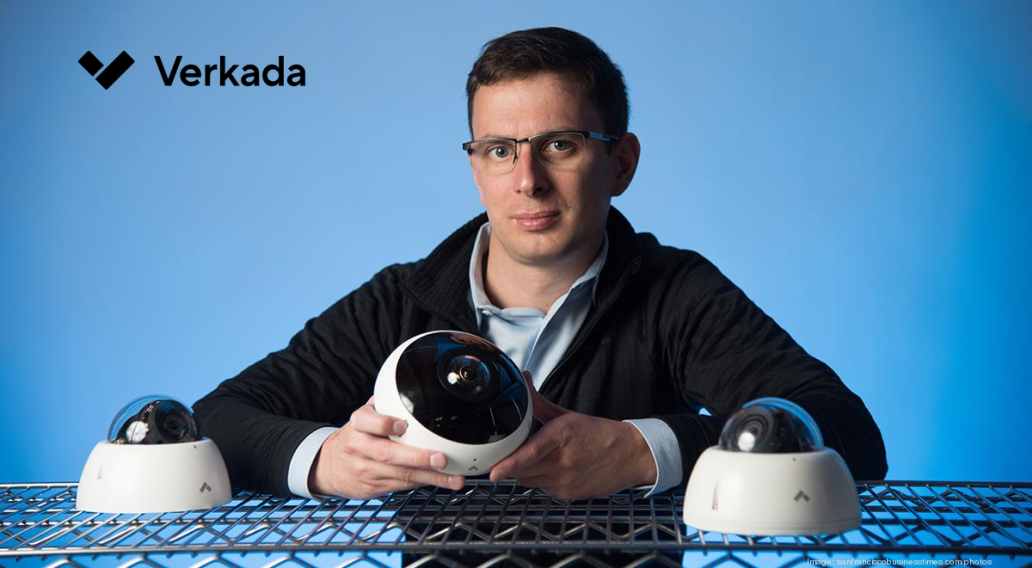
Verkada CEO Filip Kaliszan