Startup Funding News Today, November 25, 2026: Zipher, Peak Energy, Atomqubic, Dante Security & More
 Nickie Louise
Posted On November 25, 2026
The next wave of AI investment is creating opportunities far beyond the companies building models. Venture investors are financing startups that can cut cloud computing costs, supply electricity to data centers, provide AI agents with better scientific training data, and hold autonomous software accountable to the people deploying it.
Enterprise data startup Zipher led today’s selection with a $45 million Series A, part of a $53 million funding disclosure. Peak Energy added an estimated $24 million in equity to its Series B for grid-scale battery storage, while Chinese quantum computing startup Atomqubic announced an angel round exceeding RMB 100 million. Two more investments in scientific AI and enterprise security illustrate how AI adoption can create demand for entirely different kinds of infrastructure.
The 10 selected announcements represent $111 million in dollar-denominated equity rounds and extensions, alongside two Chinese financings of over and nearly RMB 100 million respectively, and A$7.75 million for an Australian health technology company. Separately disclosed debt facilities totaling $40 million are excluded from that equity figure. Rialto’s $5 million seed round was first publicized now but closed earlier in 2026, so the subtotal measures disclosed financing rather than money that necessarily changed hands during the past day.
The Macro Environment: AI Adoption Creates New Infrastructure Bills
The economics of deploying AI have become a business opportunity in their own right. Zipher is tackling the cost of running the data workloads that autonomous software generates, while Peak Energy wants to address the electricity constraints that can limit data center expansion. The two companies operate in very different industries, yet both could benefit from growing demand for AI computing capacity.
Security is another expense that grows as AI becomes more useful. Dante Security is betting that companies will need a way to identify the humans responsible for automated actions. Its investment illustrates why successful AI deployment requires more than access to a model: organizations must be able to govern the software as it interacts with real systems and sensitive information.
There is a separate investment case for technologies that are difficult to reproduce. Atomqubic is developing quantum processors and the optical links that could connect them, while Leash Biosciences generates experimental data through physical laboratory work. Neither can rely solely on advances in general-purpose AI models. Their advantage, if demonstrated, would come from engineering and data that competitors cannot easily replicate.
The financing structures also deserve attention. Peak Energy and Sooner paired equity with debt suited to their operating models. That is economically different from using venture capital to finance every manufactured battery or every customer loan. Investors should assess the quality of the underlying customer commitments and assets, rather than mistake a large financing package for proof of profitability. A single day’s announcements do not establish a change in interest rates, exit conditions, or the broader venture market.
Zipher raises $45 million in funding to automate enterprise data infrastructure
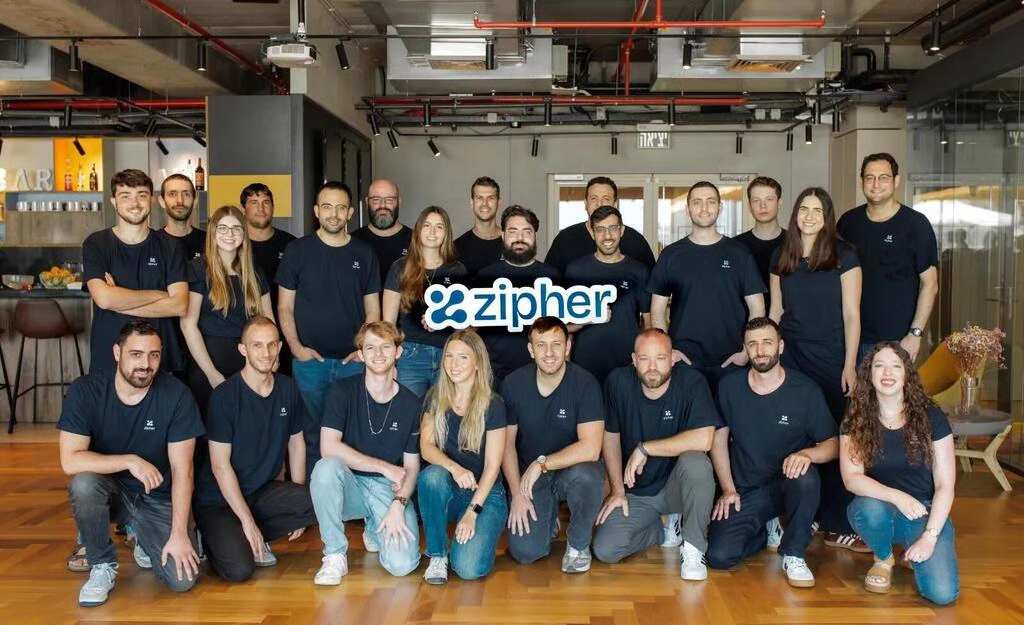
Zipher has emerged from stealth with $53 million in financing disclosed across its seed and Series A rounds. The newest round is a $45 million Series A co-led by Maor Investments and Glilot Capital, with existing investor TLV Partners returning. The remaining $8 million came from its August 2024 seed round, CTech reports. The company’s own announcement reports the combined figure.
The startup is building software that decides how corporate data-processing jobs should run across cloud platforms. Rather than requiring engineers to select resources for each workload, Zipher uses AI to choose computing configurations within customer-defined cost and performance constraints. It supports the three major public clouds.
The pitch has a clear economic basis: as companies automate more tasks, data processing volume can increase faster than the number of employees managing it. Zipher could benefit from that imbalance without competing directly with the model developers whose products generate the workloads.
In Zipher’s announcement, Hertz, a customer, reported computing-cost savings of 25% to 40%, depending on the workload. The financing will support product development and international sales. The next challenge is proving that those savings remain consistent across different customer environments without sacrificing reliability. Cloud providers’ own optimization tools are a natural competitive threat.
Funding Details
Startup: Zipher
Investors: Maor Investments and Glilot Capital (co-leads); TLV Partners
Amount Raised: $45 million in Series A; $53 million combined disclosure
Total Raised: $53 million
Funding Stage: Series A
Funding Date: November 24, 2026
Headquarters: New York, United States; offices in Tel Aviv, Israel
Sector: AI infrastructure/enterprise data management
Valuation: Not disclosed
Peak Energy raises an additional $24 million in equity to expand battery manufacturing
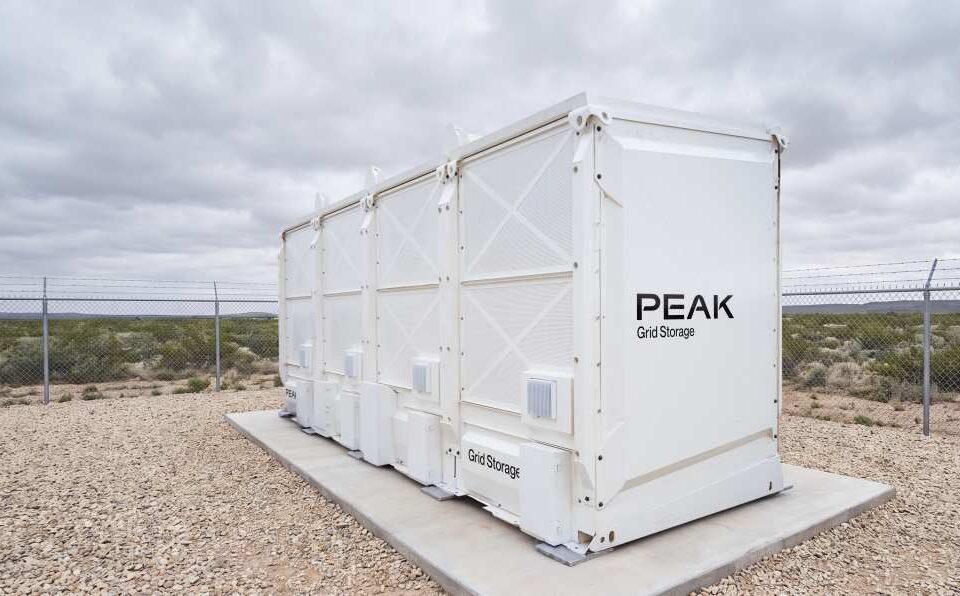
Peak Energy increased its Series B financing to $157 million. The package now consists of $132 million in equity and a $25 million debt facility from HSBC. Compared with its $108 million Series B announced in October, the latest disclosure implies $24 million in additional equity and $25 million in new debt. Today’s selection counts only the equity increment.
Peak develops sodium-ion energy storage systems for large electricity users and the grid. Its technology relies on passive cooling, an approach intended to reduce operating and maintenance costs. The company is preparing to expand domestic manufacturing and begin commercial deliveries in 2027.
Peak says it has more than $2.5 billion in customer agreements. That figure is not recognized revenue, and the announcement does not indicate how much of the backlog is firm and non-cancellable. Nevertheless, it explains why investors are financing manufacturing capacity rather than simply another research program.
The strategic interest is notable: General Motors Ventures led the original Series B, joined by industrial and technology investors. Additional funding from existing equity holders and a bank facility shows how hardware startups can reserve ownership capital for manufacturing and product development while using debt for eligible delivery costs. The main risks are production yield, installation economics, and converting customer commitments into profitable shipments.
Funding Details
Startup: Peak Energy
Investors: Existing shareholders (extension participants not individually identified); General Motors Ventures led the original Series B, joined by Maverick Silicon, Infinite Capital, Eclipse, Xora Innovation, and LG Technology Ventures; HSBC provides debt
Amount Raised: $24 million additional equity, calculated from disclosed round totals; $25 million separate debt facility
Total Raised: $197 million in identified equity rounds (calculated); excludes debt
Funding Stage: Series B extension
Funding Date: November 24, 2026
Headquarters: Burlingame, California, United States
Sector: Energy storage/grid and data center infrastructure
Valuation: Not disclosed
Atomqubic raises over RMB 100 million to develop distributed quantum computers
Shanghai-based Atomqubic announced an angel financing exceeding RMB 100 million, co-led by Legend Star and the Shanghai Future Industry Fund. Other backers include Beijing Zhongguancun Capital, Jinyu Maowu, and additional Chinese investors. The company was founded in April 2026.
Atomqubic is developing a quantum computing architecture that combines neutral-atom quantum processors with optical connections between processors. The idea is to build a larger quantum system from interconnected modules rather than rely on one processor to accommodate all the required qubits.
The analogy with distributed conventional computing is useful, but quantum networking introduces a different set of physical constraints. Reliably moving quantum information, controlling errors, and demonstrating useful logical operations are more important milestones than the headline count of physical qubits. Atomqubic’s proposed route to larger systems remains a technical ambition, not proof that it has solved those problems.
The funding will support processor and interconnect development, commercialization work, and recruitment. The participation of both a venture firm and a regional industrial fund highlights the strategic importance China places on developing domestic frontier-computing capabilities. Investors are taking a long-term technical risk rather than financing an established mass market.
Funding Details
Startup: Atomqubic
Investors: Legend Star and Shanghai Future Industry Fund (co-leads); Beijing Zhongguancun Capital, Jinyu Maowu, and other investors
Amount Raised: More than RMB 100 million
Total Raised: Not disclosed separately
Funding Stage: Angel
Funding Date: November 25, 2026 (China local date)
Headquarters: Shanghai, China
Sector: Quantum computing / optical interconnects
Valuation: Not disclosed
Jiutian Chuangzhi raises nearly RMB 100 million to scale outdoor robots
Chinese robotics developer Jiutian Chuangzhi announced a nearly RMB 100 million Series A from Yidao Capital, Qingke Industrial Investment, and Nanshan Strategic Emerging Industry Investment. The Shenzhen company develops robots for large outdoor operating environments, with autonomous cleaning as a principal commercial application.
The company says its machines have reached nearly 100 cities and more than 20 countries and regions. Its products address a recurring maintenance expense for large properties and public spaces. Unlike a general-purpose humanoid robot, a cleaning machine has a specific task and a relatively identifiable customer budget.
That specialization could help the company build a dataset based on actual operating conditions. Rain, changing surfaces, pedestrians, and crowded outdoor spaces create problems that controlled demonstrations cannot fully reproduce. Deployments can improve the software, but a large fleet also brings servicing costs and operational responsibilities.
The proceeds will support its robot platform, AI development, manufacturing, and overseas expansion. For investors, the most informative milestones will be equipment uptime, labor savings, maintenance costs, and repeat customer purchases, not the number of demonstrations alone.
Funding Details
Startup: Jiutian Chuangzhi
Investors: Yidao Capital, Qingke Industrial Investment, Nanshan Strategic Emerging Industry Investment
Amount Raised: Nearly RMB 100 million
Total Raised: Not disclosed
Funding Stage: Series A
Funding Date: November 25, 2026 (China local date)
Headquarters: Shenzhen, China
Sector: Robotics / outdoor industrial automation
Valuation: Not disclosed
Leash Biosciences raises $11 million in funding to train AI systems on real scientific data
Leash Biosciences raised $11 million in a financing co-led by Innovation Endeavors and Insight Partners. Axios identified it as a seed round at a $30 million post-money valuation, based on an interview with CEO Ian Quigley. The company previously announced a $9.3 million seed financing in 2024.
The Utah startup operates an automated laboratory that generates experimental measurements for evaluating scientific AI. According to Leash, its researchers have tested 6.3 million molecules and produced more than 44 billion measurements. Its training environments let AI systems make research decisions and receive feedback from physical experiments.
That approach addresses a weakness in applying general-purpose AI to science. Published papers and existing datasets may not contain the experimental results needed to teach a model how to choose its next experiment. A prediction that appears convincing can still fail when tested in the laboratory.
Leash intends to expand into additional biological assays and work with AI developers and drug companies. The investment case depends on the scientific relevance and reproducibility of its data, and whether customers will pay for better research outcomes. Measurement volume alone does not demonstrate improved clinical success or drug-discovery productivity.
Funding Details
Startup: Leash Biosciences
Investors: Innovation Endeavors and Insight Partners (co-leads)
Amount Raised: $11 million
Total Raised: $20.3 million across two identified rounds (calculated)
Funding Stage: Seed, according to Axios; the company announcement does not specify a stage
Funding Date: November 24, 2026
Headquarters: Salt Lake City, Utah, United States
Sector: Scientific AI infrastructure/biotechnology
Valuation: $30 million post-money (reported by Axios)
Intelligent Legal Solutions raises $11 million to automate private fund legal workflows
London-based Intelligent Legal Solutions (ILS) raised an $11 million Series A co-led by Aquiline and BlackFin Capital Partners, with Chicago Ventures and The LegalTech Fund participating. The financing brings total funding to $15 million.
Its ProVision software helps investment fund lawyers and their clients manage contractual obligations, side letters, and investor elections. The company combines rules-based processing with optional AI features that are subject to human review. That design reflects the consequences of errors in fund documentation, where a plausible but incorrect response can create substantial legal exposure.
ILS says its software has supported fundraises exceeding $900 billion, with more than 20 large law firms using the platform. That is the value of transactions supported, not revenue earned by ILS. The company plans to open U.S. offices and increase hiring across its product and commercial teams.
The investment reminds us that industry-specific software can remain valuable even as general-purpose AI tools improve. A product that becomes the shared record for lawyers and fund managers can accumulate integrations, process knowledge, and switching costs. The challenge is expanding beyond its initial workflow without compromising the reliability that attracts those customers.
Funding Details
Startup: Intelligent Legal Solutions (ILS)
Investors: Aquiline and BlackFin Capital Partners (co-leads); Chicago Ventures, The LegalTech Fund
Amount Raised: $11 million
Total Raised: $15 million
Funding Stage: Series A
Funding Date: November 24, 2026
Headquarters: London, United Kingdom
Sector: Legal technology / private markets software
Valuation: Not disclosed
Dante Security raises $10 million in funding to make enterprise AI agents accountable
Dante Security emerged from stealth with a $10 million seed round led by NFX, joined by Alpha Drive, Inovia, and private investors. Former Imperva executives Moshe Lipsker and Gabi Beyo, alongside entrepreneur Shai Feinberg, founded the startup.
Dante is building a system that identifies AI agents operating inside an organization and associates their activity with a responsible employee. The product is intended to help security teams reconstruct what happened when an automated task accesses sensitive information or performs an unexpected action.
Many organizations already have identity management and security monitoring tools. Agents complicate that model because they can initiate multiple actions using credentials belonging to a person or another service. The resulting commercial opportunity is to connect automated activity with meaningful ownership and evidence.
Dante’s advantage will depend on the quality of its integrations and its ability to detect activity without generating overwhelming alerts. Attribution also cannot replace appropriate permissions or human approval for high-risk actions. The round reflects confidence in a growing governance problem, not proof that this startup has established market leadership.
Funding Details
Startup: Dante Security
Investors: NFX (lead); Alpha Drive, Inovia, and private investors
Amount Raised: $10 million
Total Raised: $10 million disclosed
Funding Stage: Seed
Funding Date: November 24, 2026
Headquarters: Tel Aviv, Israel; New York presence
Sector: Cybersecurity / AI agent governance
Valuation: Not disclosed
WearOptimo raises A$7.75 million to advance continuous health monitoring

Australian health technology startup WearOptimo closed an A$7.75 million financing backed by Synthesis Capital through its venture fund and a dedicated investment vehicle managed for superannuation fund HESTA. Other new and existing shareholders also participated. The company plans a separate Series A in the future.
WearOptimo is developing wearable sensors that use tiny electrodes extending beneath the skin to collect physiological signals. Its first application is monitoring hydration and heat stress, with potential customers in sports and industrial safety. The company plans to combine those measurements with AI analysis.
Heat-related risk creates a clear use case for employers and professional sports organizations. Yet the economics of a medical or occupational monitoring product depend on reliable measurements, ease of use, and evidence that the information leads to better decisions. The startup must demonstrate these characteristics rather than assume a new sensor automatically creates a market.
The investment will finance further product development and commercial milestones through 2027. HESTA’s involvement via a specialist manager also provides an example of patient institutional capital entering early health technology development. No commercialization timeline or regulatory approval should be inferred from the funding alone.
Funding Details
Startup: WearOptimo
Investors: Synthesis Capital, including through a mandate for HESTA; other new and existing shareholders
Amount Raised: A$7.75 million (Australian dollars)
Total Raised: Not disclosed
Funding Stage: Early-stage financing ahead of a planned Series A; formal stage not disclosed
Funding Date: November 24, 2026
Headquarters: Brisbane, Australia
Sector: Medical technology / wearable biosensors
Valuation: Not disclosed
Sooner raises $5 million in equity to help UAE homebuyers finance deposits
Dubai-based fintech Sooner announced a $20 million seed financing package comprising $5 million in equity led by Nuwa Capital and a $15 million debt facility from Amwal Capital Partners. Other equity investors include 500 Global, Annex Investments, Plus VC, Serkal Group, Axeed Group, 21Ventures, and Iliad Partners.
Sooner’s service addresses the large upfront deposits that can prevent renters from becoming homeowners. On eligible Dubai properties, the company says buyers can make a 10% initial payment rather than the usual 20%, with the remainder repaid over five years under its Shariah-compliant structure.
The equity and debt serve distinct economic functions. Venture funding supports product development and operations; the debt facility helps finance the underlying lending activity. Counting the full $20 million as venture equity would overstate the investment in the company’s ownership capital.
Sooner reports receiving roughly 9,000 applications since launch and supporting around $10 million in property purchases. These are company figures and do not establish credit performance. The key tests will be underwriting quality, arrears, acquisition costs and whether borrowers can comfortably service both their mortgages and the additional financing. Lower upfront payments do not necessarily mean lower total housing costs.
Funding Details
Startup: Sooner
Investors: Nuwa Capital (lead); 500 Global, Annex Investments, Plus VC, Serkal Group, Axeed Group, 21Ventures, Iliad Partners and angels; Amwal Capital Partners (debt provider)
Amount Raised: $5 million equity; $15 million separately disclosed debt
Total Raised: $5 million disclosed equity; $20 million combined announced financing
Funding Stage: Seed
Funding Date: November 25, 2026
Headquarters: Dubai, United Arab Emirates
Sector: Fintech/home financing
Valuation: Not disclosed
Rialto discloses $5 million in seed funding to build tokenized-asset trading infrastructure
Rialto announced a $5 million seed investment co-led by Robinhood and Tandem, the venture arm of Offchain. The company first publicized the financing on November 24 as it emerged from stealth; its co-founder told The Block that the round closed earlier in 2026. It was structured as equity with token warrants.
Rialto is developing trading infrastructure for cryptocurrencies and tokenized financial assets, initially focused on Robinhood Chain and Arbitrum. It seeks to improve how orders are routed and executed across available liquidity sources. Its strategic backers have an interest in expanding the activity and utility of those networks.
The company’s announcement reported $199.3 million in October trading volume, versus $53.4 million in September. These figures represent transaction volume, not Rialto’s revenue. The distinction matters in trading businesses, where apparently large volumes may translate into relatively modest income.
Tokenized securities introduce questions about legal ownership, redemption rights, market liquidity and regulatory treatment. The venture opportunity rests on whether the platform can deliver reliable execution while meeting applicable obligations. The investor relationships offer potential distribution advantages, but could also create dependence on the networks being supported.
Funding Details
Startup: Rialto
Investors: Robinhood and Tandem by Offchain (co-leads)
Amount Raised: $5 million, first publicly disclosed now; closed earlier in 2026
Total Raised: $5 million disclosed
Funding Stage: Seed (equity with token warrants)
Funding Date: November 24, 2026 (public announcement)
Headquarters: Not disclosed; announcement issued from New York, with team members in Europe and Asia
Sector: Fintech / tokenized asset trading infrastructure
Valuation: Not disclosed
What Today’s Funding Activity Reveals
The clearest pattern is that investors see opportunities in the systems surrounding AI, not just in AI applications themselves. Five of the selected businesses have AI directly integrated into their technology or infrastructure: Zipher, Jiutian Chuangzhi, Leash Biosciences, Dante Security, and WearOptimo. Peak Energy provides an additional link through demand for electricity storage from computing facilities. ILS uses AI selectively but is primarily specialized legal software.
Zipher, Leash and Dante address three separate costs of adoption: processing data, obtaining reliable training feedback and establishing accountability. These are distinct markets. Investors may find attractive businesses in all three even if model development becomes more concentrated among a small number of providers.
Hardware and scientific investments present a contrasting risk profile. Peak, Atomqubic, Jiutian and WearOptimo require physical product development or deployment, and Leash depends on laboratory infrastructure. Their capital requirements and validation timelines differ considerably from those of software companies. These investments cannot be interpreted through software revenue multiples alone.
The geographic picture is also instructive. The two Chinese announcements cover robotics and quantum computing, both technically demanding sectors. The British legal software investment, Israeli-linked cybersecurity and data businesses, Australian medical technology and UAE housing finance demonstrate that meaningful funding activity extends beyond the U.S. technology market. This curated sample does not establish national market shares or a shift in global capital allocation on its own.
Finally, headline totals can exaggerate new funding. Zipher’s $53 million includes an earlier $8 million seed round. Peak’s $157 million package incorporates its October financing and debt. Sooner’s package is predominantly debt. Rialto’s announcement describes a round that closed months earlier. The $111 million dollar-denominated subtotal is therefore an announcement measure; $106 million excludes Rialto’s delayed disclosure, and even that figure does not establish exact cash-transfer dates.
Startup Funding Table
| Startup | Amount Raised | Sector | Funding Stage | Lead/Key Investors | Country |
|---|---|---|---|---|---|
| Zipher | $45M | AI data infrastructure | Series A | Maor, Glilot, TLV | US / Israel offices |
| Peak Energy | $24M equity increment | Energy storage | Series B extension | Existing holders; GM Ventures led original round | US |
| Atomqubic | Over RMB 100M | Quantum computing | Angel | Legend Star, Shanghai Future Industry Fund | China |
| Jiutian Chuangzhi | Nearly RMB 100M | Robotics | Series A | Yidao, Qingke, Nanshan | China |
| Leash Biosciences | $11M | Scientific AI | Seed (reported) | Innovation Endeavors, Insight Partners | US |
| ILS | $11M | Legal technology | Series A | Aquiline, BlackFin | UK |
| Dante Security | $10M | AI cybersecurity | Seed | NFX, Alpha Drive, Inovia | Israel |
| WearOptimo | A$7.75M | Wearable biosensors | Early stage | Synthesis Capital, HESTA mandate | Australia |
| Sooner | $5M equity | Housing fintech | Seed | Nuwa Capital, 500 Global | UAE |
| Rialto | $5M (earlier close) | Trading infrastructure | Seed | Robinhood, Tandem | Not disclosed |
Amounts use the original disclosed currencies. Peak Energy’s equity increment is calculated from successive company announcements; the table excludes debt from equity figures. Rialto is included as a first public disclosure, not a new closing.
Strategic Takeaways for Founders and Investors
Build around a customer’s existing expense. Zipher is selling into cloud computing budgets, Peak into energy infrastructure, and Jiutian into maintenance operations. Each can make a case based on the cost of an existing activity. Founders should establish a baseline against which customers can measure savings and test whether those savings persist after deployment.
Treat governance as a product requirement. Dante and ILS demonstrate why accountability and deterministic processes matter in businesses where errors have real consequences. Founders can differentiate by offering reliable permissions, traceability, and appropriate human review rather than relying on claims that a model makes fewer mistakes.
Look for data that competitors cannot simply download. Leash’s experimental measurements and Jiutian’s real-world operations provide examples of potential data advantages. Investors should ask how the company collects the data, whether it has durable rights to use it, and whether it improves outcomes enough to justify the acquisition cost.
Match financing to the asset being financed. Peak and Sooner illustrate how equity and debt can serve complementary needs. Founders should understand debt maturity, covenants, and repayment obligations before using it to finance inventory, projects, or customer loans. A bigger financing headline is not necessarily a healthier balance sheet.
Demand milestones appropriate to frontier technology. Assess Atomqubic’s progress through useful quantum operations and interconnection performance, not just physical qubit counts. WearOptimo needs evidence of sensor accuracy and usefulness. Investors should tie follow-on commitments to technical and commercial validation rather than distant market-size forecasts.
Distinguish distribution from dependence. Rialto’s strategic investors could help it reach users, just as ILS’s financial-services investors may help open doors to fund managers. Those relationships are valuable, but founders should consider whether they can maintain customer access and bargaining strength if partners change priorities.
Conclusion
Today’s funding announcements point to the business opportunities created when promising technologies become part of everyday operations. The companies attracting capital are trying to make computing cheaper, scientific research more reliable, autonomous systems more accountable, and physical infrastructure more productive.
Investors are funding very different kinds of risk across these markets, and several of the largest figures include earlier financing or debt. What connects the deals isn’t a uniform surge in venture appetite, but the prospect of capturing value by solving difficult problems customers already face. The next test is whether these startups can turn their technical advantages into sustainable operating economics.