Startup Funding News Today, November 19, 2026: MegaRobo, Boltz, BrightAI, Dcubed, Variational & More
 Nickie Louise
Posted On November 19, 2026
Venture investors backed a strikingly practical set of technologies over the past 24 hours: machines that run laboratory experiments, AI models that help chemists design molecules, sensors that monitor aging infrastructure, and software that keeps the modern development pipeline secure. China’s MegaRobo disclosed nearly $200 million in funding, Boltz raised $110 million for molecular-design AI, and BrightAI secured $97 million to expand physical infrastructure monitoring.
The day’s 10 selected announcements include $535.25 million in precisely stated U.S.-dollar equity rounds, plus MegaRobo’s nearly $200 million round and German space-hardware company Dcubed’s €27.2 million financing. Together, these represent approximately $765 million in reported financing, excluding separately identified debt, using an approximate euro conversion. The true equity-only total cannot be established because MegaRobo did not disclose the transaction structure. Robot-training data company Humyn Labs also disclosed $21 million in venture debt, which is excluded from the aggregate.
The financing spans AI-driven science, biotechnology, industrial monitoring, blockchain finance, robotics data, spacecraft components, developer security, and maritime defense. A notable shared theme is that investors are paying for technology that can operate in real environments, not simply produce an impressive demonstration. The harder question is whether customers will keep paying once the hardware, validation, security, and maintenance costs become visible.
The Macro Environment: Capital Is Moving Toward Technology That Can Prove Its Work
The most visible investments sit at the intersection of software and physical systems. MegaRobo uses automated laboratories and manufacturing equipment to generate experimental data and carry out research tasks. BrightAI deploys monitoring systems around pipelines, utilities, and other physical assets. Humyn Labs collects data about how humans work so robot developers can train and test machines. These companies face complex delivery and operating challenges that releasing another software interface can’t solve.
Drug discovery is a second investment center. Boltz’s computational models, Ansa Biotechnologies’ synthetic DNA production, and VitriVax’s vaccine platform sit at different stages of the research process. The companies are not interchangeable, but their investments share a premise: scientists will spend money for tools that produce reliable, testable outcomes. A model-generated molecule must survive experimental testing; DNA must be manufactured correctly; and a vaccine still needs credible clinical evidence.
The appearance of Oman’s sovereign investment capital in MegaRobo also makes the day more than a domestic technology story. Cross-border investors are financing companies that can sell specialized industrial systems internationally. Meanwhile, GE Vernova’s participation in BrightAI and pharmaceutical investors in VitriVax illustrate a familiar logic: strategic backers may have commercial insight into whether a startup’s technology solves a problem their industry already pays to address.
Financing structure matters as much as sector. Humyn Labs announced a $47 million package, but $21 million is venture debt. The $110 million Variational round is conventional private startup financing even though the product is a blockchain-based trading venue. Dcubed disclosed euros, while MegaRobo reported an approximate dollar amount. Treating all those announcements as interchangeable cash invested in common equity would distort the picture.
The broader message for founders is narrower than the funding headlines suggest. Capital is available for clearly differentiated science and infrastructure, but these investments do not prove that software companies generally enjoy similar fundraising conditions. They demonstrate investor conviction in selected technologies whose real-world performance can eventually be measured.
MegaRobo raises nearly $200M to expand automated laboratories and industrial AI

Chinese laboratory-automation company MegaRobo has raised nearly $200 million in an Oman-backed round. The Oman Investment Authority participated alongside continuing backers Asia Investment Capital, Granite Asia, and Sinovation Ventures. CMB International and Chinese regional investment groups also joined. The company said its cumulative financing had reached nearly $600 million; it did not disclose a conventional stage label or the new round’s valuation.
MegaRobo provides software, robotics, and scientific automation that allow laboratories to run experiments, capture results, and feed them into the next stage of analysis. It also serves industrial customers in areas such as semiconductor and display manufacturing, where diagnosing process defects and raising yields can have direct financial value. Chinese original reporting says its scientific infrastructure has reached more than 500 customers, while a connected research laboratory serves more than 200 customers. These are company-reported figures, not independently audited sales disclosures.
Investors appear to be backing the bridge between AI-generated hypotheses and physical experiments. That opportunity is significant, but it brings service-delivery, hardware reliability, laboratory reproducibility, and international-expansion risks. The company’s exact fundraising amount remains approximate, and the transaction should not be treated as evidence of a newly confirmed valuation.
Funding Details
Startup: MegaRobo Technologies
Investors: Oman Investment Authority, Asia Investment Capital, Granite Asia, Sinovation Ventures, CMB International, Suzhou investors, and others
Amount Raised: Nearly $200 million
Total Raised: Nearly $600 million, company-reported
Funding Stage: Not disclosed
Funding Date: November 19, 2026 (China; November 18 in U.S. Eastern time)
Headquarters: Beijing/Suzhou operations, China
Sector: Laboratory automation, AI for science, industrial robotics
Valuation: Not disclosed for this round
Boltz raises $110M in funding to put molecular-design AI into pharmaceutical research
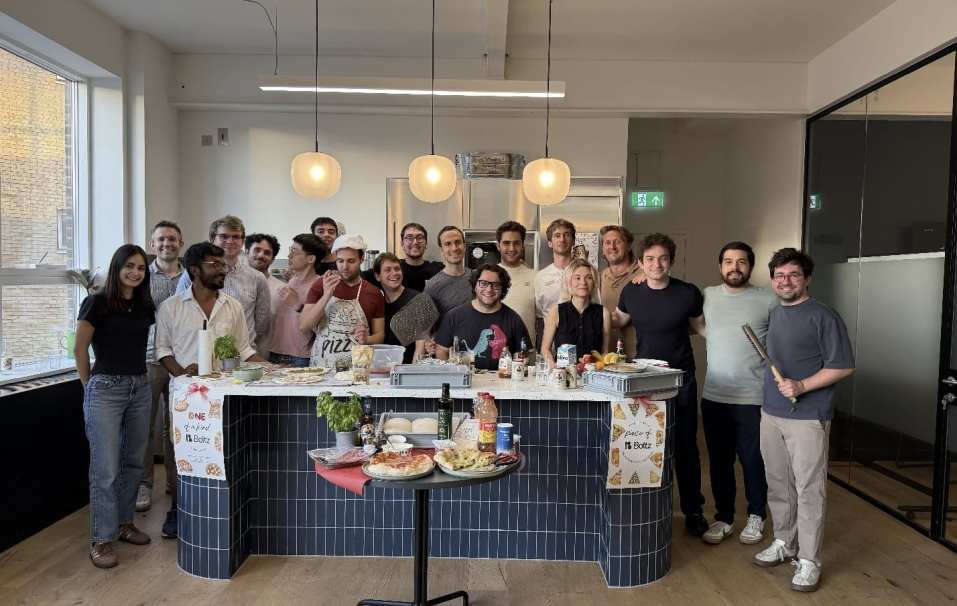
Boltz announced a $110 million Series A led by Bessemer Venture Partners, with returning investors Andreessen Horowitz, Amplify Partners, Zetta Venture Partners, and Obvious Ventures and new participants Greycroft, F-Prime Capital, Hummingbird, and Benchling. Boltz PBC is incorporated in the United States and has Cambridge/Boston operations, while its group also has a London presence.
The company develops computational models and tools to predict molecular behavior and design new small molecules and proteins. Boltz reports partnerships with six of the world’s 20 largest pharmaceutical companies, including relationships with Pfizer, GSK, Takeda, and Bristol Myers Squibb. It also says molecular-token use among paying customers has increased 50-fold since June, following the release of BoltzMol-1 and BoltzProt-1. Usage growth is an adoption indicator, not a disclosed revenue growth rate.
The commercial question is whether models reliably reduce the number of costly laboratory experiments required to find a useful candidate. The venture case is attractive because successful adoption could recur across many therapeutic programs; the scientific risk remains equally concrete because model outputs require external experimental validation. The financing will support computing capacity, data development, and hiring.
Funding Details
Startup: Boltz PBC
Investors: Bessemer Venture Partners, Andreessen Horowitz, Amplify Partners, Zetta Venture Partners, Obvious Ventures, Greycroft, F-Prime Capital, Hummingbird, Benchling
Amount Raised: $110 million
Total Raised: Not independently reconciled; the company previously disclosed seed backing
Funding Stage: Series A
Funding Date: November 18, 2026
Headquarters: Cambridge/Boston, Massachusetts, United States; London operations
Sector: Biomolecular AI, computational drug discovery
Valuation: Not disclosed
Variational raises $110M to expand derivatives tied to crypto and traditional markets
Variational announced a $110 million Series B led by Bain Capital Crypto at a reported $1.5 billion valuation. Other investors include Dragonfly, HSG, Peak XV, and 50T Funds. Variational is a Cayman Islands-based business behind the Omni derivatives platform.
Omni offers leveraged trading products tied to cryptocurrencies, as well as markets such as stocks, indexes, and commodities. The company says it has processed more than $475 billion in trading volume since its 2025 launch, with more than $1.3 billion in open positions; these are company-reported usage figures, not revenue or profit. Unlike a conventional order-book exchange, the venue relies substantially on an in-house market-making approach, making liquidity and counterparty exposure central to the product’s economics.
Investors are betting on expanding always-available trading infrastructure beyond digital tokens. But leveraged derivatives raise serious concerns about liquidations, market integrity, jurisdictional restrictions, and customer exposure to the firm’s liquidity model. The fundraising marks a valuation milestone, not independent validation of the venue’s long-term risk controls.
Funding Details
Startup: Variational
Investors: Bain Capital Crypto, Dragonfly, HSG, Peak XV, 50T Funds, and others
Amount Raised: $110 million
Total Raised: Approximately $171.8 million if earlier reported rounds are included
Funding Stage: Series B
Funding Date: November 18, 2026
Headquarters: Cayman Islands
Sector: Blockchain finance, derivatives infrastructure
Valuation: $1.5 billion, reported
BrightAI raises $97M in funding to modernize monitoring of critical infrastructure

Palo Alto-based BrightAI announced a $97 million investment led by Smith Point Capital, joined by GE Vernova, Cobalt Capital, Marlinspike Partners, and Zero Infinity Partners, among others. The round brings reported cumulative funding to $184 million. Fortune reported a valuation of roughly $750 million, citing a person familiar with the transaction; the company did not announce an official valuation or conventional stage label.
BrightAI sells systems intended to monitor physical infrastructure continuously rather than relying solely on periodic visits to inspect pipes, power equipment, and other hard-to-reach assets. The company combines sensors, physical data collection, and AI to identify changes that may signal deterioration. It says its systems reach more than 250,000 monitored endpoints across 50,000 operating locations. Treat those deployment figures as company claims unless independently validated.
GE Vernova, already identified as a BrightAI customer, is a meaningful commercial signal. For infrastructure operators, however, the investment case hinges on detecting actionable defects early, reducing unnecessary field visits, and proving that the system saves more than it costs to deploy and maintain. Software sophistication alone cannot demonstrate those outcomes.
Funding Details
Startup: BrightAI
Investors: Smith Point Capital, GE Vernova, Cobalt Capital, Marlinspike Partners, Zero Infinity Partners; existing backers include Khosla Ventures, Inspired Capital, Upfront Ventures
Amount Raised: $97 million
Total Raised: $184 million, company-reported
Funding Stage: Not disclosed
Funding Date: November 18, 2026
Headquarters: Palo Alto, California, United States
Sector: Physical AI, infrastructure monitoring, industrial technology
Valuation: Approximately $750 million, reported by Fortune; not company-confirmed
VitriVax raises $87M in funding to advance a single-dose Lyme disease vaccine candidate
Colorado-based VitriVax closed an $87 million Series C, co-led by F-Prime, NEA, RA Capital Management, and Sanofi Ventures, with participation from Eli Lilly and existing investors. The company did not disclose a valuation or a complete, reconciled lifetime funding total.
VitriVax is developing vaccine products built around its ALTA formulation platform, intended to stabilize antigens and adjuvants and potentially reduce the need for repeated doses and complex cold-chain logistics. Its lead proprietary program is a Lyme disease vaccine candidate that the company plans to move into first-in-human testing. The product is not yet clinically proven, and the financing does not establish its efficacy or safety in people.
The investment is noteworthy because it moves VitriVax from mainly providing vaccine technology toward owning a clinical pipeline. That could help retain more product value, but it also increases development costs, regulatory risk, and the need for strong clinical evidence. The company separately lists non-dilutive partnerships and support from public-health and defense organizations; those prior grants and contracts are not counted in this financing.
Funding Details
Startup: VitriVax
Investors: F-Prime, NEA, RA Capital Management, Sanofi Ventures, Eli Lilly and existing backers
Amount Raised: $87 million
Total Raised: Not disclosed on a fully reconciled lifetime basis
Funding Stage: Series C
Funding Date: November 18, 2026
Headquarters: Boulder, Colorado, United States
Sector: Vaccine biotechnology, formulation technology
Valuation: Not disclosed
Ansa Biotechnologies raises $71.5M in funding to scale manufacturing of complex DNA
Ansa Biotechnologies announced a $71.5 million Series C led by Blue Water Life Science Advisors. New investors include Illumina Ventures, BEVC, Lightscape Partners, and Agent Capital, alongside existing supporters. The company puts its lifetime financing at $211 million. An SEC filing associated with the offering identifies an earlier first-sale date; the company publicly announced the full Series C on November 18, which is the event counted here.
Ansa uses an enzymatic process to manufacture long, complex DNA sequences for researchers, biotech companies, and other customers. Its commercial promise includes reliable delivery of difficult DNA constructs—a less glamorous but potentially valuable feature for organizations where a delayed shipment can hold up weeks of experiments. Ansa also works with distribution partner Integrated DNA Technologies, giving its products access to an established research customer base.
This is as much a manufacturing and quality-control story as a biotechnology story. Better synthesis could speed discovery, but customers will assess price, sequence accuracy, turnaround times, and failure rates. Investors are financing scale, not a guarantee that demand and margins will rise together.
Funding Details
Startup: Ansa Biotechnologies
Investors: Blue Water Life Science Advisors, Illumina Ventures, BEVC, Lightscape Partners, Agent Capital, Cerberus Ventures, Fall Line Capital, Dauntless Ventures, Altitude Life Science Ventures
Amount Raised: $71.5 million
Total Raised: $211 million, company-reported
Funding Stage: Series C
Funding Date: November 18, 2026, first public disclosure
Headquarters: Emeryville, California, United States
Sector: Synthetic biology, DNA synthesis, life-sciences tools
Valuation: Not disclosed
Humyn Labs announces $47M financing package for robot-training data, including $26M equity
Bengaluru-based Humyn Labs disclosed $47 million in total financing, split between $26 million in equity led by Accel and $21 million in venture debt led by Lighthouse Canton, with Trifecta Capital participating in the debt. Equity investors include Prosus Ventures, BeeGlobal, Finserv Intelligence through Bajaj Finance, and other institutions. Original reporting of the financing appeared on November 18 after the 6:15 a.m. Eastern cutoff; the company’s U.S.-dated press release followed on November 19.
Humyn collects detailed recordings of people performing work in factories, warehouses, farms, and homes, then prepares that information for training robotics models. The company says it works in more than 20 countries and has reached more than $50 million in annualized revenue within six months. Reporting indicates that the figure is extrapolated from recent monthly activity, not a verified $50 million collected over a full year; that distinction matters when judging growth.
The market opportunity is the shortage of data about real work. Robotics teams must teach machines how tasks vary in uncontrolled environments, not just within simulations. Humyn’s risks include expensive on-site data capture, privacy and consent requirements, repeatable service margins, and whether customers ultimately bring data operations in-house. The debt component may support working-capital demands, but it also creates repayment obligations.
Funding Details
Startup: Humyn Labs
Investors: Accel (equity lead), Prosus Ventures, BeeGlobal, Finserv Intelligence/Bajaj Finance, Lighthouse Canton (debt lead), Trifecta Capital and others
Amount Raised: $26 million equity plus $21 million venture debt ($47 million combined)
Total Raised: Not disclosed on a fully reconciled basis
Funding Stage: Series A equity plus venture-debt financing
Funding Date: November 18, 2026, first original reporting (company U.S. release November 19)
Headquarters: Bengaluru, India, with U.S. operations
Sector: Physical AI, robotics training data, deployment services
Valuation: Not disclosed
Dcubed raises €27.2M in funding to expand spacecraft hardware and solar-power systems
German space-hardware specialist Dcubed announced an oversubscribed €27.2 million Series A+ led by Warsaw Equity Group, with the European Innovation Council Fund, HTGF Opportunity Fund, BayBG, and Expansion among the participants. The company, which operates in Germany and the United States, disclosed the financing on November 18.
Dcubed builds release mechanisms and deployable structures used by spacecraft. It reports more than 170 customers and more than 500 products already in space. The new financing supports a planned increase in production capacity in Germany and the United States, alongside a line of foldable solar arrays called ARAQYS. The company says it aims to quadruple manufacturing capacity; that is a target, not an achieved result.
Spacecraft builders place a premium on components that perform reliably after launch because repairs are difficult or impossible. Investors can therefore see value in a proven flight record and production discipline. The next test for Dcubed will be whether it can scale quality-controlled manufacturing without sacrificing margins, and whether its newer solar systems meet customer performance and cost targets.
Funding Details
Startup: Dcubed
Investors: Warsaw Equity Group, European Innovation Council Fund, HTGF Opportunity Fund, BayBG, Expansion
Amount Raised: €27.2 million (approximately $29.8 million at a contemporaneous reference rate)
Total Raised: Not disclosed on a fully reconciled basis
Funding Stage: Series A+
Funding Date: November 18, 2026
Headquarters: Munich area, Germany
Sector: Space hardware, satellite power and deployment systems
Valuation: Not disclosed
StepSecurity raises $20M in funding to defend software supply chains from malicious code
Seattle-based StepSecurity announced a $20 million Series A led by Elephant, with participation from Runtime Ventures, Inner Loop Capital, and SaaS Ventures. The new round brings its disclosed funding to $23 million, including an earlier $3 million seed. The company made the announcement on November 18 at 12:15 p.m. Eastern.
StepSecurity builds tools to identify and prevent malicious activity across developer machines, code repositories, package registries, and continuous-integration systems. The need is growing as AI coding agents gain access to more development workflows and dependencies arrive through increasingly complicated software supply chains. StepSecurity says its free Harden-Runner tool is used by more than 20,000 open-source projects and names commercial customers including Circle, Dexcom, Kong, and Mercari.
The investment case centers on preventing compromise before malicious dependencies enter production. Its ability to earn recurring revenue will depend on accurate detection, low disruption to developer productivity, and integration into workflows already crowded with security tools. Customer and usage figures are company-reported; they should not be read as independently validated market share.
Funding Details
Startup: StepSecurity
Investors: Elephant, Runtime Ventures, Inner Loop Capital, SaaS Ventures
Amount Raised: $20 million
Total Raised: $23 million
Funding Stage: Series A
Funding Date: November 18, 2026
Headquarters: Seattle, Washington, United States
Sector: Developer security, software supply-chain protection
Valuation: Not disclosed
Odin Dynamics raises $13.75M in funding to build autonomous undersea vehicles
Defense technology startup Odin Dynamics emerged from stealth on November 18 with a $13.75 million seed financing from Freestyle VC, BlueYard Capital, and Sierra Ventures, bringing reported cumulative funding to $17 million, including earlier undisclosed capital. Some headlines rounded the seed figure to $13.8 million; this report uses the more precise disclosed figure.
The Los Angeles-area company develops autonomous underwater vehicles, including its Dolphin line, and associated power systems. Odin reports a $14.56 million prototype agreement awarded through the Army Contracting Command with the Navy as its principal end user, plus more than $20 million in first-year contracts. Those contract values are not venture equity and must not be added to the fundraising total. The company is targeting longer-duration operations than conventional short-endurance underwater platforms.
The strategic rationale is demand for maritime systems that can perform difficult missions with fewer crewed assets. But defense startups live or die by procurement, testing, reliability, manufacturing scale, and field performance. A prototype award is a promising signal of customer interest; it is not the same as a full production contract or deployed fleet.
Funding Details
Startup: Odin Dynamics
Investors: Freestyle VC, BlueYard Capital, Sierra Ventures
Amount Raised: $13.75 million (often rounded to $13.8 million)
Total Raised: $17 million, including previously undisclosed pre-seed capital
Funding Stage: Seed
Funding Date: November 18, 2026
Headquarters: Los Angeles area, California, United States
Sector: Defense technology, autonomous undersea systems
Valuation: Not disclosed
What Today’s Funding Activity Reveals
Capital is paying for proof in the physical world. MegaRobo, BrightAI, Humyn Labs, Dcubed, and Odin Dynamics all depend on hardware, field conditions, or physical processes. Their potential advantages include reliable operation and hard-to-recreate datasets, but those same features can make expansion more expensive than in a software-only business.
Biology is becoming a combined software-and-laboratory market. Boltz creates computational designs; Ansa produces synthetic DNA that scientists use to build and test biological systems; VitriVax needs clinical evidence to validate a vaccine platform. Their rounds don’t mean biology has become easy. They show investors funding different ways to make a demanding research process more productive.
Strategic investors matter when they can become customers. GE Vernova’s presence in BrightAI’s round gives that financing a different commercial character from a purely financial investment. The same principle applies to life-sciences investors evaluating technologies that their broader portfolios might eventually use. Such relationships can help distribution, but they do not remove the need to win customers on merit.
The global funding picture is more varied than one region’s press cycle. The selection spans China, the United States, India, Germany, and a Cayman Islands-based financial platform. China’s MegaRobo announcement appeared during the Asian business day and within the U.S. reporting window. Its inclusion reflects strategic importance, not the convenience of its publication time.
Debt, company valuations, and capital raised are different numbers. Humyn’s $47 million financing includes only $26 million of equity, and Variational’s $1.5 billion valuation is not the same as the $110 million it raised. Those distinctions should remain visible whenever readers compare rounds or calculate sector totals.
Tech Funding Table
| Startup | Amount Raised | Sector | Funding Stage | Lead/Key Investors | Country |
|---|---|---|---|---|---|
| MegaRobo | Nearly $200M | Laboratory/industrial AI | Not disclosed | Oman Investment Authority; Granite Asia; Asia Investment Capital | China |
| Boltz | $110M | Biomolecular AI | Series A | Bessemer Venture Partners; a16z | United States (UK operations) |
| Variational | $110M | Derivatives infrastructure | Series B | Bain Capital Crypto; Dragonfly; HSG | Cayman Islands |
| BrightAI | $97M | Physical AI/infrastructure | Not disclosed | Smith Point Capital; GE Vernova | United States |
| VitriVax | $87M | Vaccine biotech | Series C | F-Prime; NEA; RA Capital; Sanofi Ventures | United States |
| Ansa Biotechnologies | $71.5M | Synthetic DNA | Series C | Blue Water Life Science Advisors; Illumina Ventures | United States |
| Humyn Labs | $26M equity + $21M debt | Robotics data | Series A + venture debt | Accel; Lighthouse Canton | India |
| Dcubed | €27.2M | Space hardware | Series A+ | Warsaw Equity Group; EIC Fund; HTGF | Germany |
| StepSecurity | $20M | Software supply-chain security | Series A | Elephant; Runtime Ventures | United States |
| Odin Dynamics | $13.75M | Maritime defense autonomy | Seed | Freestyle VC; BlueYard; Sierra Ventures | United States |
Funding metrics: Eight precisely stated U.S.-dollar equity amounts add to $535.25 million. MegaRobo adds nearly $200 million, while Dcubed’s €27.2 million is roughly $29.8 million at a November 18 euro reference rate. That produces an indicative aggregate just under $765 million in reported financing, excluding Humyn’s separately disclosed $21 million of venture debt. MegaRobo did not disclose sufficient financing-structure details to verify whether its entire amount was equity, so an equity-only total cannot be stated definitively. The Odin amount is $13.75 million, not a second $17 million round.
Strategic Takeaways for Founders and Investors
- Find the expensive real-world bottleneck. MegaRobo targets the difficulty of producing consistent laboratory data; BrightAI targets costly infrastructure inspection. Both have clearer customer problems than an AI feature searching for a use case.
- Prove productivity with external measurements. Boltz’s reported 50-fold usage increase is interesting, but the decisive result will be validated experimental performance and whether pharmaceutical teams save meaningful time and money.
- Keep financial categories separate. Humyn Labs illustrates why debt financing and new equity should never be combined into a venture-capital-only total. Debt can provide capacity without additional dilution but creates repayment obligations.
- Design distribution into the business. Ansa’s relationship with Integrated DNA Technologies gives it a channel to researchers; StepSecurity’s free software reaches maintainers who may become future paying customers.
- A strategic investor can help with commercial learning. GE Vernova’s role in BrightAI may provide feedback from an industry with expensive infrastructure failures, but customer renewals and cost savings remain the ultimate test.
- Frontier hardware requires manufacturing discipline. Dcubed and Odin Dynamics both need to turn specialized prototypes or existing products into repeatable deliveries. Reliability and unit economics matter as much as technical novelty.
- Clinical risk cannot be funded away. VitriVax has enough capital to pursue human testing, but a clinical result, not the round’s size, will determine whether its Lyme vaccine thesis advances.
- Risk management belongs in the core product. Variational’s on-chain derivatives model depends on liquid markets, strong controls, and resilient counterparties. User activity alone is insufficient evidence of a defensible financial business.
- Protect the quality of your data advantage. Humyn must show that captured work data transfers across robot platforms and real environments; MegaRobo must show experiments can be reproduced. A proprietary dataset is only valuable if it improves outcomes.
- Do not mistake a day’s outliers for the whole market. MegaRobo’s approximate $200 million financing and multiple nine-figure rounds show conviction among selected investors, not the average fundraising opportunity for an early-stage startup.
Conclusion
The standout deals of November 19 show investors financing the hardest-to-fake parts of modern technology: laboratory experiments, molecular research, physical infrastructure, reliable manufacturing, and systems operating in demanding environments. MegaRobo’s international financing and Boltz’s pharmaceutical partnerships give those themes global reach; BrightAI, VitriVax, and Ansa show how much capital is still required to turn promising science into dependable tools.
For founders, the question is increasingly practical: can the technology produce a result customers can verify, repeat, and afford? For investors, the discipline is to separate real operating evidence from funding headlines. The strongest businesses will be the ones that make difficult technology work reliably—and make the economics work just as well.