BrightAI raises $97M to bring physical AI to critical infrastructure using robots, drones, and smart sensors
 Daniel Levi
Posted On November 18, 2026
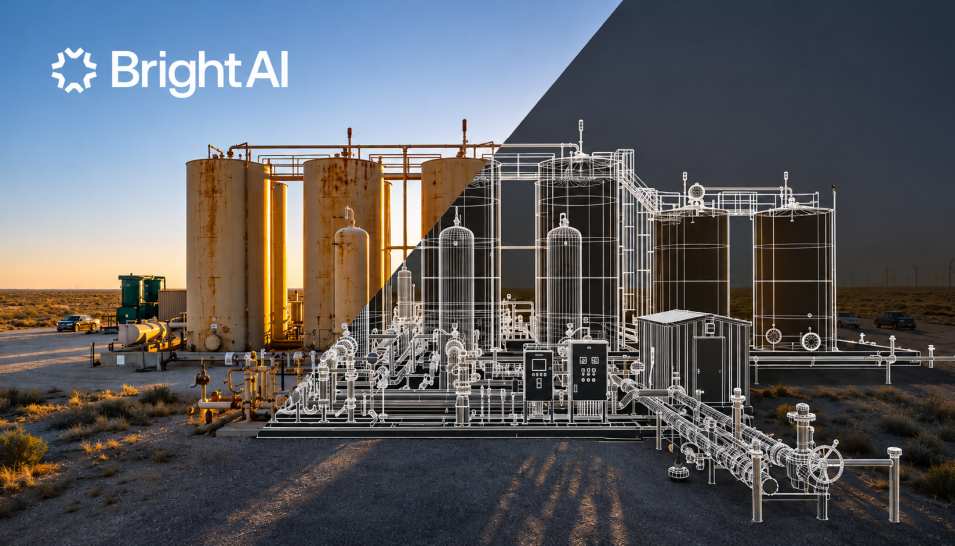
BrightAI has raised $97 million to bring artificial intelligence out of data centers and into the physical infrastructure that keeps everyday life running. The Palo Alto-based startup bets that AI-powered sensors, autonomous robots, and drones can help utilities and industrial operators spot equipment failures before they become costly outages, leaks, or shutdowns.
Smith Point Capital led the round, with participation from GE Vernova, Cobalt Capital, Marlinspike Partners, and Zero Infinity Partners. Existing backers Khosla Ventures, Inspired Capital, and Upfront Ventures returned for the round, bringing BrightAI’s total funding to $184 million.
The funding comes as aging infrastructure faces mounting pressure from rising electricity demand, water shortages, and a shrinking pool of experienced field technicians. For companies that maintain pipelines, electrical grids, and industrial equipment, detecting problems early remains a stubborn challenge.
BrightAI wants to change that by giving operators continuous visibility into equipment that has traditionally depended on periodic inspections.
The company calls this the “Observability Problem.” Its argument is straightforward: industrial operators spend enormous amounts inspecting equipment that may be working perfectly, yet serious problems can develop between inspections.
BrightAI estimates that infrastructure failures cost $2.5 trillion annually, citing research from the U.S. Department of Energy, Environmental Protection Agency, Swiss Re, and National Safety Council. That figure is a company-compiled estimate, not a single independently established industry total.
The startup sees an even larger commercial opportunity. Based on its analysis of 12,158 operators across 16 industries, BrightAI estimates more than $7.5 trillion in potential annual economic impact from better infrastructure monitoring.
From reactive maintenance to AI-powered infrastructure
At the center of BrightAI’s business is Stateful, an industrial AI platform that connects sensors, autonomous inspection systems, and wearable technology used by field workers.
Sensors installed on pipelines, compressors, tanks, and electrical equipment collect operational data and detect unusual conditions. Robots and drones inspect hard-to-reach or dangerous locations. Wearable AI assistants give technicians guidance when equipment needs attention.
The goal is to replace the familiar cycle of scheduled inspections and emergency repairs with a system that identifies potential failures early and directs maintenance crews to the right equipment.
BrightAI says Stateful is deployed across more than 50,000 operational locations, connecting millions of sensors and processing tens of trillions of sensor readings. The company says its technology supports hundreds of thousands of industrial assets and tens of thousands of frontline workers.
Those figures suggest BrightAI has moved beyond the experimental stage, though the company has not disclosed revenue, profitability, or independently verified savings from its deployments.
“Our infrastructure is under more strain than it has ever been, and Physical AI has finally become reliable enough to work in the field. Bringing those two facts together is a once-in-a-generation opportunity,” said Alex Hawkinson, BrightAI’s founder and CEO.
One of the more significant names in the funding round is GE Vernova, which is already a BrightAI customer. The energy equipment company plans to extend its use of BrightAI’s technology across its Power, Wind, and Electrification businesses, including field inspections of critical assets.
Other customers and development partners include Reworld, Osmose Utilities Services, Azuria Water Solutions, Kodiak Gas Services, and Diamondback Energy.
Smith Point Capital founder Keith Block, a former Salesforce co-CEO, sees an opportunity in industrial systems that have been slower to adopt modern software.
“For decades, enterprises have used software to transform how they run every part of their business – but the critical infrastructure that powers the world was left behind, considered too complex to change. That era is over,” Block said.
BrightAI plans to use the funding to expand internationally, particularly in Europe and Asia, where it estimates nearly 60% of its addressable opportunity lies outside North America.
Founded in 2019, the company recently opened a 25,000-square-foot headquarters in Palo Alto, an operations center in Midland, Texas, and a briefing center in Washington, D.C.
For BrightAI, the challenge now is proving that physical AI can deliver measurable savings at scale. Preventing infrastructure failures is a compelling proposition, but industrial customers will judge the technology by fewer breakdowns, lower maintenance costs, and safer operations, not the number of sensors deployed.

BrightAI Founder & CEO Alex Hawkinson