Snapp raises $4.6M from a16z to take on ChatGPT and Claude with real-time sports AI
 Daniel Levi
Posted On November 9, 2026

ChatGPT and Claude can answer almost anything, but predicting what happens on a football field or basketball court is a different challenge. San Francisco-based Snapp is betting that general-purpose AI models aren’t built for the speed and unpredictability of sports. The startup has raised $4.6 million from investors including a16z Speedrun to build a specialized AI platform that helps sports teams, fantasy players, and bettors make smarter decisions using real-time data.
The funding comes as Snapp emerges from stealth with a bold claim: its sports AI delivers 44% more accurate results than leading general-purpose AI models, including ChatGPT and Claude, according to internal benchmarks. The company says its system draws on more than 30 live data pipelines and billions of data points, giving it an advantage in a field where a last-minute injury, roster change, or weather update can alter a game’s outcome.
Snapp is entering a market where AI assistants are becoming increasingly common, yet reliable sports analysis remains difficult. General-purpose chatbots can summarize past games and explain player statistics, but answering questions about live matchups, changing betting odds, or fantasy lineups requires current information that traditional AI systems may lack.
The startup wants to close that gap by bringing live sports data, predictive analytics, and conversational AI into a single platform.
From Food Delivery to Sports AI: Why Caviar’s Co-Founder Is Betting on Snapp
Snapp was co-founded by Shawn Tsao, the entrepreneur behind food delivery startup Caviar, which Square acquired in 2014 and later sold to DoorDash in a $410 million deal in 2019. Tsao is now applying his experience building consumer technology businesses to a different industry: sports intelligence.
The company operates two products. Its consumer app, available on iOS and Android, has surpassed 20,000 downloads, according to Snapp. Users can analyze games, optimize fantasy lineups, track injuries, and evaluate betting markets without switching between multiple research tools.
For professional sports organizations, Snapp offers an enterprise platform focused on scouting, recruiting, opponent analysis, and in-game decision-making. The startup says it has secured a pilot partnership with UC Berkeley’s football program, an early opportunity to test its technology in a competitive sporting environment.
“Winning should be fun. Getting an edge shouldn’t feel like work,” said Shawn Tsao, cofounder of Snapp. “Our AI does the research and connects the dots, using live sports data to help you make smarter calls on your fantasy lineup and bets. You get to focus on enjoying the game.”
Snapp supports more than 100 sports leagues and integrates with platforms including ESPN, Yahoo Sports, Sleeper, Kalshi, and Polymarket. Its technology can monitor betting lines, identify potential pricing discrepancies, and generate automated briefings about injuries, matchups, and fantasy roster opportunities.
The startup claims its AI is up to 3.2 times faster at delivering accurate answers than competing models. Those performance figures come from company-reported tests, and the company has not provided independent validation. View the results in the context of sports-specific tasks rather than overall AI capabilities.
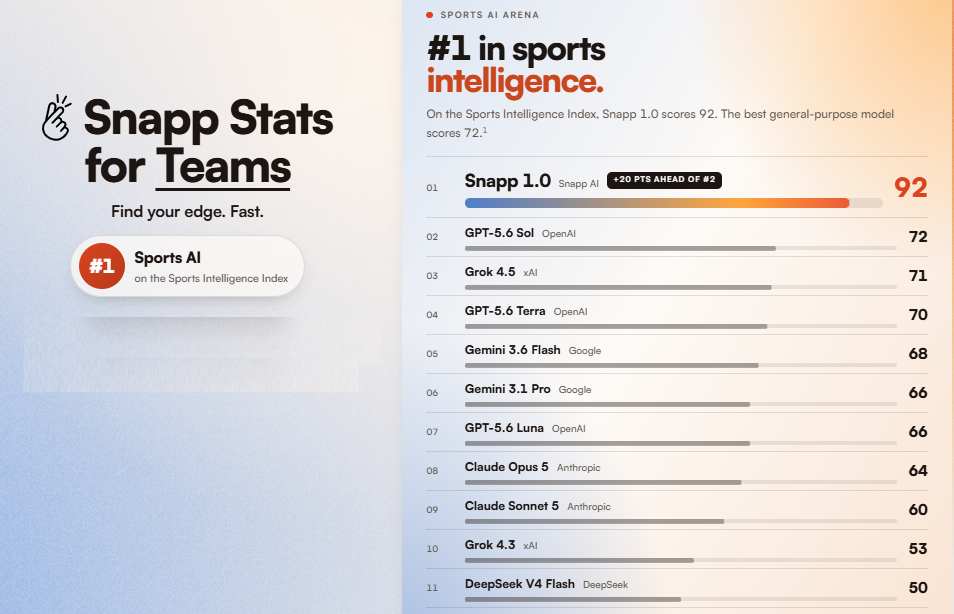
Image credit: Snapp Stats
Investors backing Snapp include Dorm Room Fund, Gold House Ventures, House Fund, Valia Ventures, and a16z Speedrun, alongside several prominent technology founders and angel investors.
“AI models are great at answering static questions, but sports move in real time. Snapp is building the dedicated data and reasoning infrastructure necessary to make conversational AI actually work for sports fans,” explained Josh Lu, General Manager of a16z Speedrun. “Shawn, Min, and the team have the exact operational and marketplace background required to build the central operating system for sports, and we’re thrilled to back them through Speedrun.”
The bigger question is whether a specialized AI platform can consistently deliver better answers than general-purpose chatbots as those systems gain access to increasingly fresh information.
For Snapp, the opportunity extends beyond predicting winners or helping fans set fantasy lineups. Professional teams spend heavily on data and analytics, and the company is betting that a single AI interface can make that information easier to use.
The real test won’t be how many questions Snapp can answer. It will be whether its answers lead to better decisions when the game is on the line.