Startup Funding News Today, October 12, 2026: Infinigence AI, Mosi Intelligence, Fulian Integrated & More
 Nickie Louise
Posted On October 12, 2026
Startup investors are pouring money into artificial intelligence, AI chips, robots, space technology, advanced materials, and new energy technologies that could reshape how businesses operate. China dominates today’s verified deal flow, led by Infinigence AI’s RMB2.3 billion Series C, followed by BlueCore Compute’s nearly RMB2 billion B-series financing, Mosi Intelligence’s more than RMB1 billion Pre-A, and Fulian Integrated’s nearly RMB1 billion strategic Series B. Sina Finance
Several younger companies also attracted unusually large early checks. Xianyin Future disclosed several hundred million yuan across Angel, Pre-A, and Series A rounds completed within four months, with Alibaba and China Mobile-linked capital participating in the A round. Former Huawei embodied-AI researcher Zhou Shunbo’s OlaDimensions raised several hundred million yuan in an Angel+ round, while bio-based materials company Sairuike secured several hundred million yuan in Series A1 funding to move an FDCA process toward industrial production.
The verified group contains at least RMB6.4 billion in clearly quantified or threshold-disclosed Chinese financing before counting three additional “several hundred million yuan” rounds, plus Matter Machine’s £4 million pre-Series A in Britain. That figure intentionally excludes transactions with undisclosed amounts, such as Kongyu Technology’s Series B. It also avoids pretending that “several hundred million” disclosures are precise enough to convert into a single aggregate number.
The research window runs from approximately 3:52 p.m. ET on October 11 through 7:52 a.m. ET on October 12. That cutoff excludes several Sunday deals that remain prominent in Monday feeds. Tessolve’s $75 million semiconductor-services financing was announced Sunday morning ET, for example, while PONGBOT’s Series B was first reported Sunday morning in China. Oratomic’s $475 million Series B dates to October 8 despite fresh Monday coverage.
The Macro Environment: China’s AI Buildout Moves Down the Stack
Today’s capital is concentrated in China, but the more interesting signal is where investors are placing it within the technology stack.
Infinigence AI operates at the compute and deployment layer, working across heterogeneous hardware, inference optimization, and AI infrastructure. BlueCore Compute is trying to fuse general-purpose server computing and AI acceleration inside a RISC-V-based processor. Fulian Integrated manufactures compound-semiconductor wafers used in optical interconnects and satellite communications. These companies are not competing to build the same chatbot. They are financing different pieces of the infrastructure needed to scale AI and advanced computing.
Mosi Intelligence represents a different branch of the AI race. The company grew out of Fudan University’s OpenMOSS research team and is concentrating on real-time multimodal interaction across speech, vision, audio, and increasingly agentic systems. Its more than RMB1 billion Pre-A is unusually large for such an early stage and reflects investors’ continued willingness to finance foundational AI research when teams have strong academic pedigrees and differentiated technical theses.
Physical AI is attracting capital through several strategies. OlaDimensions is building home robots around real-world learning. Xianyin Future is developing flexible, cable-driven robots to service spacecraft in orbit. Kongyu Technology is applying multimodal sensing and specialized AI to low-altitude security. Investors are therefore funding the robot, the training loop, and the infrastructure around autonomous physical systems rather than betting exclusively on humanoid hardware.
The non-AI rounds reveal another pattern: investors are willing to finance industrial scale-up once laboratory technology starts crossing into production. Sairuike is funding a large FDCA plant. Phase Change Energy Storage Technology is building a 10,000-ton production line for temperature-regulating fibers. Matter Machine is translating university research in inorganic materials and machine learning into a commercial discovery platform. In each case, the next risk is less “does the science work?” and more “can this be manufactured, sold, and integrated economically?”
Infinigence AI raises $344M in funding to expand China’s AI-native infrastructure stack
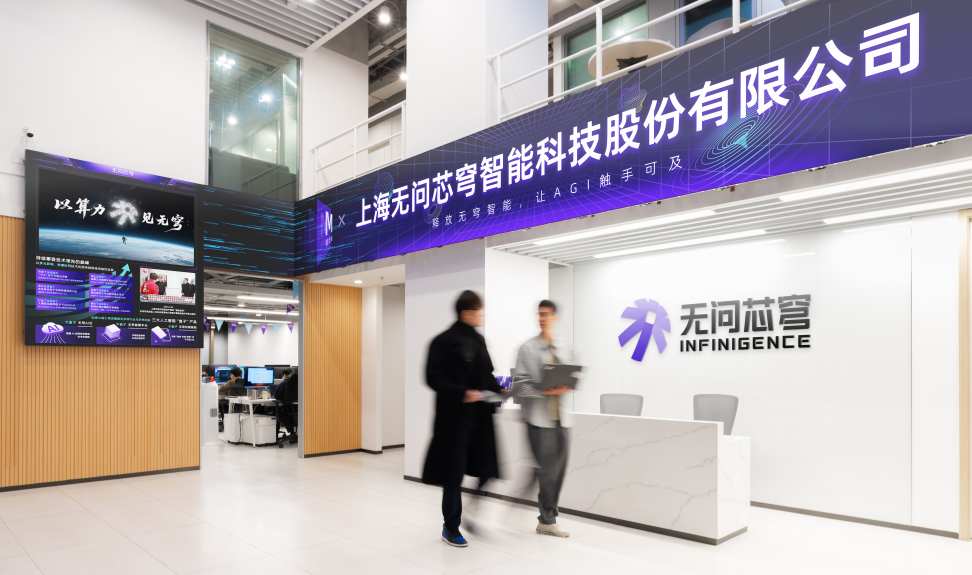
Shanghai-based Infinigence AI completed a RMB2.3 billion ($344 million) Series C, taking cumulative funding since its 2023 founding to RMB4.3 billion. Chinese reporting describes both figures as records for the country’s AI-native infrastructure category.
The company originated from research teams associated with Tsinghua University and Shanghai Jiao Tong University and focuses on AI infrastructure spanning compute resources, model deployment, inference optimization, and industry applications.
Its broader investor base includes state-backed capital, industrial investors, and venture firms such as Lenovo, Tencent, Baidu, Sequoia China, Qiming Venture Partners, Shunwei Capital, and others, although reports on the new Series C do not clearly break out the exact investors or allocations specific to this tranche.
Infinigence says it works with major Chinese model developers including Zhipu AI and Moonshot AI and has expanded infrastructure solutions into healthcare, legal services, gaming, energy, and other industries. The investment thesis is therefore not simply “China needs more GPUs.” It is that heterogeneous compute, model deployment, scheduling, and inference efficiency become independent infrastructure categories as AI workloads proliferate.
Funding Details
Startup: Infinigence AI
Investors: Exact Series C allocation not separately disclosed; broader shareholder roster includes state-backed funds, Lenovo, Tencent, Baidu, Sequoia China, Qiming, Shunwei, and others
Amount Raised: RMB 2.3 billion
Total Raised: RMB 4.3 billion
Funding Stage: Series C
Funding Date: October 12, 2026
Headquarters: Shanghai, China
Sector: AI infrastructure / compute / model deployment
Valuation: Not disclosed
Matter Machine raises £4M to accelerate AI-powered materials discovery
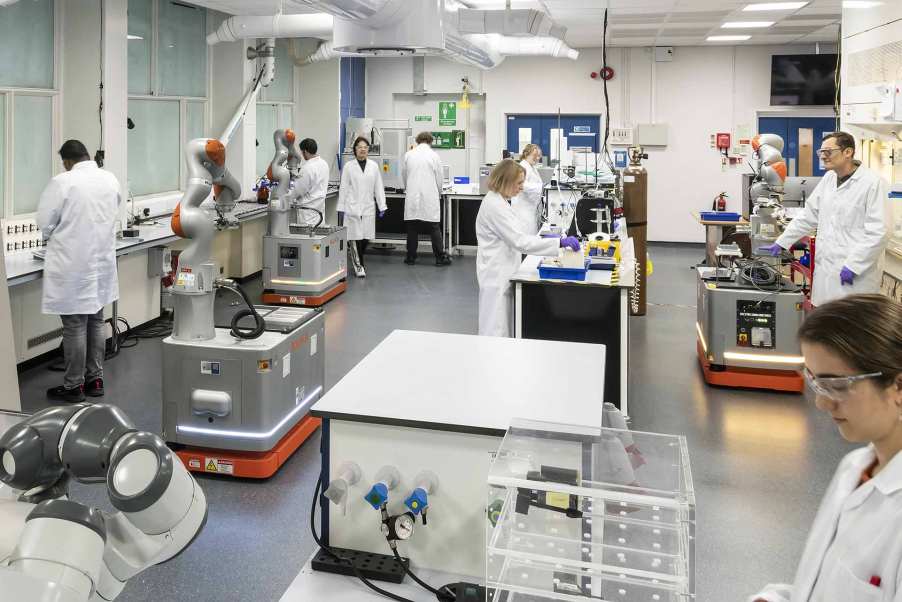
UK-based Matter Machine Technologies raised £4 million in an oversubscribed pre-Series A led by IP Group, with Northern Gritstone, the University of Liverpool Enterprise Fund, Norrsken Evolve, LYVA Labs, and the Northern Universities Venture Fund participating.
The University of Liverpool spinout combines inorganic chemistry, automated experimentation, materials characterization, and machine learning to identify and optimize new crystalline materials.
Its target markets include batteries, catalysts, electronics, manufacturing, and other sectors where material discovery can take years of laboratory work.
Former Oxford Nanopore CEO and co-founder Gordon Sanghera has joined to lead commercialization. His participation is strategically important because Matter Machine is moving from academic research to a company that must sell discovery partnerships and eventually prove its technology shortens real industrial development cycles.
The opportunity sits squarely in AI for science. Models can suggest candidate materials much faster than humans can test them, but experimental validation remains the bottleneck. Matter Machine’s value will depend on how tightly it can connect prediction with automated laboratory evidence.
Funding Details
Startup: Matter Machine Technologies
Investors: IP Group, Northern Gritstone, University of Liverpool Enterprise Fund, Norrsken Evolve, LYVA Labs, Northern Universities Venture Fund
Amount Raised: £4 million
Total Raised: £4 million disclosed external funding
Funding Stage: Pre-Series A
Funding Date: October 12, 2026
Headquarters: Liverpool, United Kingdom
Sector: AI for science/materials discovery / deep tech
Valuation: Not disclosed
BlueCore Compute raises nearly $280 million in funding to fuse server CPUs with AI acceleration
BlueCore Compute disclosed nearly RMB2 billion ($280 million)n across its B-series financing, with existing investors including Shenzhen Capital Group, Huakong Fund, and Longqiu Capital increasing their positions. New participants include Suzhou state-backed capital, GigaDevice, China Taiping-linked investment entities, Tongchuang Weiye, CCB International, Guangdong Technology Financial Group, Jiukun Investment, and others.
Founded in 2023, the Shenzhen company develops high-performance server processors based on the RISC-V architecture.
Its LX500 is described as a server processor combining general-purpose computing with AI inference on one chip, reducing the need for a separate accelerator in some workloads. The company says it has already worked with Lenovo on complete server systems and is targeting telecom operators, cloud providers, financial institutions, and research customers.
The strategic significance goes beyond processor performance. China’s AI infrastructure push increasingly includes domestic alternatives across CPUs, accelerators, memory, optical links, and software. RISC-V gives developers an open instruction-set architecture that can reduce reliance on proprietary foreign architectures, though hardware success will still depend heavily on software ecosystems, manufacturing, and customer adoption.
Funding Details
Startup: BlueCore Compute
Investors: Shenzhen Capital Group, Huakong Fund, Longqiu Capital, Suzhou-related state capital, GigaDevice, China Taiping-linked capital, CCB International, Guangdong Technology Financial Group, Jiukun Investment and others
Amount Raised: Nearly RMB 2 billion across Series B financing
Total Raised: Not disclosed
Funding Stage: Series B series
Funding Date: October 12, 2026 disclosure
Headquarters: Shenzhen, China
Sector: Semiconductors/server CPUs / AI compute
Valuation: Not disclosed
Mosi Intelligence raises more than RMB1B for real-time multimodal AI
Shanghai-based Mosi Intelligence raised more than RMB1 billion in a Pre-A round led by Huakong Fund. Participating investors include China Development Bank-linked capital, Shanghai Science and Technology Innovation Fund, Xinwei Capital, Xuhui Capital, Lingang-related funds, and other state and market-oriented investors. Existing shareholders, including Oriza Holdings and Shanghai state-backed technology investors, also followed on.
Mosi was incubated from the OpenMOSS research group associated with Fudan University professor Qiu Xipeng. Its research focuses on speech, audio, vision, and real-time multimodal interaction.
The company has released a series of MOSS-branded speech, vision, transcription, and multimodal models and says it is now working toward systems that can maintain real-time interaction while also reasoning and executing tasks.
This is an unusually large Pre-A. Investors are effectively financing a research thesis that AI’s next major interface will require models that understand a continuous stream of speech, images, emotion, context, and action rather than processing isolated prompts.
The risk is equally clear: the frontier labs are also pursuing native multimodality. Mosi will need differentiation in latency, deployment economics, research quality, distribution, or localized applications rather than simply producing another multimodal model.
Funding Details
Startup: Mosi Intelligence
Investors: Huakong Fund, CDB-linked capital, Shanghai Science and Technology Innovation Fund, Xinwei Capital, Xuhui Capital, Lingang-related funds, Oriza Holdings and others
Amount Raised: More than RMB 1 billion
Total Raised: More than RMB 1.5 billion reported across recent rounds
Funding Stage: Pre-A
Funding Date: October 12, 2026
Headquarters: Shanghai, China
Sector: Artificial intelligence/multimodal foundation models
Valuation: Not disclosed
Fulian Integrated raises nearly RMB1B to scale compound-semiconductor manufacturing
Fujian Fulian Integrated Circuit completed a strategic Series B financing of nearly RMB1 billion, co-led by Shenzhen Capital Group and Xingzheng Investment. The syndicate includes Fujian Electronics & Information Group, SMIC-linked investment capital, national and provincial industrial funds, banking capital, and other strategic investors.
Fulian specializes in compound-semiconductor foundry services, including 6-inch gallium arsenide RF chips and 4-inch indium phosphide optical chips.
Those technologies serve markets including optical interconnects, satellite communications, and consumer electronics. The company says its production lines are running at full capacity, and its customers include leading domestic and international companies.
The timing is strategically interesting because AI compute is increasing demand for high-speed optical connectivity. The processors attract most of the attention, but the systems connecting racks, accelerators, and data centers increasingly rely on specialized optical components.
Fulian therefore offers investors exposure to the semiconductor buildout without competing directly in the crowded GPU market.
Funding Details
Startup: Fujian Fulian Integrated Circuit
Investors: Shenzhen Capital Group, Xingzheng Investment, Fujian Electronics & Information Group, SMIC-linked capital, national and regional industry funds and others
Amount Raised: Nearly RMB1 billion
Total Raised: Not disclosed
Funding Stage: Strategic Series B
Funding Date: October 12, 2026
Headquarters: Fujian, China
Sector: Compound semiconductors/foundry / optical communications
Valuation: Not disclosed
Xianyin Future discloses several hundred million yuan across three rounds for space robotics
Anhui-based Xianyin Future disclosed that it completed Angel, Pre-A, and Series A rounds totaling several hundred million yuan over roughly four months beginning in May.
BlueRun Ventures, Hillhouse-related investment entities, and Binfu Capital led or participated in the Angel round. Huaying Capital led the Pre-A. Alibaba and China Mobile’s Chain Leader Fund led the Series A, with additional backing from Hontai, Zhuhai Technology Industry Group, Vitalbridge-related funds, and other investors. Industrial participants have also included robotics company Galbot and Trina Solar.
The startup is developing cable-driven flexible robots for servicing spacecraft in orbit. Its target use cases include refueling satellites, assisting with deorbiting damaged or retired spacecraft, and performing inspection or maintenance on orbital infrastructure. The company says its team members have engineering experience from actual space missions.
The investment thesis is tied to the growing value of assets already in orbit. As constellations expand, extending the life of a high-value satellite or safely removing a failed spacecraft can become more economical than launching a replacement.
Funding Details
Startup: Xianyin Future
Investors: BlueRun, Hillhouse-related funds, Binfu Capital, Huaying Capital, Alibaba, China Mobile Chain Leader Fund, Hontai, Zhuhai Technology Industry Group, industrial investors and others
Amount Raised: Several hundred million RMB across Angel, Pre-A, and Series A rounds
Total Raised: Several hundred million RMB disclosed
Funding Stage: Angel through Series A
Funding Date: Publicly disclosed October 12, 2026; individual rounds closed during the preceding four months
Headquarters: Anhui, China
Sector: Space robotics / in-orbit servicing / commercial space
Valuation: Not disclosed
Sairuike raises several hundred million yuan to move bio-based FDCA into industrial production
Jiangsu-based Sairuike raised several hundred million yuan in Series A1 financing from Puhua Capital, Oak Capital, Jinshui Lake Fund, and Green Move Capital.
The company develops FDCA, or 2,5-furandicarboxylic acid, using a process based on renewable sugars. FDCA can be used to make bio-based polyesters that may substitute for petroleum-derived materials in packaging, textiles, and other products.
The new capital will finance a 10,000-ton-class plant in Jiande, Zhejiang. Sairuike says the first 5,000 tonnes of capacity already have pre-sales covering more than 40%, with prospective orders exceeding RMB1 billion. The company provided those commercial figures.
This is a classic industrial-scale financing inflection. The chemistry must move from pilot validation to a plant where yield, uptime, feedstock cost, energy use, customer qualification, and product consistency determine whether a promising process becomes an economic material.
Funding Details
Startup: Sairuike New Materials.
Investors: Puhua Capital, Oak Capital, Jinshui Lake Fund, Green Move Capital
Amount Raised: Several hundred million RMB
Total Raised: Not disclosed
Funding Stage: Series A1
Funding Date: October 12, 2026
Headquarters: Jiangsu, China
Sector: Bio-based materials / industrial biotechnology/chemicals
Valuation: Not disclosed
Phase Change Energy Storage Technology raises over RMB100M to build temperature-regulating materials at scale
Hangzhou-based Phase Change Energy Storage Technology raised more than RMB100 million in Series A financing from Hangzhou Urban Investment, Linping State Capital, Hangzhou Financial Investment, and others, with Ventech China reinvesting.
The company develops phase-change and temperature-control materials that can absorb and release heat as materials move between physical states.
Its product lines include temperature-regulating nylon, polyester, and bio-based fibers, along with technologies involving radiative cooling and aerogel materials.
The financing will fund a 10,000-ton AC-TEX temperature-regulating fiber production line, brand development, licensing partnerships, and additional material research.
This is another industrialization round rather than pure research financing. Investors are paying for manufacturing capacity and commercial scale. Key milestones now include production cost, product durability, factory utilization, and whether textile and industrial customers pay enough for the thermal-management benefits.
Funding Details
Startup: Phase Change Energy Storage Technology
Investors: Hangzhou Urban Investment, Linping State Capital, Hangzhou Financial Investment, Ventech China, and others
Amount Raised: More than RMB 100 million
Total Raised: Not disclosed
Funding Stage: Series A
Funding Date: October 12, 2026
Headquarters: Hangzhou, China
Sector: Advanced materials / thermal management/climate technology
Valuation: Not disclosed
Kongyu Technology raises Series B capital to secure low-altitude airspace
Chengdu-based Kongyu Technology completed a Series B strategic financing from Mingzhi Fund, with the amount undisclosed. The company’s founding team emerged from Tsinghua University’s electronic-engineering ecosystem.
Kongyu develops low-altitude security systems combining radar, electro-optical sensors, radio-frequency detection, multisensor fusion, and specialized AI.
Its products target police, defense, energy, transportation, and other environments where drones and low-altitude aircraft create new monitoring and security requirements. The company says it has participated in national-level low-altitude-security projects.
The financing reflects a market being created partly by drones’ own success. As low-altitude aviation expands, airports, utilities, governments, factories, and public events need systems that can identify what is flying, determine whether it is authorized, and respond to threats.
This is another example of a second-order startup opportunity: growth in autonomous aircraft creates a parallel market for the systems that monitor and control them.
Funding Details
Startup: Kongyu Technology (空御科技)
Investors: Mingzhi Fund
Amount Raised: Not disclosed
Total Raised: Not disclosed
Funding Stage: Series B
Funding Date: October 12, 2026
Headquarters: Chengdu, China
Sector: Defense technology/drone security / low-altitude infrastructure
Valuation: Not disclosed
What Today’s Funding Activity Reveals
The first signal is China’s extraordinary share of today’s fresh funding. Nine of the 10 selected companies are Chinese or UK/Chinese? More precisely, nine? Actually, Matter Machine is UK, while the remaining nine are Chinese. That concentration partly reflects the early U.S. cutoff, but the breadth across AI infrastructure, semiconductors, space, robotics, materials, and security is notable.
Second, AI infrastructure is fragmenting into more specialized layers. Infinigence is working on compute and deployment. BlueCore Compute is designing server processors. Fulian Integrated manufactures compound-semiconductor wafers. Mosi is working higher in the stack on multimodal models. Each can benefit from rising AI demand without competing in precisely the same market.
Third, physical AI is broadening beyond humanoid robots. Xianyin Future is building robots for space, and Kongyu Technology is securing the airspace autonomous aircraft operate in. The physical-AI investment opportunity increasingly includes infrastructure, sensing, data, security, and specialized deployment environments.
Fourth, industrialization is receiving serious capital. Sairuike and Phase Change Energy Storage Technology are financing large production lines rather than laboratory experiments. Fulian is scaling wafer manufacturing. That indicates investors increasingly want evidence that technical innovation can survive manufacturing economics.
Fifth, strategic and state-backed capital is everywhere in today’s Chinese rounds. Telecom-linked capital backs space robotics. Local-government funds back AI infrastructure, semiconductors, materials, and defense-adjacent technologies. Industrial companies invest alongside financial funds. The investor mix reflects the strategic importance China assigns to domestic technology capacity.
Finally, the headline totals need interpretation. Some disclosures use phrases such as “nearly RMB2 billion,” “more than RMB1 billion,” or “several hundred million yuan.” These describe scale but are not precise enough for a mathematically exact funding total. A premium funding report should preserve that uncertainty rather than manufacture precision.
Startup Funding Table
| Startup | Amount Raised | Sector | Funding Stage | Lead/Key Investors | Country |
|---|---|---|---|---|---|
| Infinigence AI | RMB2.3B | AI infrastructure / compute | Series C | Round-specific allocation not disclosed; broad roster includes major state, strategic and VC investors | China |
| BlueCore Compute | ~RMB2B | AI/server semiconductors | Series B series | Shenzhen Capital, Huakong, GigaDevice, CCB International + others | China |
| Mosi Intelligence | >RMB1B | Multimodal AI/foundation models | Pre-A | Huakong Fund, CDB-linked capital, Shanghai state funds + others | China |
| Fulian Integrated | ~RMB1B | Compound semiconductors / optical chips | Strategic Series B | Shenzhen Capital, Xingzheng Investment + industry/state investors | China |
| Xianyin Future | Several hundred million RMB across 3 rounds | Space robotics / in-orbit servicing | Angel–Series A | Alibaba, China Mobile Chain Leader Fund, BlueRun, Hillhouse-related funds + others | China |
| Sairuike | Several hundred million RMB | Bio-based materials / FDCA | Series A1 | Puhua Capital, Oak Capital, Jinshui Lake Fund, Green Move | China |
| OlaDimensions | Several hundred million RMB | Embodied AI/home robotics | Angel+ | Chengyuanxiang, Xineng, Xizhou, Topband, Hony + others | China |
| Phase Change Energy Storage Technology | >RMB100M | Advanced materials / thermal management | Series A | Hangzhou Urban Investment, Linping State Capital + others | China |
| Matter Machine | £4M | AI materials discovery | Pre-Series A | IP Group, Northern Gritstone, Norrsken Evolve + others | United Kingdom |
| Kongyu Technology | Undisclosed | Low-altitude security/defense tech | Series B | Mingzhi Fund | China |
Strategic Takeaways for Founders and Investors
AI infrastructure is becoming a stack of independent businesses. Compute orchestration, server processors, optical chips, model deployment, and multimodal interaction can each support their own venture-scale companies. Founders do not necessarily need to compete with frontier-model laboratories to capture value from the AI buildout.
Physical AI needs infrastructure around the robot. Xianyin Future and Kongyu Technology demonstrate two less obvious opportunities: servicing machines after they reach space and securing airspace as autonomous aircraft proliferate. Supporting markets can become large even if end-product winners remain uncertain.
Industrial capacity is a moat when the technology is difficult to manufacture. Fulian, Sairuike, and Phase Change Energy Storage Technology are raising against production lines, not presentations. Once a company can manufacture specialized materials or chips reliably at scale, competitors cannot reproduce that capability by hiring a few engineers and licensing an AI model.
Strategic investors can matter more than headline fund brands. Alibaba and China Mobile may give Xianyin Future infrastructure, customers, and technical relationships. Industrial investors in OlaDimensions can help with components and manufacturing. Semiconductor-industry investors can help Fulian qualify products. In hardware markets, the investor that shortens commercialization can be more valuable than the investor offering the highest valuation.
Large early AI rounds raise the proof burden. Mosi’s more-than-RMB1-billion Pre-A is extraordinary. That capital gives the team resources for compute, researchers, and commercialization, but it also creates expectations that go far beyond producing strong demos. Distribution, economics, and differentiated model capability will matter quickly.
AI for science still needs experiments. Matter Machine can generate candidate materials computationally, but investors ultimately need to see those materials synthesized, measured, and proven useful. The strongest scientific-AI businesses will own both the prediction loop and the experimental validation loop.
Conclusion
October 12 is a far stronger funding morning than the quiet weekend suggested.
Infinigence AI and BlueCore Compute are raising billions of yuan around the compute stack. Mosi Intelligence is attracting an unusually large early check for multimodal AI. Fulian is scaling the compound-semiconductor manufacturing needed by optical communications. Xianyin Future and OlaDimensions are applying physical AI to space and the home, while Sairuike and Phase Change Energy Storage Technology are pushing new materials into industrial production.
Matter Machine adds the European version of the same thesis: AI can accelerate discovery, but real value appears only when the technology connects to experimental proof and industrial use.
The common thread is increasingly clear:
Capital is moving toward the layers where intelligence meets something scarce — chips, factories, scientific data, orbital assets, physical-world experience, strategic infrastructure, and production capacity.
Those assets take years to build. That is exactly why investors are paying for them.