Startup Funding News Today, September 29, 2026: Atomic, ANote, Helix, Marble, Reverion & More
 Nickie Louise
Posted On September 29, 2026

Over the past few hours, startup capital has moved across a strikingly broad set of sectors, with investors backing AI infrastructure, energy systems, enterprise automation, RNA therapeutics, design software, financial compliance, alternative assets, and consumer AI. The largest deal is in a category that increasingly looks less like venture software and more like industrial finance: Samsung and five of its affiliates are investing $1 billion in Helix Digital Infrastructure, the KKR-founded company building data centers together with the power and connectivity required to run them.
Behind it, German energy startup Reverion raised $175 million in Series B funding to move its reversible fuel-cell power plants into mass production, while Milan biotech Aptadir Therapeutics landed a €40 million Seed round for RNA medicines designed to reactivate genes silenced by abnormal DNA methylation. Boston-based Atomic raised $12.5 million to automate supply-chain planning with AI, while France’s Rayon and Marble raised Series A rounds for interior-design software and financial-crime compliance, respectively.
In total, these startup companies disclosed $1.1875 billion in dollar-denominated funding and €59 million in euro-denominated capital. That headline number requires context: Helix alone accounts for $1 billion and is a strategic infrastructure investment rather than a conventional venture round. Remove Helix, and today’s remaining companies raised $187.5 million plus €59 million. Six of the eight selected companies are European, while five are directly tied to AI or AI-enabling software and infrastructure.
The Macro Environment: AI’s Capital Boom Is Moving Into Power, Operations, and Specialized Workflows
Today’s funding activity splits into two very different markets.
At one end sits Helix, backed by the kind of capital normally associated with infrastructure funds rather than startups. KKR launched the company in June with the Kuwait Investment Authority, Nvidia, and Vistra, and more than $10 billion in long-duration capital commitments. Samsung’s new $1 billion investment pushes the capital available to the strategy above $11 billion. Helix is trying to solve a problem hyperscalers increasingly face: obtaining GPUs is only one part of building AI capacity. Data centers also require land, electricity generation, grid connections, transmission, cooling, and fiber.
Reverion attacks another piece of that constraint from the energy side. Its containerized systems can convert gas into electricity and operate in reverse to turn electricity into hydrogen or synthetic gas. The company’s current systems have recorded 74.2% electrical efficiency, according to Reverion, and demand has outgrown its existing production capacity. Its $175 million Series B will finance a new factory and a tenfold increase in production.
At the other end of the market are smaller companies applying AI to very specific jobs. Atomic is automating inventory decisions. Rayon is rebuilding interior-design software around a browser-native drawing layer. Marble is using AI inside fraud and anti-money-laundering operations. Kyndred is betting that persistent AI companions could become a new consumer interface. These companies are not raising money to train frontier models. They are trying to own the workflows that make those models commercially useful.
Aptadir provides the counterpoint. Its €40 million Seed round has almost nothing to do with software economics. Investors are financing preclinical science around a new class of RNA inhibitors and accepting biological, regulatory, and clinical risk in exchange for the possibility of a new therapeutic modality. That such a company can raise €40 million at Seed shows that large early checks remain available when investors believe the underlying science could create an entirely new drug class.
The broader pattern is that investors appear willing to pay for control over scarce inputs. Sometimes that means electricity and data-center capacity. Sometimes it is manufacturing know-how, biological IP, customer workflows, regulatory infrastructure, or a proprietary operating history. Access to an AI model is becoming easier. Building the system around it remains much harder.
Helix Digital Infrastructure lands $1B from Samsung to build the physical backbone for AI
Samsung Electronics and five other Samsung companies are investing a combined $1 billion in Helix Digital Infrastructure, the AI infrastructure company KKR created earlier this year. Samsung Electronics is committing $500 million, while Samsung C&T, Samsung SDS, Samsung SDI, Samsung Life Insurance, and Samsung Fire & Marine Insurance will provide the other $500 million.
Helix is not a conventional startup. KKR, the Kuwait Investment Authority, Nvidia, and power producer Vistra launched it in June, with more than $10 billion in committed long-duration capital. Former AWS CEO Adam Selipsky leads the company. Its mandate spans hyperscale data centers, power generation, transmission and distribution, and fiber connectivity. Nvidia serves as a strategic technology partner, while Vistra is its preferred power partner.
That structure says a great deal about where AI infrastructure is heading. Building a large GPU cluster increasingly requires coordination across industries that historically operated separately. A hyperscaler might need a data-center developer, utility connection, gas or nuclear generation, batteries, cooling equipment, networking, semiconductor supply, and billions of dollars of financing before a single model runs.
Samsung gives Helix more than capital. Its affiliates cover semiconductors, construction, data-center operations, cooling systems, UPS and battery equipment, and financial services. The investment therefore looks partly like vertical integration around the AI buildout.
The risk is equally large. Infrastructure returns depend on power availability, permitting, construction costs, hyperscaler demand, hardware cycles, and long-term utilization. But Samsung joining Nvidia, KKR, KIA, and Vistra suggests major industrial investors increasingly view AI infrastructure as a decade-long capital deployment opportunity rather than a short hardware cycle.
Funding Details
Startup: Helix Digital Infrastructure
Investors: Samsung Electronics, Samsung C&T, Samsung SDS, Samsung SDI, Samsung Life Insurance, Samsung Fire & Marine Insurance; existing founding investors include KKR, Kuwait Investment Authority, Nvidia, and Vistra
Amount Raised: $1 billion new strategic investment
Total Raised: More than $11 billion in committed capital to the Helix strategy, including its original $10B+ commitments and Samsung’s new investment
Funding Stage: Strategic investment; no conventional series disclosed
Funding Date: September 29, 2026
Headquarters: United States
Sector: AI infrastructure/data centers/power/connectivity
Valuation: Not disclosed
Reverion raises $175M in funding to move reversible power plants into mass production
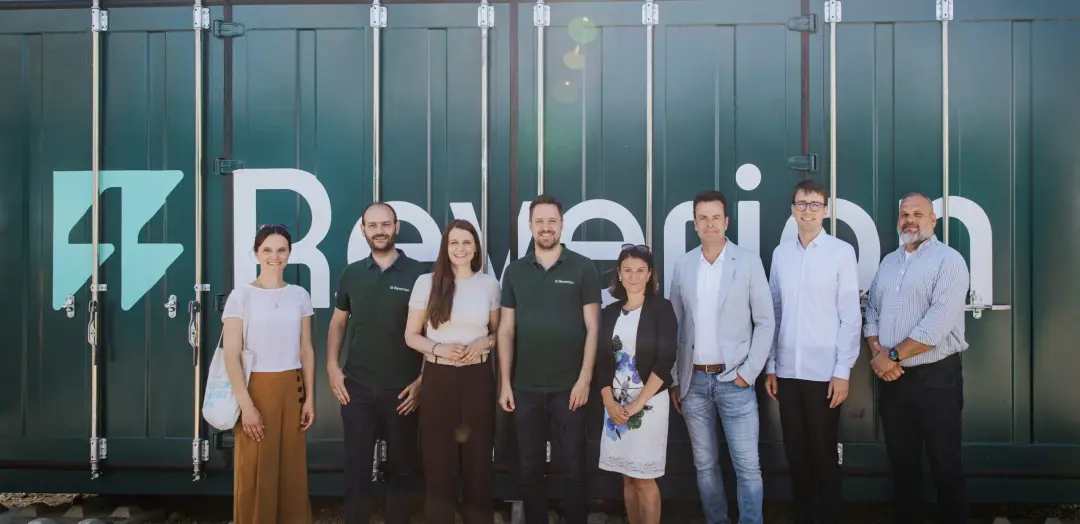
German climate-tech startup Reverion raised $175 million in Series B funding, led by deep-tech and climate investor Kembara. Allianz, KfW Capital, Aurum Impact, and Carbon Equity joined the round alongside existing investors.
Reverion emerged from research at the Technical University of Munich and builds container-sized power plants based on high-temperature solid-oxide fuel cells. The systems are unusual because they work in both directions: they can convert biogas, natural gas, or hydrogen into electricity, then reverse operation and use electricity to produce hydrogen or synthetic gas when renewable electricity is abundant.
The company says its plants have achieved 74.2% electrical efficiency in field operations, compared with roughly 40% for conventional gas engines used at many biogas plants. Reverion already moved toward serial production after a $62 million Series A in 2024, but demand has pushed it toward a much larger industrial buildout.
The Series B will finance a new European factory that could create roughly 800 jobs and increase production approximately tenfold. That makes the financing less about proving the underlying technology and more about crossing one of climate tech’s hardest gaps: moving from successful hardware to high-volume manufacturing.
AI provides a second demand vector. Data centers increasingly need reliable electricity that can complement intermittent renewable generation. Reverion’s core market remains broader than AI, but an era of large new electricity loads makes flexible power technology more strategically valuable.
Funding Details
Startup: Reverion
Investors: Kembara, Allianz, KfW Capital, Aurum Impact, Carbon Equity, existing investors
Amount Raised: $175 million
Total Raised: At least $237 million across its disclosed Series A and Series B rounds; cumulative company funding was not separately disclosed
Funding Stage: Series B
Funding Date: September 29, 2026
Headquarters: Eresing, Germany
Sector: Climate tech/power generation/fuel cells/energy storage
Valuation: Not disclosed
Aptadir Therapeutics raises €40M to develop RNA drugs that reactivate silenced genes
Milan-based Aptadir Therapeutics raised €40 million ($45 million) in Seed funding led by 4BIO Capital. Existing investor EXTEND participated again, alongside CDP Venture Capital, XGEN Ventures, Indaco Bio, CE-Ventures, Angelini Ventures, Kerna Ventures, Italian Angels for Biotech, and members of Club degli Investitori. GlobeNewswire
Aptadir is developing a class of RNA molecules called DNMT-interacting RNAs, or DiRs, designed to interfere with abnormal DNA methylation at specific genes. DNA methylation can effectively switch genes off. Aptadir’s thesis is that precisely targeting that process could reactivate genes whose silencing contributes to genetic disorders and cancers.
Its lead candidate, CAP1-FMR1, targets Fragile X syndrome, where silencing of the FMR1 gene reduces or eliminates production of a protein needed for normal brain development. Aptadir says its approach has restored gene expression in patient-derived disease models, but that evidence remains preclinical. Human efficacy has yet to be demonstrated.
That makes the seed round notable. Investors are financing the company through the expensive transition from promising laboratory science toward drug development. The attraction is platform potential: if DiRs can selectively reactivate one silenced gene, the same underlying mechanism could potentially generate candidates against multiple genetic diseases and cancers.
For founders, Aptadir illustrates why biotech stage labels can be misleading when compared with software. A €40 million Seed round sounds enormous beside most Seed software deals, but moving a therapeutic toward human studies requires manufacturing, toxicology, regulatory work, specialized staff, and years of testing before commercial revenue is possible.
Funding Details
Startup: Aptadir Therapeutics
Investors: 4BIO Capital, EXTEND/CDP Venture Capital, Angelini Ventures, Evotec, XGEN Ventures, Indaco Bio, CE-Ventures, Kerna Ventures, Italian Angels for Biotech, Club degli Investitori members
Amount Raised: €40 million / approximately $45 million
Total Raised: Not disclosed on a fully comparable cumulative basis
Funding Stage: Seed
Funding Date: September 29, 2026
Headquarters: Milan, Italy
Sector: Biotechnology / RNA therapeutics / rare disease
Valuation: Not disclosed
Atomic raises $12.5M in funding to automate supply-chain planning
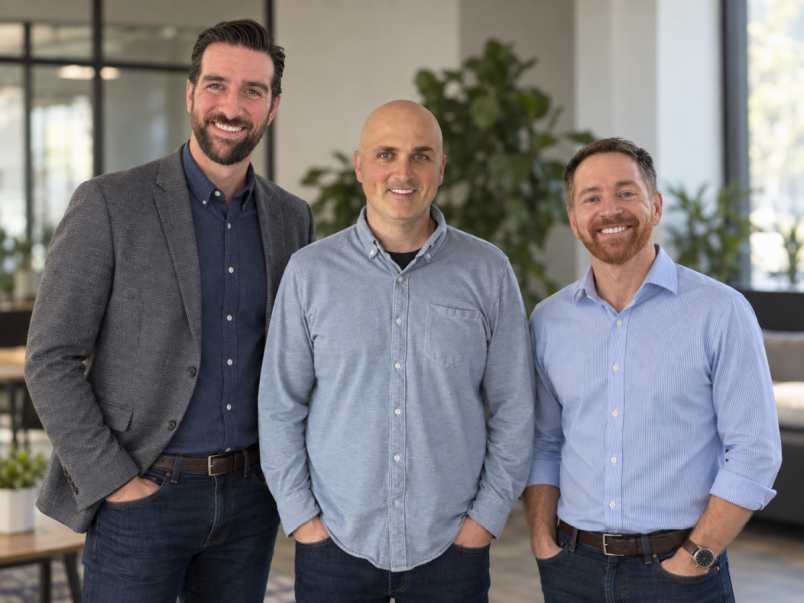
Boston-based Atomic raised $12.5 million in Series A funding co-led by Klass Capital and Madrona Venture Group, taking total funding to just over $15 million. The company was incubated at DVx Ventures and was founded by former Tesla supply-chain executives Michael Rossiter and Neal Suidan. Longtime Tesla planning director Jeff Goodrich is joining as CTO and third co-founder.
Atomic uses AI to model supply chains, simulate possible outcomes, and decide how much inventory a company should hold and where it should sit. The underlying idea grew out of Tesla’s 2018 Model 3 production ramp, when conventional spreadsheets struggled to keep pace with constantly shifting production plans.
The more interesting part is how far Atomic is moving from recommendations toward actions. TechCrunch reports that customers include DoorDash and HelloFresh. DVx founder Jon McNeill said Atomic’s annual recurring revenue has increased fivefold since the start of 2026 and that DoorDash runs roughly 90% of purchasing across hundreds of sites through the platform. Those operating figures come from an investor and should be treated as company-side claims rather than independently audited metrics.
This is where enterprise AI becomes economically meaningful. Supply chains generate countless interconnected decisions around purchasing, inventory, spoilage, production, lead times, and demand. A system that merely summarizes the data saves labor. A system trusted to place orders can directly influence working capital and gross margin.
That also raises the barrier to adoption. Companies will tolerate a chatbot giving a mediocre answer. They will be much less forgiving if an autonomous system buys millions of dollars of excess inventory. Atomic’s defensibility will therefore depend as much on its operating history and decision accuracy as on the underlying models.
Funding Details
Startup: Atomic
Investors: Klass Capital, Madrona Venture Group; incubated by DVx Ventures
Amount Raised: $12.5 million
Total Raised: Just over $15 million
Funding Stage: Series A
Funding Date: September 29, 2026
Headquarters: Boston, Massachusetts, United States
Sector: Enterprise AI / supply-chain software / autonomous operations
Valuation: Not disclosed
Rayon raises €10M in funding to rebuild interior-design software around the browser and AI
Paris-based Rayon raised €10 million in Series A funding led by Partech, with existing investors Northzone, Foundamental, and Seedcamp participating. The financing takes total funding to nearly €16 million.
Founded in 2021 by Bastien Dolla and Stanislas Chaillou, Rayon provides browser-based drawing software for interior designers. Teams can import PDFs, images, and DWG files, edit plans together in real time, maintain specifications alongside drawings, and share projects through links rather than exchanging static files.
The company is now pushing AI directly into that design workflow. Rayon already offers a floor-plan vectorizer that converts scanned or photographed plans into editable drawings and a tool that produces design blocks from images. A new version expected later this year will add further AI and 3D capabilities.
The investment thesis is less about generative AI itself and more about replacing old desktop workflows. Professional design software has historically carried steep learning curves, file-format friction, and limited collaboration. The browser changed productivity software for documents, spreadsheets, and software development; Rayon bets the same transition can happen in specialized CAD.
The company says Virgin Atlantic uses Rayon for airport lounges, while CityHub and Coloc Housing report monthly savings of roughly €10,000 and €11,000, respectively. Those are customer- and company-supplied figures, but they suggest the product is being sold around measurable workflow economics rather than novelty.
Funding Details
Startup: Rayon
Investors: Partech, Northzone, Foundamental, Seedcamp
Amount Raised: €10 million
Total Raised: Nearly €16 million
Funding Stage: Series A
Funding Date: September 29, 2026
Headquarters: Paris, France
Sector: Design software / CAD / AI
Valuation: Not disclosed
Marble raises €6.5M in funding to automate fraud and anti-money-laundering operations
Paris-based Marble raised €6.5 million in Series A funding led by Smartfin, with ADNEXUS and existing investors Passion, 42Capital, and Hexa participating. The round brings total funding to €9 million.
Marble builds an open-source, no-code system for fraud detection and anti-money-laundering compliance. Banks and fintech companies can create transaction-monitoring rules, run sanctions and watchlist checks, score customer risk, investigate alerts, and test rules against live data without relying on a vendor every time a compliance policy changes. EU-Startups
That matters because financial institutions face an awkward AI problem. Compliance teams want automation, but regulators and auditors also need to know why a transaction was flagged or cleared. Marble’s open-source core and support for on-premises deployment give customers more visibility into those decisions than an opaque external system would.
The company says it already runs in more than 100 institutions across 25-plus countries, processes more than three billion transactions annually, and has reduced manual review work by up to 90%. Nearly 70% of customers are outside France, the company says.
The Series A will push AI deeper into rule creation, alert triage, investigations, and deployment. Marble is also developing AI agents that can operate only within defined data permissions. That combination—automation plus traceability—may prove more important in regulated markets than simply having the most capable model.
Funding Details
Startup: Marble
Investors: Smartfin, ADNEXUS, Passion, 42Capital, Hexa; TSIC is an existing investor
Amount Raised: €6.5 million
Total Raised: €9 million
Funding Stage: Series A
Funding Date: September 29, 2026
Headquarters: Paris, France
Sector: Fintech / regtech / fraud and AML software
Valuation: Not disclosed
ANote Music raises €2M in funding to expand its marketplace for music royalties
Luxembourg-based ANote Music closed a €2 million funding round led by Seventure Partners alongside ScaleFund, with existing investors and shareholders also participating. The company did not disclose a conventional stage label.
ANote operates a marketplace where music rights holders can sell interests in future royalty streams, and investors can buy those interests. The infrastructure includes primary auctions, a secondary-market order book, and an automated system for collecting and distributing royalties.
The business sits at the intersection of music and alternative assets. Rights to established music catalogs can generate recurring cash flow from streaming, radio, licensing, and other usage. Historically, accessing those assets required relationships with labels, publishers, private funds, or catalog owners. ANote is trying to turn smaller pieces of those royalty streams into a tradable financial product.
The company says its marketplace now includes more than 100,000 songs across 36 catalogs, 52,000 user accounts, and more than €28 million in cumulative transaction value. Earlier this year it reported passing €2 million in cumulative royalty distributions.
For investors, marketplace liquidity is the harder question. Creating an asset is easier than maintaining enough buyers and sellers to produce reliable price discovery. ANote’s secondary order book and growing transaction history are therefore strategically more important than the consumer-facing ability to invest in a famous song.
Funding Details
Startup: ANote Music
Investors: Seventure Partners, ScaleFund, existing investors and shareholders
Amount Raised: €2 million
Total Raised: Not disclosed on a complete cumulative basis
Funding Stage: Funding round; stage not disclosed
Funding Date: September 29, 2026
Headquarters: Luxembourg
Sector: Fintech/music royalties / alternative assets
Valuation: Not disclosed
Kyndred raises €500K in funding to test whether AI companions can become a consumer interface
Romanian startup Kyndred closed a €500,000 pre-seed round from Early Game Ventures to develop AI companions with persistent memory, voice, facial animation, and real-time interaction.
Founders Alex Băraru and Rareș Moșescu previously built Meditații.ro, an education marketplace that generated more than €15 million in gross merchandise value, according to the funding announcement. Kyndred grew partly out of their attempt to create an AI tutor for that business.
Its first companion, Maya, is designed less like a task-specific assistant and more like a persistent digital character that remembers previous interactions. Kyndred says Maya reached more than 150 paying users within three months of launch and generated revenue even before the product was fully released through a pre-launch campaign.
This is the smallest deal on today’s list, but it touches one of the biggest unanswered questions in consumer AI: who owns the interface?
If foundation models become interchangeable underneath applications, the company that owns persistent identity, memory, personality, distribution, and daily engagement could capture a different kind of consumer relationship. The risk is obvious: OpenAI, Google, Meta, Apple, and others can build many of those features into platforms with billions of existing users. Kyndred therefore needs engagement and product identity that cannot be replicated simply by adding memory to a general assistant.
Funding Details
Startup: Kyndred
Investors: Early Game Ventures
Amount Raised: €500,000
Total Raised: €500,000 disclosed
Funding Stage: Pre-seed
Funding Date: September 29, 2026
Headquarters: Romania; city not disclosed in the announcement
Sector: Consumer AI / AI companions
Valuation: Not disclosed
What Today’s Funding Activity Reveals
The first takeaway is impossible to miss: AI capital is becoming infrastructure capital.
Helix dwarfs everything else in today’s report. Its $1 billion Samsung investment comes only months after it launched with more than $10 billion of committed capital. KKR, Nvidia, Vistra, Samsung, and Kuwait’s sovereign wealth fund are not financing another software layer. They are financing electricity, land, transmission, data centers, cooling, fiber, and equipment.
That distinction matters because the AI industry’s capital requirements are migrating outward from GPUs. The fastest processor has limited value if a data center cannot get a grid connection. The most advanced model cannot serve customers if facilities cannot secure enough electricity. Helix and Reverion sit at different scales, but both benefit from the same constraint: compute increasingly depends on energy infrastructure.
Second, most of today’s rounds are early-stage. Aptadir is Seed. Atomic, Rayon, and Marble are Series A. Kyndred is pre-seed. ANote did not disclose a stage. Only Reverion is clearly into later-stage scaling. Excluding Helix, this is not a day of investors chasing mature private-market winners. It is a day of relatively concentrated bets around companies that still have significant execution risk.
Third, specialized software is winning capital over generic AI wrappers. Atomic owns a supply-chain decision workflow. Rayon owns the drawing environment. Marble owns compliance rules, transaction history, and investigation workflows. None needs to train a foundation model to build a valuable company. Their opportunity comes from putting AI where customers already make expensive decisions.
Fourth, investors are backing systems where mistakes have economic consequences. Atomic can influence inventory purchases. Marble can affect whether transactions clear or are investigated. Aptadir is developing medicine. Reverion’s equipment produces electricity. These markets demand more than plausible output. Accuracy, auditability, operational history, and real-world reliability become part of the product.
Fifth, interpret Europe’s six appearances carefully. Today’s early U.S. cutoff captures a full European business morning while many American startups have yet to issue Tuesday announcements. Still, the categories are noteworthy: German industrial energy, Italian biotech, French design software, French fintech infrastructure, Luxembourg alternative assets, and Romanian consumer AI. European venture activity today is spread across science, software, finance, and energy rather than concentrated in a single theme.
Finally, Helix makes today’s headline capital number look far larger than the underlying venture market. The useful comparison is therefore two markets operating simultaneously: billion-dollar infrastructure platforms financing AI’s physical buildout, and Seed-to-Series-A startups attempting to own narrow, high-value workflows around it.
Startup Funding Table
| Startup | Amount Raised | Sector | Funding Stage | Lead/Key Investors | Country |
|---|---|---|---|---|---|
| Helix Digital Infrastructure | $1B | AI infrastructure/data centers/energy | Strategic investment | Samsung affiliates; KKR, KIA, Nvidia, Vistra are founding investors | U.S. |
| Reverion | $175M | Energy/fuel cells/climate tech | Series B | Kembara, Allianz, KfW Capital, Aurum Impact, Carbon Equity | Germany |
| Aptadir Therapeutics | €40M | RNA therapeutics/biotech | Seed | 4BIO Capital, EXTEND, CDP Venture Capital, Angelini Ventures, XGEN + others | Italy |
| Atomic | $12.5M | Enterprise AI/supply chain | Series A | Klass Capital, Madrona Venture Group | U.S. |
| Rayon | €10M | Design software / AI / CAD | Series A | Partech, Northzone, Foundamental, Seedcamp | France |
| Marble | €6.5M | Regtech / fraud / AML | Series A | Smartfin, ADNEXUS, Passion, 42Capital, Hexa | France |
| ANote Music | €2M | Music royalties/fintech | Not disclosed | Seventure Partners, ScaleFund | Luxembourg |
| Kyndred | €500K | Consumer AI / AI companions | Pre-seed | Early Game Ventures | Romania |
Strategic Takeaways for Founders and Investors
Follow the bottleneck, not the headline technology. Helix is being financed because AI needs power, grid connections, cooling, fiber, and physical facilities. Reverion is raising because electricity itself is becoming more strategically valuable. Some of the biggest opportunities created by AI may sit several layers away from the model.
Enterprise AI gets more valuable as it moves from suggesting to deciding. Atomic illustrates the progression. Software that tells a planner what inventory to order saves time. Software trusted to place the order directly becomes part of the business’s operating system. That increases customer value—but also raises the burden of reliability.
Proprietary workflows can matter more than proprietary models. Rayon has design files and professional workflows. Marble sits inside transaction monitoring and compliance. Atomic accumulates supply-chain decision history. Competitors can’t obtain these assets simply by licensing the same language model.
Regulation can strengthen software defensibility. Marble has to satisfy compliance teams, auditors, banks, and regulators. That sounds like friction, but once the product is integrated and trusted, the same requirements can make replacement harder. Traceability and permissions can become competitive advantages.
Hardware companies should raise against manufacturing inflection points. Reverion’s Series B has a specific industrial objective: build production capacity. For deep-tech founders, a financing round tied to a measurable factory, yield, cost, or output milestone can tell investors far more than an abstract expansion plan.
Biotech still rewards platform science when the mechanism is sufficiently differentiated. Aptadir’s €40 million Seed financing shows investors will write substantial checks before clinical proof if a technology could open multiple therapeutic programs. But the next valuation step will depend on experimental evidence, not market storytelling.
Distribution remains the hardest question in consumer AI. Kyndred can build a compelling companion, but consumer AI incumbents already have enormous distribution. Its eventual defense must come from attachment, identity, memory, community, or another behavior that makes users choose the product repeatedly rather than merely admire the technology.
Marketplaces need liquidity, not just supply. ANote Music’s long-term value will depend on whether enough rights holders and investors transact regularly to create dependable price discovery. In marketplace businesses, transaction density is often more defensible than the software itself.
Conclusion
September 29’s startup funding activity is dominated by one enormous AI infrastructure transaction, but underneath that $1 billion headline sits a more useful signal.
Helix is financing the physical systems required to keep AI compute running. Reverion is scaling new energy hardware. Atomic, Rayon, and Marble are embedding AI into specific operational environments. Aptadir is financing a new therapeutic mechanism. ANote is building financial infrastructure around intellectual-property cash flows, while Kyndred is testing a new consumer interface for AI.
These deals look different, but investors are repeatedly paying for the same thing: control over something difficult to reproduce.
The model can be licensed. The electricity supply, factory, clinical IP, customer workflow, transaction history, distribution network, and operating trust cannot.