Joby Aviation acquires defense tech startup Resonant Sciences for $500 million as it expands beyond air taxis
 Daniel Levi
Posted On August 11, 2026
Daniel Levi
Posted On August 11, 2026

Joby Aviation is making a $500 million bet that its future will extend far beyond flying passengers across congested cities.
The electric air taxi maker said Tuesday it has agreed to acquire Ohio-based defense technology startup Resonant Sciences for roughly $500 million, giving Joby a dedicated defense business at a time when military spending and demand for autonomous aircraft are rising.
Joby expects to pay about $450 million in cash and $50 million in common stock. The transaction is expected to close in the first half of 2027.
Resonant Sciences designs, manufactures, and delivers advanced radio-frequency and mission systems for U.S. national security customers. Once the acquisition closes, Resonant will become Joby’s dedicated defense business, bringing together its existing operations with Joby’s hybrid aircraft and autonomy technologies.
The deal marks a significant shift for a company best known for developing electric vertical take-off and landing aircraft, or eVTOLs, for commercial passenger transportation.
Joby’s commercial aircraft business will remain focused on electric air taxis, but the Resonant acquisition gives the company another route into a defense market that has become increasingly attractive to aviation startups.
Military interest in autonomous aircraft, drones, hybrid propulsion, and advanced communications systems has grown amid the wars in Ukraine and the Middle East. For eVTOL companies, defense contracts can offer something the commercial air taxi market has yet to provide at scale: customers willing to pay for aircraft and related technology before mass passenger service becomes commonplace.
Investors initially reacted negatively to the deal. Joby shares fell 6.5% in premarket trading Tuesday, Reuters reported.
From seven-minute air taxi rides to defense technology
The acquisition comes just four months after Joby launched its first electric air taxi flights in New York City, where the company demonstrated trips to John F. Kennedy International Airport in about seven minutes.
That commercial vision remains intact. The Resonant deal shows Joby wants a second business running alongside it.
The combination will give Joby roughly 1 million square feet of manufacturing, integration, and testing space across the Dayton, Ohio region. That footprint could prove valuable as the company moves from aircraft development into larger-scale manufacturing and defense programs.
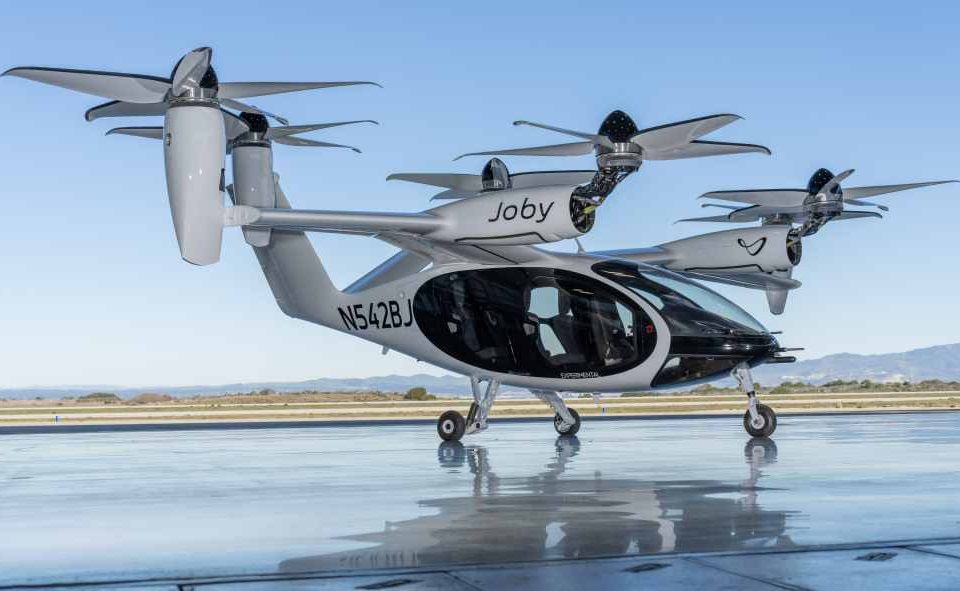
Resonant brings a different set of capabilities. Its work in radio-frequency and mission systems puts Joby closer to the communications, sensing, and electronic systems used by U.S. national security customers. Pairing those technologies with autonomous and hybrid aircraft could open opportunities that look very different from carrying passengers between airports and city centers.
Joby’s move reflects a broader change across the eVTOL sector. Commercial air taxi companies have spent years working through aircraft certification, manufacturing challenges, infrastructure requirements, and the economics of passenger service. Defense customers offer another path to revenue and a place to deploy aircraft technologies developed for civilian aviation.
The $500 million price tag makes clear that Joby sees defense as more than a side project.
It is another chapter in a company that TechStartups has followed since its early days. TechStartups first covered Joby Aviation in 2018, when the eVTOL startup raised $100 million to develop its first air taxi prototype, backed by investors including the venture arms of Intel, Toyota, and JetBlue.
Eight years later, Joby’s ambitions have grown considerably. The company that once raised venture funding to build an electric air taxi prototype is now preparing to own a defense technology operation with a major manufacturing footprint in Ohio.
Joby is still betting on electric air taxis. With Resonant Sciences, it is making a second bet that the aircraft, autonomy, and engineering developed for that future can find a much nearer-term customer in defense.