Jeff Bezos’ Blue Origin valued at $130 billion valuation in historic first outside funding round
 Daniel Levi
Posted On July 8, 2026
Daniel Levi
Posted On July 8, 2026
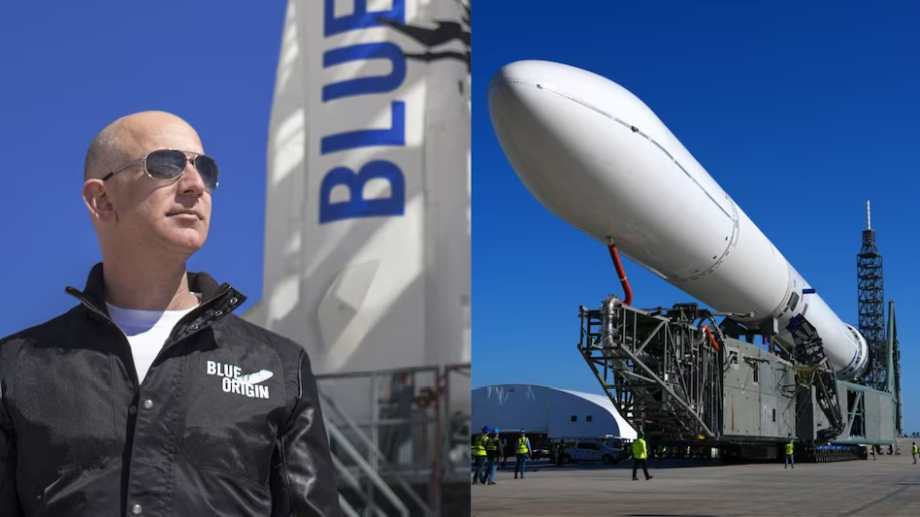
For 25 years, Jeff Bezos funded Blue Origin with his own fortune. That era is coming to an end.
Blue Origin is raising outside capital for the first time in its history in a financing round that values the company at about $130 billion, according to an exclusive report from CNBC. The fundraising marks one of the biggest milestones since Bezos founded the rocket company in 2000 and signals a new phase for a business preparing to compete more aggressively in the commercial space industry.
“Jeff Bezos’ Blue Origin is raising outside capital for the first time in its history in a funding round that values the rocket company at $130 billion,” CNBC reported, citing sources familiar with the matter who spoke to CNBC’s Andrew Ross Sorkin.
The decision reflects a major change in strategy. Blue Origin has relied almost entirely on Bezos’ personal wealth since its founding, with billions of dollars flowing into the company through sales of his Amazon stock. Bringing in outside investors opens a new source of capital as launch operations, manufacturing, and lunar exploration projects demand far larger investments than a single backer can comfortably provide over the long term.
Blue Origin was founded with an ambitious goal: enabling millions of people to live and work in space. Over the past two decades, the company has built the suborbital New Shepard rocket for space tourism, developed the heavy-lift New Glenn launch vehicle, produced the BE-4 engines that power United Launch Alliance’s Vulcan rocket, and secured a key role in NASA’s Artemis program through its Blue Moon lunar lander.
Unlike many aerospace startups, Blue Origin spent its first quarter century without traditional venture capital investors. Bezos remained its primary financial supporter, investing an estimated $28 billion into the company over the years. Annual spending continues to climb, with reports indicating Blue Origin could spend roughly $4.8 billion during 2026 alone. PitchBook records show a later-stage venture financing dated June 24, 2026, matching the timing of the newly reported fundraising.
The timing is no accident.
Chief Executive Dave Limp has told employees that Blue Origin’s long-term ambitions require much greater financial resources. The company wants to dramatically increase launch frequency, with internal goals reportedly targeting about 100 launches per year. Achieving that level of production requires larger manufacturing capacity, more launch infrastructure, and a stronger commercial business.
Investor appetite for space companies has grown sharply following SpaceX’s blockbuster public offering earlier this year, which reportedly valued Elon Musk’s company between roughly $1.75 trillion and $2 trillion and raised as much as $75 billion. Blue Origin’s leadership has acknowledged growing interest from institutional investors, stressing that Bezos is not selling control of the company. Executives have said an initial public offering remains a future possibility rather than an immediate objective.
The reported $130 billion post-money valuation places Blue Origin above many prior analyst estimates, which generally ranged from $50 billion to $100 billion before the company sought outside financing. The valuation reflects investor confidence in Blue Origin’s long-term position across commercial launches, national security missions, lunar exploration, and space infrastructure.
The fundraising comes during an important period for the company.
Blue Origin successfully launched New Glenn into orbit for the first time in January 2025, marking a breakthrough after years of development. Follow-up missions demonstrated successful booster recoveries and commercial payload capabilities. Momentum slowed in late May after a New Glenn vehicle exploded during a static fire test at Launch Complex 36 at Cape Canaveral, damaging the launch pad and forcing the company to suspend flights. Blue Origin says cleanup and reconstruction work is underway, with a return to flight targeted before the end of 2026.
The setback has not changed Blue Origin’s position in several high-value government programs. The company holds a $3.4 billion NASA contract to develop the Blue Moon lunar lander for Artemis missions and continues work with NASA and the U.S. Space Force. Engineers are building a satellite constellation expected to support future low-Earth-orbit communications and complement Amazon’s broader Project Kuiper ambitions later this decade.
Blue Origin now employs more than 12,000 people and continues to expand its manufacturing footprint in Florida as production scales.
SpaceX still holds a commanding lead in launch cadence, reusable rocket operations, and commercial market share. Blue Origin has completed only a handful of New Glenn missions compared with the hundreds of launches SpaceX has conducted in recent years. Fresh capital could help Blue Origin narrow that gap by accelerating production, expanding launch facilities, and supporting new revenue opportunities across government and commercial customers.
Bezos has long argued that Blue Origin could one day become larger than Amazon. His belief rests on the idea that space infrastructure will become one of the defining industries of the century.
This first external fundraising round provides Blue Origin with fresh financial backing to pursue its “Gradatim Ferociter” philosophy, or “step by step, ferociously,” without relying solely on Bezos’ personal fortune. The financing could create new liquidity opportunities for employees through stock-based compensation programs similar to those used by other large private technology companies.
Blue Origin has not disclosed how much money it plans to raise, who the participating investors are, or how the proceeds will be allocated.
Those details are expected to emerge as the financing progresses. For now, the $130 billion valuation sends a clear message that investors see Blue Origin as one of the few private aerospace companies with the scale, technology portfolio, and government relationships needed to compete at the highest level of the modern space economy.