Venture Capital & Startup Funding Roundup, June 29, 2026
 Nickie Louise
Posted On June 29, 2026
Nickie Louise
Posted On June 29, 2026
It’s Monday, June 29, 2026, and today’s funding activity offers a clear picture of where venture capital believes the next decade of technology will be built. Investors aren’t chasing AI simply because it carries the label. They’re backing the infrastructure beneath it—the software factories that produce enterprise applications, the semiconductor technologies that keep AI data centers running, the security platforms that protect autonomous agents, and the industrial systems that bring AI into the physical economy. The largest disclosed rounds for 8090, Reed Semiconductor, and Straiker reflect a market placing bigger bets on the foundations of AI than on AI itself.
That matters because it shows where investor conviction is hardening. The market is increasingly rewarding companies that sit in the control plane around AI adoption: power delivery, software governance, code security, digital identity, and go-to-market infrastructure. Even the smaller rounds on today’s list fit that theme. Pocket is betting on a narrow but proven hardware use case, Proception is attacking dexterous robot hands, and Baz is going after the quality-assurance layer for AI-generated code. This is a day when capital flowed toward bottlenecks, not slogans.
Another pattern stands out: strategic money is everywhere. Salesforce Ventures appeared in both 8090 and GenerativeX, Citi Ventures and Workday Ventures joined Straiker, global semiconductor companies backed Reed, and X Square Robot’s cap table now spans China’s biggest internet platforms across multiple rounds. That mix suggests investors want more than optionality; they want distribution, supply-chain leverage, and early access to platforms that could become structural in enterprise AI and physical AI.
The Macro Environment: Capital Rushes to the Control Plane
The clearest read-through from today’s funding tape is that venture money is moving closer to the risks and constraints created by AI adoption. When model capabilities rise quickly, the next investable layer is not always another model company. It is often the company that manages the new failure modes: power density in data centers, security around autonomous agents, code quality in AI-assisted development, and identity assurance in a post-quantum world. Reed, Straiker, Baz, and Wultra all fit that pattern from different angles.
That financing behavior also sits within a larger infrastructure cycle. Governments and large incumbents are placing significant weight on semiconductors, AI facilities, and industrial capacity, which in turn strengthens the case for startups building the overlooked layers around compute and deployment. South Korea’s newly announced AI-chip and semiconductor push is a useful reminder that power, packaging, memory, and manufacturing are no longer side stories to AI; they are core to it. Reed’s $100 million financing looks more legible in that context.
Investor psychology is also changing. Enterprise AI buyers have moved beyond curiosity and into procurement discipline. That is why today’s rounds favored companies that can show operational proof rather than just technical promise: 8090 is selling enterprise-grade software manufacturing, Straiker is defending active AI agents, GenerativeX has more than 80 enterprise clients already, and Baz says it has had more than 100 customers since launch. In other words, the market is paying up for systems that can survive contact with compliance teams, security leaders, and real production workflows.
There is also a notable split in check size. Bigger rounds went to infrastructure and enterprise-risk categories, while smaller financings backed sharper hardware or implementation bets. Pocket and Proception are not tiny because investors see them as toys; they are smaller because those markets still need more proof on repeatability, margins, and scale. By contrast, cybersecurity, power semis, and AI software infrastructure are already being priced as nearer-term budget line items.
Funding Rounds
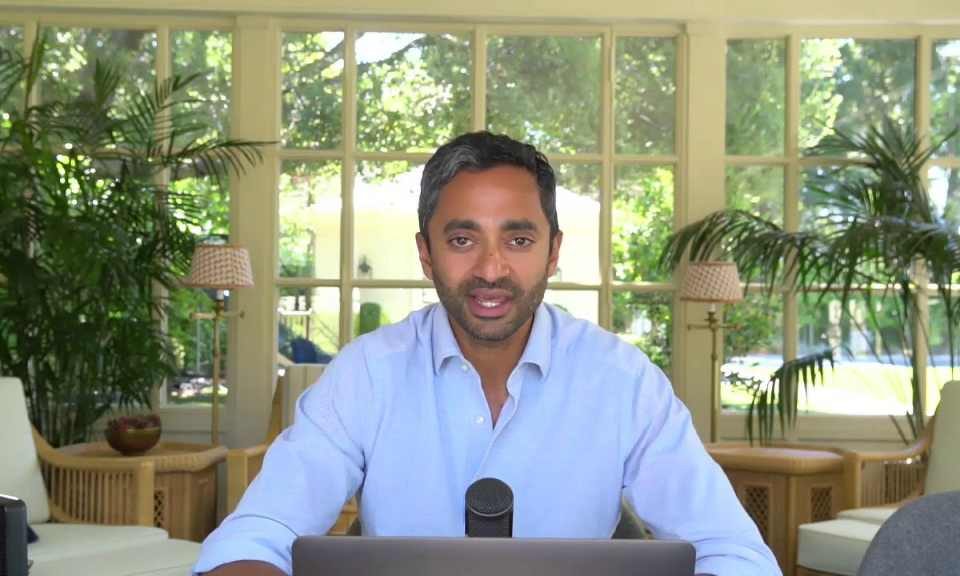
Chamath Palihapitiya’s 8090 Labs raises $135M in funding to build an AI-native software factory for enterprise engineering teams
Chamath Palihapitiya’s 8090 Labs announced a $135 million Series A led by Salesforce Ventures, with participation from WndrCo, Craft Ventures, The Production Board, Launch, and a group of well-known angel investors. The startup says it is building “Software Factory,” an AI coding product aimed at corporate programming teams that need production-quality output and enterprise controls rather than consumer-grade coding assistance. TechCrunch reports that Palihapitiya founded the company in January 2024 and is now stepping in as CEO.
Why investors care is straightforward: coding assistants are becoming common, but enterprise software generation with governance, auditability, and process rigor is still unfinished. Salesforce Ventures’ lead role suggests the commercial opportunity is not limited to developer productivity. It is an opportunity to become part of the enterprise workflow stack for AI-assisted software delivery. In a crowded coding market, 8090’s wager is that buyers want a managed production system, not a flashy co-pilot. That is a more defensible position if enterprises decide they need fewer tools and more accountable platforms.
Funding Details
Startup: 8090 Labs
Investors: Salesforce Ventures, WndrCo, Craft Ventures, The Production Board, Launch, plus angel investors including Nikesh Arora and Adam D’Angelo
Amount Raised: $135M
Total Raised: Not disclosed
Funding Stage: Series A
Funding Date: June 29, 2026
Headquarters: Menlo Park, California
Sector: Enterprise AI, developer tools
Reed Semiconductor raises $100M to scale power solutions for AI infrastructure
Reed Semiconductor announced an upsized, oversubscribed $100 million financing round with participation from leading global semiconductor companies. The company positions itself as a provider of turnkey power solutions for AI infrastructure and says the new capital will accelerate product development, expand market reach, and increase operating scale. Reed’s own materials emphasize AI, data centers, and high-performance computing power delivery.
This round is strategically important because it indicates where the next AI hardware bottleneck is headed. The market has already spent the past two years obsessing over GPUs and memory. Reed is a reminder that the power stack is becoming just as important. AI racks are becoming power-management problems as much as compute problems, and semiconductor companies do not write nine-figure checks in that category unless they see real demand pull. Reed is not chasing AI at the application layer; it is selling into the physical limits of AI deployment. That makes it interesting.
Funding Details
Startup: Reed Semiconductor
Investors: Undisclosed global semiconductor companies
Amount Raised: $100M
Total Raised: Not disclosed
Funding Stage: Growth financing
Funding Date: June 29, 2026
Headquarters: Warwick, Rhode Island
Sector: Semiconductors, power infrastructure for AI data centers
Straiker raises $64M in funding to secure the agentic workforce

Straiker has raised $64 million in Series A, bringing total funding to $85 million. The round was led by Marathon Management Partners, Citi Ventures, Illuminate Financial, and Workday Ventures, with continued backing from Bain Capital Ventures and Lightspeed. The company describes itself as “the agentic security company,” arguing that enterprise AI agents are becoming a new workforce that legacy controls were never built to govern.
The deal matters because it captures a fast-forming budget category. Security vendors are no longer just protecting human endpoints, SaaS apps, or cloud infrastructure. They are beginning to protect agents that reason, access tools, and take action across enterprise systems. Straiker’s investor group is saying: this is not just classic cybersecurity venture money. It includes financial services and enterprise software strategies that benefit from deploying autonomous software with less institutional fear. That points to a market where security is becoming the tollbooth for agent adoption.
Funding Details
Startup: Straiker
Investors: Marathon Management Partners, Citi Ventures, Illuminate Financial, Workday Ventures, Bain Capital Ventures, Lightspeed
Amount Raised: $64M
Total Raised: $85M
Funding Stage: Series A
Funding Date: June 29, 2026
Headquarters: Mountain View, California
Sector: Cybersecurity, AI agent security
Nebex raises $30M to build financial infrastructure for the space economy

Nebex announced a $30 million seed round led by GV, with participation from Eniac Ventures, 2048 Ventures, Better Tomorrow Ventures, Oceans Ventures, AIN Ventures, Also Capital, Anagram, Armory Square Ventures, Multiball Capital, Trajectory Capital, and VSC Ventures. The company, founded in late 2025 by former Axiom Space chief executive Tejpaul Bhatia and others, says it is building market infrastructure that connects space companies with sovereign buyers and the capital that moves deals.
This is one of today’s more interesting rounds because it funds space as a financial-market problem, not a launch problem. Nebex is betting that the next phase of commercial space growth depends on smoothing the revenue, payments, and cash-flow friction around government and sovereign contracts. That is a far more institutional thesis than “more satellites.” GV’s participation suggests there is real appetite for a company that serves as the exchange layer for the space economy. If that works, Nebex could end up closer to capital-market infrastructure than to traditional aerospace software.
Funding Details
Startup: Nebex
Investors: GV, Eniac Ventures, 2048 Ventures, Better Tomorrow Ventures, Oceans Ventures, AIN Ventures, Also Capital, Anagram, Armory Square Ventures, Multiball Capital, Trajectory Capital, VSC Ventures
Amount Raised: $30M
Total Raised: Not disclosed
Funding Stage: Seed
Funding Date: June 29, 2026
Headquarters: New York, New York
Sector: Space infrastructure, fintech, aerospace market infrastructure
X Square Robot raises undisclosed capital to advance embodied AI foundation models
X Square Robot announced that it has closed four consecutive financing rounds, culminating in a Series C, and now carries a valuation above $2.8 billion. The company says the new financing supports embodied AI foundation models, commercial deployments, and robotics infrastructure. It did not disclose the amount raised, but it did say IDG participated in the Series C, while HongShan and Xiaomi backed prior rounds, and that Meituan, Alibaba, ByteDance, and Xiaomi have all led rounds at different stages.
Even without a disclosed dollar figure, this is too important to ignore. China’s physical-AI race is producing companies that look less like robotics startups and more like strategic national platforms, and X Square’s cap table reflects that. The valuation is the point. When one embodied-AI company can claim support across multiple rounds from four of China’s biggest internet and consumer-tech groups, investors are signaling that the next computing interface may be physical and autonomous, not just conversational. The lack of a disclosed check size limits direct comparison, but the geopolitical and competitive signal is still loud.
Funding Details
Startup: X Square Robot
Investors: IDG in Series C; prior backing from HongShan, Xiaomi, Meituan, Alibaba, and ByteDance
Amount Raised: Undisclosed
Total Raised: Undisclosed
Funding Stage: Multiple rounds culminating in Series C
Funding Date: June 29, 2026
Headquarters: Shenzhen, China
Sector: Robotics, embodied AI, physical AI foundation models
Baz raises $9M to secure and review AI-generated code earlier in the workflow
Baz announced an additional $9 million in seed financing, bringing the total raised to $17 million. The extended seed was co-led by existing investors Battery Ventures and Boldstart Ventures, with participation from AFG Partners and Disruptive VC. The company says its platform helps engineering teams govern AI-generated code, and it launched a new product, Baz Planner, designed to catch vulnerabilities and design flaws before code is committed.
This is a sharp read on where the coding-tool market is heading. As AI-generated code becomes normal, value is shifting from code generation itself toward review, orchestration, policy enforcement, and reliability. Baz says it already serves more than 100 customers across AI, infrastructure, and cybersecurity. That customer count matters more than the check size. Investors are backing the idea that the highest-margin position in AI coding may not be the coder, but the system that decides which AI-written code can safely ship.
Funding Details
Startup: Baz
Investors: Battery Ventures, Boldstart Ventures, AFG Partners, Disruptive VC
Amount Raised: $9M
Total Raised: $17M
Funding Stage: Extended seed
Funding Date: June 29, 2026
Headquarters: San Francisco, California
Sector: Developer tools, AI code security, software quality
Wultra raises €6.8M to expand post-quantum digital identity infrastructure
Prague-based Wultra raised €6.8 million in Series A funding to expand its post-quantum authentication and digital identity platform for banks and fintechs. The round was led by Seventure Partners, with participation from ARIADNEXT founders Marc Norlain and Guillaume Despagne, as well as existing investors J&T Ventures and Elevator Ventures. The company says it now supports more than 70 clients across 25 countries.
The timing of this deal is telling. Identity has become one of the most exposed surfaces in the AI era, especially as fraud becomes more automated and regulators raise the bar for secure digital credentials. Wultra is not selling generic cybersecurity; it is targeting the overlap of regulation, banking trust, and cryptographic transition. That is where spending can become sticky. With eIDAS 2.0, PSD3/PSR, and post-quantum migration pressure building, Wultra is riding one of the clearer compliance-driven security budgets in Europe.
Funding Details
Startup: Wultra
Investors: Seventure Partners, Marc Norlain, Guillaume Despagne, J&T Ventures, Elevator Ventures
Amount Raised: €6.8M
Total Raised: At least €9.8M disclosed across announced rounds
Funding Stage: Series A
Funding Date: June 29, 2026
Headquarters: Prague, Czech Republic
Sector: Cybersecurity, digital identity, post-quantum infrastructure
Pocket raises $11M to turn AI note-taking hardware into a traction business
Pocket announced $11 million in funding from Accel, Y Combinator, and ElevenLabs co-founder Mati Staniszewski. TechCrunch reports the company has sold more than 130,000 units of its credit-card-shaped recording device, which attaches to a phone and offers recording, transcription, and follow-up features. Separate coverage from The Recursive describes Pocket as a Polish co-founded startup and pegs the round at €9.65 million.
This is one of the more useful consumer-hardware signals of the day. Dedicated AI devices have mostly produced skepticism, but Pocket looks less like a moonshot gadget and more like a constrained workflow product with a clear job to do. That distinction matters. Investors are willing to fund hardware when the use case is familiar, the attachment behavior is simple, and there is evidence of revenue traction. Pocket’s round does not imply a new consumer-device boom. It suggests the bar for hardware funding is now narrower and more evidence-driven.
Funding Details
Startup: Pocket
Investors: Accel, Y Combinator, Mati Staniszewski
Amount Raised: $11M
Total Raised: Not disclosed
Funding Stage: Early-stage venture round
Funding Date: June 29, 2026
Headquarters: Not disclosed in the source materials reviewed
Sector: AI hardware, productivity devices
Proception raises $11M to build dexterous robot hands and the data layer behind them
Proception announced an $11 million seed round led by First Round Capital, with participation from Y Combinator and BoxGroup. The company also said it is shipping the first batch of its “high-dexterity robotic hand” while opening wider orders. Founder Jay Li, formerly a technical lead on Tesla’s Optimus program, told TechCrunch that the company is pairing hardware with a glove-based data-capture system to improve dexterous manipulation.
Investors increasingly understand that “humanoids” is too broad a bucket. The most important technical constraints in robotics can become big standalone businesses if they sit on a hard bottleneck. Hands are one of those bottlenecks. If locomotion and general body coordination improve faster than manipulation, then a specialist hand supplier with its own training-data advantage could matter more than another full-stack robot startup. That is the strategic angle in Proception’s relatively modest seed: it is a subsystem bet with the potential to sell into a much larger robotics buildout.
Funding Details
Startup: Proception
Investors: First Round Capital, Y Combinator, BoxGroup
Amount Raised: $11M
Total Raised: Not disclosed
Funding Stage: Seed
Funding Date: June 29, 2026
Headquarters: Not disclosed in the source materials reviewed
Sector: Robotics, dexterous manipulation, industrial automation
GenerativeX raises $4M to scale a forward-deployed enterprise AI model
GenerativeX announced a $4 million Series A led by Nissay Capital, with participation from Salesforce Ventures, Angel Bridge, DeepCore, and SMBC Venture Capital. The company says it serves more than 80 enterprise clients and uses teams of forward-deployed engineers who work directly with customer organizations to turn AI strategy into production deployments. It has offices in San Francisco, New York, and Tokyo.
The round is small, but the model is worth paying attention to. A lot of enterprise AI spend still leaks into consulting, pilots, and half-finished internal projects. GenerativeX is trying to formalize that messy middle with a service-code hybrid model. Investors care because this is where many large enterprises still are: they want deployment help, not just software seats. Salesforce Ventures’ participation again hints at a bigger pattern in today’s deal flow. Strategic investors are backing companies that can help translate AI platform demand into real implementations.
Funding Details
Startup: GenerativeX
Investors: Nissay Capital, Salesforce Ventures, Angel Bridge, DeepCore, SMBC Venture Capital
Amount Raised: $4M
Total Raised: Not disclosed
Funding Stage: Series A
Funding Date: June 29, 2026
Headquarters: Offices in San Francisco, New York, and Tokyo
Sector: Enterprise AI, implementation infrastructure, developer services
What Today’s Funding Activity Reveals
The strongest pattern across today’s rounds is that AI is being financed as an operating-system problem rather than a novelty problem. 8090, Baz, GenerativeX, and Straiker all address different layers of enterprise AI execution: code generation, code review, implementation, and security. Reed adds the physical power layer, Wultra adds identity assurance, and Nebex extends the pattern into space-market infrastructure. Even the smaller hardware bets, Pocket and Proception, focus on practical interfaces and subsystem pain points rather than generalized consumer hype.
A second pattern is investor concentration around strategic relevance. Salesforce Ventures turned up twice. Enterprise and fintech-linked investors backed Straiker. Global semiconductor companies backed Reed. China’s platform giants helped validate X Square across multiple stages. The message is that venture capital is not acting alone here. Corporates want positions in companies that either complement their platforms, reduce implementation friction, or give them visibility into the next important layer of the stack.
Geographically, the United States still dominates the biggest disclosed checks in this 12-hour slice, but the more interesting spread is thematic rather than national. China is aggressively financing embodied AI, Central Europe is producing serious identity-security companies, and newer space and hardware bets are drawing capital outside the usual consumer or SaaS playbook. This does not look like one market chasing one trend. It looks like different ecosystems are funding the bottlenecks most relevant to their strengths.
The last takeaway is about budget ownership. These startups increasingly sell into line items that are easier to justify than experimental AI spend. Power efficiency, cybersecurity, regulatory compliance, and software throughput are not discretionary in the same way demo-friendly AI features are. That makes the current funding tape feel more durable than a day filled with generic assistant startups would have.
Comparative Funding Table
| Startup | Amount Raised | Sector | Funding Stage | Lead Investors | Country |
|---|---|---|---|---|---|
| 8090 Labs | $135M | Enterprise AI, developer tools | Series A | Salesforce Ventures | United States |
| Reed Semiconductor | $100M | Semiconductors, AI power infrastructure | Growth financing | Undisclosed global semiconductor companies | United States |
| Straiker | $64M | Cybersecurity, AI agent security | Series A | Marathon Management Partners, Citi Ventures, Illuminate Financial, Workday Ventures | United States |
| Nebex | $30M | Space infrastructure, fintech | Seed | GV | United States |
| X Square Robot | Undisclosed | Robotics, embodied AI | Multiple rounds culminating in Series C | IDG in Series C; prior backing from Xiaomi, HongShan, Meituan, Alibaba, ByteDance | China |
| Baz | $9M | Developer tools, AI code security | Extended seed | Battery Ventures, Boldstart Ventures | United States |
| Wultra | €6.8M | Cybersecurity, digital identity | Series A | Seventure Partners | Czech Republic |
| $11M | AI hardware, productivity devices | Early-stage venture round | Accel | Not disclosed publicly | |
| Proception | $11M | Robotics, dexterous manipulation | Seed | First Round Capital | Not disclosed publicly |
| GenerativeX | $4M | Enterprise AI implementation | Series A | Nissay Capital | United States / Japan |
Strategic Takeaways for Founders and Investors
For founders, the clearest lesson is that capital is still available for AI, but the market wants tighter problem statements. The winning pitch is less “we use AI” and more “we remove a specific bottleneck created by AI adoption.” Reed removes power strain. Straiker reduces agent risk. Baz reduces bad code getting into production. Wultra addresses the collision of regulation, identity, and cryptography. Those are board-level budget conversations, not experimental line items.
Founders should also pay attention to investor composition. Strategic and corporate participation showed up repeatedly today, and for good reason. In this market, distribution, platform adjacency, and ecosystem trust can matter as much as raw capital. If your company sits inside enterprise workflows, deep infrastructure, or regulated sectors, the right strategic investor may be worth more than a marginally higher valuation from a purely financial buyer.
For investors, today’s rounds reinforce a familiar yet still underappreciated theme: defensibility is moving down the stack. The closer a company gets to production systems, scarce data, compliance requirements, or hard physical constraints, the more durable its pricing power can become. That is why code-review infrastructure, power semis, and post-quantum identity can look more attractive than many end-user AI apps, even if the top-line story sounds less exciting at first glance.
There is also a cautionary point on consumer and hardware bets. Pocket and Proception made the list not because investors are suddenly throwing money at every new device or robotics component, but because each showed a clearer wedge. Pocket has shipped product and sold units. Proception is going after a well-known bottleneck in humanoid development. In the current market, hardware can still get funded, but it has to arrive with a focused use case, not a broad promise.
Conclusion
If there is one phrase that captures today’s funding activity, it is this: venture capital is moving from AI possibility to AI accountability. The biggest checks and the sharpest strategic signals went to companies that can make AI systems deployable, governable, financeable, power-efficient, and physically capable. That is a more mature kind of risk appetite than the market showed a year ago.
The startup ecosystem now appears headed toward a structure in which value accrues to the firms that control failure points. In practical terms, that means the next breakout companies may be less likely to sell AI as magic and more likely to sell reliability, throughput, identity, and infrastructure. Today’s funding tape is a reminder that venture money is no longer just about asking what AI can do. It is asking what must exist for AI to work at scale.