Venture Capital & Startup Funding Roundup, June 11, 2026
 Nickie Louise
Posted On June 11, 2026
Nickie Louise
Posted On June 11, 2026
It’s Tuesday, June 9, 2026, and venture investors continue to plough capital into frontier tech. Today’s biggest deals reinforce a clear theme: AI-driven infrastructure – both physical and digital – is where the money is flowing. Jeff Bezos’s AI start‑up Prometheus kicked off the day by announcing a staggering $12 billion Series B (at a $41 b valuation) to scale its industrial AI software. Not long after, NEURA Robotics – a German Physical AI robotics platform – revealed up to $1.4 billion in Series C funding led by crypto‑native investors (Tether) alongside tech giants (Qualcomm, Amazon, NVIDIA). These mega‑rounds dwarf most funding in 2026 and underscore a broader pattern: investors are betting on marrying AI with real‑world systems (robots, factories, hardware), not just digital apps.
Meanwhile, fintech and decentralized finance startups are also grabbing outsized rounds today. Digital Asset, the firm behind the Canton on‑chain network for capital markets, raised $355 million to accelerate blockchain integration in finance. Canada’s KOHO neobank became a unicorn with a C$130 million ($230M) at a C$1.47B valuation to expand its AI‑powered lending platform. In short, massive funding is converging on two hot fronts – Physical AI/robotics and next‑gen finance – highlighting where venture capitalists see the next wave of innovation.
The Macro Environment: Physical AI & Fintech Infusion
Global venture funding has reached unprecedented levels this year, driven by AI hype. Crunchbase reports that Q1 2026 saw a record $300 billion invested globally – roughly 70% of all 2025’s VC dollars – with 80% of that going to AI‑related companies. Today’s haul continues that trend: outsized rounds to AI startups around the world. Notably, U.S. companies still dominate global VC (83% of Q1 funding), but major non‑U.S. deals are breaking through too. European and Canadian companies like NEURA (Germany), Theker (Spain) and KOHO (Canada) all raised multi-hundred-million-dollar rounds, signalling that AI and fintech are truly global drivers.
Investor psychology is “risk‑on” for AI infrastructure. Sovereign and crypto‑wealth funds are acting like traditional VCs – e.g., Tether’s $1.4B NEURA bet and Abu Dhabi’s Mubadala backing KOHO – reflecting a sovereign AI-arms-race mindset. Institutional giants (BlackRock, Goldman, DTCC, etc.) are joining crypto‑natives in these rounds, blurring old lines between fintech and blockchain. At the same time, public market pressures (flat tech IPOs) seem to be pushing private investors to double down on transformational sectors: robotics, semiconductors, decentralized finance. In sum, capital is concentrating in startups that blend digital intelligence with physical systems or that redefine core infrastructure (payments, cloud agents, compliance) for enterprises.
Prometheus raises $12B in funding to supercharge engineering AI
Seattle‑based Prometheus (aka Project Prometheus) builds AI tools for engineering and manufacturing. Today, the AI startup announced a massive $12 billion Series B funding at a $41 billion valuation. Prometheus’s platform aims to act as an “artificial general engineer” – optimizing design, production and operations across industries. Investors are betting Bezos’s vision can revolutionize how physical products are built and maintained.
The round was backed by major institutions (BlackRock, Goldman Sachs, Arch Venture Partners, DST Global, JPMorgan) alongside Bezos himself and AWS infrastructure. For investors, Prometheus embodies the next wave of AI: not just chatbots, but intelligence embedded in factories and products. In a crowded enterprise AI field, its $41B price tag signals sky‑high expectations for monetizing AI in manufacturing.
Funding Details:
Startup: Prometheus
Investors: BlackRock, Goldman Sachs, Arch Venture Partners, DST Global, JPMorgan, Jeff Bezos (and AWS)
Amount Raised: $12,000,000,000
Total Raised: ~$12,300,000,000 (including prior seed)
Funding Stage: Series B
Funding Date: June 11, 2026
Headquarters: San Francisco, USA
Sector: Enterprise AI / Industrial Software
NEURA Robotics raises $1.4B in funding to build a Physical AI platform
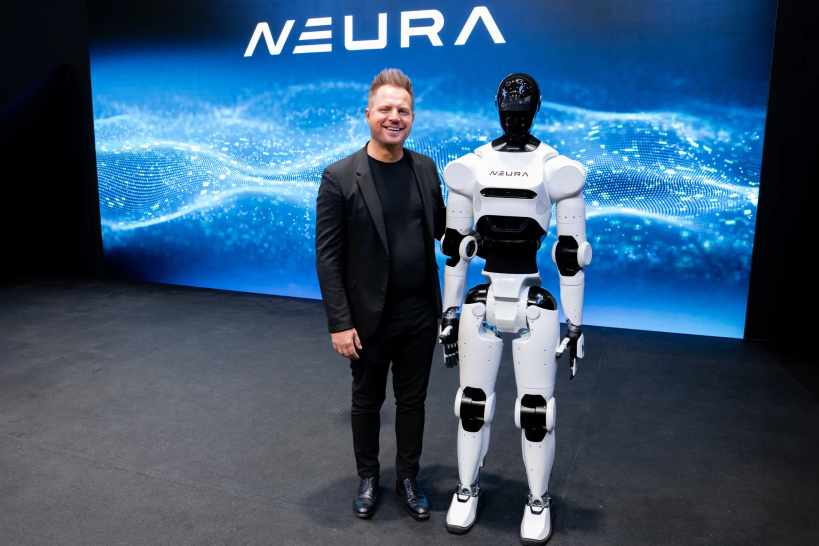
Germany’s NEURA Robotics is creating “cognitive” humanoid and mobile robots with shared AI (the Neuraverse). It announced up to $1.4B in Series C funding, the largest round ever for a full-stack robotics company. This “Physical AI” play combines AI models with robots, sensors and edge compute to learn in the real world. The funding was co-led by Tether and Qualcomm’s venture arm, with Amazon, NVIDIA, Bosch, Schaeffler, the EIB and others in the syndicate.
NEURA will use the capital to scale production of its humanoids and build “Gyms” for large‑scale robot training. Investors care because NEURA sits at the nexus of robotics, AI, and manufacturing automation – a long‑term bet that robots will increasingly handle complex work. NEURA’s existing order backlog exceeds $1 b, suggesting real commercial traction. In a field where most AI is software, NEURA’s physical approach (robots that continuously learn) represents a new frontier – and the massive round signals investors believe Physical AI could be the next major shift in tech.
Funding Details:
Startup: NEURA Robotics
Investors: Tether (lead), Qualcomm Ventures, Amazon (via AWS), NVIDIA, imec.xpand, Bosch, Schaeffler, European Investment Bank, Lingotto, InterAlpen, others
Amount Raised: $1,400,000,000 (Series C)
Total Raised: ~$2,000,000,000 (including prior rounds)
Funding Stage: Series C
Funding Date: June 10, 2026
Headquarters: Metzingen, Germany
Sector: Robotics / Physical AI Platform
Digital Asset raises $355 M in funding to accelerate blockchain for finance
Digital Asset, creator of the Canton blockchain for financial institutions, secured $355 million in funding. This round, led by a16z Crypto, adds to a wave of institutional investment in blockchain. Digital Asset’s platform lets banks and asset managers trade regulated assets on a decentralized ledger. Investors include major Wall Street and crypto players (Coinbase Ventures, Pantera, SevenX, etc.) aiming to speed up on‑chain capital market workflows.
The funding will expand Canton’s use of bonds, equities and other assets under strict privacy controls. In today’s deal, the consensus is clear: financial infrastructure is moving on‑chain. As Digital Asset’s CEO notes, big banks and exchanges are “accelerating sovereign and institutional-grade blockchain” – and they backed it with hundreds of millions today.
Funding Details:
Startup: Digital Asset
Investors: Andreessen Horowitz (crypto), Dragoneer, Accel (Liane B.), Earlybird, Phoenix, 11:11, Eight Roads, Citi Ventures, Pacific Century, Pine Labs, Crestline, Rand… and others (70+ total)
Amount Raised: $355,000,000
Total Raised: ~$500,000,000 (approximate, including previous $135M round)
Funding Stage: Late Stage (Series unknown)
Funding Date: June 11, 2026
Headquarters: New York, USA
Sector: Blockchain / Fintech Infrastructure
KOHO raises C$130 m to become a federal bank
Toronto‑based KOHO is a fintech “challenger bank” for consumers. It announced a C$130 million (~$100M) Series E, making it Canada’s latest unicorn. The all‑equity round was backed by Abu Dhabi’s Mubadala, venture firm Savano, Shopify’s CEO Tobi Lütke, and others. KOHO will use the money to meet capital requirements for its pending federal banking license.
Investors care because KOHO has built scale (2.5M users, $250M in revenue) and is now positioned to offer full‑service banking in Canada. The long‑awaited banking license could open up new products (loans, mortgages) and reduce costs. This round signals that cross‑border fintech innovation is alive: a Canadian fintech scaled to unicorn status while tapping Middle Eastern and tech-focused backers.
Funding Details:
Startup: KOHO Financial Inc.
Investors: Mubadala Investment Company, Savano Capital Partners, Shopify CEO Tobias Lütke, Michael Linford (Affirm COO), Portage Ventures, BDC Capital, Drive Capital, others
Amount Raised: C$130,000,000
Total Raised: C$507,000,000 (about $390M)
Funding Stage: Series E
Funding Date: June 10, 2026
Headquarters: Toronto, Canada
Sector: Fintech / Neobank
nesto raises C$302 m to expand AI mortgage platform
Montreal’s nesto is a fintech startup offering an AI‑driven home mortgage platform. It secured C$302 million (~$230M) in Series E funding at a C$1.47B valuation. Lead investors included Quebec’s Caisse de dépôt (CDPQ), Fidelity Canada and others. With this capital, nesto will scale its AI “Maestro” home equity platform and onboard financial institution partners.
The raise reflects soaring investor interest in fintech digitizing traditional markets: nesto now edges toward Canada’s fintech elite. Its valuation and growth plans suggest mortgage origination is ripe for disruption via data and AI. For investors, nesto’s round underscores that AI‑powered financial services (especially in large, steady markets like home lending) remain a top priority in 2026.
Funding Details:
Startup: nesto Group
Investors: CDPQ (La Caisse), Fidelity Investments Canada, PICton Investments, Endeavor Catalyst, Portage Ventures, Diagram Ventures, NAventures, National Bank of Canada, Fonds de solidarité FTQ, Fondaction, others
Amount Raised: C$302,000,000
Total Raised: ~$450,000,000 (including prior rounds)
Funding Stage: Series E
Funding Date: June 10, 2026
Headquarters: Montreal, Canada
Sector: Fintech / Mortgage Lending Platform
THEKER raises €73 M in funding to bring industrial AI robots to market
Barcelona‑based THEKER makes “generalist” AI robots for factories and warehouses. It announced a €73 million (~$85M) Series A led by CRV. Theker’s founder says these robots are built to “work the day they arrive” and improve via AI afterwards. Key backers include Samsung (its first investment in Spain), luxury group LVMH, Cathay Innovation and Henkel Ventures. This round will fund deployments with large industrial customers, deepen THEKER’s AI stack and grow its engineering team.
In context, today’s Theker funding slots into a broader surge: other recent European robotics raises include Germany’s RobCo (€100M) and Sereact (€93M) for industrial automation. Theker’s Series A at a unicorn‑level valuation highlights how “industrial AI” robotics is accelerating globally. For investors, backers like CRV see Theker carving out a rare space: deep tech with real‐world factory revenue, enabled by breakthroughs in vision and AI.
Funding Details:
Startup: THEKER (Spain)
Investors: CRV (lead), Samsung NEXT, LVMH Luxury Ventures, Cathay Innovation, 20VC, Henkel Ventures, Korelya, Bright Pixel Capital (Sonae), existing backers
Amount Raised: €73,000,000 (~$85M)
Total Raised: ~$100,000,000 (including seed funding)
Funding Stage: Series A
Funding Date: June 11, 2026
Headquarters: Barcelona, Spain
Sector: Robotics / AI (Industrial Automation)
Poetic raises $50M in funding to automate loans and underwriting
Poetic (San Francisco) offers AI agents that automate insurance underwriting and lending workflows. It emerged from stealth today with a $50 million Series A at a $500M valuation. The round was co‑led by Founders Fund and Kleiner Perkins, with strategic checks from OpenAI (Mira Murati) and other angels. Poetic’s platform uses large language models to process financial data, promises to cut manual underwriting time dramatically.
Investors care because automating these “last boring finance jobs” with AI is lucrative – and Poetic has marquee Silicon Valley backers. This deal signals a hot sub‑theme: enterprise AI agents. Founders aspiring to build AI copilots (for contracts, loans, code, etc.) will note Poetic’s high valuation and heavyweight support – a vote of confidence in this new application area of generative AI.
Funding Details:
Startup: Poetic, Inc.
Investors: Founders Fund (lead), Kleiner Perkins (lead), OpenAI (Mira Murati), Yahoo co‑founder Jeremy Stoppelman, other angels
Amount Raised: $50,000,000
Total Raised: $58,500,000 (including prior $8.5M seed)
Funding Stage: Series A
Funding Date: June 11, 2026
Headquarters: San Francisco, USA
Sector: AI / Enterprise (Automated Underwriting and Document AI)
Aryon Security raises $29M in funding to secure cloud infrastructure
Tel Aviv’s Aryon Security builds a proactive platform to prevent cloud misconfiguration risks. It raised $29 million Series A led by Brightmind Partners. Additional investors include Datadog Ventures, Skinos Ventures, Blumberg Capital and Viola Ventures. Aryon’s SaaS scans cloud accounts in real time, enforcing security policies before anything reaches production. The company, founded in 2025, says this fresh capital will help expand its platform beyond cloud to support AI systems and SaaS apps as well.
Today’s round highlights investors’ renewed focus on cybersecurity for AI-era infrastructure: as more data and AI workloads live in the cloud, companies like Aryon (which automate secure setup and governance) are attracting funding. Founders in cybersecurity should note that cloud security startups are still drawing solid Series A checks, especially those with forward‑looking product roadmaps.
Funding Details:
Startup: Aryon Security
Investors: Brightmind Partners (lead), Datadog Ventures, Skinos Ventures, Blumberg Capital, Viola Ventures
Amount Raised: $29,000,000
Total Raised: $38,000,000
Funding Stage: Series A
Funding Date: June 10, 2026
Headquarters: Tel Aviv, Israel
Sector: Cybersecurity (Cloud Infrastructure Protection)
Jedify raises $24M in funding to give AI agents real‑world context
Jedify (New York) offers an AI platform that builds “context graphs” of a company’s data to make enterprise AI agents smarter. It secured a $24 million Series A led by Norwest Ventures, with Snowflake Ventures, S Capital, and others participating. Jedify’s software connects an organization’s structured (databases) and unstructured (docs, communications) data so that AI agents can access the right business context at runtime.
The startup says this capital will speed product development and help move AI pilots into production by reducing hallucinations. In today’s market, any startup that enables reliable enterprise AI is attracting investor attention. Jedify’s raise shows demand for AI infrastructure tools that solve data silos. Founders building LLM applications should heed this: providing a “context layer” is now seen as crucial infrastructure work, evidenced by this seven‑figure series.
Funding Details:
Startup: Jedify
Investors: Norwest Ventures (lead), Snowflake Ventures, S Capital VC, Cerca Partners, Oceans Ventures
Amount Raised: $24,000,000
Total Raised: $33,500,000
Funding Stage: Series A
Funding Date: June 10, 2026
Headquarters: New York, USA
Sector: AI / Enterprise Software (Context Graph for AI Agents)
Capsa AI raises $18M in funding to organize private equity data
London/New York‑based Capsa AI provides a data platform for private equity firms. It announced an $18 million Series A led by TX Ventures and Pivot Investment Partners. Capsa’s AI-driven solution aggregates deal documents, emails and spreadsheets so investment teams have one coherent knowledge base.
The company says this funding will further develop its platform across deal sourcing, diligence and portfolio monitoring. This niche fintech/AI round is smaller, but still notable: it shows continued interest in vertical AI applications beyond general agents. Startups that tackle specific high‑value workflows (here, capital markets intelligence) can still secure funding if they demonstrate clear ROI.
Funding Details:
Startup: Capsa AI
Investors: TX Ventures, Pivot Investment Partners (co‑leads), Bek VC, Antler, Outward VC, Cornerstone VC, angel Paul Forster
Amount Raised: $18,000,000
Total Raised: $20,000,000
Funding Stage: Series A
Funding Date: June 10, 2026
Headquarters: London, UK
Sector: Fintech / Enterprise AI (Private Equity Data Platform)
What Today’s Funding Activity Reveals
The day’s deals paint a broader picture of where venture capitalists see potential. First, cross‑industry AI is in full swing. Beyond open‑ended chat AI, investors are ploughing money into applied AI: robots that work in factories (NEURA, THEKER), agents that automate specific corporate tasks (Poetic, Jedify), and infrastructure for real‑world AI training. This suggests an emerging pattern: the fusion of digital and physical AI. As NEURA’s CEO put it, AI “will move, interact, learn and work beside us in the real world”, and today’s rounds show belief that turning that vision into reality can create massive businesses.
Second, financial innovation remains a priority. Rounds like Digital Asset’s and KOHO’s highlight both blockchain finance and modern fintech as capital magnets. Digital Asset’s funding indicates institutions are gearing up to put trillions of real‑world assets on scalable blockchains. Meanwhile, KOHO and nesto (with backing from banks, pension funds and fintech VCs) underscore a scramble to modernize payments, banking and lending platforms. The presence of global players (Mubadala, DTCC, Caisse, etc.) in these rounds shows that capital providers view fintech as strategically important – from sovereign wealth funds to traditional financial institutions.
Geographically, though the U.S. remains dominant, the top deals span North America and Europe. California may lead “frontier AI,” but funding chases talent worldwide. EU robotics startups and Canadian fintechs notched multi-hundred-million deals, indicating venture flows are truly global.
Finally, investor concentration and valuation are high. When one round is $12B (Prometheus) and another $1.4B (NEURA), it skews headline numbers. We’re seeing fewer but larger deals. Today’s mega‑rounds signal capital is centralizing on a few “platform” bets rather than dozens of smaller startups – echoing the Q1 trend that a handful of companies (OpenAI, Anthropic, etc.) captured most capital. For founders, this means there’s fat on both ends: sky‑high rounds for those in hot sectors, but harder follow‑on funding for others. For investors, it means many are doubling down on incumbent winners and infrastructure plays.
Comparative Funding Table
| Startup | Amount Raised | Sector | Funding Stage | Lead Investors | Country |
|---|---|---|---|---|---|
| Prometheus | $12,000M | AI / Industrial Software | Series B | BlackRock, Goldman Sachs, DST, Arch Ventures, JPMorgan | United States |
| NEURA Robotics | $1,400M | Robotics / Physical AI | Series C | Tether (lead), Qualcomm, Amazon, NVIDIA, Bosch, Schaeffler | Germany |
| Digital Asset | $355M | Blockchain / Fintech | Late Stage | a16z Crypto (lead), Dragoneer, Accel, Citi Ventures, 11:11, Pine Labs, etc. | United States |
| nesto | C$302M (~$230M) | Fintech / Mortgage Lending | Series E | CDPQ (La Caisse), Fidelity Canada, Picton, Endeavor Catalyst, etc. | Canada |
| KOHO | C$130M (~$100M) | Fintech / Neobank | Series E | Mubadala, Savano, Tobias Lütke (Shopify), Michael Linford, Portage | Canada |
| THEKER | €73M (~$85M) | Robotics / Industrial AI | Series A | CRV (lead), Samsung NEXT, LVMH Luxury Ventures, Cathay Innovation | Spain |
| Poetic | $50M | AI / Underwriting Automation | Series A | Founders Fund, Kleiner Perkins (co-leads); OpenAI (Mira Murati), Jeremy Stoppelman | United States |
| Aryon Security | $29M | Cybersecurity (Cloud) | Series A | Brightmind Partners (lead), Datadog Ventures, Blumberg, Viola | Israel |
| Jedify | $24M | AI / Enterprise Agents | Series A | Norwest (lead), Snowflake Ventures, S Capital VC | United States |
| Capsa AI | $18M | Fintech / Private Equity AI | Series A | TX Ventures, Pivot Investment Partners | United Kingdom |
Strategic Takeaways for Founders and Investors
Founders: Today’s funding flurry underscores that startups tackling real-world challenges with AI can attract big checks. If you’re in industrial automation, manufacturing, fintech or enterprise AI, investors are highly interested – but they expect significant traction or unique IP. Note the importance of defensibility: NEURA is backed by a broad industrial consortium, Poetic by OpenAI and specialized VCs. Founders should emphasize not just hot tech, but clear value in the physical or regulated domain. Also, these valuations are high. If you raise now, plan for capital efficiency: market conditions could shift, so use funds to hit clear milestones (revenue, partnerships, regulatory progress). Lastly, global is okay – THEKER in Spain and KOHO in Canada show you don’t have to be in Silicon Valley to reach unicorn status, but local investor clusters (Tokyo, the EU, the Middle East) are crucial.
Investors: The diversity of sectors funded today shows a few priorities. Leading VCs are doubling down on deep infrastructure and specialized AI. For instance, an investor placing big bets on cloud security (Aryon) or industrial AI (NEURA, Theker) signals those areas will see heavy R&D and competition. Investors should watch for consolidation: as founders with deep tech build scale, M&A or IPO plays could emerge. Also, many deals feature consortium-style round participation (fintech deals have banks and pension funds; AI deals have tech cos as investors). This suggests that syndicated bets on platforms (rather than lone VC checks) is the model. Finally, the capital overload means price sensitivity may be rising: startups will raise at very high valuations now, so later rounds may demand stricter terms. Diligence should focus on business fundamentals, not just tech coolness.
Looking ahead, these funding signals suggest the market is valuing outcomes over novelty. AI’s next phase is about practical impact: reducing costs, entering new markets, automating complex tasks. Both founders and investors should align on measurable adoption in finance, manufacturing, cybersecurity or whatever space they’re in. The bar will be high – as today’s rounds show, only solutions with potentially massive global reach or revenue will secure mega‑deals. But for those building the critical platforms of tomorrow (from blockchain settlements to factory robots), venture capital is abundant. In short, the VC dollars are flooding towards AI’s real‑world applications and the infrastructure that enables them – and that’s the clearest forecast for where the startup ecosystem is headed.