It’s Wednesday, June 10, 2026, and the global tech engine is running red-hot. In the last 24 hours alone, billions are pouring into AI infrastructure, humanoid robots are inching toward mass production in China, zero-days are cracking enterprise defenses, and regulators are forcing open closed platforms.
AI is no longer living inside chatbots. It is moving into debt markets, power grids, satellites, sports stadiums, WhatsApp, Siri, and the cooling systems buried inside data centers. Today’s tech headlines show a clear shift: the AI race is becoming an infrastructure race, a regulation fight, and a global capital war all at once. From OpenAI’s 10-gigawatt ambitions and China’s $295 billion data-center plan to Europe’s crackdown on platform control, the future of tech is being built less like an app and more like a new industrial system.
From Big Tech’s high-stakes bets in Asia to fresh cybersecurity wake-up calls and frontier hardware pivots, here are the top tech news stories that will shape tomorrow’s startup battlefield and innovation agenda today.
Technology News Today
Microsoft AI Chief Says Superintelligence Is Near, but Jobs Will Change by Task
Microsoft AI CEO Mustafa Suleyman said superintelligence is getting closer but argued that AI will automate tasks rather than wipe out entire jobs. He also emphasized Microsoft’s push to build more of its own AI capabilities while continuing its partnership with OpenAI.
The comments show Microsoft trying to balance ambition with public trust. As AI systems become more powerful, Big Tech companies face pressure to explain how the technology will affect work, safety, and competition.
Why It Matters: Microsoft is positioning itself as both an OpenAI partner and an independent frontier AI player.
Source: The Verge.
Morgan Stanley Says AI Debt Issuance Could Hit $570 Billion in 2026
Morgan Stanley expects AI-related global debt issuance to more than double to nearly $570 billion this year, as hyperscalers and AI infrastructure builders look beyond equity markets to fund massive data center expansion.
The forecast shows how the AI boom is spreading into credit markets. Training and running frontier models now require chips, power, land, cooling, fiber, and long-term energy contracts. That is turning AI infrastructure into one of the largest capital-formation stories in global tech.
Why It Matters: AI is no longer just a software race; it is becoming a debt-funded infrastructure buildout.
Source: Reuters.
Anthropic Releases Claude Fable 5, But Limits the AI Model from Discussing High-Risk Topics Like Cybersecurity and Biology
Anthropic has restricted its latest Fable 5 AI model from engaging with queries on cybersecurity, biology, and chemistry, which it deems too dangerous for public release. The safeguards aim to prevent misuse that could lead to harmful scientific insights or malicious applications. The model otherwise excels in creative and ethical reasoning tasks. This proactive approach reflects Anthropic’s commitment to responsible scaling of frontier AI systems, balancing capability with risk mitigation.
The restrictions were implemented following internal evaluations of potential dual-use scenarios. In the AI startup landscape, such built-in guardrails set precedents for safety-first development, influence investor expectations and regulatory conversations around high-capability models, and encourage innovation within defined ethical boundaries.
Why It Matters: Anthropic’s decision to block high-risk topics in its Fable 5 model advances responsible AI practices, helping startups navigate safety requirements and shaping policy for frontier model deployment.
Source: TechStartups via Anthropic, CNBC.
Palantir CEO Alex Karp Blasts AI Layoff Boasts as ‘Bernie Sanders Manifesto’
Palantir CEO Alex Karp sharply criticized tech executives who publicly celebrate workforce reductions enabled by AI automation, likening such statements to endorsing a “Bernie Sanders manifesto.” He argued that aggressive AI-driven headcount cuts risk long-term damage to innovation, employee morale, and the industry’s talent pipeline. Karp positioned Palantir as focused on responsible AI deployment that augments rather than replaces human roles.
The remarks come amid broader debates on AI’s societal impact, with Karp warning that short-term efficiency gains could undermine the creative workforce needed for sustained technological leadership. This critique resonates across the startup ecosystem by urging founders to weigh AI efficiency against talent retention, potentially shaping corporate culture and attracting regulatory scrutiny on responsible AI adoption.
Why It Matters: Palantir’s CEO warning against AI-fueled mass layoffs highlights the tension between efficiency and workforce sustainability, pushing startups toward balanced AI strategies that preserve innovation and avoid backlash.
Source: Fortune.
Google Brings Gemini AI Into the 2026 World Cup
Google is bringing Gemini into the 2026 FIFA World Cup through a partnership with Argentina’s national team and broader AI-powered fan features. Gemini will support training analysis, performance breakdowns, and real-time fan experiences.
The move pushes AI deeper into sports, media, and live entertainment. For Google, the World Cup offers a global stage to make Gemini more visible outside productivity apps and search.
Why It Matters: AI is moving into mass-market culture through sports, not just enterprise software.
Source: Wired.
SpaceX Pushes Toward Orbital AI Computing Tests by Late 2027
SpaceX is accelerating plans to test space-based AI computing infrastructure, with demonstration missions now targeted for late 2027, according to Reuters. The company has pitched orbital compute as part of its long-term growth strategy while pursuing one of the largest IPOs in history.
The plan would use satellites as future AI data centers, potentially reducing some terrestrial constraints around land and power. But the effort depends heavily on Starship, satellite manufacturing, thermal management, and regulatory approval at unprecedented scale.
Why It Matters: SpaceX is trying to turn low-Earth orbit from a communications layer into a compute layer for AI.
Source: Reuters.
OpenAI Weighs 10-Gigawatt Ohio AI Data Center Lease With Nvidia Backing
OpenAI is reportedly in talks to lease a planned 10-gigawatt data center campus on federal land in Ohio, with Nvidia potentially providing financial support. The Information first reported the talks, underscoring how closely frontier AI labs are now tied to physical infrastructure.
A 10-gigawatt campus would be enormous by today’s standards and would signal where AI competition is heading. The next phase may be decided less by model demos and more by who can secure enough chips, electricity, grid access, cooling, and financing.
Why It Matters: OpenAI’s growth increasingly depends on industrial-scale compute capacity, not just model research.
Source: The Information.
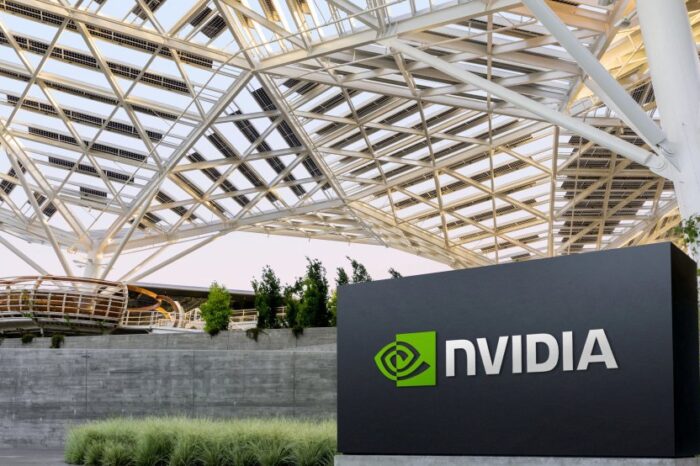
Super Micro Computer Raises $7 Billion in Equity to Meet Exploding AI Server Demand
Super Micro Computer announced plans to raise $7 billion through equity offerings, directly targeting the surging need for AI-optimized servers. The company, a key supplier of high-performance computing hardware, cited unprecedented demand from hyperscalers and AI developers as the driver behind the capital raise. This move will fund expanded production capacity, including new manufacturing lines and supply chain enhancements to accelerate delivery of rack-scale systems powered by the latest GPUs and accelerators.
The funding comes as data center operators scramble to scale infrastructure amid the AI boom, with Super Micro positioning itself as a critical partner for firms deploying large language models and inference workloads. Executives highlighted that the proceeds will support R&D on liquid-cooled, energy-efficient designs, addressing power and thermal challenges that have bottlenecked previous deployments.
In the broader tech ecosystem, this capital infusion strengthens the hardware supply chain that underpins AI innovation, enabling faster iteration for startups building applications on top of cloud and on-prem infrastructure while reducing dependency risks for Big Tech buyers.
Why It Matters: Super Micro’s massive equity raise underscores the intense capital requirements for AI infrastructure scaling, giving startups and hyperscalers more reliable access to cutting-edge servers and accelerating the global AI deployment race.
Source: Reuters.
Meta AI Software Bug Allows Attackers to Hijack Over 34,000 Instagram Accounts
A vulnerability in Meta’s new AI software enabled unauthorized access to more than 34,000 Instagram accounts, allowing attackers to seize control without valid credentials. The bug was quickly patched after discovery, but the incident exposed weaknesses in AI systems used for platform security functions. No evidence of widespread data theft was reported, though affected users were notified.
The flaw originated during the integration of AI-driven authentication and moderation tools, highlighting risks when deploying experimental models at scale. Meta emphasized that core systems remained secure. This breach serves as a cautionary tale for the startup ecosystem, emphasizing rigorous testing of AI security features and the need for rapid response protocols to maintain user trust in social and consumer platforms.
Why It Matters: Meta’s AI-driven Instagram breach affecting 34,000 accounts reveals integration risks in platform security tools, urging startups to invest heavily in AI safety testing to prevent similar trust-eroding incidents.
Source: New York Times.
Microsoft Quickly Patches Researcher-Disclosed Zero-Day Amid Public Rivalry
Microsoft addressed a critical zero-day vulnerability originally disclosed by an independent researcher amid a public dispute that escalated tensions. The patch also resolved a second zero-day, “Nightmare Eclipse,” reported by the same individual. The fixes were deployed rapidly following the disclosures, demonstrating Microsoft’s response to external security research.
The rivalry highlights ongoing challenges in coordinated vulnerability disclosure, where public pressure can accelerate fixes but strain relationships between vendors and researchers. For cybersecurity startups and the broader tech ecosystem, this episode reinforces the importance of bug bounty programs and ethical disclosure, while underscoring the need for robust internal processes to handle external reports without delays that expose users.
Why It Matters: Microsoft’s swift patching of a researcher-disclosed zero-day amid rivalry accelerates vulnerability fixes while highlighting disclosure tensions, benefiting startups by validating independent security research in the ecosystem.
Source: Ars Technica.
Broadcom, Apollo, and Blackstone Launch $35 Billion AI Infrastructure Push
Broadcom is teaming with Apollo and Blackstone on a major AI infrastructure platform to finance and build compute capacity for top AI labs, including Anthropic. The first phase centers on a $35 billion expansion tied to custom chips, networking, and data center capacity.
The deal shows private capital moving directly into the AI supply chain. As AI companies race to secure compute, chipmakers and investors are packaging hardware, financing, and capacity into integrated infrastructure deals.
Why It Matters: AI infrastructure is becoming a Wall Street-backed asset class.
Source: Barron’s.
Meta Signs First AI Data Center Deal in India With Reliance
Meta has signed its first AI data center deal in India through a partnership with Reliance. The companies will collaborate on a 168-megawatt AI-enabled data center in Jamnagar, Gujarat, expanding their existing relationship in one of the world’s fastest-growing digital markets.
The move gives Meta more local infrastructure for AI products and enterprise services while strengthening Reliance’s position as a major AI and cloud infrastructure player in India. It also reflects the broader trend of localization as countries push for domestic AI capacity.
Why It Matters: India is becoming a strategic battleground for AI infrastructure among Big Tech.
Source: TechCrunch.
Google Launches Gemini 3.5 Live Translate for Real-Time Voice-to-Voice AI Translation
Google introduced Gemini 3.5 Live Translate, an AI-powered feature that delivers instant voice-to-voice translation while preserving the original speaker’s tone, pacing, and pitch. The tool incorporates SynthID watermarks for content traceability and security, leveraging Google’s advanced AI infrastructure for low-latency performance in consumer and enterprise applications.
The rollout targets multilingual communication needs, from business meetings to travel, and integrates seamlessly with existing Google services. Benchmarks show significant improvements in naturalness over prior translation models. This breakthrough enhances consumer gadgets and real-time AI tools, enabling startups in communication and accessibility apps to build enhanced features while increasing demand for edge-compute infrastructure to support low-latency global services.
Why It Matters: Google’s Gemini 3.5 Live Translate sets a new standard for natural real-time AI voice translation, empowering startups in global communication tools and driving infrastructure investment for low-latency consumer AI.
Source: Ars Technica.
EU Orders Meta to Restore WhatsApp Access for Rival AI Chatbots
The European Union has ordered Meta to restore WhatsApp access for rival AI chatbot developers while an antitrust investigation continues. Regulators argue Meta’s restrictions could harm competition in the emerging AI assistant market.
Meta says the decision goes too far, but the order shows Brussels is watching how messaging platforms become distribution channels for AI. If WhatsApp becomes a gateway for AI agents, control over access could shape which startups survive.
Why It Matters: Europe is treating AI distribution as a competition issue, not just a product feature.
Source: Associated Press.
Apple and EU Clash Over Delayed Siri AI Rollout in Europe
Apple and the European Commission are blaming each other for the delayed EU rollout of Apple’s new Siri AI assistant. Apple says the Digital Markets Act creates privacy and interoperability risks, while EU officials say the law does not block product launches.
The dispute highlights the tension between platform control, privacy, and competition. Apple wants to preserve its tightly integrated ecosystem, while regulators want rival assistants to have fair access to key platform functions.
Why It Matters: Apple’s AI strategy in Europe may be shaped as much by regulation as by engineering.
Source: Associated Press.
EU Publishes Code of Practice for Labeling AI-Generated Content
The European Commission has published a Code of Practice on the marking and labeling of AI-generated content under the EU’s AI Act. The guidance is meant to help platforms, developers, and content providers disclose synthetic media more clearly.
The move comes as AI-generated text, images, audio, and video become harder to detect. Clear labeling rules could affect social networks, newsrooms, advertisers, model providers, and startups building creative AI tools.
Why It Matters: AI transparency rules are moving from theory into operational compliance.
Source: European Commission.
China Drafts $295 Billion AI Data Center Grid Built Around Domestic Chips
China is reportedly preparing a roughly $295 billion plan to build a national AI data center network that relies heavily on domestic suppliers, including Huawei. The plan would support Beijing’s push to reduce dependence on U.S. chips and cloud infrastructure.
The ambition is massive, but execution will depend on domestic chip output, power availability, and the ability to connect data centers into a reliable national computing grid. It also raises the stakes in the U.S.-China AI infrastructure race.
Why It Matters: China is turning AI compute into a national industrial policy project.
Source: Tom’s Hardware.
MIT Startup Ferveret Targets AI Data Center Cooling With Nuclear-Inspired System
Ferveret, a startup founded by MIT researchers, is developing a cooling system inspired by nuclear reactor technology to reduce the energy and water required to cool AI chips. The company is focused on one of the least glamorous but most important bottlenecks in AI infrastructure.
As GPU clusters grow denser, cooling is becoming a major cost and sustainability issue. Better thermal systems could help data centers run more efficiently while reducing pressure on local water and power resources.
Why It Matters: AI’s next infrastructure breakthrough may come from cooling, not just chips.
Source: MIT News.
CISA Orders Federal Agencies to Patch Exploited Check Point VPN Flaw
CISA has ordered U.S. federal agencies to patch a critical Check Point VPN vulnerability being exploited in the wild. The flaw affects certain Remote Access VPN and Mobile Access deployments and can allow unauthorized access without valid credentials.
The urgency reflects the risk of VPN appliances as entry points into sensitive networks. Attackers often use edge-device flaws to gain initial access before moving laterally, stealing data, or deploying ransomware.
Why It Matters: The security of remote access infrastructure remains a frontline national cybersecurity issue.
Source: BleepingComputer.
Anthropic’s AI Financing Structures Draw Attention From Conservative Investors
The Financial Times reports that Anthropic-linked AI exposure is being packaged to allow more conservative investors to participate in the AI boom. The trend reflects growing demand for access to frontier AI companies without direct public-market exposure.
As AI labs remain private for longer and require enormous capital, financial engineering is becoming part of the ecosystem. Investors want exposure, companies need cash, and intermediaries are creating new structures to bridge that gap.
Why It Matters: Frontier AI is creating new financial products around private tech exposure.
Source: Financial Times.
Waymo Builds New Benchmark to Compare Robotaxis With Human Drivers
Waymo says it has developed a new benchmark for comparing robotaxi behavior to that of human drivers in crash scenarios. The model uses an active inference framework to better understand how people anticipate risk and make driving decisions.
The announcement comes as autonomous vehicle companies face growing scrutiny over safety claims. Better benchmarks could help regulators, insurers, and the public compare robotaxis with human performance in more transparent ways.
Why It Matters: The robotaxi race is shifting from launch promises to measurable safety standards.
Source: TechCrunch.