Alphabet-backed Isomorphic Labs raises $2.1B to accelerate AI-designed drug discovery as clinical trials near
 Daniel Levi
Posted On May 12, 2026
Daniel Levi
Posted On May 12, 2026

Drug discovery has long been one of the slowest and most expensive parts of modern medicine. Isomorphic Labs, a drug discovery startup spun out of Google DeepMind, wants artificial intelligence to change that, and investors are betting billions that it can.
The London-based startup announced Wednesday that it raised $2.1 billion in a new funding round led by existing investor Thrive Capital. The round included participation from Alphabet, GV, CapitalG, Temasek, and MGX.
The fresh capital arrives as pharmaceutical companies race to figure out whether AI can shorten the path from lab research to real treatments. Investors have poured money into startups promising faster drug development, lower research costs, and better success rates in clinical testing. Few companies sit closer to the center of that push than Isomorphic Labs.
“This funding round is a massive vote of confidence from a diverse group of top-tier international investors in our AI-first approach to drug design and development,” said Sir Demis Hassabis, Founder and CEO. “Now that we have shown our approach is fundamentally sound, our focus is on scaling our technology to its full potential.”
Founded in 2021 as a spinout from Google DeepMind, the company was created by DeepMind CEO Demis Hassabis after the success of AlphaFold, the AI system that stunned the scientific community by predicting protein structures with high accuracy. The breakthrough opened the door to a new idea inside biotech: using AI to predict how molecules behave before drugs ever reach a lab bench.
“This capital injection allows us to build out our drug design engine at scale, driving us forward in our mission to solve all diseases,” Hassabis said.
The company has spent the last few years building AI models to help researchers identify potential drug candidates faster than traditional methods. Its long-term goal is ambitious. Isomorphic wants AI to move drug discovery from a process that can take years into something measured in months.
“The application of AI in healthcare offers a profound opportunity. Isomorphic Labs has already made extraordinary progress in harnessing AI to accelerate drug discovery, and we are excited by this momentum and the early promise of the technology platform,” said Ruth Porat, President and Chief Investment Officer Alphabet and Google. “This trajectory is encouraging, and this funding will be used to accelerate the work and bring important interventions to market with greater speed.”
The latest funding round comes a year after Isomorphic Labs raised $600 million in its first outside funding round. The startup drew wider attention in 2024 after signing drug discovery partnerships worth up to $3 billion with pharmaceutical giants Eli Lilly and Novartis, a move that put the DeepMind spinout at the center of the growing race to apply AI to medicine.
Those partnerships gave Isomorphic something many AI biotech startups still lack: validation from large drugmakers willing to commit serious money to the technology.
“Now that we have shown our approach is fundamentally sound, our focus is on scaling our technology to its full potential,” Hassabis said.
The company now expects its first AI-designed drugs to enter clinical trials by the end of 2026, Reuters reported. That timeline falls short of Hassabis’ earlier target of reaching human trials by the end of 2025.
The delay highlights a reality facing the AI drug discovery sector. AI can help identify promising compounds faster, but turning those discoveries into approved medicines still requires years of testing, regulatory review, and clinical validation.
Even so, investor appetite for the sector remains strong. The funding round marks another major win for Thrive Capital, which has aggressively backed AI startups across industries. Alphabet’s continued support signals Google’s growing interest in applying DeepMind’s research beyond chatbots and consumer AI products.
For Isomorphic Labs, the next phase is less about scientific hype and more about proving AI can produce medicines that work in real patients. That is the hurdle the entire industry is now watching.
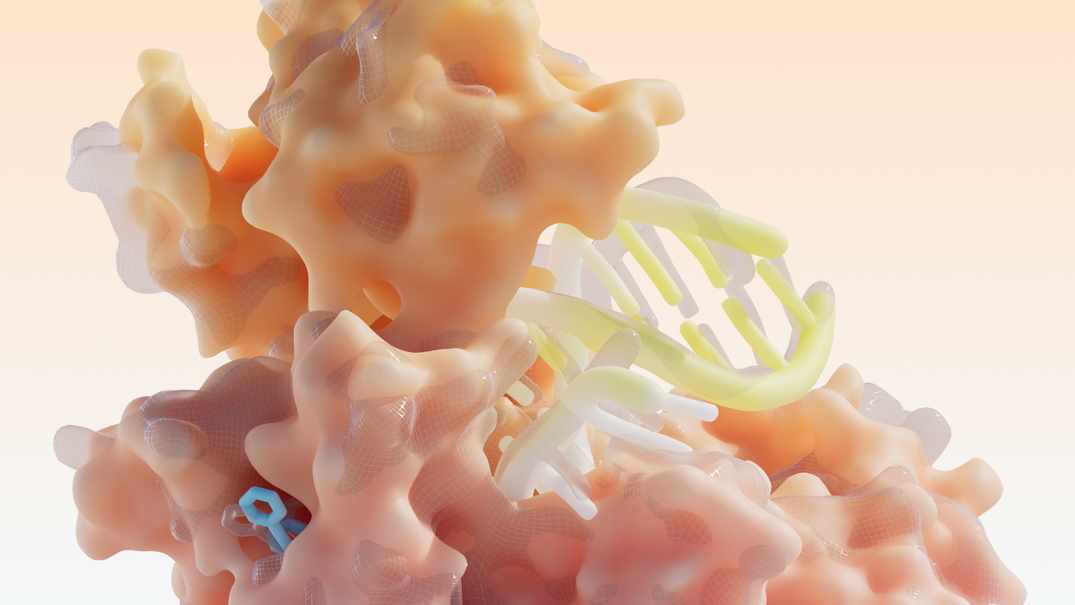
Credit: Isomorphic Labs
Trending Now