Best AI Cloud Security Platforms in 2026: How AI Is Transforming Enterprise Cloud Protection
 Nickie Louise
Posted On May 10, 2026
Nickie Louise
Posted On May 10, 2026

Cloud security used to revolve around firewall rules, static policies, and periodic configuration reviews. That model worked reasonably well when the infrastructure was smaller, and cloud adoption was still limited.
Modern environments look very different.
Most enterprises now operate across multiple cloud providers while managing containerized workloads, APIs, serverless applications, remote users, and increasingly, AI infrastructure. At the same time, attack surfaces have expanded rapidly. Security teams are dealing with identity sprawl, cloud misconfigurations, exposed AI services, and highly automated attacks that outpace traditional review processes.
This shift pushed the industry toward AI-assisted cloud security platforms that continuously analyze environments rather than relying entirely on manual oversight.
The result is a new generation of cloud security platforms focused on contextual visibility, automated remediation, workload protection, and AI-specific threat detection across hybrid infrastructure.
What Is AI Cloud Security for Enterprises?
AI cloud security refers to platforms that use machine learning, behavioral analytics, automation, and contextual risk analysis to secure cloud infrastructure and workloads in real time.
These platforms go beyond traditional rule-based security models by continuously analyzing cloud environments for misconfigurations, exposed identities, anomalous behavior, vulnerable workloads, and infrastructure risks.
Most modern platforms combine several categories together, including:
- cloud security posture management (CSPM)
- cloud workload protection (CWPP)
- identity exposure analysis
- container and Kubernetes security
- AI workload visibility
- runtime threat detection
The goal is not simply to identify vulnerabilities, but to prioritize which risks are actually exploitable in large-scale cloud environments.
How Cloud Security Has Evolved with AI
Early cloud security strategies were largely extensions of traditional on-premise security thinking. Security teams applied familiar controls to cloud environments and attempted to manage risk through static policies and manual review processes.
That approach became difficult to sustain once infrastructure started scaling dynamically.
Cloud workloads can appear and disappear within minutes. Developers deploy continuously, APIs change rapidly, and modern environments generate far more telemetry than analysts can realistically review manually.
This is one reason the CNAPP category expanded so quickly. Organizations needed platforms capable of correlating posture management, workload protection, identity analysis, and runtime visibility inside unified systems.
AI accelerated that evolution further.
Modern platforms now use machine learning models to identify attack paths, prioritize exploitable risks, detect abnormal workload behavior, and automate remediation processes across cloud environments.
The growing wave of AI-focused cybersecurity acquisitions reflects how seriously vendors are treating this transition.
Best AI Cloud Security Platforms in 2026
Here are the platforms leading the way in AI-powered cloud security.
Check Point AI cloud security
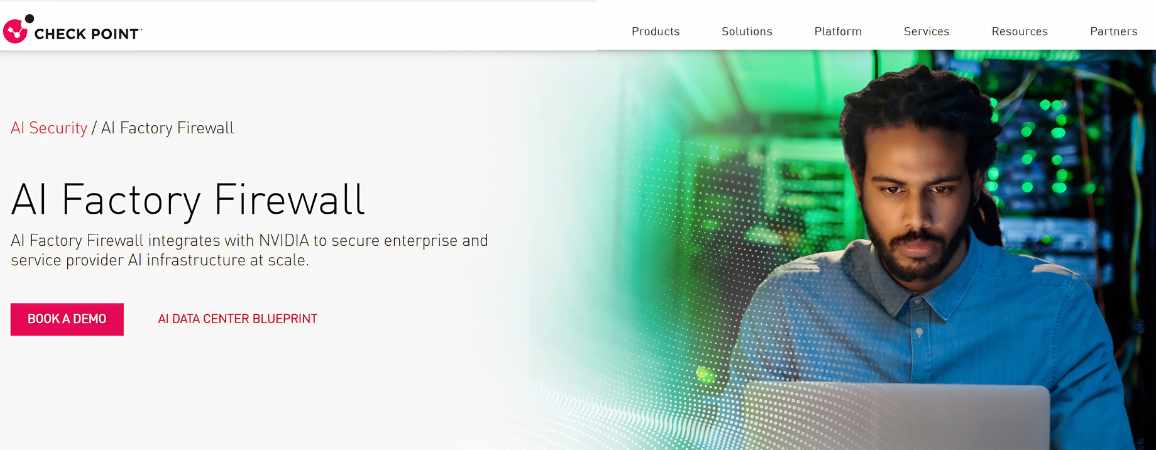
Check Point AI Cloud security combines cloud posture management, workload protection, application security, and AI infrastructure protection within a unified platform designed for hybrid and multi-cloud environments.
The platform includes AI-driven risk analysis, runtime protection for containers and serverless workloads, identity-aware visibility, and automated remediation capabilities across AWS, Azure, Google Cloud, and Kubernetes environments.
It also includes dedicated AI infrastructure protection capabilities designed for organizations that deploy and secure AI workloads, inference pipelines, and GPU-intensive environments.
Best suited for: Enterprises running hybrid and multi-cloud infrastructure that want centralized cloud security visibility alongside AI-specific workload protection.
Wiz Cloud Security Platform
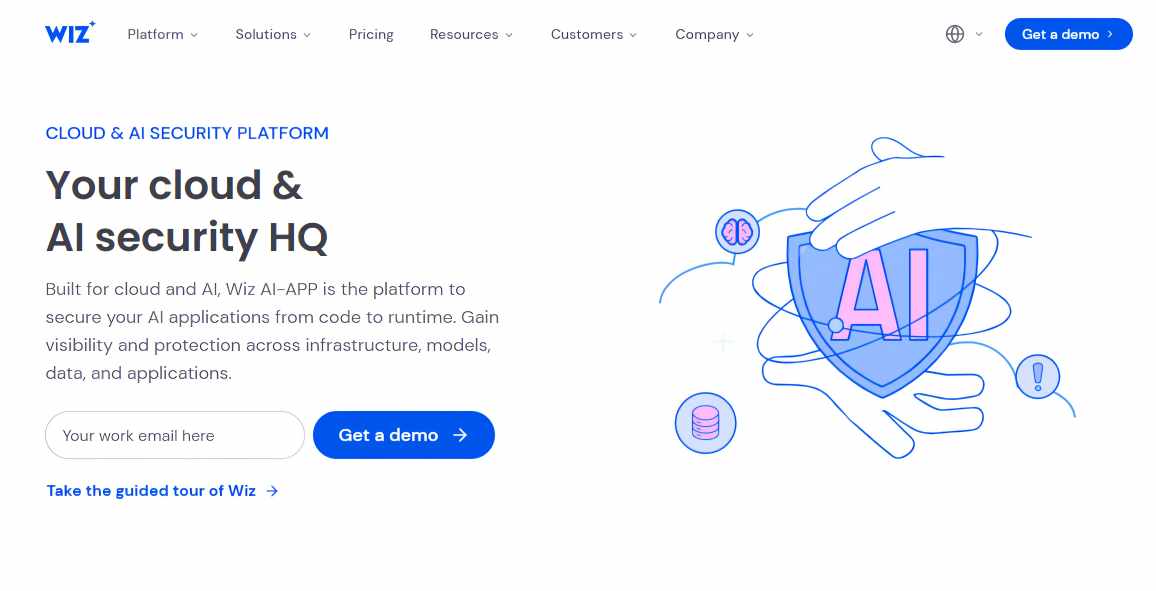
The Wiz Cloud Security Platform has become one of the most recognized names in cloud-native security. The platform connects directly to cloud APIs to generate a contextual graph of cloud assets, identities, workloads, and exposures.
This approach allows security teams to identify high-risk attack paths and prioritize remediation efforts more effectively. Wiz includes CSPM, workload visibility, container security, and identity exposure analysis within a largely agentless architecture.
Best suited for: Organizations seeking fast deployment, robust cloud visibility, and simplified multi-cloud risk prioritization.
Orca Security Platform
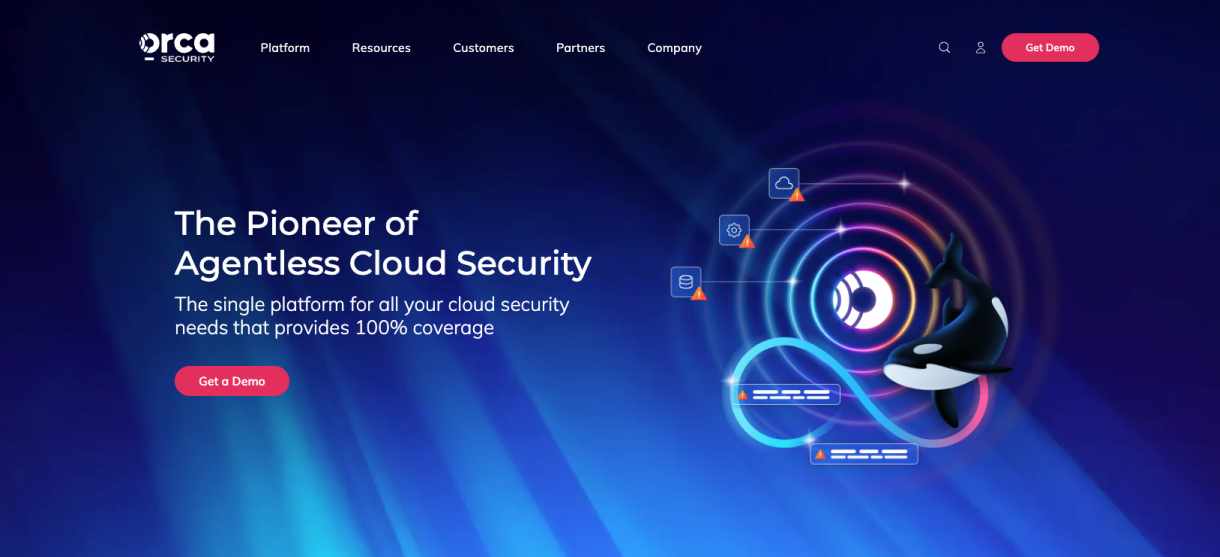
Orca Security Platform pioneered SideScanning technology, which analyzes workload and cloud configuration data directly at the cloud provider layer, without requiring traditional agents on every workload.
The platform combines CNAPP capabilities with AI-assisted risk prioritization to help security teams identify exploitable exposures and misconfigurations across cloud infrastructure.
Orca has also expanded into AI security posture management, focusing on visibility into AI services, model exposure, and shadow AI deployments.
Best suited for: Security teams that want broad cloud visibility with minimal operational overhead.
Palo Alto Networks Prisma Cloud
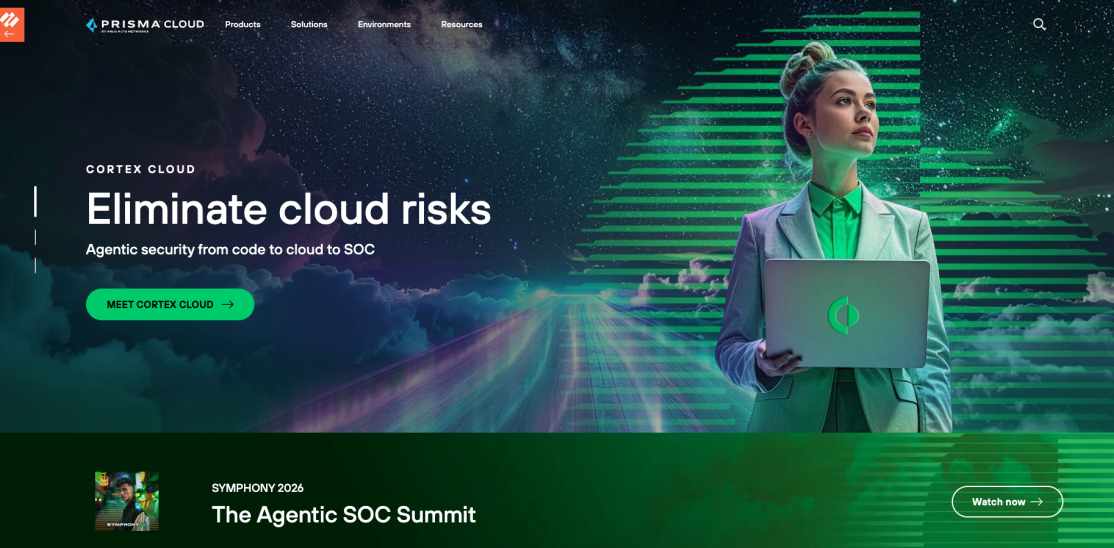
Palo Alto Networks Prisma Cloud provides a CNAPP platform designed to secure workloads from development through runtime deployment.
The platform includes CSPM, workload protection, infrastructure-as-code scanning, identity security, and AI-assisted threat analysis. Prisma Cloud also integrates closely with Palo Alto Networks’ broader Cortex and SASE ecosystem for centralized security operations.
Best suited for: Large enterprises already invested in Palo Alto infrastructure and looking for integrated cloud and SOC visibility.
Microsoft Cloud Security
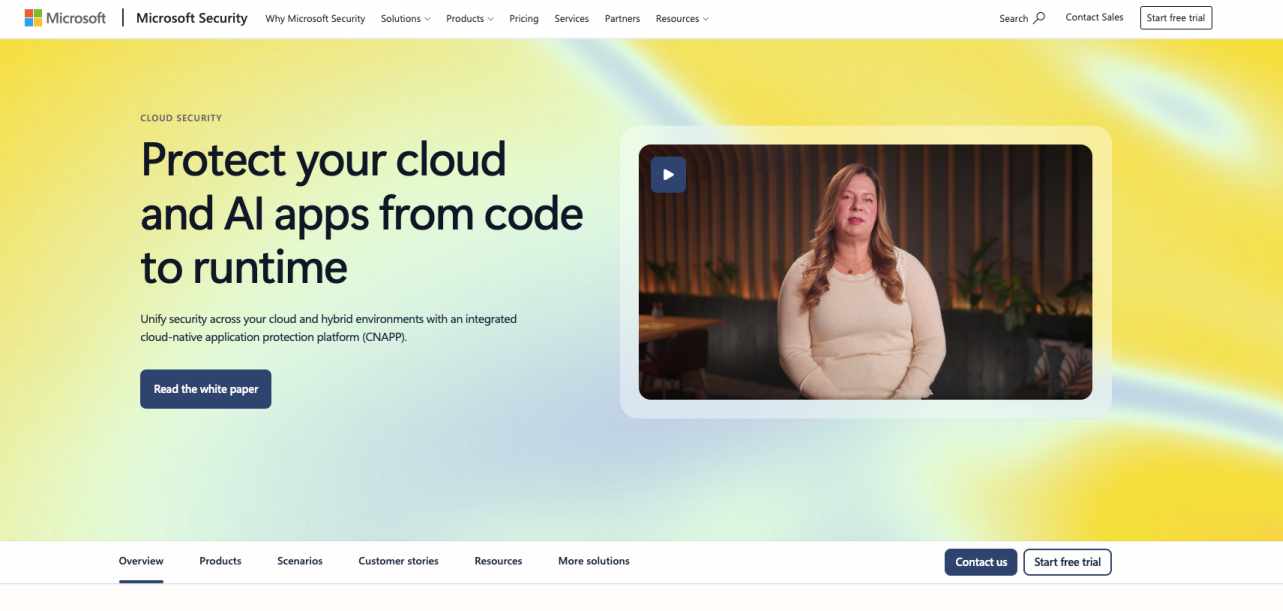
Microsoft Cloud Security combines Defender for Cloud, identity protection, compliance management, and AI-assisted investigation capabilities across Azure and multi-cloud environments.
The platform integrates directly with Microsoft security tooling, including Sentinel, Purview, Entra ID, and Copilot for Security. Organizations heavily invested in Microsoft infrastructure often benefit from tighter operational integration across cloud and endpoint environments.
Best suited for: Enterprises operating heavily within Microsoft Azure and Microsoft 365 ecosystems.
Comparison at a Glance
| Capability | Check Point | Wiz | Orca | Prisma Cloud | Microsoft |
| CSPM | Yes | Yes | Yes | Yes | Defender for Cloud |
| Workload Protection | Yes | Yes | SideScanning | Yes | Defender for Servers |
| AI Security Capabilities | AI infrastructure protection | AI SPM | AI SPM | Cortex AI integration | Copilot for Security |
| Agentless Visibility | Yes | Yes | Yes | Partial | Partial |
| Multi-Cloud Support | AWS, Azure, GCP | AWS, Azure, GCP | AWS, Azure, GCP | AWS, Azure, GCP, OCI | AWS, Azure, GCP |
| Deployment Approach | Agent + Agentless | Agentless-first | Agentless-first | Hybrid | Hybrid |
Key Capabilities to Look For
A few capabilities have become increasingly important when evaluating modern AI cloud security platforms.
Strong CSPM and workload protection remain foundational, but organizations are also paying closer attention to identity exposure analysis, AI workload visibility, and runtime protection for containerized environments.
Agentless or flexible deployment models can significantly reduce operational overhead, particularly in large multi-cloud environments where rapid visibility matters more than maintaining dozens of separate agents.
AI-assisted risk prioritization is also becoming increasingly important. Security teams are dealing with far more telemetry than they can realistically analyze manually, making contextual prioritization essential to reducing alert fatigue.
Organizations deploying AI services internally should also pay attention to platforms offering visibility into AI pipelines, model exposure risks, prompt injection scenarios, and shadow AI usage across cloud environments.
How to Choose the Right AI Cloud Security Platform
The right platform usually depends on the complexity of the environment and how much operational overhead the security team can realistically manage.
Organizations operating heavily inside Microsoft Azure may naturally prefer tighter native integration through Microsoft’s ecosystem. Teams prioritizing rapid deployment and broad visibility may lean toward more agentless-first approaches.
Larger enterprises with complex hybrid infrastructure often prioritize centralized visibility, workload protection, and integrated AI security capabilities across multiple cloud providers simultaneously.
Existing tooling also matters. Many organizations choose platforms that integrate naturally with their existing SOC workflows, identity systems, and cloud infrastructure rather than introducing entirely separate operational models.
Why AI Cloud Security Is Becoming a Core Enterprise Priority
Cloud environments now host critical applications, sensitive business data, APIs, AI models, and increasingly, enterprise inference infrastructure.
At the same time, attack surfaces are becoming more dynamic and difficult to manage manually. Identity exposure, misconfigurations, vulnerable containers, exposed AI services, and excessive permissions all create risks that can spread rapidly across connected cloud environments.
Traditional review cycles struggle to keep pace with this level of change.
AI-assisted cloud security platforms help organizations continuously process large volumes of telemetry, identify attack paths faster, correlate risks across environments, and automate remediation decisions that would otherwise overwhelm security teams.
For many enterprises, AI cloud security is no longer being treated as a future investment category. It is increasingly viewed as core operational infrastructure for securing modern cloud environments at scale.