Circle raises $222M for Arc blockchain at $3B valuation backed by BlackRock, Apollo, and Andreessen Horowitz
 Daniel Levi
Posted On May 11, 2026
Daniel Levi
Posted On May 11, 2026
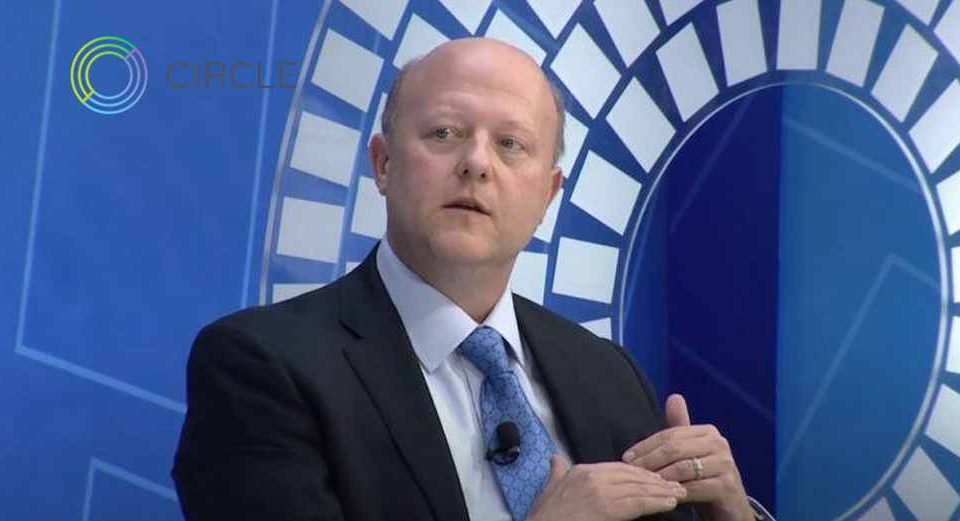
Circle Internet Group has raised $222 million in a presale of Arc, the native token tied to its new blockchain network, giving the project a fully diluted valuation of $3 billion, according to a CNBC report. The move shows how quickly the crypto industry is shifting from digital coins into something much bigger: ownership of the infrastructure itself.
Andreessen Horowitz led the raise with a $75 million investment. Other backers include BlackRock, Apollo Funds, Intercontinental Exchange, Standard Chartered Ventures, General Catalyst, ARK Invest, Haun Ventures, and crypto exchange Bullish.
The raise marks one of Circle’s biggest moves yet, beyond USDC, the stablecoin business that turned the company into one of crypto’s most influential players. With Arc, Circle is pushing deeper into blockchain infrastructure, institutional finance, and AI-powered financial systems.
For Circle CEO Jeremy Allaire, Arc is about far more than payments.
“[Blockchain] infrastructure is becoming as important as mobile operating systems or cloud platforms,” Allaire told CNBC in an exclusive interview. “We want to build an operating system that has many, many stakeholders in it … major companies who are running the infrastructure with us and who ultimately help to govern it.”
Founded in 2013, Circle is best known for issuing USDC, a dollar-pegged stablecoin used across crypto trading, DeFi, and payments. The company also launched EURC, pegged to the euro.
From stablecoins to infrastructure: Circle expands its ambitions with $222M funding for Arc blockchain
The company is trying to reposition itself at a time when stablecoins are moving into the financial mainstream. New regulations in Washington have opened the door for banks, fintech firms, and payment companies to issue their own digital dollars, raising questions about how much long-term control stablecoin issuers like Circle will retain.
Arc is Circle’s answer to that threat.
Instead of relying heavily on external blockchains such as Ethereum and Solana, Circle wants more control over the infrastructure layer where financial activity occurs. If the strategy works, Arc could become the backbone for institutional payments, tokenized assets, smart contracts, and AI-driven financial services running on USDC.
“We’re becoming a broader internet platform company,” Allaire said. “We’re entering the operating system business, and we’re doing it by building this multi-stakeholder distributed model with a token, with a distributed network. But it is an operating system business. And we’re also getting into the apps business.”
The pitch appears to resonate with large investors seeking exposure to blockchain infrastructure rather than speculative meme tokens or short-lived crypto trends.
Circle said Arc is being built from the ground up for institutional finance. The network aims to support asset issuance, governance systems, contracts, payments, and applications tied to the broader economy.
“The economy is not just representations of values, it’s every contract that undergirds those financial relationships … the systems of governance that we use to govern all these economic institutions,” Allaire said.
Circle plans to maintain a 25% stake in Arc’s initial 10 billion-token supply, giving the company a direct role in operating the validator infrastructure and collecting staking and transaction revenue. About 60% of the token supply will go to developers, users, and participants building on the network. The remaining 15% will be reserved for long-term ecosystem support.
The company unveiled developer tools alongside the token raise to help builders create AI agents capable of handling transactions, payments, and online services using USDC.
That focus reflects a bigger bet taking shape across Silicon Valley and Wall Street. AI agents are increasingly viewed as future economic actors that will negotiate contracts, transfer funds, purchase services, and interact with software systems without human involvement.
“We’re entering this era where software machines will power the economic system,” Allaire said. “Software will do most of the work — that is what AI agents represent.”
Circle’s token sale carries another layer of significance for the crypto industry. The company is the first publicly traded firm to conduct a token presale tied to a blockchain network.
That model exploded during the 2017 ICO boom before collapsing under regulatory pressure and allegations of widespread fraud. The environment looks very different today. Washington has become far more receptive to crypto infrastructure projects, particularly those tied to tokenized financial systems and compliant digital assets.
Circle appears to be betting that blockchain networks are entering a new phase where institutional money, stablecoins, AI agents, and tokenized securities begin converging into a much larger financial stack.
“It is a major shift in how stakeholders can participate in the growth of networks,” Allaire said. “Every company in the world, over time, will be tokenized, meaning your shares will be tokens … [and] you will use digital tokens as mechanisms of engagement with your customers and stakeholders.”