OpenAI’s $852B valuation faces investor scrutiny and pushback as Sam Altman shifts to enterprise AI
 Nickie Louise
Posted On April 14, 2026
Nickie Louise
Posted On April 14, 2026
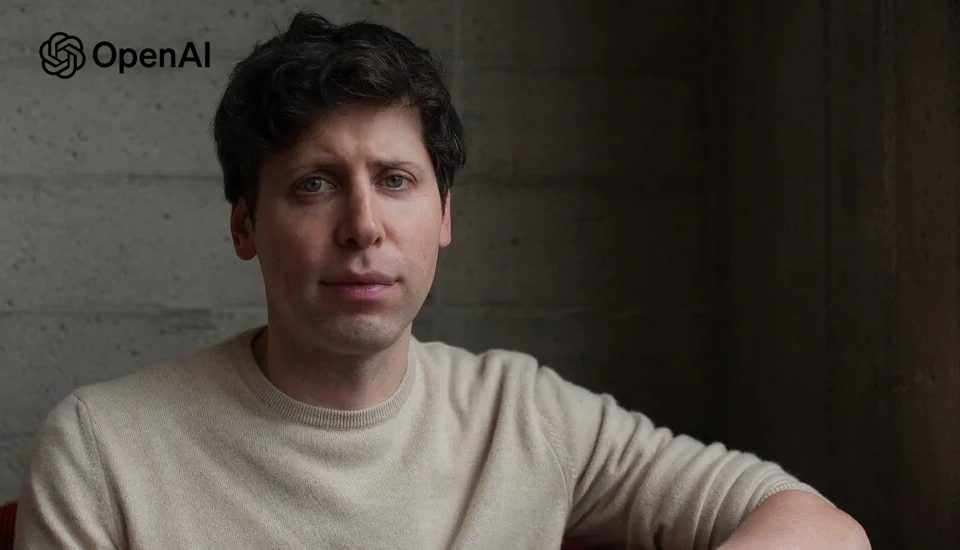
OpenAI’s $852 billion valuation is starting to face a new kind of test—this time from inside the tent.
Just weeks after closing a record $122 billion funding round, OpenAI is facing growing unease among some of its own investors as it pivots away from its consumer stronghold toward enterprise AI. The shift, led by CEO Sam Altman, signals a new phase for the company—one that leans less on viral growth and more on long-term contracts with businesses.
That transition is raising a fundamental question: can OpenAI expand into enterprise without losing the focus that made ChatGPT a global hit?
According to reporting from the Financial Times, some backers worry the company is stretching itself too thin. In the past six months, OpenAI has redrawn its roadmap more than once—first reacting to advances from Google, then adjusting again as Anthropic picked up speed with faster model releases and strong enterprise traction.
“You have ChatGPT, a 1 billion-user business growing 50-100 percent a year, what are you doing talking about enterprise and code?” one early backer of OpenAI told The Financial Times. “It’s a deeply unfocused company.”
That criticism lands at a critical moment. OpenAI is preparing for a potential IPO as early as this year, and the enterprise push sits at the center of that strategy. Corporate AI deals offer higher margins and more predictable revenue, but they demand something different—reliability, integration, and consistent performance under pressure.
Competition isn’t standing still.
Anthropic’s growth has been hard to ignore. Its annualized revenue jumped from $9 billion at the end of 2025 to $30 billion by March, driven largely by demand for its coding tools. That surge has brought it close to OpenAI’s reported $25 billion in annualized revenue earlier this year, though differences in accounting make direct comparisons difficult.
The rivalry is starting to spill into the open. Denise Dresser, OpenAI’s chief revenue officer, accused Anthropic of overstating its revenue “by roughly $8 billion” by “grossing up [revenue] share with Amazon and Google.” Anthropic has said it follows standard accounting practices and recognizes revenue as the principal in those transactions.
Inside OpenAI’s Strategy Shift as Investor Doubts Grow
Even inside OpenAI, there’s acknowledgment that Anthropic found an early opening. Dresser noted that its coding focus “gave them an early wedge,” though she remains confident: “the market is ours to win”.
Still, investors are weighing the trade-offs.
One backer involved in both companies said justifying OpenAI’s latest round requires assuming an IPO valuation of $1.2 trillion or more. That bet looks tougher as Anthropic offers a lower entry point, most recently valued at $380 billion. Secondary market data is starting to reflect that shift, with some buyers placing a premium on Anthropic shares over OpenAI for the first time.
“There’s room for both, but there is fundamentally a number one and a number two dynamic, and the one will win disproportionately,” said Roy Luo of Iconiq Capital, which has invested heavily in Anthropic while maintaining a smaller stake in OpenAI.
OpenAI still holds a clear lead with consumers. ChatGPT’s launch in 2022 created the modern generative AI market and pushed the company into the center of the conversation. That early advantage helped drive massive infrastructure investments and positioned OpenAI as the face of the AI boom.
The challenge now is staying disciplined as the company expands.
Altman signaled urgency late last year with a “code red,” urging teams to refocus on core priorities. Internally, similar messages followed. Fidji Simo pushed employees to drop “side quests” and concentrate on the products that matter most.
Some recent decisions have raised questions. The company spent in the “low hundreds of millions of dollars” to acquire tech talk show TBPN. One investor reacted bluntly: “I don’t get it frankly, it doesn’t make any sense to me. It’s a distraction and it irks me.”
At the same time, OpenAI has been pulling back in other areas. It shut down its video-generation effort Sora, scaled back infrastructure plans in the UK and Texas, and reduced the scope of a major deal with Nvidia. A planned investment from Disney fell through.
The focus is shifting toward enterprise tools, especially Codex, its coding platform. Some inside the company believe Codex could eventually take priority over ChatGPT as OpenAI leans into higher-margin business software.
Infrastructure remains one of OpenAI’s biggest advantages. The company says it has secured access to 8 gigawatts of compute capacity and is targeting 30 gigawatts by 2030. That scale could help offset any gaps in model performance. As one person involved in those efforts put it, “even if our model is less good, we can just serve it”.
Leadership continues to push back on the idea that confidence is slipping. CFO Sarah Friar said claims of investor dissatisfaction “defy the facts,” pointing to the scale and speed of the recent funding round backed by SoftBank, Amazon, Nvidia, Andreessen Horowitz, Sequoia Capital, and Thrive Capital.
The bigger picture is coming into focus. OpenAI is trying to evolve from a consumer breakout success into a full-scale enterprise AI company, all while defending its lead on both fronts.
That’s a narrow path to walk.
The $852 billion valuation reflects belief in what OpenAI could become. The pushback shows that belief now comes with sharper expectations.