nEye.ai raises $80M to scale optical circuit switching for AI data centers
 Daniel Levi
Posted On April 14, 2026
Daniel Levi
Posted On April 14, 2026
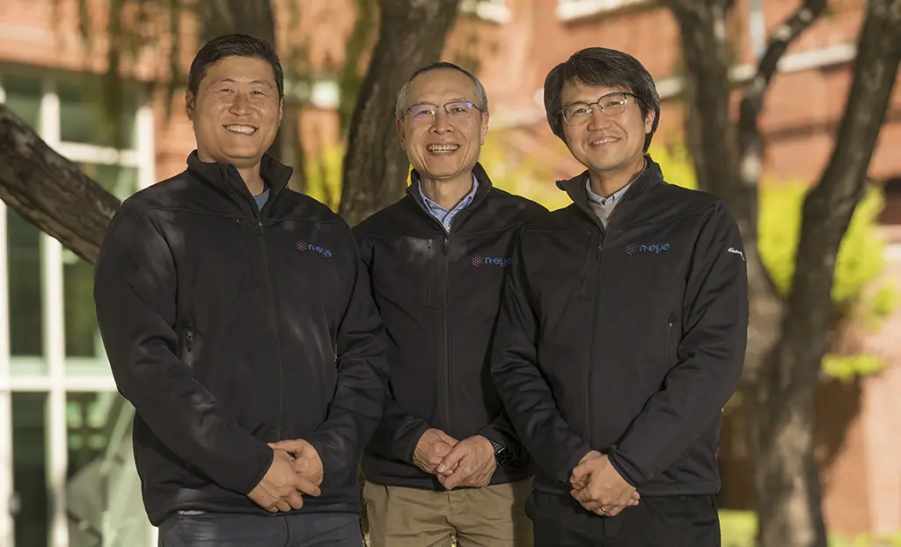
AI’s growth is hitting a physical wall. More chips and bigger clusters aren’t enough when data can’t move fast enough between them. That’s the gap nEye.ai is chasing, and investors are backing the bet with fresh capital.
The Silicon Valley startup said it has raised $80 million in a Series C round led by Sutter Hill Ventures, with participation from CapitalG, M12, and Socratic Partners. The new funding brings the total capital raised to $152 million and sets up the company’s next phase: turning its optical switching technology into a product that can be produced at scale.
At the center of nEye’s pitch is a different way to connect the building blocks of modern AI systems. Large training clusters now look more like industrial infrastructure than traditional servers. Companies are stitching together massive pools of GPUs, CPUs, and memory, then trying to move data across them without slowing everything down. That’s where optical interconnects come in.
nEye’s approach replaces parts of the traditional electrical switching stack with optical circuit switches built directly onto a chip. The company combines silicon photonics, MEMS, and CMOS into a single design, shrinking the footprint and cutting power use. That matters in data centers already straining under energy limits.
Backed by Microsoft and Alphabet, nEye.ai Raises $80M to Transform AI Data Centers
“The market for Optical Circuit Switching is projected to surpass $3 billion within the next three years,” said Dyckerhoff. “By moving away from complex mechanical assemblies to a foundry-compatible wafer-scale process, nEye is positioned to deliver the most cost-effective, high-performance switching solution for scale-up, scale-out, and scale-across applications.”
Investors see a timing advantage. AI workloads are pushing infrastructure designs in a new direction, with hyperscalers exploring more flexible, composable systems. Instead of fixed architectures, resources can be pooled and reassigned as needed. Optical switching makes that model more practical by enabling faster reconfiguration across large clusters.
“Optical switching is now a requirement to unlock the true potential of AI training and inference at scale,” said James Luo, General Partner at CapitalG. “We are doubling down on nEye because their ‘OCS-on-a-chip’ approach offers a unique path to meeting the extreme density and power constraints of modern hyperscale data centers.”
The company plans to use the new funding to push deeper into manufacturing. Moving from prototype to high-volume production is where many hardware startups stall. nEye is betting on a foundry-based model that aligns with existing semiconductor processes, a step that could make adoption easier for large customers.
Leadership is shifting alongside the funding. Stefan Dyckerhoff, Managing Director at Sutter Hill Ventures, is joining the board, adding another experienced voice as the company moves closer to commercialization.
“While this milestone validates our technology, our focus now shifts to scaling our foundry-based manufacturing and meeting the rigorous performance standards our customers demand,” said Ashish Vengsarkar, CEO of nEye.ai. “The addition of Stefan and the team at Sutter Hill Ventures to our existing slate of strategic partners strengthens our ability to address all hyperscaler use-cases.”
nEye’s broader ambition is clear. As AI systems grow, the bottleneck is shifting from compute to connectivity. The companies that solve that problem stand to shape how the next generation of data centers is built.
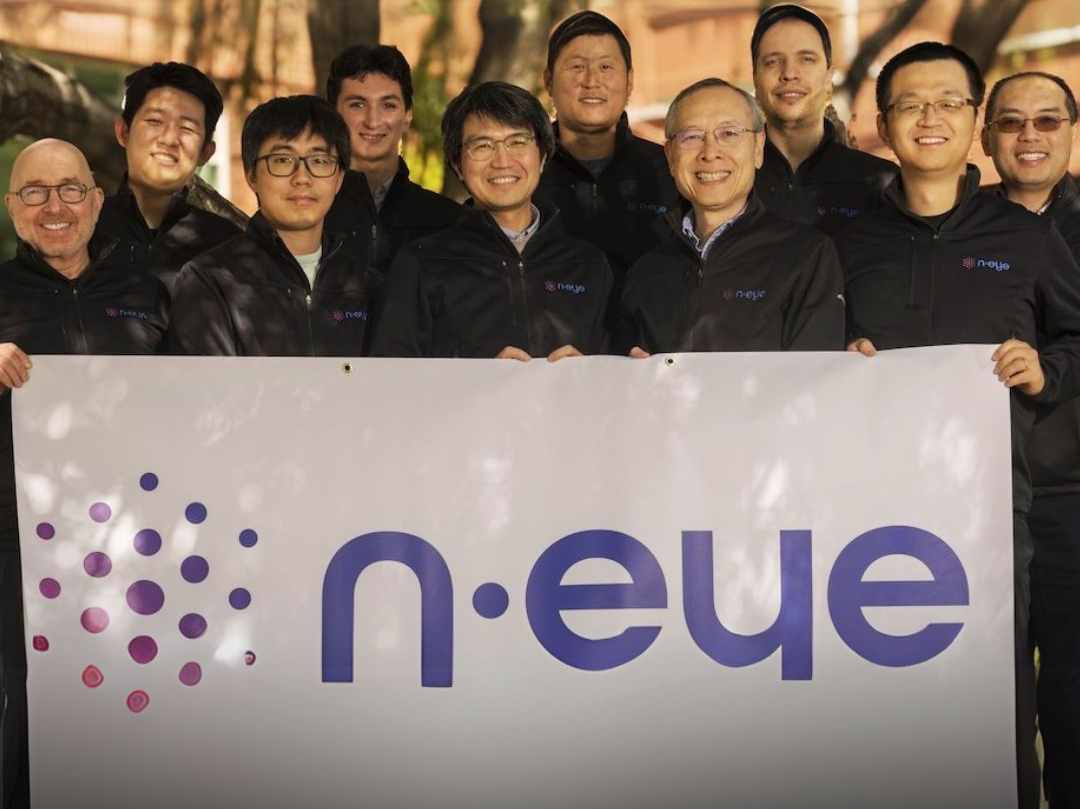
nEye Team