South Korean AI startup whereable.ai raises $2.26M to bring autonomous driving to industrial sites
 Daniel Levi
Posted On November 24, 2026
Autonomous driving has largely been associated with robotaxis and self-driving cars, but a South Korean AI startup sees an opportunity in places far removed from public roads: shipyards, airports, and industrial logistics facilities.
Seoul-based whereable.ai announced Tuesday that it has raised $2.26 million in pre-Series A funding from Quad Ventures, LOTTE Ventures, and Korea Credit Guarantee Fund (KODIT). The investment brings the startup’s total investor funding to $3.76 million.
Founded in 2024 and led by CEO Doosan Baek, whereable.ai previously secured seed funding from NAVER D2SF and Quad Ventures. The startup is developing autonomous driving software that allows industrial vehicles to operate in environments where workers, heavy machinery, and constantly changing routes make conventional automation difficult.
Rather than relying on predefined rules and fixed routes, whereable.ai is building an end-to-end autonomous driving system using AI world models. These models learn from real-world data to predict how the surrounding physical environment might change, helping vehicles make driving decisions based on the movement of workers, equipment, and other vehicles.
The approach addresses a practical problem for industrial operators. Replacing existing infrastructure to accommodate autonomous vehicles can be expensive and disruptive. Software that adapts to existing facilities could lower the barrier to automation without requiring companies to rebuild their operations from scratch.
Beyond self-driving cars: Where AI meets heavy industry
One of whereable.ai’s first major industrial projects involves making shipyards safer.
In July 2026, the startup joined a South Korean government-funded autonomous driving research project with a total budget of $14.3 million. Whereable.ai secured $2.45 million in R&D funding for its participation, separate from its latest investment round.
The consortium, led by HYUNDAI MOVEX, includes some of South Korea’s largest shipbuilders, including Hanwha Ocean, Samsung Heavy Industries, HD Hyundai Heavy Industries, and HD Korea Shipbuilding & Offshore Engineering.
As part of the project, whereable.ai is developing Escort Bot, a robot that guides forklifts, transporters, and other industrial vehicles through shipyards. The robot will take over signaling tasks traditionally performed by human spotters, aiming to reduce collisions between heavy machinery and workers.
Field trials are scheduled for 2028 and 2029 at South Korean shipyards and Hanwha Philly Shipyard in the United States.
The robot serves another purpose beyond workplace safety. Each deployment could provide whereable.ai with real-world operational data to train and improve its AI models. The company hopes this data will eventually allow it to introduce autonomous driving software across forklifts, trucks, tractors, transporters, and autonomous mobile robots.
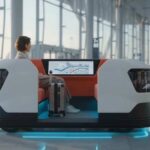
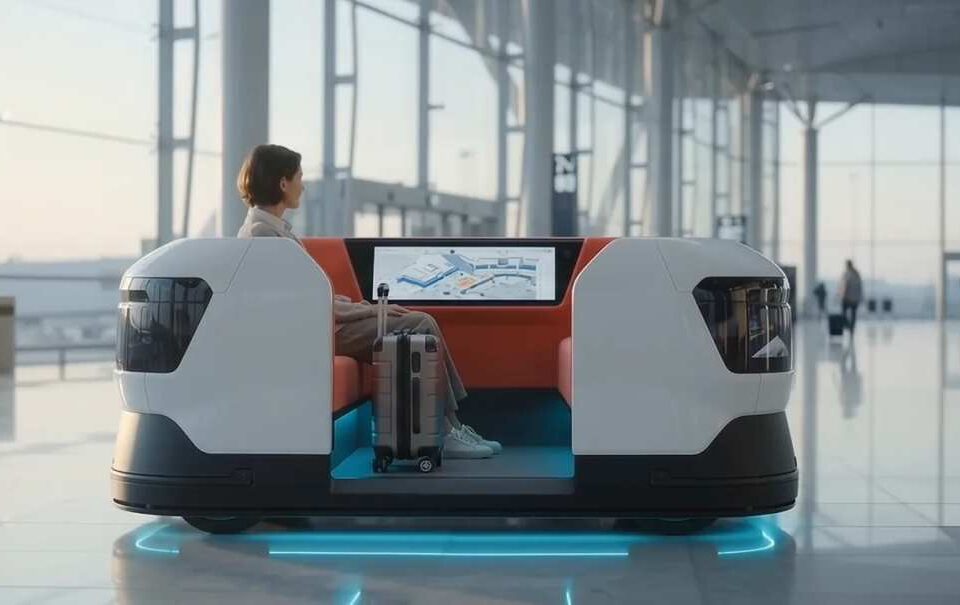
The startup already has some commercial experience. Eleven of its four-seat linq autonomous indoor shuttles are operating at Terminal 2 of Incheon International Airport. The shuttle received CES 2026 Innovation Awards Honoree recognition in the Smart Communities and Accessibility & Longevity categories.
Whereable.ai is pursuing military applications as well. The company is developing an autonomous vehicle for troop and cargo transport through a South Korean government-supported defense project, with field trials planned for 2027.
The fresh funding will go toward developing its AI models, building machine learning infrastructure, conducting industrial field trials, validating product safety and reliability, preparing for certification, and growing its customer and partner network.
“whereable.ai will use the funding to advance its world model-based autonomous driving software, build machine learning operations (MLOps) pipelines, and develop and field-test Escort Bot and other industrial products,” the startup said in a statement.
For whereable.ai, the challenge now is proving that its technology can operate reliably across different industrial settings. Shipyards, airports, and logistics facilities each present distinct safety and operational demands, and success in one environment does not guarantee success in another.
The autonomous driving industry’s most visible race may be playing out on city streets, but whereable.ai is betting that some of its most practical commercial applications lie behind factory gates, inside logistics facilities, and across industrial sites where safety and operational efficiency carry measurable economic value.