Startup Funding News Today, October 26, 2026: Ailytics, Approaching.AI, CASBOT, Volare & More
 Nickie Louise
Posted On October 26, 2026
Venture capital continues to flow into the infrastructure needed to make artificial intelligence more affordable, robots more capable, and specialized technologies commercially viable. China’s Approaching.AI led Monday’s startup funding activity with more than RMB 1.3 billion in Series B financing, while humanoid robotics developer CASBOT and AI research startup SuperSpherical Technology also announced substantial funding rounds, though neither disclosed an exact amount.
Beyond China, fresh investments in European industrial biotechnology, medical technology, and consumer AI highlighted the breadth of investor interest. Together, these deals point to a broader pattern in venture capital: investors are backing companies tackling AI’s underlying technical and economic challenges while continuing to fund innovations across industries where advanced technology can deliver measurable commercial value.
Europe contributed several distinctive transactions. London’s Nous secured $17 million to develop AI agents that manage household expenses. British medical technology startup adsilico raised £10 million to simulate medical-device performance using virtual patients. In Finland, Volare raised €7.1 million as it opened an industrial-scale insect-protein factory built for approximately €15 million. The factory provides an interesting counterpoint to the week’s AI financing activity: its business depends on manufacturing efficiency, contracted demand, and the ability to produce protein economically at scale.
Elsewhere, semiconductor materials developer Zhongke Zhuoer disclosed several hundred million yuan in Series B+ financing, while biotechnology startup DeliNova Therapeutics announced approximately RMB 100 million for experimental cell therapies. Tokyo Artisan Intelligence secured a mixed equity-and-debt financing package to develop industrial AI processors, and Singapore’s Ailytics raised $7.4 million to expand its computer-vision safety technology.
The revised selection comprises five companies headquartered in China, three in Europe, one in Japan, and one in Singapore. No qualifying U.S.-headquartered round was sufficiently verified and compelling to displace these selections within the strict cutoff. The newly identified Canadian funding round from North Vector Dynamics also qualified, but fell outside the final 10 after weighing transaction size, technological significance, and the broader range of sectors represented.
The precise global funding total remains unavailable because several rounds have undisclosed amounts and one includes an unspecified debt component. A single aggregate would therefore give readers an inaccurate impression of the day’s venture-equity activity.
The Macro Environment: Investors Are Backing the Hard Problems AI Still Hasn’t Solved
Monday’s funding activity reminds us that technology investors are pursuing several different opportunities at once. Large financings continue to support the computing systems behind AI, but capital is also moving into businesses that solve difficult manufacturing, engineering, healthcare, and energy-related problems. The commercial question is becoming more specific: which companies can turn advanced technology into products customers can depend on?
Approaching.AI is addressing one of the industry’s most expensive problems: the cost of generating AI responses at scale. Rather than competing directly to build the largest foundation model, the company is developing infrastructure intended to run existing models more efficiently. That opportunity grows as AI applications and autonomous agents consume more computing resources. SuperSpherical Technology is approaching the problem differently, researching ways to coordinate multiple specialized models rather than relying entirely on increasingly large individual systems.
Robotics financing presents another contrast. CASBOT is developing complete robotic systems for industrial customers, including manufacturers performing repetitive assembly tasks. The company’s investment thesis depends on turning machines into productive equipment. This requires hardware reliability, customer integration, maintenance, and measurable economics. Those challenges are distinct from the software problems that dominate many AI discussions.
Europe’s announcements introduce a different measure of technological progress. Volare is attempting to scale alternative-protein manufacturing without repeating the costly expansion mistakes seen elsewhere in the sector. Its first factory was completed within a reported €15 million capital budget, and customer agreements support a significant share of planned production. Meanwhile, adsilico is developing simulation software to help medical-device manufacturers evaluate how products perform across different anatomical conditions. Both companies must prove their technologies deliver measurable results, not just demonstrate technical capability.
The smaller financings reinforce the same theme. Nous is trying to make AI agents financially useful to households, while Ailytics applies computer vision to workplace safety using existing cameras. Zhongke Zhuoer and Tokyo Artisan Intelligence are addressing specialized semiconductor requirements, and DeliNova’s biotechnology programs face the demanding process of clinical validation.
These investments do not demonstrate a broad recovery across all startup categories. Their significance lies in the different forms of investor conviction they reveal. Some backers are financing fundamental research, others are supporting manufacturing expansion, and still others are investing in technologies with existing customer deployments.
The strongest common thread is a search for commercial advantages that cannot be reproduced simply by adding another AI model to an application.
Approaching.AI raises over $194.66 million in funding to reduce AI inference costs
Beijing-based Approaching.AI, also known as Qujing Technology, announced more than RMB 1.3 billion ($194.66 million) in Series B financing backed by a group of state-linked, financial, and industrial investors. The round included Zhejiang Finance Capital, Xiaoshan Capital, ICBC Investment, Zhongguancun Science City, Xinglian Capital, Qianjiang Century City, SenseTime, and Wangsu Science & Technology.
The company develops software and computing infrastructure designed to run large language models efficiently. It focuses on inference, the process by which trained models generate responses. This is becoming a major operating expense as companies deploy AI assistants and agents that may make multiple model calls to complete a single task.
Approaching.AI is attempting to improve computing utilization, memory management, and token-generation efficiency. The company also develops technology intended to improve performance across different processor architectures, including Chinese AI hardware.
The investment reflects demand for lower-cost AI computing, especially in markets where access to advanced foreign chips remains constrained. However, the company’s long-term advantage will depend on independently comparable cost, performance, and reliability under commercial workloads.
Funding Details
| Startup | Approaching.AI / Qujing Technology |
|---|---|
| Investors | Zhejiang Finance Capital, Xiaoshan Capital, ICBC Investment, Xinglian Capital, SenseTime, and others |
| Amount Raised | More than RMB 1.3 billion |
| Total Raised | Approximately RMB 2.4 billion during 2026, according to earlier reporting |
| Funding Stage | Series B |
| Funding Date | October 26, 2026 |
| Headquarters | Beijing, China |
| Sector | AI inference infrastructure |
| Valuation | Not disclosed |
CASBOT raises several hundred million yuan to commercialize humanoid robots
Beijing-based CASBOT, developed by Zhongke Huiling Robotics, announced Series A++ financing worth several hundred million yuan. Investors included Zhilai Investment, Yonghua Investment, Maotian Investment, Yuanhe Chenkun, Guoke Kezhi, and Luning Investment.
CASBOT develops humanoid and industrial robotic systems, including the CASBOT 02, CASBOT W2, and CASBOT Mini platforms. Its strategy combines robotic hardware with software designed for industrial tasks.
The company has reported more than RMB 400 million in orders connected to footwear manufacturing. That figure is company-reported and should not be interpreted as recognized revenue. It nevertheless provides a more specific commercial application than many general-purpose humanoid robot demonstrations.
For investors, the central question is whether CASBOT can deliver machines that improve production economics. Customers will evaluate cycle times, uptime, servicing requirements, and the financial return on automation. Successful deployment would provide a stronger basis for valuation than technical demonstrations alone.
Funding Details
| Startup | CASBOT / Zhongke Huiling Robotics |
|---|---|
| Investors | Zhilai Investment, Yonghua Investment, Maotian Investment, Yuanhe Chenkun, Guoke Kezhi, Luning Investment |
| Amount Raised | Several hundred million yuan; exact amount undisclosed |
| Total Raised | Not disclosed |
| Funding Stage | Series A++ |
| Funding Date | October 26, 2026 |
| Headquarters | Beijing, China |
| Sector | Humanoid robotics / industrial automation |
| Valuation | Not disclosed |
SuperSpherical Technology raises several hundred million yuan to develop alternative AI architectures
Shenzhen-based SuperSpherical Technology announced angel financing worth several hundred million yuan from investors including Legend Capital, CAS Star, SenseTime Guoxiang Capital, WestSummit Capital, and Gengxin Capital.
The startup is researching AI architectures that coordinate multiple specialized models. Its approach seeks to investigate whether systems composed of complementary models can deliver capabilities that would otherwise require larger individual models.
That idea is relevant to growing concerns about AI computing costs. Using specialized models for particular tasks could reduce expenditure, although coordinating those models adds technical requirements.
The financing is unusually large for an angel-stage company. Yet SuperSpherical has not disclosed verified commercial revenue, customer deployments, or a valuation.
Investors are financing a research opportunity whose value will depend on demonstrated improvements in model performance, cost, and reliability compared with existing systems.
Funding Details
| Startup | SuperSpherical Technology |
|---|---|
| Investors | Legend Capital, CAS Star, SenseTime, Guoxiang Capital, WestSummit Capital, Gengxin Capital |
| Amount Raised | Several hundred million yuan |
| Total Raised | Not disclosed |
| Funding Stage | Angel |
| Funding Date | October 26, 2026 |
| Headquarters | Shenzhen, China |
| Sector | Foundation models / AI research |
| Valuation | Not disclosed |
Zhongke Zhuoer raises several hundred million yuan to expand semiconductor materials production
Chengdu-based Zhongke Zhuoer announced several hundred million yuan in Series B+ financing, backed by BOC International Investment, Jinan Industrial Development Integrated Circuit Investment, Jiantou Huake, Jiangyin Xin Guolian, and Chuanliu Investment.
The company develops quartz photomask blanks, optical components, and specialized manufacturing technology used in semiconductor production. Photomasks are central to lithography, the process that transfers circuit patterns onto semiconductor wafers. Manufacturing these components requires exceptional precision and consistent quality.
China’s efforts to strengthen domestic semiconductor supply chains provide a potential commercial opportunity for Zhongke Zhuoer. But the company’s prospects depend on manufacturing yields, customer qualification, equipment reliability, and its ability to deliver products that meet demanding technical specifications.
The financing is significant because semiconductor competitiveness depends on materials and manufacturing equipment as well as chip designers.
Funding Details
| Startup | Zhongke Zhuoer |
|---|---|
| Investors | BOC International Investment, Jiantou Huake, Jiangyin Xin Guolian, and others |
| Amount Raised | Several hundred million yuan |
| Total Raised | Not disclosed |
| Funding Stage | Series B+ |
| Funding Date | October 26, 2026 |
| Headquarters | Chengdu, China |
| Sector | Semiconductor materials/precision manufacturing |
| Valuation | Not disclosed |
DeliNova Therapeutics raises approximately RMB 100M to develop AI-assisted cancer therapies
Shanghai-based DeliNova Therapeutics announced approximately RMB 100 million in pre-Series A financing. The investment included Proxima Ventures, Yueyin Medical Fund, Jianggen Capital, and returning investors Legend Capital, Hongfeng Investment, and Hanyuan Capital.
DeliNova develops experimental in vivo CAR-T therapies intended to modify immune cells inside the body rather than requiring all modifications to occur in external manufacturing facilities.
The approach could potentially reduce some of the complexity and cost associated with conventional cell therapies. But it also introduces substantial challenges involving targeted delivery, treatment safety, and consistent biological performance.
The company uses computational methods to support elements of therapeutic design, including delivery systems and antigen recognition. Its programs remain experimental, and company-reported research activity should not be interpreted as established clinical efficacy.
Investors are financing a potentially valuable therapeutic approach whose commercial prospects remain dependent on preclinical and clinical evidence, regulatory authorization, and manufacturing economics.
Funding Details
| Startup | DeliNova Therapeutics |
|---|---|
| Investors | Proxima Ventures, Yueyin Medical Fund, Jianggen Capital, Legend Capital, and others |
| Amount Raised | Approximately RMB 100 million |
| Total Raised | Approximately RMB 200 million reported |
| Funding Stage | Pre-Series A |
| Funding Date | October 26, 2026 |
| Headquarters | Shanghai, China |
| Sector | Biotechnology/cell therapy |
| Valuation | Not disclosed |
Nous raises $17M in funding to let AI agents manage household bills and everyday expenses
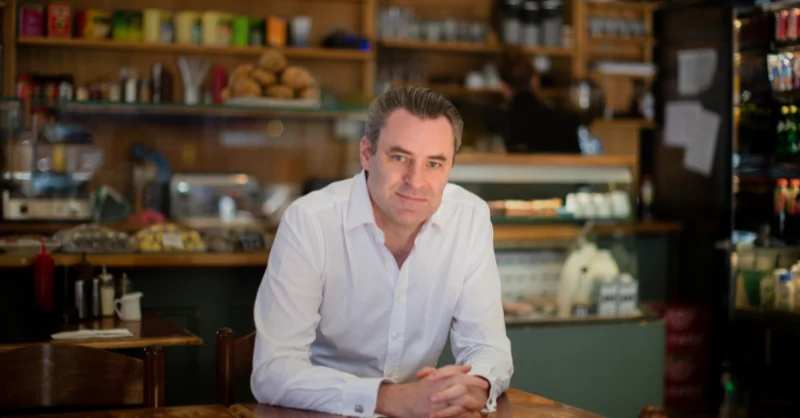
London-based Nous raised $17 million in financing backed by Heartcore Capital, Mosaic Ventures, Chalfen Ventures, Joyance Partners, Bain Future Back Ventures, and several angel investors, including entrepreneurs associated with Monzo and other British fintech companies.
Founded by Greg Marsh, Nous develops AI agents that help households manage recurring expenses, compare service providers, cancel subscriptions, and complete administrative tasks. The company wants to move beyond tools that merely recommend cheaper services toward systems authorized to perform work on customers’ behalf.
Nous says nearly 250,000 British households have registered for its service. It reports managing information about more than £685 million in annual household expenditure and identifying average savings of approximately £734.
Those figures are company-reported, and the expenditure managed through the platform does not equal Nous’s revenue.
The business represents an interesting consumer AI strategy because its economic value can be measured through completed transactions and verified customer savings. However, consumers must trust the company with sensitive financial information and permissions affecting household services.
For investors, Nous’s commercial opportunity depends on retaining customers and demonstrating that the savings delivered exceed the cost of acquiring and serving them.
Funding Details
| Startup | Nous |
|---|---|
| Investors | Heartcore Capital, Mosaic Ventures, Chalfen Ventures, Joyance Partners, Bain Future Back Ventures |
| Amount Raised | $17 million |
| Total Raised | Approximately $26 million reported |
| Funding Stage | Not disclosed |
| Funding Date | October 26, 2026 |
| Headquarters | London, United Kingdom |
| Sector | Consumer AI/household financial automation |
| Valuation | Not disclosed |
adsilico raises £10M in funding to test medical devices using AI-generated virtual patients
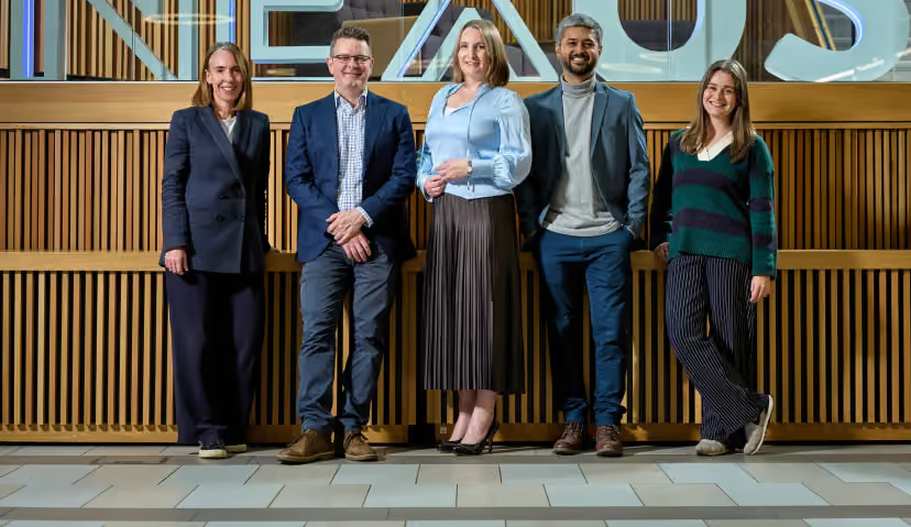
Leeds-based adsilico raised £10 million in Series A financing led by PXN Ventures, with participation from existing investors Northern Gritstone and Parkwalk. The University of Leeds spinout develops simulation software that helps medical-device manufacturers evaluate how products might perform across different patient populations.
Its Virtual Chimera platform uses anonymized medical scans and generative AI to create virtual anatomical models. It combines these with physics-based simulations to examine how devices such as heart valves and stents might perform under different conditions.
The approach addresses a difficult problem in medical-device development. Clinical trials cannot always capture every anatomical variation in the broader patient population. Simulation may help manufacturers identify potential design problems before committing to expensive testing programs.
adsilico has already completed projects with heart-valve and neurovascular-device manufacturers. Its latest financing will support further development of virtual cardiac models and expansion into additional medical-device categories.
However, the company’s software must show that its simulated results reliably match real-world outcomes. Such tools may provide valuable additional evidence, but they do not automatically replace clinical trials or regulatory requirements.
The investment reflects growing interest in AI applications where specialized data and engineering validation can create advantages beyond general-purpose model capabilities.
Funding Details
| Startup | adsilico |
|---|---|
| Investors | PXN Ventures, Northern Gritstone, Parkwalk |
| Amount Raised | £10 million |
| Total Raised | Not disclosed |
| Funding Stage | Series A |
| Funding Date | October 26, 2026 |
| Headquarters | Leeds, United Kingdom |
| Sector | Medical simulation / medical technology / AI |
| Valuation | Not disclosed |
Volare raises €7.1M in funding to scale insect-protein manufacturing and expand across Europe
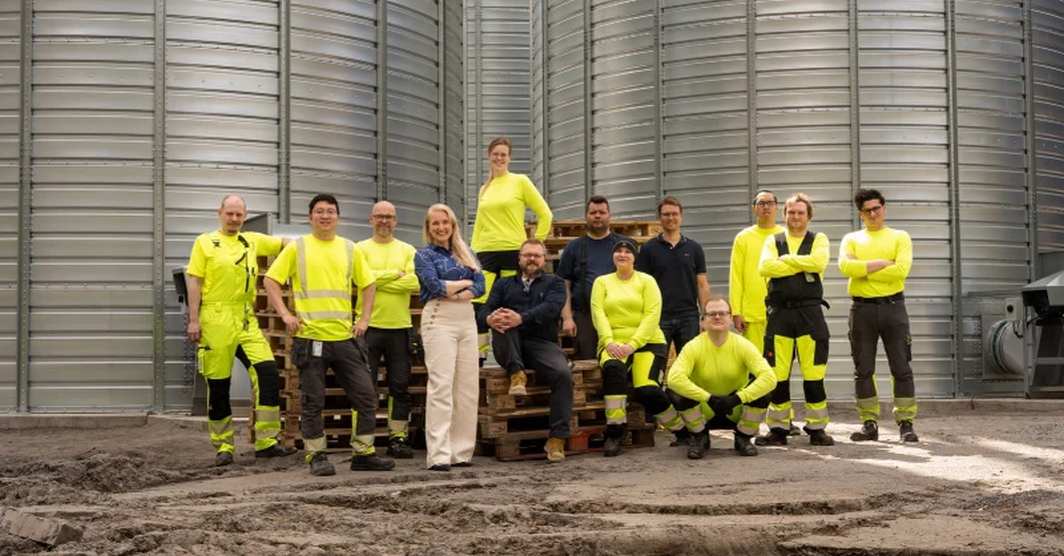
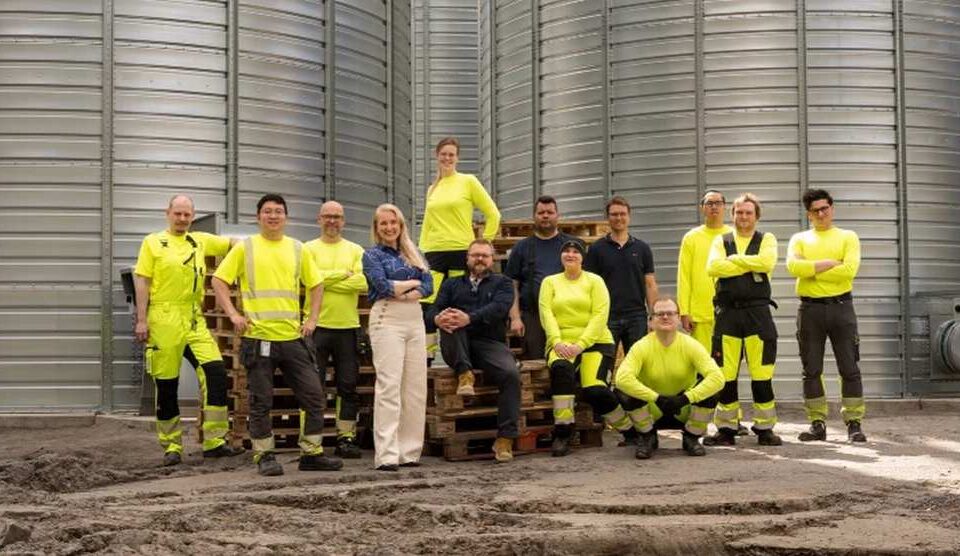
Finnish industrial biotechnology startup Volare raised €7.1 million in new financing through Springvest, with backing from new and existing investors, including Maki.vc. The financing accompanied the opening of Volare 01, the company’s first industrial-scale insect-protein factory in Pori, Finland.
The 10,000-square-meter facility was completed within a reported €15 million capital budget. It has a planned annual capacity of up to 5,000 tonnes of insect protein and 2,000 tonnes of insect oil.
Founded in 2021 by Jarna Hyvönen, Tuure Parviainen, and Matti Tähtinen, Volare uses black soldier fly larvae to convert food-industry byproducts into protein, oil, and fertilizer ingredients. Its technology targets markets including aquaculture, animal feed, and other industries seeking alternative ingredients.
Why Volare’s funding matters
The company is entering a sector with a difficult financial history. Several alternative-protein businesses have struggled after investing heavily in production capacity without achieving competitive manufacturing costs or sufficient commercial demand.
Volare is approaching that challenge differently. Its newly completed facility uses automation and an existing industrial building to reduce capital requirements. The company says the factory can operate with four employees per shift.
A significant share of planned output is already covered by customer agreements, including an offtake arrangement with aquafeed company Skretting and another with a global chemical business. These agreements provide evidence of potential demand, but they do not establish the facility’s profitability.
The new funding will help Volare increase production and prepare for a second factory. That facility is planned to have substantially greater capacity than its first plant. For investors, Volare’s attraction lies in its combination of manufacturing technology, customer relationships, and capital discipline.
The company must still demonstrate that it can maintain competitive production costs while operating at full capacity. Its biggest challenge is not proving insects can produce protein. It is proving the business can manufacture useful ingredients at prices customers will continue paying.
Funding Details
| Startup | Volare |
|---|---|
| Investors | New and existing investors through Springvest, including Maki.vc |
| Amount Raised | €7.1 million |
| Total Raised | Not fully disclosed |
| Funding Stage | New venture financing; formal stage not disclosed |
| Funding Date | October 26, 2026 |
| Headquarters | Helsinki, Finland |
| Sector | Industrial biotechnology / alternative protein / climate technology |
| Valuation | Not disclosed |
Tokyo Artisan Intelligence raises ¥1.27B in mixed financing to develop industrial AI processors
Japan’s Tokyo Artisan Intelligence announced ¥1.27 billion in financing through the first closing of its Series C. The package combines equity investment with bank lending, and the company did not disclose the respective amounts. Investors included Mitsui Sumitomo Insurance Venture Capital, Watakyu Holdings, Tokyo Keiki, Tokyo Keiki Rail Techno, and ADT. Mizuho Bank supplied the lending component.
The Yokohama-based company develops AI processors and software intended for industrial and embedded computing applications. Its technology targets environments where conventional computing systems may be constrained by electricity consumption, heat, physical size, and operating requirements.
Tokyo Artisan Intelligence is developing its Manta Ray processor architecture and has reported testing of its StingRay evaluation chip.
The investment will support further engineering, manufacturing preparations, and commercial development.
The opportunity is connected to industrial demand for AI systems that operate locally, without requiring every task to be processed in a distant data center. However, semiconductor development is costly, and the company must show its processors can compete on performance, efficiency, reliability, and production economics.
Funding Details
| Startup | Tokyo Artisan Intelligence |
|---|---|
| Investors | Mitsui Sumitomo Insurance VC, Watakyu Holdings, Tokyo Keiki, ADT; Mizuho Bank lending |
| Amount Raised | ¥1.27 billion, including equity and debt |
| Total Raised | Not disclosed |
| Funding Stage | Series C, first closing |
| Funding Date | October 26, 2026 |
| Headquarters | Yokohama, Japan |
| Sector | AI semiconductors/edge computing |
| Valuation | Not disclosed |
Ailytics raises $7.4M in funding to turn existing industrial cameras into AI safety systems
Singapore-based Ailytics raised $7.4 million in Series A financing led by Tin Men Capital, with participation from SEEDS, part of SG Growth Capital, Japanese cloud-camera company Safie, a Japanese construction company, family offices, and existing investors.
Founded in 2021, Ailytics develops computer-vision software that analyzes footage from industrial CCTV systems to identify safety risks and operational issues. Its technology is designed for construction sites, factories, transportation facilities, and other workplaces where monitoring many camera feeds can be difficult.
Ailytics says its products have expanded from approximately 70 projects in four countries in 2024 to more than 400 deployments across 15 countries. The company plans to use the financing to expand internationally and develop more capable systems for interpreting industrial activity.
The investment is notable because Ailytics is working with cameras customers may already own, potentially reducing the upfront expense of adopting its technology.
However, its commercial value depends on detection accuracy, manageable false-alarm rates, and measurable improvements in safety or operating performance.
For investors, Ailytics represents a specialized industrial AI business with reported commercial deployment, rather than a company depending exclusively on research-stage technology.
Funding Details
| Startup | Ailytics |
|---|---|
| Investors | Tin Men Capital, SEEDS/SG Growth Capital, Safie, and others |
| Amount Raised | $7.4 million |
| Total Raised | At least $10.1 million across its disclosed 2024 and 2026 rounds |
| Funding Stage | Series A |
| Funding Date | October 26, 2026 |
| Headquarters | Singapore |
| Sector | Industrial AI/computer vision/workplace safety |
| Valuation | Not disclosed |
What Today’s Funding Activity Reveals
The updated selection offers a more complete picture of where capital is moving. AI infrastructure remains the dominant story by disclosed financing size, but European investments in healthcare simulation, household automation, and industrial biotechnology reveal opportunities that larger Chinese transactions might otherwise obscure.
First, AI investment is spreading across several layers of the technology economy. Approaching.AI is focused on inference infrastructure. SuperSpherical is investigating model architectures. Tokyo Artisan Intelligence is developing specialized processors, while Ailytics is applying computer vision to industrial operations. These companies address different problems and should not be treated as interchangeable AI investments.
Second, physical technology continues to attract capital. CASBOT is developing robots for manufacturing tasks. Zhongke Zhuoer supplies materials used in semiconductor fabrication. Volare is scaling an industrial biotechnology process. Their commercial progress depends on manufacturing quality, production economics, and customer demand.
Third, Europe’s contribution is more diverse than the largest Asian announcements might suggest. Nous is developing consumer AI agents, adsilico is creating medical simulation tools, and Volare is manufacturing alternative protein. Those businesses operate in different markets, but each is trying to reduce the cost or difficulty of an existing process.
Fourth, research-backed valuations differ meaningfully from commercially grounded investment cases. SuperSpherical is primarily a research-stage company, while Volare has constructed a factory and secured customer agreements. Ailytics reports hundreds of deployments, and Nous reports substantial household adoption. These milestones provide different types of evidence, not equivalent assurances of future returns.
Fifth, specialized information remains a potential competitive advantage. adsilico works with anatomical data and simulation models. Ailytics analyzes industrial video. Approaching.AI focuses on the technical characteristics of inference workloads. The economic value depends on whether these capabilities deliver outcomes competitors cannot readily reproduce.
Sixth, investors are supporting different capital structures. Tokyo Artisan Intelligence’s financing includes both equity and debt. That differs from the conventional venture rounds announced by other selected companies and should not be aggregated indiscriminately into an equity total.
Seventh, geographic concentration partly reflects the reporting window. Today’s selected rounds are concentrated in Asia, with three meaningful European additions. The period covers the U.S. and European Sunday and the beginning of Monday in Asian markets. It is a one-day sample, not evidence of a permanent regional shift in venture capital.
The key takeaway is that investors remain willing to finance difficult problems when they see the potential for valuable technical capabilities, manufacturing advantages, or specialized customer relationships.
Startup Funding Table
| Startup | Amount Raised | Sector | Funding Stage | Lead/Key Investors | Country |
|---|---|---|---|---|---|
| Approaching.AI | >RMB1.3B | AI inference infrastructure | Series B | Zhejiang Finance Capital, ICBC Investment, Xinglian Capital | China |
| CASBOT | Several hundred million RMB | Humanoid robotics | Series A++ | Zhilai Investment, Yonghua Investment, Maotian Investment | China |
| SuperSpherical Technology | Several hundred million RMB | AI research/model architecture | Angel | Legend Capital, CAS Star, WestSummit Capital | China |
| Zhongke Zhuoer | Several hundred million RMB | Semiconductor materials | Series B+ | BOC International Investment, Jiantou Huake | China |
| DeliNova Therapeutics | ~RMB100M | Biotechnology/cell therapy | Pre-Series A | Proxima Ventures, Legend Capital, Yueyin Medical Fund | China |
| Nous | $17M | Consumer AI / financial automation | Not disclosed | Heartcore Capital, Mosaic Ventures | United Kingdom |
| adsilico | £10M | Medical simulation / AI | Series A | PXN Ventures, Northern Gritstone, Parkwalk | United Kingdom |
| Volare | €7.1M | Industrial biotechnology / alternative protein | Not disclosed | Springvest participants, Maki.vc | Finland |
| Tokyo Artisan Intelligence | ¥1.27B, equity plus debt | AI semiconductors/edge computing | Series C first closing | Mitsui Sumitomo Insurance VC, Mizuho Bank | Japan |
| Ailytics | $7.4M | Industrial AI/computer vision | Series A | Tin Men Capital, SEEDS, Safie | Singapore |
Strategic Takeaways for Founders and Investors
1. Lowering AI operating costs remains a substantial opportunity. Approaching.AI’s financing highlights the potential value of infrastructure that improves inference economics. Founders should measure cost per useful output, computing efficiency, and reliability rather than relying exclusively on model benchmarks.
2. Robotics startups need a path from demonstrations to production. CASBOT’s manufacturing orders suggest commercial demand, but equipment economics will determine whether that demand translates into a sustainable business. Investors should examine deployment costs, equipment utilization, and maintenance requirements.
3. Manufacturing discipline can differentiate climate technology companies. Volare’s factory is especially interesting because the company has combined production expansion with existing commercial agreements. Founders pursuing industrial projects should consider whether customer demand and production economics justify new capacity before committing to additional facilities.
4. Healthcare AI requires credible validation. adsilico must establish that virtual patient simulations predict meaningful device performance. DeliNova must demonstrate biological safety and therapeutic efficacy. Technical sophistication does not replace the evidence medical customers and regulators require.
5. Consumer AI needs a measurable reason for customers to trust it. Nous is promising to reduce household expenses and complete administrative work. That gives investors concrete metrics to examine, including verified savings, completed transactions, customer retention, and operating costs.
6. Specialized industrial data can support defensibility. Ailytics’ deployments may generate experience with diverse workplace conditions, while Zhongke Zhuoer is developing specialized manufacturing knowledge. The advantage lies in translating that information and expertise into better commercial results.
7. Semiconductor opportunities extend beyond the largest processors. Zhongke Zhuoer is focused on manufacturing materials, while Tokyo Artisan Intelligence develops specialized computing systems. Investors should assess customer qualification, manufacturing yields, and the specific workloads each technology targets.
8. Research-stage AI valuations require a different standard of diligence. SuperSpherical’s investment reflects expectations about future technical progress. Investors should evaluate whether its approach produces independently measurable advantages over existing model architectures.
9. Capital structure affects financial risk. Tokyo Artisan Intelligence’s mixed financing demonstrates that reported funding totals may include repayable capital. Founders and investors should distinguish ownership dilution from debt obligations before comparing transactions.
10. Geographic diversity should improve analysis, not dictate investment selection. The European additions make today’s report more representative of the industries receiving funding, but transaction quality and verification must remain the deciding factors.
Conclusion
October 26’s startup funding activity reveals a venture market investing across a wider range of technologies than the largest AI financings alone would suggest.
Approaching.AI’s substantial Series B reflects the growing importance of reducing inference costs. CASBOT and SuperSpherical represent different bets on robotics commercialization and fundamental AI research.
Europe’s announcements add another dimension. Nous is developing AI agents that manage household expenses. adsilico is using virtual patients to support medical-device development. Volare is attempting to scale alternative-protein manufacturing through a capital-disciplined industrial model.
Zhongke Zhuoer, DeliNova, Tokyo Artisan Intelligence, and Ailytics extend the picture across semiconductor materials, biotechnology, specialized processors, and industrial computer vision.
The geographic distribution remains concentrated in Asia, but the investment themes are substantially broader.
The clearest signal is that investors are financing companies that can solve specific technical and economic problems, whether those involve AI computing costs, robotic manufacturing, medical validation, or producing alternative protein at industrial scale.
The companies that justify those investments will be the ones that convert technical progress into reliable products, repeat customer demand, and sustainable economics.