Top Tech News Today, October 8, 2026: Adobe, Google, Manus, Microsoft, Nvidia, OpenAI, Tencent & More
 Nickie Louise
Posted On October 8, 2026
It’s Thursday, October 8, 2026, and here are the top tech stories making waves today — from AI and startups to regulation and Big Tech.
The AI race is entering a new phase, and the biggest developments are no longer confined to model benchmarks. OpenAI has launched GPT-6 with Intelligent UI, turning ChatGPT into an interface that can generate interactive tools instead of simply returning text. Microsoft is pushing advanced AI onto personal computers with Nvidia-powered Surface devices and new safeguards for autonomous agents. Meanwhile, Manus has reportedly raised more than $500 million after its proposed Meta acquisition unraveled, showing that investors are still willing to make enormous bets on independent AI companies.
Behind the software, the industrial race is accelerating. TSMC’s September revenue jumped 54.6%, GlobalFoundries has secured a five-year agreement to manufacture advanced chip-packaging components for TSMC in New York, and Tencent is considering another $5 billion debt raise as Chinese technology companies expand their AI ambitions.
But the expansion is also running into physical, legal, and security constraints. Finnish authorities have ordered Google to halt preparatory work at two planned data centers over environmental concerns. A drone attack has forced Russia’s Yandex to suspend operations at a major computing facility. Denmark is moving to protect people’s faces and voices from unauthorized AI-generated replicas, while security researchers have uncovered another 45 zero-day vulnerabilities at Pwn2Own Ireland.
The next wave is taking shape across robotics, quantum computing, enterprise servers, and financial services. A robotics data startup has secured $60 million to help machines learn from human behavior, a British quantum company has raised $100 million, and AI agents are moving into mortgage underwriting and customer-service systems.
The question is no longer simply how capable AI models can become. It is whether the chips, computers, data centers, security systems, and institutions surrounding them can keep pace.
Here are the top technology news stories shaping the day.
Microsoft Unveils Nvidia-Powered Surface AI PCs and New Windows Security Controls for Autonomous Agents
Microsoft introduced a new generation of Windows computers built to run advanced AI models locally, including the Surface Laptop Ultra and Surface RTX Spark Dev Box. Announced October 7, the Surface Laptop Ultra starts at $2,600, with a more powerful configuration beginning at $3,700. Higher-end versions can cost as much as $5,900, while the RTX Spark Dev Box starts at $6,000. Both are built around Nvidia’s RTX Spark technology, letting developers run substantial AI workloads without constantly sending requests to remote cloud servers. Microsoft says the Surface Laptop Ultra can support up to 128GB of unified memory and run models with more than 120 billion parameters locally.
The more consequential announcement may be inside Windows itself. Microsoft has made Microsoft Execution Containers, or MXC, generally available on Windows 11. The technology lets developers and organizations place AI agents in controlled environments and define which files and networks those agents can access. Those restrictions are enforced while an agent operates. Microsoft is also expanding support for running smaller models locally and routing workloads between local hardware and cloud systems. Additional Copilot features that can use local context and perform actions on users’ behalf are expected to roll out over the coming months.
Microsoft is betting that autonomous agents will become ordinary Windows workloads, requiring both substantially more local computing capacity and operating-system-level security.
Why It Matters: Microsoft’s latest PCs and agent-containment technology suggest the next personal-computing battle will center on secure, locally running AI rather than cloud chatbots alone.
Source: Microsoft Windows Experience Blog
OpenAI Launches GPT-6 With Intelligent UI, Turning ChatGPT Into an Interactive Software Platform

OpenAI has launched GPT-6 with Intelligent UI, introducing a new way for ChatGPT to respond with interactive interfaces rather than conventional text alone. Announced October 7, the update lets ChatGPT generate visual explanations, charts, forms, buttons, calculators, and other interactive elements directly in conversations. Users can ask ChatGPT to explain a bicycle’s mechanical components, build a personal wardrobe, split a restaurant bill, or create a financial calculator and receive an interface they can use immediately. OpenAI says more than 1.2 billion people use ChatGPT every week, giving the new capability an enormous potential audience.
The release also introduces a different approach to reasoning. Instead of waiting until a model has completed its entire reasoning process before responding, GPT-6 can begin answering while continuing to work through harder parts of a request. OpenAI says GPT-6 Instant begins responding 44% sooner on average than GPT-5.6 Instant for questions requiring web searches, based on internal testing. GPT-6 with Intelligent UI began rolling out to Plus, Pro, Business, and Enterprise customers on October 7, with Free and Go users scheduled to follow on October 8. The update applies to ChatGPT, not the models used in Work and Codex.
The broader implication is significant: ChatGPT is moving closer to a platform that can create interfaces for individual tasks, potentially reducing the need to switch between specialized applications.
Why It Matters: GPT-6’s Intelligent UI could change how people use software by letting AI generate interactive tools around a task instead of forcing users into fixed applications.
Source: TechStartups via OpenAI
Anthropic Launches Claude Haiku 5.5 at Roughly 75 Percent Lower Cost
Anthropic released Claude Haiku 5.5 on October 7, pricing most prompts at $0.10 per million input tokens and $0.50 per million output tokens for requests under 100,000 tokens—about 75 percent below Haiku 4.5 on average and up to 90 percent cheaper on the common short-prompt band. The model adds an adjustable effort setting, a 1 million-token context window, and stronger scores on computer-use and agent benchmarks than its predecessor. Anthropic also halved Sonnet 5.5 cache-read prices and began issuing monthly API credits to Max and Team subscribers.
Cheaper, faster small models change the economics of high-volume classification, routing, summarization, and sub-agent work. Startups that previously reserved frontier models for every step can now chain Haiku-class calls without the same bill shock, while larger labs face pressure to match the price cut. The launch continues a clear pricing race among frontier providers as inference volume scales.
Why It Matters: A sharp drop in small-model pricing makes always-on agents and high-volume AI features viable for more startups and enterprise workflows.
Source: Anthropic.
Nvidia Expands Halos Safety Stack to Humanoid Robots and Robotaxis
Nvidia is pitching its Halos full-stack safety system for physical AI, covering compute, sensors, software, and inspection tools for machines that operate near people. Agility Robotics has already incorporated Halos into its Digit humanoid so safety sensing can live on the robot rather than in external work-cell hardware. The company previously extended the architecture from autonomous vehicles to warehouse robots, humanoids, and surgical systems, and CEO Jensen Huang has described physical AI as a multi-billion-dollar revenue line.
Safer deployment stacks lower the integration burden for robotics startups that lack the resources to certify every sensor and control loop themselves. Warehouse and factory operators can trial humanoids without permanent barriers, while robotaxi programs gain a vendor-backed safety reference. The move also keeps Nvidia inside the robotics bill of materials beyond GPUs alone.
Why It Matters: A standardized safety layer from Nvidia could speed real-world pilots of humanoids and robotaxis by startups that cannot build certification stacks in-house.
Source: Ars Technica.
Oracle Health Breach Tally Climbs Toward 20 Million People
The personal and medical information of nearly 20 million people was compromised in a cyberattack on legacy Cerner systems now operated as Oracle Health, according to figures cited from state filings and a Bloomberg report. Oracle notified customers beginning in 2025 of unauthorized access around February 2025 to data on an old server not yet migrated to Oracle Cloud. Texas listings alone cover nearly 3 million residents, with additional counts in other states. If the higher total is confirmed, the incident ranks among the largest US healthcare breaches.
Healthcare data remains among the most sensitive and monetizable records. The delayed full tally shows how legacy migrations create long exposure windows, a pattern relevant to any startup or provider still running pre-cloud clinical systems. Regulators and plaintiffs are likely to examine notification timing and the scope of inherited Cerner infrastructure.
Why It Matters: A near-20-million healthcare breach underscores the lingering risk of unmigrated legacy systems inside major cloud acquisitions.
Source: SecurityWeek.
AI Startup Manus Raises More Than $500 Million After Proposed Meta Acquisition Falls Apart
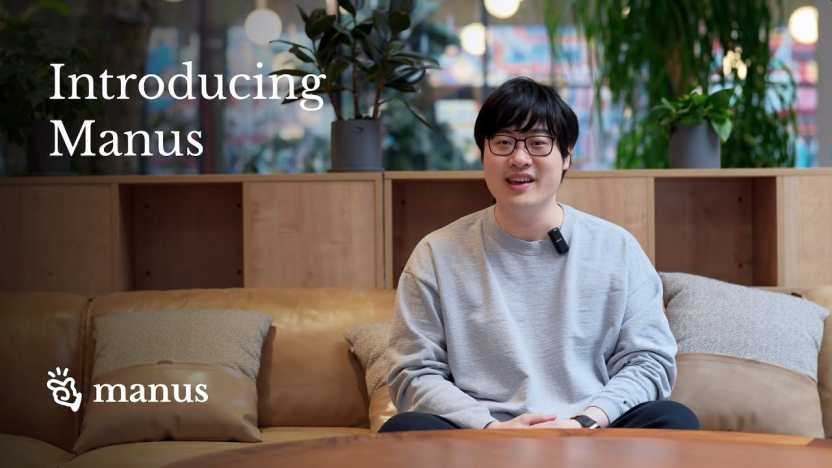
AI startup Manus has raised more than $500 million after unwinding its proposed acquisition by Meta, according to a new report from The Information. The financing marks a substantial development for the company following the collapse of a deal that would have placed its agent technology inside one of the world’s largest social media and technology businesses. The Information’s October 8 report confirms the new fundraising amount, though it does not publicly disclose detailed financing terms or the identities of all participating investors.
Manus has attracted attention for developing AI agents that can carry out multistep tasks, including research, information gathering, document preparation, and other work that traditionally requires users to move between applications. That makes it part of an increasingly competitive segment of the AI market: companies building systems that perform work rather than simply answer questions. A financing round exceeding half a billion dollars gives Manus considerable resources to expand its technology and commercial operations without being absorbed into Meta. The key question now is whether independent agent developers can build durable businesses while larger platforms increasingly integrate similar capabilities into their own products.
The deal also illustrates a broader shift in AI investing. Investors are increasingly willing to fund companies that own valuable agent infrastructure, even when those companies face competition from much larger model developers.
Why It Matters: Manus’s fundraising shows that independent AI-agent companies can still attract substantial capital despite intensifying competition from Meta, OpenAI, Google, and other technology giants.
Source: TechStartups via CNBC, The Information
GlobalFoundries Wins Five-Year TSMC Deal to Manufacture Critical AI Chip Components in New York
GlobalFoundries has signed a five-year manufacturing agreement with TSMC to produce silicon interposers at its Malta, New York, facility. Announced October 8, the agreement establishes a new U.S. manufacturing source for components used in advanced chip packaging. Silicon interposers sit beneath processors and high-bandwidth memory chips, allowing multiple components inside an AI accelerator package to communicate at high speeds. The companies expect production to begin ramping up during the first half of 2028, with the arrangement providing a framework for additional capacity expansion as demand grows.
The agreement addresses one of the semiconductor industry’s less visible bottlenecks. Training and deploying advanced AI models requires more than manufacturing powerful processors. Those processors must be connected to enormous amounts of memory, often through sophisticated packaging technologies that are difficult to produce at scale. Even if chipmakers have sufficient advanced wafers, shortages of interposers and packaging capacity can restrict the number of finished accelerators available to customers. GlobalFoundries’ participation could help TSMC diversify part of that supply chain while expanding advanced semiconductor manufacturing activity in the United States.
The agreement is also notable because GlobalFoundries is not competing directly with TSMC at the most advanced logic manufacturing nodes. Instead, it is supplying a critical component within TSMC’s broader production ecosystem.
Why It Matters: The AI chip shortage is increasingly about packaging and memory integration, making specialized manufacturers such as GlobalFoundries strategically important even without leading-edge processor fabrication.
Source: Reuters
TSMC September Revenue Surges 54.6% as Global AI Chip Demand Remains Strong
Taiwan Semiconductor Manufacturing Company (TSMC) reported NT$511.86 billion in September revenue, up 54.6% from the same month a year earlier, according to financial figures released October 8. Revenue declined slightly, by 0.6%, from August. For the first nine months of 2026, TSMC generated NT$3.90 trillion in revenue, up 41.1% from the same period in 2025. The figures further indicate strong demand for manufacturing capacity supporting advanced processors used in artificial intelligence, smartphones, data centers, and other computing systems.
TSMC occupies a central position in the semiconductor supply chain because companies including Nvidia, AMD, Apple, and major custom-chip developers depend on advanced contract manufacturing. AI infrastructure spending has increased demand for leading-edge wafers and advanced packaging, while smartphone and other electronics markets continue competing for production capacity. The monthly figures are revenue disclosures, not full earnings results, so they do not yet reveal the company’s latest profit margins or operating performance. Those details will become clearer when TSMC releases its complete quarterly financial statements.
The importance extends well beyond Taiwan. TSMC’s manufacturing output influences schedules for AI accelerator deployments, consumer electronics launches, and data-center construction projects worldwide.
Why It Matters: TSMC’s revenue growth suggests demand for advanced semiconductor manufacturing remains strong even as the AI industry faces mounting concerns about capital spending and infrastructure costs.
Source: TSMC
Tencent Considers $5 Billion Bond Sale as Chinese Big Tech Expands AI Spending
Chinese technology giant Tencent is considering raising as much as $5 billion through an offshore bond offering, according to Bloomberg reporting cited by Reuters on October 8. The transaction could include bonds denominated in U.S. dollars and offshore yuan, with an offering potentially taking place this month. Tencent has not announced a final decision or completed issuance. The proposed financing follows Tencent’s approximately $4.66 billion bond sale in June, its largest such transaction since 2020. Proceeds from that earlier offering were intended for general corporate purposes, including artificial intelligence development
Tencent’s potential return to debt markets comes as Chinese technology companies increase investment in AI models, computing infrastructure, and cloud services. Like their U.S. counterparts, they face substantial upfront costs for processors, networking equipment, data centers, and engineering talent. Chinese companies must also operate within a semiconductor market shaped by U.S. export restrictions, making access to domestic chips and alternative infrastructure arrangements strategically important. The precise uses of any new Tencent financing remain unconfirmed, but the broader financial context is clear: AI competition increasingly requires access to capital markets as well as advanced technology.
The development also follows a series of major AI-related borrowing and financing plans involving technology companies elsewhere, suggesting that debt is becoming a more prominent source of funding for AI expansion.
Why It Matters: Tencent’s potential bond sale shows that financing the AI race is becoming a global capital-markets challenge, extending well beyond American hyperscalers.
Source: Bloomberg, as reported by Reuters
Google Ordered to Halt Work at Two Finland Data Center Sites Over Suspected Illegal Forest Clearing
Finnish authorities have ordered Google to suspend preparatory construction work at two planned data-center sites following concerns about environmental damage and possible illegal forest clearing. Finland’s Supervisory Agency, known as LVV, issued the order to Google’s subsidiary Tuike Finland, affecting sites in Muhos and Kajaani. The work under scrutiny included tree removal, topsoil clearing, road construction, storage areas, and drainage ditch modifications. According to Finnish broadcaster Yle, the suspension will remain in effect until the required environmental impact assessment procedures have been completed.
The decision affects projects associated with Google’s previously announced €13 billion investment in Finland. Police have also begun examining activity at the Muhos site after a complaint was filed on October 2. Investigators have not established that a crime occurred, and the inquiry remains in its early stages. Google acknowledged that its activities had fallen short of its own standards and said it would comply with the regulator’s order. Tuike Finland has until October 14 to explain. The development marks a significant escalation from earlier scrutiny of the project: authorities are now restricting construction activity rather than merely examining complaints.
The case underscores the tension between Europe’s ambition to attract AI infrastructure investment and its environmental protections. Electricity, land use, biodiversity, and permitting are becoming increasingly important constraints on data-center development.
Why It Matters: Google’s construction halt shows that access to capital and electricity does not guarantee that AI data centers can proceed when environmental approvals and local protections are unresolved.
Source: Yle News
Drone Attack Forces Yandex to Shut Down Major Russian Data Center, Exposing AI Infrastructure Risks
A drone attack has forced Yandex to suspend operations at one of Russia’s largest data-center facilities, marking a significant escalation in attacks against digital infrastructure during the war in Ukraine. Yandex said its Sasovo facility was struck Thursday, causing a fire and disrupting operations at a site containing tens of thousands of servers. The company operates five major data centers and said it was working to restore affected services. Yandex’s core consumer services were not affected, although cloud customers were advised to use alternative availability zones after problems with electricity supply at the damaged location.
The Sasovo site is especially important because Yandex previously identified it as home to two of its three Nvidia A100-based supercomputers. Those systems have supported the company’s AI development, including large language models. However, Yandex declined to confirm whether the supercomputers were damaged, and its current deployment status at the facility remains unclear. Several Russian online services reported technical problems as the attack disrupted infrastructure. Reuters described the incident as the first major strike against a Russian data-center hub since the war began, following earlier attacks on Ukrainian telecommunications and computing facilities
The incident illustrates a growing national-security concern: data centers have become critical infrastructure supporting commerce, communications, government services, and increasingly advanced AI development.
Why It Matters: The Yandex attack demonstrates that data centers are becoming physical targets in modern conflicts, making geographic redundancy and infrastructure resilience increasingly important for AI and cloud providers.
Source: Reuters
Denmark Introduces AI Deepfake Bill to Protect People’s Faces and Voices Without Consent
Denmark is introducing legislation intended to protect people from the unauthorized use of their faces and voices in realistic AI-generated content. The proposed amendment to Danish copyright law would restrict distributing deepfakes depicting identifiable individuals without their consent. The protections would apply to ordinary citizens as well as artists and performers whose appearances or voices can be digitally replicated. Culture Minister Zenia Stampe said the legislation is intended partly to encourage major technology platforms to remove manipulated content quickly before it causes widespread harm.
The proposal includes exceptions for satire, parody, caricature, and legitimate criticism of public institutions and powerful figures, although it does not necessarily protect specified harmful misinformation. Danish officials hope the law can take effect in early 2027, but it has not yet been enacted. The legislation follows earlier political agreement on stronger protections against unauthorized digital imitation. It arrives as AI-generated audio and video become increasingly convincing and easier to produce, creating challenges involving impersonation, fraud, reputational damage, and political misinformation. Other European countries have introduced related measures, but Denmark’s approach is distinctive in its attempt to extend copyright-style protections to aspects of personal identity.
The broader issue is becoming increasingly urgent as consumer AI tools can recreate recognizable human characteristics from relatively limited source material.
Why It Matters: Denmark’s proposal could help establish a legal framework for treating faces and voices as protected elements of personal identity in the age of generative AI.
Source: Euronews
Samsung Galaxy S26 Hacked Three More Times as Pwn2Own Researchers Expose 45 Zero-Day Flaws
Security researchers demonstrated 45 previously undisclosed vulnerabilities during the second day of Pwn2Own Ireland 2026, earning a combined $232,500 in awards. Separate research teams successfully compromised the Samsung Galaxy S26 three additional times, while other demonstrations targeted smart-home devices, enterprise software, and AI infrastructure. Researchers also demonstrated attacks against the Oracle Autonomous AI Database and Home Assistant Green. One participant compromised an AI infrastructure target in a demonstration that earned a $40,000 award. The findings were reported October 8 by BleepingComputer.
Pwn2Own is an authorized security competition organized by Trend Micro’s Zero Day Initiative. Researchers attempt to exploit vulnerabilities in fully patched products under controlled conditions, providing vendors with technical information needed to address the weaknesses. Under the competition’s disclosure rules, affected vendors generally receive 90 days to develop fixes before vulnerability details are publicly released. The successful demonstrations should not be confused with evidence that criminals are actively exploiting those same flaws. Still, the results remind us that current software and hardware remain vulnerable even after receiving their latest security updates.
The expansion of Pwn2Own into AI infrastructure is particularly notable. As companies integrate models and autonomous agents with databases, networks, and connected devices, the number of components that require coordinated security testing keeps growing.
Why It Matters: Pwn2Own’s latest results highlight how quickly vulnerabilities can accumulate across smartphones, AI infrastructure, databases, and connected devices — even when products are fully updated.
Source: BleepingComputer
Robotics Data Startup Mecka AI Raises $60 Million From Sequoia, Nvidia and Microsoft-Backed Investors
Robotics startup Mecka AI has raised $60 million in Series B funding to expand its business collecting and processing human movement data used to train robots. Sequoia led the round, with participation from Nvidia, Microsoft’s venture investment arm M12, and other investors. Founded in 2024, Mecka is building a data infrastructure business for humanoid and general-purpose robotics, an industry that increasingly depends on large datasets showing how people perform physical tasks. The company pays participants to record everyday activities while wearing body sensors and using smartphones, generating movement examples that robots can learn to imitate.
The startup is pursuing a model similar to the businesses that became important during the rise of large language models. Companies such as Scale AI built substantial operations around collecting, labeling, and organizing data used to train AI systems. Robotics adds challenges because useful training data includes physical motion, object manipulation, timing, and interaction with unpredictable environments. A robot learning to repair equipment or prepare food must connect visual information with movement sequences that produce reliable results. Mecka’s financing also comes as investors fund companies building robot foundation models, humanoid hardware, simulation software, and safety-testing systems.
The opportunity is substantial, but collecting human movement data at scale is only part of the problem. Developers must still show that models trained on those datasets can reliably transfer their skills to physical machines.
Why It Matters: Mecka’s funding shows that real-world human behavior is becoming a valuable training resource for robotics, potentially creating a new data infrastructure market alongside physical AI.
Source: TechStartups via Mecka
British Quantum Computing Startup Universal Quantum Raises $100 Million to Scale Trapped-Ion Technology
British quantum computing startup Universal Quantum has raised $100 million in Series A financing, which the company describes as the largest Series A raised by a UK-headquartered quantum company. The University of Sussex spinout was founded in 2018 and is developing trapped-ion quantum computing systems. DCVC and Firgun Ventures co-led the financing, with participation from investors including Singapore’s EDBI, Japanese investment groups, and Roblox founder and CEO David Baszucki. Universal Quantum said the capital will support technology development and expansion across the United States, Japan, and Germany.
The company’s approach focuses on a central challenge in quantum computing: scaling from small experimental systems to machines that can perform reliable computations despite errors. Universal Quantum is developing integrated quantum processing units fabricated using established 200-millimeter semiconductor manufacturing processes. Its design uses microwave-based controls, aiming to reduce the optical complexity associated with some trapped-ion approaches. The company ultimately wants to build systems containing enough error-corrected qubits for useful industrial and scientific applications. That remains a long-term engineering ambition rather than an existing commercial capability.
The financing arrives as quantum developers seek capital for increasingly expensive manufacturing, control electronics, and system integration. Investors are looking beyond laboratory demonstrations toward companies with plausible paths to repeatable production.
Why It Matters: Universal Quantum’s $100 million raise illustrates the growing importance of manufacturability and system engineering as quantum computing companies move toward larger, fault-tolerant machines.
Source: Tech.eu
HPE Unveils ProLiant Gen 13 Servers With AMD Venice Chips for Enterprise AI and Autonomous Agents
Hewlett Packard Enterprise has unveiled the first systems in its ProLiant Gen 13 server lineup, introducing hardware designed for enterprise AI inference, autonomous agents, simulation, and other demanding workloads. The new systems use AMD’s sixth-generation EPYC 9006 processors, known as Venice. Among the highlighted products is the ProLiant DL585a, a 10U server that supports up to eight double-width GPUs and two AMD EPYC processors with up to 256 cores each. HPE plans to make the system available in March 2027. Other configurations target workloads requiring dense CPU resources and high memory bandwidth.
HPE’s strategy reflects changing demands inside enterprise data centers. Training frontier models has driven much of the demand for large GPU clusters, but organizations deploying AI agents also need substantial conventional computing resources to coordinate tools, run application logic, retrieve data, and manage security. HPE executives told The Next Platform that customers increasingly face power constraints before exhausting available rack space. The company is responding with updated cooling, networking, memory, and security capabilities alongside the new processors. The architecture is intended to support companies running their own AI systems rather than depending exclusively on external cloud infrastructure.
The launch also signals that the enterprise hardware market is preparing for a wider range of AI workloads beyond large-scale model training.
Why It Matters: HPE’s new servers show how autonomous AI agents are changing enterprise infrastructure requirements, increasing demand for powerful CPUs, memory, security, and local computing capacity.
Source: The Next Platform
Mortgage AI Startup Vesta Raises $30 Million to Automate Underwriting and Loan Processing
Mortgage technology startup Vesta has raised $30 million in Series B funding to expand an AI-native loan origination platform designed to automate routine mortgage processing. Conversion Capital led the round, bringing the company’s total funding to $85 million. Investors also include major mortgage lenders such as New American Funding, PennyMac Financial Services, and NBKC Bank, alongside Citi Ventures and other financial technology backers. Vesta says lenders already using its platform or migrating to it originate more than $100 billion in mortgages annually. The software integrates AI agents directly into loan processing workflows, including underwriting support, clearing outstanding conditions, and reviewing files before closing.
The company is attempting to address a longstanding problem in mortgage lending: applications involve substantial document collection, repetitive data checks, compliance requirements, and coordination among numerous parties. Traditional automation often sits on top of older loan-processing software, limiting how much work it can complete independently. Vesta instead integrates automated tasks within the underlying loan origination system. Pennymac reported a 25% reduction in operational origination costs and about a 50% improvement in loan-officer efficiency after adopting the platform, although those improvements were reported before activating AI agents. The results therefore should not be attributed entirely to autonomous AI.
The broader opportunity involves applying AI to regulated administrative workflows where successful automation requires reliable records, auditability, and human oversight.
Why It Matters: Vesta’s funding highlights a growing enterprise AI opportunity: automating expensive back-office processes inside established industries rather than building another general-purpose chatbot.
Source: HousingWire
Adobe Expands Heathrow Airport AI Partnership as Travel Discovery Shifts From Google Search to Chatbots
Adobe and London’s Heathrow Airport have expanded their technology partnership to introduce AI-powered digital experiences for the airport’s passengers. Announced October 8, the agreement will use Adobe’s customer experience software to support Heathrow’s digital services, including a redesigned website, personalized information, and tools intended to make the airport’s content easier to discover through AI search platforms. Heathrow serves approximately 84.5 million passengers annually, while its website attracts more than 50 million visitors each year. The partnership will involve Adobe Experience Manager and Adobe Brand Visibility, among other products.
The announcement reflects a significant change in how organizations expect customers to find information. Traditionally, airports, hotels, airlines, and travel companies optimized their websites primarily for conventional search engines. Increasingly, travelers are asking AI assistants to help plan journeys, identify transport options, check accessibility services, and answer questions about destinations. Adobe’s Brand Visibility technology helps organizations monitor how their information appears across AI services such as ChatGPT, Gemini, Copilot, and Perplexity. Heathrow plans to use those capabilities to improve the accuracy and availability of information across traditional websites and AI-generated answers. The companies have not disclosed the financial terms of the expanded agreement.
The strategic significance extends beyond airports. Organizations increasingly need to consider whether their information is accessible and accurately represented by AI assistants that may become intermediaries between businesses and customers.
Why It Matters: Heathrow’s expanded partnership with Adobe shows that AI search visibility is becoming a business priority as consumers increasingly rely on chatbots and digital agents to find information and make decisions.
Source: Adobe Newsroom