Venture Capital & Startup Funding Roundup, September 23, 2026: Accel, JPMorgan, S32, T. Rowe Price, Y Combinator & More
 Nickie Louise
Posted On September 23, 2026

Venture money today is not clustering around generic AI applications. It is moving toward companies that control something harder to reproduce: autonomous systems with battlefield deployment, proprietary biological data, orbital connectivity, regulated clinical workflows, enterprise distribution, and the infrastructure through which AI systems communicate. Tekever’s $580 million Series D, Enveda’s $311 million Series E, Hubble Network’s $200 million Series C, and Basecamp Research’s $140 million Series C all fit that pattern.
The second signal is the widening definition of an “AI company.” Today’s capital is funding drones, drug discovery, satellite networks, cardiac imaging, enterprise process automation, audiovisual content systems, and communications infrastructure. AI is increasingly becoming a component inside defensible businesses rather than the entire investment thesis. Ema, for example, is selling automated business outcomes rather than model access; UltraSight is applying AI to a constrained clinical bottleneck; and Hubble is pairing software with a physical satellite network.
This roundup focuses on funding rounds first announced today, prioritizing original company and investor announcements over older deals republished or picked up by other outlets. The ranking weighs amount raised, investor quality, strategic importance, technological significance, and what each transaction says about the direction of private capital. One transaction — Bird.com’s $450 million financing — is debt rather than venture equity, but its size and direct connection to AI communications infrastructure make it too consequential to exclude.
The Macro Environment: Capital Is Moving From AI Models to Scarce Assets
The broader venture market remains extraordinarily well funded, but the headline totals conceal extreme concentration. Crunchbase calculated that global startup investment reached a record $510 billion in the first half of 2026, already exceeding the roughly $440 billion invested during all of 2025. In the first quarter, AI companies captured roughly 80% of global venture dollars, with OpenAI, Anthropic, xAI and Waymo alone accounting for about 65% of the quarter’s investment.
That concentration is starting to show up beyond foundation-model developers. Crunchbase estimates that companies it categorizes around “physical AI,” including robotics, aerospace, and other systems operating in the physical world, raised $47.4 billion across 521 deals in the first half of 2026, nearly four times the amount invested in the second half of 2025. Tekever is an unusually clear example of that migration: investors are paying a $6.4 billion valuation not for another software wrapper, but for autonomous defense systems with manufacturing requirements, government customers, and operational experience in Ukraine.
Life sciences is developing a similar pattern. Enveda and Basecamp Research together announced $451 million today for businesses using machine learning alongside proprietary biological datasets and wet-lab or therapeutic development capabilities. At the same time, biotech companies are again testing public-market demand: ADARx recently targeted a valuation of up to $1.74 billion for its U.S. IPO, while Nvidia- and QIA-backed Iambic filed to go public after raising about $462 million privately. That suggests late-stage biotech investors can once again underwrite some private rounds with a plausible public-market exit path — although the IPO market remains selective and favors companies with differentiated clinical assets.
The macro backdrop is hardly benign. Global bond yields were moving higher Wednesday as oil rebounded above $100 a barrel, reviving inflation concerns. Yet high-conviction private financings are still closing at substantial valuations. That combination points to a venture market that is liquid but discriminating: capital is abundant for businesses that can demonstrate strategic scarcity, measurable adoption, government relevance, proprietary data or clinical progress, while the hurdle remains much higher for undifferentiated software.
Capital is also shifting in who supplies it. Today’s backers include university investment capital, Baillie Gifford, T. Rowe Price, JPMorgan, Nvidia, the NATO Innovation Fund, Indian alternative-asset manager Multiples and specialist venture firms. Private technology financing is increasingly a mixed market in which traditional VCs compete and collaborate with pension-like pools, crossover investors, banks, strategic corporations and national-security capital.
Today’s Top Funding Rounds
Tekever raises $580M in funding to scale AI-powered autonomous defense systems

European autonomous-systems company Tekever raised $580 million in the first close of its Series D, led by UC Investments and Baillie Gifford, at a $6.4 billion valuation. Reuters reported the transaction at 9:29 UTC Wednesday, placing it just inside this report’s 12-hour cutoff. Merlyn Advisors joined the financing alongside existing shareholders including Crescent Cove, Ventura Capital and Iberis Capital.
Tekever matters because the defense-tech investment thesis has moved from speculative procurement potential to operating scale. The company develops AI-enabled autonomous aircraft and related systems and has accumulated operational experience in Ukraine. It has also been selected for the British Army’s CORVUS surveillance program, which could be worth as much as £400 million over ten years. The new capital is earmarked for international expansion, manufacturing capacity, technology development and acquisitions.
The $6.4 billion valuation is the more interesting number. Defense startups used to face a structural discount because procurement cycles were slow, customers were concentrated, and exits were uncertain. Investors are now assigning premium valuations to businesses that combine software economics with industrial production and government demand. Tekever is therefore competing not merely against drone startups, but for a larger share of the defense primes’ future economics. Its challenge will be proving that startup-speed product development can survive the cost, compliance and manufacturing demands that accompany major defense programs.
Funding Details
Startup: Tekever
Investors: UC Investments and Baillie Gifford, with Merlyn Advisors, Crescent Cove, Ventura Capital and Iberis Capital among participants
Amount Raised: $580 million
Total Raised: Cumulative funding not stated in the current announcement
Funding Stage: Series D, first close
Funding Date: September 23, 2026; Reuters reported at 5:29 a.m. ET
Headquarters: Lisbon, Portugal; the company operates as a Portuguese-British defense technology business
Sector: Defense technology, autonomous systems, drones, physical AI
Bird.com raises $450M in debt financing to build communications infrastructure for AI agents
Bird.com completed a $450 million debt financing led by JPMorgan as it repositioned its communications platform around infrastructure for AI agents. The financing was announced at 10:52 a.m. Eastern, making it one of the largest private technology financings of the day even though it is debt rather than a conventional venture round.
The strategic argument is straightforward: if software agents increasingly communicate with customers and businesses through messaging, voice, and other channels, then communications APIs become part of the agent stack. Bird is effectively wagering that AI-driven interactions will create another large wave of machine-generated communications traffic, just as mobile apps produced demand for cloud communications platforms in the previous decade.
The financing structure also deserves attention. Debt allows a mature private company to finance expansion without repricing its equity or imposing the same dilution as a new stock round. But it creates fixed repayment obligations, so lenders must have greater confidence in cash generation than venture investors typically require. JPMorgan’s willingness to lead a $450 million facility therefore says something different from a seed investor betting on technical potential: this is credit underwriting around an existing business that intends to use AI as a new growth vector.
Funding Details
Startup: Bird.com
Investors: JPMorgan led the debt financing
Amount Raised: $450 million
Total Raised: Not directly comparable with prior equity funding; the announcement describes a new $450 million debt financing
Funding Stage: Debt financing/growth capital
Funding Date: September 23, 2026, 10:52 a.m. ET
Headquarters: Amsterdam, Netherlands
Sector: Cloud communications, AI-agent infrastructure
Enveda raises $311M in funding to push AI-discovered medicines deeper into the clinic

Boulder-based Enveda raised a $311 million Series E led by Catalio Capital Management, with investors including Surveyor Capital, T. Rowe Price, Lux Capital and a sovereign wealth fund. The financing values Enveda at roughly $2 billion and brings cumulative funding to more than $845 million.
Enveda is trying to industrialize a historically difficult corner of drug discovery: identifying therapeutically useful chemistry from nature. Its approach combines metabolomics, machine learning, and large biological datasets to search natural compounds for drug candidates. The company has moved beyond an AI-platform-only story into clinical development, which is a major distinction for investors assessing computational biotech companies.
The Series E matters because it shows AI-biotech financing is splitting into two categories. Companies that primarily sell discovery software face one set of economics; companies that use computational systems to own drug assets can potentially capture pharmaceutical-scale value, but must fund trials and absorb clinical risk. Enveda’s repeated large rounds indicate investors are underwriting the latter model. At roughly $2 billion, the valuation now depends more on clinical outcomes than on improvements in the underlying AI platform.
That explains the investor mix. Catalio and Lux bring specialist life-sciences and venture experience, while T. Rowe Price and Surveyor provide the later-stage capital that can matter as a company approaches greater clinical maturity and considers future liquidity options. That does not guarantee an IPO, but the financing profile increasingly resembles a company being capitalized for several possible paths rather than another short private round.
Funding Details
Startup: Enveda
Investors: Catalio Capital Management led; Surveyor Capital, T. Rowe Price, Lux Capital, a sovereign wealth fund, and other investors participated
Amount Raised: $311 million
Total Raised: More than $845 million
Funding Stage: Series E
Funding Date: September 23, 2026
Headquarters: Boulder, Colorado, United States
Sector: Biotechnology, AI drug discovery, therapeutics
Valuation: Approximately $2 billion
Hubble Network raises $200M to turn satellite Bluetooth into a global connectivity layer

Seattle-based Hubble Network raised $200 million in Series C financing led by Smith Point Capital, bringing total funding to roughly $300 million and valuing the company at $1.6 billion. Participants include Seraphim, Carthona Capital, Earthshot Ventures, Y Combinator and RPM Ventures. Reuters reported the transaction Wednesday afternoon.
Hubble’s pitch is technically unusual: it is building a satellite network designed to connect ordinary Bluetooth devices directly with satellites. The company says it is opening that network for public use, aiming to let connected devices communicate from locations beyond traditional cellular or Wi-Fi coverage.
Investors are effectively betting that satellite connectivity becomes a feature embedded much deeper into low-power devices rather than remaining a specialized service requiring expensive terminals. That could matter in logistics, industrial monitoring, agriculture, asset tracking, defense, and remote infrastructure. The competitive set is therefore wider than satellite operators alone; Hubble is also competing indirectly with terrestrial low-power networks and other direct-to-device satellite architectures.
The strategic advantage, if the technology scales economically, is distribution through existing Bluetooth hardware rather than requiring every application to adopt a proprietary radio standard. The hard part will be proving reliability, regulatory coverage, and unit economics across a large constellation. At a $1.6 billion valuation, the market is already assigning meaningful value to that architecture before satellite connectivity becomes a routine component of everyday devices.
Funding Details
Startup: Hubble Network
Investors: Smith Point Capital led; Seraphim, Carthona Capital, Earthshot Ventures, Y Combinator, and RPM Ventures participated
Amount Raised: $200 million
Total Raised: Approximately $300 million
Funding Stage: Series C
Funding Date: September 23, 2026
Headquarters: Seattle, Washington, United States
Sector: Space technology, satellite communications, Internet of Things
Valuation: $1.6 billion
Brahma AI raises $150M to build enterprise audiovisual AI infrastructure
Brahma AI announced $150 million in preferred-equity financing, with Multiples Alternate Asset Management investing $100 million. The company said it received an additional $100 million in investor interest, though that amount is not part of the announced $150 million transaction. Cantor Fitzgerald served as sole placement agent.
Brahma sits at the intersection of generative media and enterprise content management. Its platform combines a content-intelligence layer with tools for visual AI, synthetic humans, voice and multilingual content production. The company says Warner Bros., the NBA and Mayo Clinic are anchor customers, while Google, Hakuhodo and DNEG are strategic distribution partners.
That customer mix points to the real investment thesis. Generative-media technology by itself is becoming easier to access as base models improve. The more defensible business may be managing the workflows, rights, provenance, localization, approvals, and deployment of generated audiovisual content inside large organizations. In other words, Brahma has to become the system that enterprises trust around synthetic content, not merely another generation interface.
Multiple investors taking two-thirds of the round also makes this a concentrated conviction bet rather than a broad venture syndicate. The planned use of proceeds — research and development, worldwide commercialization and a larger Silicon Valley presence — suggests Brahma is moving from technology consolidation into a more aggressive commercial phase.
Funding Details
Startup: Brahma AI
Investors: Multiples Alternate Asset Management led with a $100 million investment; other investors were not individually identified in the release
Amount Raised: $150 million
Total Raised: $150 million publicly disclosed in this financing; cumulative historical funding was not stated
Funding Stage: Preferred-equity growth financing
Funding Date: September 23, 2026
Headquarters: The announcement lists operations in Los Angeles, London, and Mumbai; a single headquarters was not specified
Sector: Enterprise AI, generative media, audiovisual content infrastructure
Basecamp Research raises $140M to advance AI-designed therapeutics
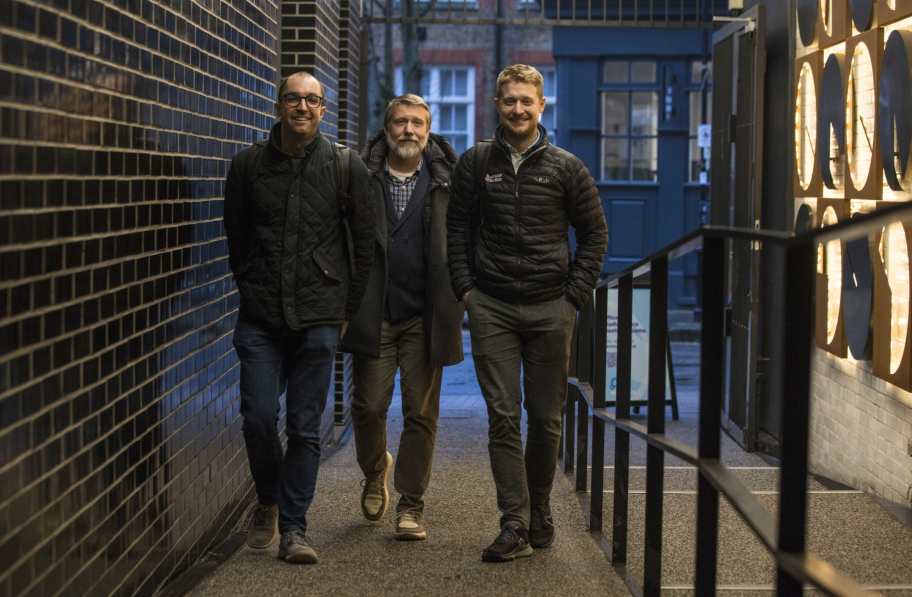
Basecamp Research raised an oversubscribed $140 million Series C led by S32, with participation from Nvidia, Anthropic’s Anthology Fund, Catalio Capital Management, the NATO Innovation Fund, True Ventures, Redalpine, The Rockefeller Foundation, Singular and several other investors.
The company is developing biological foundation models called EDEN using its proprietary Trillion Gene Atlas, which it describes as a dataset built from biological information collected through partnerships in more than 30 countries. Basecamp says its models can design DNA sequences, cell and gene therapies, enzymes and peptides, and the company is initially applying them to in vivo cell therapy.
What separates this from many computational drug-discovery financings is the scope of the data strategy. Basecamp is not simply applying a third-party language model to published scientific literature; it is attempting to build proprietary biological training data and then capture value through therapies designed with those models. In AI investing, ownership of non-public, difficult-to-recreate data is increasingly one of the strongest answers to model commoditization.
The syndicate is also revealing. Nvidia brings computing and AI ecosystem exposure; S32 has deep technology and health experience; Catalio is a specialist life-sciences investor; and the NATO Innovation Fund introduces a strategic-security dimension. It is an unusually broad coalition around the idea that biological data, AI models, and programmable medicine are becoming one integrated technology stack.
Funding Details
Startup: Basecamp Research
Investors: S32 led; Nvidia, Anthology Fund, Catalio Capital Management, NATO Innovation Fund, True Ventures, Redalpine, Singular, The Rockefeller Foundation, and others participated
Amount Raised: $140 million
Total Raised: Cumulative funding not stated in the Series C announcement
Funding Stage: Series C
Funding Date: September 23, 2026
Headquarters: London, United Kingdom, with a major Boston/Cambridge operation
Sector: Biotechnology, biological foundation models, AI-designed therapeutics
Ema raises $77M to automate enterprise workflows with teams of AI agents
Enterprise AI startup Ema raised a $77 million Series B led by Creaegis, with Accel, Section 32 and Prosus increasing their stakes. The all-primary-equity round lifts Ema’s total funding to $140 million and more than quadruples its valuation from its 2024 financing, although the company declined to disclose the new valuation.
Ema coordinates teams of AI agents across HR, finance, IT and other corporate functions. Rather than selling another employee-facing assistant, it is trying to automate multi-step workflows spanning existing enterprise applications. The company says it can access more than 150 AI models, which makes model selection a component rather than the core product.
The commercial metrics are what make the deal notable. TechCrunch reports more than 50 active enterprise deals, more than one million active enterprise users, over five million actions and queries, and customers including NTT Data, Hitachi, ADP, PwC, Google, KPMG, Wipro and Microsoft. Ema says revenue has expanded roughly 50-fold in two years, with multiyear contract bookings exceeding $150 million and net dollar retention around 180%. The bookings figure is not annual recurring revenue, an important distinction when evaluating the headline number.
Ema is attacking two profit pools at once: SaaS licensing and the services revenue tied to integrating that software. Its outcome-based pricing model also points toward a larger transition in enterprise technology. If agents actually perform work, vendors may increasingly be paid for completed processes rather than seats or token consumption. That creates considerable upside, but also increases pressure on vendors to demonstrate measurable economic results instead of adoption statistics alone.
Funding Details
Startup: Ema
Investors: Creaegis led; Accel, Section 32, and Prosus participated
Amount Raised: $77 million
Total Raised: $140 million
Funding Stage: Series B
Funding Date: September 23, 2026; TechCrunch published at 5:00 a.m. PDT / 8:00 a.m. ET
Headquarters: Mountain View, California, United States
Sector: Enterprise AI, AI agents, workflow automation
Valuation: Undisclosed; more than four times its 2024 valuation
Pilgrim raises $25M to detect biological threats in the field
Pilgrim, a U.S. defense-biotechnology startup, raised $25 million in seed funding to develop a field-deployable system for detecting biological threats. Reporting linked to The Wall Street Journal says Buckley led the round, valuing the startup at roughly $150 million. Backers also include people associated with Anthropic, whose leadership has repeatedly highlighted the potential misuse of advanced AI in biology.
Pilgrim’s device reportedly weighs about 50 pounds and combines air sampling with genomic sequencing to identify biological threats. This is a materially different approach to AI-biosecurity than trying to prevent dangerous model outputs at the software layer: it assumes some risk must also be managed through detection in the physical world.
The investment is strategically interesting despite being much smaller than the day’s megadeals. As biological design tools become more capable, investors increasingly have two possible exposures: companies accelerating biology and companies monitoring potential misuse or outbreaks. Pilgrim sits in the second category and could eventually sell into defense, homeland-security, public-health and high-risk infrastructure markets.
Its main risk is procurement. A technically successful sensor still needs repeatable government or enterprise purchasing, field reliability, and an operating model that supports widespread deployment. The $150 million seed valuation, if sustained, gives Pilgrim little room for an ordinary outcome: investors are pricing in the possibility that biological-threat monitoring becomes a major security category.
Funding Details
Startup: Pilgrim
Investors: Buckley was reported as lead; Anthropic-affiliated backers also participated
Amount Raised: $25 million
Total Raised: $25 million publicly disclosed in the reported seed round
Funding Stage: Seed
Funding Date: September 23, 2026
Headquarters: United States; the specific headquarters was not disclosed in the reviewed reports
Sector: Biosecurity, defense technology, genomic detection
Valuation: Approximately $150 million, according to reported deal terms
UltraSight raises $24M to widen access to cardiac ultrasound with AI guidance
Israel’s UltraSight completed a $24 million Series B2 financing led by Alive HealthTech Growth Fund. Other reported participants include Deep Insight, Star51 Capital, Connecticut Innovations, and existing backers Mayo Clinic Ventures, NYU, and Iron Nation.
UltraSight addresses a practical healthcare constraint: echocardiograms are valuable, but image acquisition traditionally depends on trained sonographers. The company’s software provides real-time AI guidance designed to help healthcare professionals acquire usable cardiac ultrasound images. Its technology previously received FDA clearance, and current deployments include intensive-care settings at more than 10 medical facilities, according to Calcalist.
The investment case is less about replacing cardiologists than expanding who can capture clinically useful data. That matters because healthcare AI often produces the greatest near-term value when it relieves scarce skilled labor instead of trying to automate an entire medical decision. Ultrasound is particularly suited to that model because acquisition quality is a major bottleneck.
UltraSight’s challenge is commercial scale within health systems, where procurement, reimbursement, workflow integration, and clinical training can still slow deployment. The round nevertheless reflects a broader pattern: investors are backing AI where it can attach to an existing high-value workflow with a measurable capacity constraint.
Funding Details
Startup: UltraSight
Investors: Alive HealthTech Growth Fund led; Deep Insight, Star51 Capital, Connecticut Innovations, Mayo Clinic Ventures, NYU, and Iron Nation were reported as participants
Amount Raised: $24 million
Total Raised: At least $37 million across the publicly disclosed 2021 Series B and current financing
Funding Stage: Series B2
Funding Date: September 23, 2026
Headquarters: Rehovot, Israel, with U.S. operations in Massachusetts
Sector: Medical technology, AI imaging, cardiac ultrasound
NG.CASH raises $15M to expand credit and digital finance for Brazil’s next generation
Brazilian fintech NG.CASH raised a $15 million strategic investment led by Blockchain Capital, taking total funding since its 2021 founding to more than $65 million. The company announced the financing at 9:04 a.m. Eastern.
NG.CASH began as an offshoot of a YouTube channel and has since grown into a financial platform with more than 10 million accounts. The company says many users come from middle- and lower-income households and that its products include payments and credit. It holds direct-credit-society and payment-institution licenses from Brazil’s central bank and has applied for a virtual-asset-service-provider license.
The funding is significantly less because of its size than because of distribution. Consumer fintech economics often collapse under customer-acquisition costs. NG.CASH entered financial services with a preexisting youth audience, potentially reducing one of the sector’s hardest expenses. The company is targeting BRL 1 billion — nearly $200 million — of originated credit by 2027.
Blockchain Capital’s participation also suggests a broader thesis around Brazil as a market where mainstream fintech, stablecoins and digital assets may increasingly overlap. That does not mean crypto becomes the core product; rather, regulatory licenses and an established consumer relationship could allow NG.CASH to add new forms of money movement without having to build distribution from zero.
Funding Details
Startup: NG.CASH
Investors: Blockchain Capital led the strategic investment
Amount Raised: $15 million
Total Raised: More than $65 million
Funding Stage: Strategic investment; no conventional Series designation disclosed
Funding Date: September 23, 2026
Headquarters: São Paulo, Brazil
Sector: Fintech, digital banking, credit, digital assets
What Today’s Funding Activity Reveals
AI is becoming an ingredient, not a category. Of the ten transactions above, most involve AI somewhere in the operating stack, yet the economic assets investors are actually financing are highly varied: Tekever has autonomous aircraft and defense contracts; Enveda has drug candidates and proprietary chemistry data; Hubble has satellites; Basecamp has biological datasets and therapeutic programs; UltraSight has regulated clinical software; Bird has communications infrastructure. The common denominator is not “uses AI.” It is ownership of a scarce capability around which AI can compound value.
The market is rewarding capital intensity again — selectively. For much of the SaaS era, venture investors preferred asset-light businesses. Today, some of the largest checks are going into companies that need factories, satellites, clinical trials or extensive proprietary data collection. Crunchbase’s estimate of $47.4 billion flowing into physical-AI companies during the first half of 2026 reinforces that shift. Investors appear willing to finance expensive infrastructure when it creates a barrier that another well-funded software team cannot easily reproduce.
Biotech and AI are converging at the asset-ownership layer. Enveda and Basecamp are not being financed simply because they apply machine learning to biology. Investors back companies that can convert models into owned therapeutic assets. That distinction matters enormously for valuation: software can be copied, and models can become cheaper, but a successful drug candidate carries intellectual property, clinical data, and potentially years of market exclusivity.
Defense capital is moving from experimentation toward scale. Tekever’s $580 million first close at $6.4 billion indicates that investors now see European autonomous defense businesses as potential large independent platforms. Operational use in Ukraine and long-duration procurement programs have given investors something defense startups historically lacked: real-world validation and a visible path from prototype to recurring government expenditure.
Enterprise AI is being forced toward measurable economics. Ema’s pricing around tasks and business outcomes, rather than seats or tokens, is a particularly important signal. As foundation-model capabilities become available from many suppliers, application companies will have a harder time defending prices purely through access to intelligence. Integration depth, workflow ownership, proprietary context and demonstrable labor or software savings are becoming more credible sources of pricing power.
Capital sources are broadening. Baillie Gifford and UC Investments are backing defense autonomy; T. Rowe Price is participating in AI-biotech; Nvidia and the NATO Innovation Fund are in Basecamp; JPMorgan is underwriting Bird’s debt; Multiples is putting $100 million into enterprise media AI. The implication is that growth-stage startups can no longer think of fundraising as a sequence consisting solely of larger VC funds. The capital stack increasingly changes with the business model: banks for cash-generative infrastructure, strategics for ecosystem leverage, crossover funds for late-stage optionality, and national-security funds for technologies with geopolitical value.
Geographically, the day is also unusually broad. The selected companies span Portugal/UK defense technology, U.S. space and biotech, UK-U.S. computational biology, Israel health tech, Brazil fintech and Brahma’s Los Angeles-London-Mumbai footprint. Yet large-check concentration remains strongest around companies connected to the U.S. capital market and European strategic technology priorities.
Comparative Funding Table
| Startup | Amount Raised | Sector | Funding Stage | Lead Investors | Country |
|---|---|---|---|---|---|
| Tekever | $580M | Defense tech / autonomous systems | Series D | UC Investments, Baillie Gifford | Portugal / UK |
| Bird.com | $450M | AI communications infrastructure | Debt financing | JPMorgan | Netherlands |
| Enveda | $311M | AI biotech/therapeutics | Series E | Catalio Capital Management | United States |
| Hubble Network | $200M | Satellite communications / IoT | Series C | Smith Point Capital | United States |
| Brahma AI | $150M | Enterprise AI / audiovisual infrastructure | Preferred-equity financing | Multiples | Global / U.S.-UK-India |
| Basecamp Research | $140M | AI biotech / biological foundation models | Series C | S32 | United Kingdom / United States |
| Ema | $77M | Enterprise AI/agents | Series B | Creaegis | United States |
| Pilgrim | $25M | Biosecurity/defense biotech | Seed | Buckley | United States |
| UltraSight | $24M | AI medical imaging | Series B2 | Alive HealthTech Growth Fund | Israel |
| NG.CASH | $15M | Fintech/credit | Strategic investment | Blockchain Capital | Brazil |
Funding amounts, stages, and lead investors are drawn from company announcements and contemporaneous reporting published during the September 23 window.
Strategic Takeaways for Founders and Investors
For founders, today’s strongest message is that “AI-powered” is no longer a sufficient fundraising argument. The companies attracting large rounds can answer a harder question: what remains valuable if foundation models become dramatically cheaper and more capable? Tekever owns physical systems and government relationships. Hubble owns network infrastructure. Enveda and Basecamp own proprietary biological data and therapeutic programs. Ema owns enterprise integrations and workflow context. UltraSight operates inside a regulated clinical use case. Those are forms of defensibility that persist even when model performance converges.
That has consequences for product strategy. Application-layer founders should assume generic generation, summarization, coding, and reasoning will keep getting cheaper. Pricing power therefore needs to migrate toward proprietary data, workflow control, transactions, regulated approvals, distribution or measurable outcomes. Ema’s approach is particularly instructive: rather than charging for the number of people using the software or the number of tokens consumed, it ties pricing more closely to completed work.
For investors, the day argues for separating AI exposure from AI defensibility. Almost any company can buy model access; far fewer can build a satellite constellation, secure military programs, assemble proprietary global biology datasets, get medical software cleared by regulators or build a financial platform with ten million users. The better question is no longer whether AI expands a market. It is whether the company controls the scarce resource through which that expansion creates enterprise value.
Capital efficiency also needs a more nuanced definition. Tekever and Hubble are inherently capital-intensive. Enveda must finance clinical development. Those companies should not be judged by SaaS burn-rate norms. The relevant measure is whether each new dollar builds an asset — manufacturing capacity, constellation coverage, clinical data, proprietary datasets or regulatory progress — that increases the cost of catching up. Conversely, an AI software company spending heavily on interchangeable model inference without strengthening distribution or customer ownership may be capital-intensive without becoming more defensible.
Bird.com illustrates another lesson: the financing instrument should match the business’s maturity. Venture equity absorbs uncertainty but dilutes shareholders. Debt can be attractive once revenue and cash flow become credible enough to support repayment. Mature private technology companies with substantial recurring businesses may increasingly mix equity and private credit rather than perpetually raising priced venture rounds.
Market timing is favorable for strong companies but unforgiving for weak differentiation. Global venture funding is at record levels, yet much of that capital has been absorbed by a very small number of companies. The practical implication for founders is that a record funding market does not mean fundraising is broadly easy. It means investors have unusually large amounts of money available for a narrow set of opportunities they believe can become strategic platforms.
Finally, the public/private connection is beginning to matter again. Biotech IPO activity around companies such as ADARx and Iambic gives late-stage life-sciences investors more confidence that private capital does not have to remain trapped indefinitely. The same logic will eventually matter across defense, AI infrastructure and enterprise software: the highest private valuations become easier to support when credible public-market or strategic-exit paths reopen.
Conclusion
September 23’s financing activity offers a useful picture of where venture capital is heading after the first phase of the generative-AI boom. Money is still chasing AI, but it is increasingly chasing AI attached to something scarce: manufacturing capacity, proprietary scientific data, orbital infrastructure, government procurement, clinical permissions, enterprise workflows or large-scale consumer distribution.
Tekever’s $580 million round is the clearest expression of the physical-AI and defense thesis. Enveda and Basecamp show computational biology moving from model development toward asset creation. Hubble represents another attempt to fuse software economics with hard infrastructure. Ema shows the enterprise layer shifting from assistants toward automated work. UltraSight and Pilgrim demonstrate that some of the most interesting AI opportunities may come from putting intelligence into constrained real-world environments rather than building another general-purpose interface.
The larger lesson is that 2026’s record venture totals should not be mistaken for indiscriminate risk-taking. Capital is concentrated because investors are becoming more specific about what they are willing to fund at scale. The premium is moving toward companies that can turn intelligence into ownership — of data, infrastructure, workflows, regulated assets, distribution, or strategic customer relationships. Crunchbase’s record $510 billion first half shows there is no shortage of money; today’s deals show just how high the bar has become for earning a meaningful share of it.