Crusoe raises $3.9 billion at $30.9 billion valuation as AI infrastructure demand surges
 Daniel Levi
Posted On September 17, 2026

Crusoe has raised $3.9 billion in fresh funding at a $30.9 billion post-money valuation, marking a dramatic leap for the AI infrastructure company as investors pour enormous sums into the data centers, chips, and energy systems that support artificial intelligence.
The Denver-based company announced the initial closing of its Series F round Thursday. Atreides Management, Mubadala Capital and Valor Equity Partners co-led the financing, joined by Founders Fund, GIC, Nvidia, Qatar Investment Authority, Radical Ventures, TPG and a long list of new and existing backers.
The new valuation is especially striking compared with where Crusoe stood less than a year ago. TechStartups last covered the AI infrastructure startup in December 2025, when it raised $1.37 billion at a valuation of roughly $10 billion. Crusoe is now valued at more than three times that figure.
Behind that jump is a much bigger bet: AI may increasingly become an infrastructure business.
Crusoe says it now has more than $140 billion in total contracted value across its platform and more than 6 gigawatts of gross contracted capacity. About 1 GW is already operational. The company said bookings for Crusoe Cloud have grown more than 20-fold year over year in 2026.
From crypto mining to the AI infrastructure race
Founded in 2018 by Chase Lochmiller and Cully Cavness, Crusoe began by using stranded and otherwise wasted energy to run cryptocurrency mining operations. Its focus later shifted toward AI infrastructure, putting the company in a new crop of specialized cloud providers often called neoclouds.
Crusoe’s strategy stretches far beyond renting GPUs.
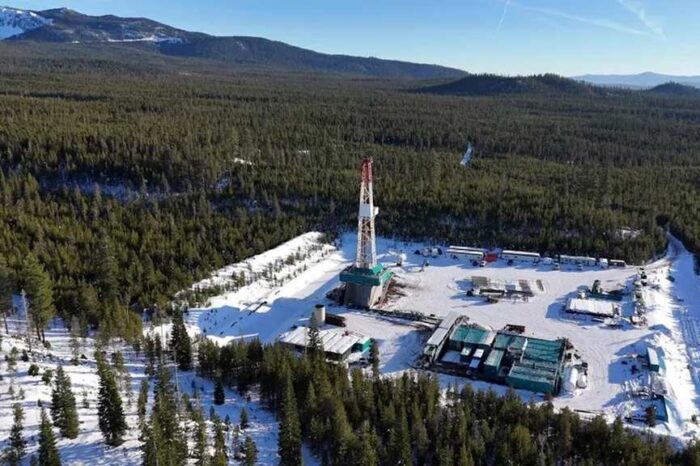
The company develops energy infrastructure, builds large data center campuses, manufactures modular data centers and operates its own AI cloud services. That vertical model is meant to give Crusoe greater control over one of AI’s biggest bottlenecks: getting enough electricity, data center capacity, and compute online at the same time.
“We believe AI will usher in an era of abundance: new scientific breakthroughs, unprecedented economic growth, and human prosperity,” said Chase Lochmiller, Co-founder and CEO of Crusoe. “Getting there means controlling the infrastructure from electrons to tokens, and we’re grateful to have investors who share that conviction. This Series F lets us scale every layer for the world’s most ambitious AI builders.”
Crusoe said the new capital will support existing projects and the construction of its own AI factories, including hyperscale campuses and modular Crusoe Spark facilities. The company now employs more than 1,800 people across five countries.
AI’s race for compute is becoming a race for capital
Crusoe’s $3.9 billion round lands during an extraordinary capital buildout across AI infrastructure.
Just a day earlier, Reuters reported that a group of banks was providing a $22 billion chip-backed loan to Crux AI, the cloud venture backed by Blackstone and Alphabet. Blackstone committed an initial $5 billion equity investment to that venture.
CoreWeave separately announced plans Thursday to raise $3 billion through convertible debt, another sign of how much financing AI infrastructure companies are seeking to secure chips and computing capacity.
Crusoe is betting that owning more of the chain can give it an edge as those costs climb.
“As AI grows, the economics flow to the lowest-cost producer of intelligence. Through a vertically-integrated model, Crusoe owns the entire value chain – a structural advantage that compounds as they build,” said Gavin Baker, Managing Partner and CIO of Atreides Management. “Chase and Cully are world-class operators, and we’re thrilled to support Team Crusoe as they lead the build-out of next-generation AI infrastructure.”
That helps explain why Crusoe’s funding round matters beyond its headline valuation. The AI race is moving deeper into physical infrastructure, where access to energy, land, chips, and construction capacity can matter just as much as software.
Crusoe started eight years ago, finding ways to turn otherwise wasted energy into computing. At a $30.9 billion valuation, it is now making a far bigger wager: that whoever can reliably turn electrons into AI compute could become one of the most valuable suppliers of the AI era.

Crusoe team