Venture Capital & Startup Funding Roundup, September 17, 2026: 3KVC, Andreessen Horowitz, Insight Partners, Valor Equity Partners & More
 Nickie Louise
Posted On September 17, 2026

Venture capital sent a clear signal over the past 12 hours: investors are no longer paying simply for AI exposure. They’re paying for control of the bottlenecks AI cannot scale without. Compute capacity, electricity, enterprise data security, industry-specific workflows, autonomous machines, and proprietary data are drawing the strongest checks. Crusoe’s $3.9 billion Series F dominates the numbers, but beneath it is a more revealing group of Series A and B financings in geothermal power, cybersecurity, construction finance, lending automation, robotics, and personal AI.
Across the ten rounds selected here, companies announced at least $4.372 billion in new capital. Crusoe alone accounts for about 89% of that total, while Crusoe, Nex and Mazama Energy together account for roughly 96%. That concentration is the story as much as the absolute dollar figure: enormous pools of capital remain available, but they are clustering around companies that can credibly own expensive infrastructure, a strategic resource, or a high-value operating layer.
The smaller deals tell the other half of the story. MIND is raising $72 million to protect corporate information as AI agents move through enterprises; Adaptive and Kastle are embedding AI into construction accounting and consumer lending; Viabot and Qubot are applying autonomy to property operations and surgery. Investors appear increasingly interested in software that works within an existing budget line and machines that replace or augment costly physical processes, rather than another horizontal AI interface.
The Macro Environment: Capital Gets More Selective as the Cost of Money Rises
Today’s funding activity is occurring against a less forgiving macro backdrop. The Federal Reserve raised its benchmark rate by 25 basis points to a 3.75%–4.00% range on Wednesday, its first increase in three years, and most policymakers now see at least one additional hike before year-end. That should, in theory, increase discount rates for long-duration technology assets and make capital-intensive startup models harder to finance. Yet the private market is not behaving as if technology spending has stopped; it is behaving as if the bar for receiving capital has moved higher.
Public markets reinforced that distinction today. The Nasdaq rose about 1.6%–1.7%, the S&P 500 gained roughly 1%, and the Philadelphia Semiconductor Index advanced 3.3%, with technology leading the rebound after the Fed-driven selloff. Investors are therefore simultaneously demanding a higher risk-free return and continuing to reward businesses tied to AI infrastructure and semiconductor demand.
That dynamic helps explain Crusoe. A $3.9 billion venture round would look extraordinary in almost any rate environment; it looks even more significant after a Fed hike. But Crusoe is not being underwritten like an ordinary SaaS company. It owns and develops physical data-center capacity, sells compute services, works with hyperscale customers, and has more than six gigawatts of data-center capacity under contract, according to The Wall Street Journal. Investors are effectively treating parts of the AI stack as infrastructure assets with technology-company upside.
The same logic appears one layer down in Mazama Energy. AI expansion is exposing electricity as a constraint on compute growth, which makes firm power technologies increasingly strategic. Mazama’s attempt to commercialize superhot geothermal is technically riskier than buying GPUs, but it targets a problem money alone cannot immediately solve: finding large volumes of dependable power to support industrial and data-center demand. Its Series B therefore belongs in the same capital-allocation conversation as AI infrastructure, even though the underlying technology is geothermal drilling.
For founders, the key change is that “AI company” is becoming a weaker financing category on its own. The strongest rounds in this window attach AI to a defensible control point: infrastructure at Crusoe, sensitive enterprise data at MIND, accounting workflows at Adaptive, lending operations at Kastle, real-world operating data at Viabot, and persistent personal context at Hello Haven. That suggests an investment market becoming more discriminating about where model capability ends and company-specific value begins.
Top Funding Rounds
Crusoe raises $3.9B to industrialize AI infrastructure
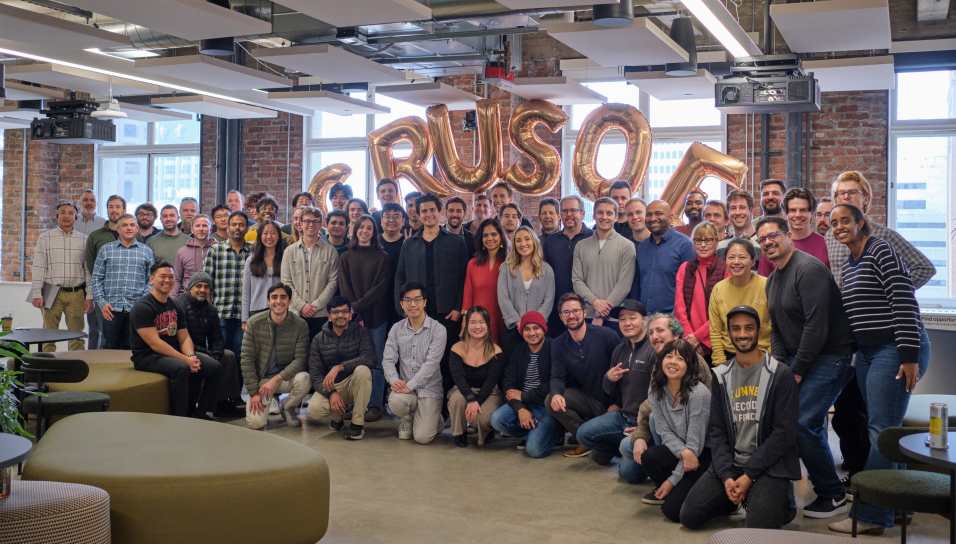
Crusoe has closed $3.9 billion in Series F financing at a $30.9 billion post-money valuation, making it by far the largest financing in this 12-hour screen. The company began in 2018 around cryptocurrency and stranded-energy computing before repositioning itself as an AI infrastructure provider spanning data-center development, GPU cloud capacity and managed AI services. Reuters describes Crusoe as part of the emerging “neocloud” category competing to supply infrastructure optimized for AI workloads.
The strategic issue is no longer simply access to GPUs. AI operators increasingly need power, land, networking, construction capacity and deployment speed. Crusoe is addressing those constraints at multiple scales. The Wall Street Journal reports that it helped build the large Abilene, Texas, AI facility associated with OpenAI and is now manufacturing smaller modular “Spark” data centers that can be transported to locations where electricity is available. Its Denver-area manufacturing operation is designed for up to one gigawatt of annual capacity, while the company also has projects involving Google and more than six gigawatts of overall data-center capacity under contract. That makes the Series F a wager that AI infrastructure will increasingly resemble an industrial supply chain rather than a conventional cloud-software business.
The $30.9 billion valuation also marks a major step up from Crusoe’s previous $10 billion-plus valuation tied to its $1.375 billion Series E in October 2025. The financing therefore shows how aggressively private investors are repricing companies that can turn the AI compute shortage into contracted physical capacity.
Funding Details
Startup: Crusoe
Investors: Co-led by Atreides Management and Valor Equity Partners; additional investors participated
Amount Raised: $3.9 billion
Total Raised: Lifetime total not stated in the current announcement; the Series E and Series F alone total $5.275 billion
Funding Stage: Series F
Funding Date: September 17, 2026
Headquarters: Denver, Colorado
Sector: AI infrastructure, cloud computing, data centers
Nex raises more than $150M in funding to take motion-based family gaming global

Nex has raised more than $150 million in Series E funding, co-led by Baillie Gifford and BAI Capital. The company makes Nex Playground, a compact gaming system that uses computer vision and body movement rather than conventional controllers. NBA Investments, Logitech, Medici Capital Partners and Raine Group also participated, and the company has added a credit facility from JPMorgan.
Nex is notable precisely because it is not another generative-AI software financing. The company has reportedly sold more than one million units, grown its subscriber base roughly sevenfold over 18 months, and approached one million active subscribers. The new capital is intended to support international expansion, including Germany later in 2026 and Japan and South Korea in 2027.
Investors appear to be underwriting a hardware-plus-subscription model with a differentiated interaction layer. That is difficult territory: consumer hardware requires inventory, distribution and marketing while subscription economics require retention after the device sale. But if Nex can establish a recurring family-gaming category around motion tracking, its installed hardware base can serve as a distribution channel for software and content. Baillie Gifford’s involvement is particularly notable given its history of backing companies at the point where private-market growth begins to resemble public-market scale.
Funding Details
Startup: Nex
Investors: Baillie Gifford, BAI Capital, NBA Investments, Logitech, Medici Capital Partners, Raine Group
Amount Raised: More than $150 million
Total Raised: At least $192 million in publicly disclosed rounds identified before accounting for an earlier undisclosed Series B
Funding Stage: Series E
Funding Date: September 17, 2026
Headquarters: San Francisco, California
Sector: Consumer technology, computer vision, interactive gaming
Mazama Energy raises $135M in funding to commercialize superhot geothermal

Mazama Energy announced a $135 million Series B led by Centaurus Capital and Doerr Capital, with participation from ConocoPhillips and Shell Ventures and repeat backing from Khosla Ventures and Gates Frontier. Other investors include SiteGround Capital, H. Barton Asset Management and the Jeffrey and Marieke Rothschild Foundation.
Mazama is pursuing “superhot rock” engineered geothermal systems. At its Newberry project in Oregon, the company says it drilled to 10,200 feet, reached rock at 629°F (331°C), and then created and circulated fluid through an engineered reservoir. Its next technical target is temperatures above roughly 705°F, where water can enter supercritical conditions; Mazama argues that such temperatures could materially increase the electricity produced per well. Those performance claims remain company targets rather than proven commercial economics, but they explain why investors are willing to fund the next stage.
The company plans to use the financing to advance Project Ceres, a Department of Energy-supported demonstration targeting roughly 15 MW of generation per well, followed by larger commercial development. The strategic connection to AI is indirect but powerful: data centers increasingly require firm, around-the-clock electricity, and geothermal can potentially provide that without the intermittency of wind and solar. If superhot systems reduce the number of wells required per megawatt, geothermal economics could shift substantially; the unresolved question is whether laboratory and pilot performance holds up under commercial drilling, reservoir management, and construction costs.
Funding Details
Startup: Mazama Energy
Investors: Centaurus Capital, Doerr Capital, ConocoPhillips, Shell Ventures, Khosla Ventures, Gates Frontier, SiteGround Capital and others
Amount Raised: $135 million
Total Raised: The company did not state a lifetime total; PitchBook listed approximately $36 million before the new Series B
Funding Stage: Series B
Funding Date: September 17, 2026
Headquarters: Dallas, Texas
Sector: Geothermal energy, energy infrastructure, climate tech
MIND raises $72M to secure enterprise data as AI agents spread
MIND has raised a $72 million Series B, bringing total funding to $112 million. Crosspoint Capital Partners led the financing, with existing backers YL Ventures and Paladin Capital Group participating. The Seattle company was founded by veterans of Israel’s Unit 8200 and is focused on preventing sensitive corporate information from leaking through human users, applications, and increasingly autonomous AI systems.
The Wall Street Journal reports that the financing values MIND at about $400 million and that company revenue grew 17-fold over the prior year. Customers include Crunchyroll and Sungrow Power Supply. MIND monitors data movement and user behavior to identify unusual transfers, an increasingly relevant control point as companies allow AI assistants and agents to interact with internal systems.
The investment thesis extends beyond traditional data-loss prevention. Enterprise AI creates new machine identities, new data paths and new ways for authorized systems to take unauthorized actions. That raises the value of security products sitting directly in the flow of corporate information. Investors are effectively betting that companies will not deploy autonomous software at scale without simultaneously increasing spending on observability, access control and data governance. MIND’s reported growth gives that thesis more commercial substance than a purely speculative security bet.
Funding Details
Startup: MIND
Investors: Crosspoint Capital Partners, YL Ventures, Paladin Capital Group
Amount Raised: $72 million
Total Raised: $112 million
Funding Stage: Series B
Funding Date: September 17, 2026
Headquarters: Seattle, Washington
Sector: Cybersecurity, data security, AI security
Valuation: Approximately $400 million
Adaptive raises $30M to automate construction finance workflows
Adaptive announced a $30 million Series B led by Tidemark, with participation from Emergence Capital, Andreessen Horowitz, Pathlight, Definition and 3KVC. The round brings total capital raised to $57 million. Adaptive builds financial software specifically for construction companies, an industry where project accounting often involves fragmented schedules, invoices, field reports, change orders, and accounting systems.
Its current product direction illustrates where enterprise AI is moving. Rather than offering a generic chatbot, Adaptive says its software reads operational documents, follows up for missing information through calls, texts and email, codes invoices and prepares change orders, billing and work-in-progress records, while keeping humans involved before entries reach the general ledger. The company says more than 750 construction businesses use its platform and that it supports more than ten accounting systems.
That specialization matters. Construction has highly specific financial workflows and costly consequences for errors, which raises the value of software trained around industry processes rather than general productivity. Tidemark and returning investors are betting that vertical AI can expand software spending by taking responsibility for work previously performed manually, not simply by providing another interface over existing systems.
Funding Details
Startup: Adaptive
Investors: Tidemark, Emergence Capital, Andreessen Horowitz, Pathlight, Definition, 3KVC
Amount Raised: $30 million
Total Raised: $57 million
Funding Stage: Series B
Funding Date: September 17, 2026
Headquarters: United States; teams centered in New York and Boston
Sector: Construction technology, financial software, vertical AI
Kastle raises $24M to build AI workers for consumer lending
Kastle raised a $24 million Series A led by Insight Partners, with continued participation from Y Combinator and Commerce Ventures and new participation from Fifth Wall and a group of founders and financial-services executives. The San Francisco company is building AI agents for lenders and other financial institutions, positioning them as software workers that can operate across existing core systems rather than forcing customers through a wholesale software replacement.
Kastle says its agents have already processed more than $1.8 billion in transactions. The company is targeting repetitive operational work around consumer credit: moving information between systems, reviewing documents, and executing defined processes. That is a significant market because financial institutions have high labor costs and strong incentives to automate, but also little tolerance for uncontrolled model behavior.
Insight’s involvement points toward an increasingly common Series A thesis: AI value may accrue less to the company with the most novel model and more to the company that understands a regulated workflow deeply enough to execute it safely. In lending, integration depth, auditability, and process data can become stronger barriers than access to a foundation model.
Funding Details
Startup: Kastle
Investors: Insight Partners, Y Combinator, Commerce Ventures, Fifth Wall and individual strategic investors
Amount Raised: $24 million
Total Raised: Not disclosed in the announcement
Funding Stage: Series A
Funding Date: September 17, 2026
Headquarters: San Francisco, California
Sector: Fintech, consumer lending, AI agents
Viabot raises $24M to scale autonomous outdoor property robots
Viabot raised a $24 million Series A led by Walden International, with CDIB Capital Group and Stalwart joining existing investors Baseline Ventures, Era Ventures, Morado Ventures, and SOSV. The financing brings total capital raised to $43 million.
The Santa Clara company builds autonomous machines for outdoor commercial-property operations. Its flagship Viabot One handles functions such as sweeping, debris collection and property monitoring, and the company sells the technology as a recurring robotics service rather than requiring customers to purchase and operate machines outright. Viabot says its fleet has operated across more than five billion square feet of training data and that deployed systems serve customers including major retailers, universities, real-estate operators and utilities.
The significance of this deal is the shift from robotics demonstrations toward narrow, economically measurable jobs. Outdoor property care is repetitive, geographically distributed and labor-intensive. A robot doesn’t have to approximate general human intelligence to be economically attractive there; it has to operate reliably for long periods, handle a constrained set of tasks, and cost less than the labor or outsourcing it replaces. That is the type of physical-AI application venture investors can model with actual unit economics.
Funding Details
Startup: Viabot
Investors: Walden International, CDIB Capital Group, Stalwart, Baseline Ventures, Era Ventures, Morado Ventures, SOSV
Amount Raised: $24 million
Total Raised: $43 million
Funding Stage: Series A
Funding Date: September 17, 2026
Headquarters: Santa Clara, California
Sector: Robotics, autonomous systems, property technology
Hello Haven raises $15M in funding to build personal AI with persistent memory
Hello Haven emerged from stealth with a $15 million pre-seed round led by Mayfield, an unusually large first financing. Founded by Frank Addante and Duc Chau, the Park City, Utah-based startup is building Haven, a personal AI system intended to maintain a persistent model of a user’s information, preferences, and digital history rather than treating every interaction as an isolated chat session.
The company says Haven uses a private memory graph, connects with more than 100 applications, and can route tasks across hundreds of AI models. Its private beta generated more than two million interactions, according to the company. Those are company-reported metrics and do not yet establish retention or monetization, but they clarify Mayfield’s thesis: as foundation models become widely interchangeable, the persistent personal context surrounding the model may become a more defensible layer.
The pre-seed size also says something about founder and category pricing. Investors remain willing to fund experienced teams well ahead of mature revenue when the perceived prize is control of a new interface layer. The strategic risk is equally obvious: Apple, Google, OpenAI and other platform owners have privileged access to identity, devices, applications and user history. A standalone personal-AI startup therefore needs trust, product quality, and cross-platform interoperability strong enough to offset those distribution disadvantages.
Funding Details
Startup: Hello Haven
Investors: Mayfield
Amount Raised: $15 million
Total Raised: $15 million
Funding Stage: Pre-seed
Funding Date: September 17, 2026
Headquarters: Park City, Utah
Sector: Personal AI, consumer software, AI agents
Qubot raises $13.8M in funding to advance magnetic surgical robotics
China-based Qubot has raised approximately $13.8 million in a Series A extension, led by Noyu Capital with participation from Pudong Venture Capital, Pianzaihuang Yingke Fund, Tongyang Fund and Taihu-linked investors. Dealroom rounded the financing to $15 million in its headline while reporting the converted amount as $13.8 million in the underlying deal description; this roundup uses the more precise figure.
Qubot is developing magnetic surgical robotics, placing it at the intersection of medical devices, robotics and precision control. The financing is strategically notable because surgical robotics remains a market where hardware, clinical workflows, regulatory approvals and physician adoption create materially higher barriers than typical software. It also broadens the day’s physical-AI theme beyond industrial and property automation into healthcare.
The investor mix carries a second signal. Local Chinese capital continues to finance robotics and medical-device platforms where domestic commercialization can support a company even amid restrictions around cross-border technology and capital. Unlike software products that can be copied or repriced quickly, surgical systems can accumulate defensibility through regulatory evidence, hardware know-how, procedure data, and hospital integration.
Funding Details
Startup: Qubot
Investors: Noyu Capital, Pudong Venture Capital, Pianzaihuang Yingke Fund, Tongyang Fund and others
Amount Raised: Approximately $13.8 million
Total Raised: Not disclosed
Funding Stage: Series A extension
Funding Date: September 17, 2026
Headquarters: China; city not specified in the retrieved announcement
Sector: Medical robotics, surgical technology
Ravel raises $8.2M in funding to recycle polyester-elastane textile blends
Seattle-based Ravel has raised $8.2 million in seed funding to commercialize technology for recycling textiles that combine polyester with elastane, or spandex. Those blended fabrics are difficult to recycle because recyclers must separate the fibers and polymers without degrading the material they hope to recover. Dealroom and GeekWire reported the round within today’s screening window.
Ravel says its purification process can recover material from poly-elastane blends at quality suitable for reuse in new fiber. The company is attacking a less fashionable but economically important climate problem: many synthetic garments cannot flow easily through conventional textile-recycling systems, leaving incineration, landfill or downcycling as common outcomes.
The deal is small compared with the AI and energy rounds above, but it is strategically useful precisely for that reason. Climate technology financing is increasingly likely to favor processes that can demonstrate a direct industrial buyer, repeatable inputs and outputs that compete with virgin material. Ravel’s challenge will be proving its chemistry at commercial throughput and at costs that survive swings in petroleum-derived virgin polyester pricing.
Funding Details
Startup: Ravel
Investors: Investor roster was not fully specified in the retrieved same-day reporting
Amount Raised: $8.2 million
Total Raised: Lifetime total not disclosed
Funding Stage: Seed
Funding Date: September 17, 2026
Headquarters: Seattle, Washington
Sector: Climate tech, textile recycling, advanced materials
What Today’s Funding Activity Reveals
The first pattern is extreme capital concentration. The ten selected financings total at least $4.372 billion, but Crusoe accounts for about 89% of the dollars. Add Nex and Mazama, and the top three represent almost 96%. Venture markets therefore can still produce huge headline totals without implying that financing conditions are loose for the median startup. The correct interpretation is a barbell: enormous checks for a small number of perceived category leaders and much more measured Series A and B financings elsewhere.
The second pattern is that AI spending is shifting from model creation to the systems around deployment. Crusoe provides compute and physical infrastructure. MIND protects information moving through AI-enabled companies. Adaptive and Kastle put agents into industry workflows. Hello Haven is betting on persistent context and memory. These are different businesses, but all derive their value from what happens after foundation models already exist.
Third, physical systems are taking a larger role in the venture conversation. Mazama is effectively an energy-and-drilling bet; Viabot is a deployment and reliability bet; Qubot requires medical hardware and clinical adoption. These companies need more than software engineering. They need manufacturing, field operations, supply chains, and—depending on the sector—regulatory clearance. Capital is returning to those categories because AI can improve perception, planning, and control, while labor shortages, electricity demand, and industrial reshoring increase automation’s economic value. The specific commercial outcomes remain uncertain, but investor interest is clear in today’s syndicates.
Fourth, vertical specialization is becoming an answer to AI commoditization. Adaptive does not need to own a frontier model if it owns the construction-accounting workflow and the integrations around it. Kastle can create value by understanding lending procedures, controls, and systems better than a general-purpose AI provider. MIND can defend itself by becoming deeply embedded in how enterprises classify and move sensitive data. The moat shifts from “we have AI” toward data access, workflow ownership, distribution, regulatory knowledge, and the ability to execute actions reliably.
Geographically, this particular 12-hour sample is strikingly U.S.-heavy: nine of the ten selected startups are U.S.-headquartered, with Qubot providing the Chinese entry. That should not be read as a definitive daily global funding-share statistic—the observation window is deliberately narrow—but it does reinforce how much late-stage AI infrastructure and enterprise-software capital remains centered in the United States. Qubot, meanwhile, shows that Chinese capital remains active in strategically important robotics and medical technology.
Today’s Funding Table
| Startup | Amount Raised | Sector | Funding Stage | Lead Investors | Country |
|---|---|---|---|---|---|
| Crusoe | $3.9B | AI infrastructure/data centers | Series F | Atreides Management, Valor Equity Partners | U.S. |
| Nex | >$150M | Interactive gaming/computer vision | Series E | Baillie Gifford, BAI Capital | U.S. |
| Mazama Energy | $135M | Geothermal/energy infrastructure | Series B | Centaurus Capital, Doerr Capital | U.S. |
| MIND | $72M | Cybersecurity / AI data security | Series B | Crosspoint Capital Partners | U.S. |
| Adaptive | $30M | Construction fintech / vertical AI | Series B | Tidemark | U.S. |
| Kastle | $24M | Fintech / AI agents | Series A | Insight Partners | U.S. |
| Viabot | $24M | Autonomous robotics | Series A | Walden International | U.S. |
| Hello Haven | $15M | Personal AI | Pre-seed | Mayfield | U.S. |
| Qubot | ~$13.8M | Surgical robotics | Series A extension | Noyu Capital | China |
| Ravel | $8.2M | Textile recycling/climate tech | Seed | Not fully disclosed in retrieved reporting | U.S. |
Strategic Takeaways for Founders and Investors
For founders, the central lesson is that a technical capability is not the same thing as a venture-scale control point. Today’s strongest financings can explain exactly what scarce or expensive resource they control. Crusoe controls pathways to compute capacity and power. MIND sits between sensitive enterprise information and the systems moving it. Adaptive and Kastle attach AI to complicated workflows where customers already spend money. Viabot turns autonomy into measurable operating labor. The fundraising story becomes more compelling when the product owns a budget line or operational dependency rather than merely improving employee productivity in theory.
That has implications for AI startups in particular. Foundation-model capabilities will continue to spread across vendors. Features such as summarization, document extraction, basic reasoning, and tool use are therefore poor standalone defenses. Founders need something models do not automatically provide: proprietary data, privileged distribution, a regulated workflow, specialized integrations, high switching costs, physical deployment, or a feedback loop created by actual customer usage. The Adaptive and Kastle rounds are useful examples because neither company’s thesis depends on owning the underlying general model.
For infrastructure founders, the opposite lesson applies: capital intensity is not automatically disqualifying when demand is strategic, and capacity can be contracted. Crusoe is the extreme example. Mazama represents a much earlier and technically riskier version in energy. Investors will tolerate substantial capital requirements when the company addresses a supply constraint that customers cannot easily bypass. In a higher-rate environment, they are less likely to tolerate capital intensity without clear utilization, customer commitments, or a credible path from pilot economics to repeatable deployment.
For investors, today also argues for separating AI exposure from AI defensibility. Security may retain pricing power because the downside of failure is high. Industry-specific workflow products can retain pricing power if they replace labor or become systems of record. Robotics can build defenses through deployment data and hardware integration. Personal AI, by comparison, may face greater platform risk because device and operating-system owners already control much of the user context a personal assistant would need. MIND’s roughly $400 million valuation alongside reported 17-fold revenue growth shows how heavily investors can reward a security company when urgency and commercial traction arrive together.
Finally, the Fed backdrop matters. A benchmark rate of 3.75%–4.00% means venture investors face a higher opportunity cost than during the zero-rate era, yet technology equities rallied today and chip shares led the move. The resulting signal is not “risk-on” in the old sense. It is selective risk-taking: investors are still willing to finance technology aggressively when there is evidence that AI capital expenditure, automation or security spending can translate into durable cash flows.
Conclusion
Thursday’s funding window looks, on the surface, like another giant AI day because one company raised $3.9 billion. The deeper story is broader. Capital moved into the infrastructure that makes AI possible, the electricity that may eventually power it, the security required to operate it inside companies, the workflow software needed to turn models into economic output, and the robots that carry computation into physical tasks. At the same time, a consumer gaming company raised more than $150 million without relying on the generative-AI narrative.
The market is therefore not simply funding “AI.” It is sorting companies by where they sit in the economic chain created by AI and automation. Compute, power, trusted data, regulated workflows, physical deployment, and proprietary context are becoming the points investors are willing to finance most aggressively. With interest rates moving higher rather than lower, that distinction matters even more: capital remains abundant at the top of the private market, but founders increasingly have to prove that they control something scarce, difficult to reproduce, and directly tied to customer economics.
The strongest signal from today is not the size of the checks. It is what investors are buying with them: control over the bottlenecks between intelligence and economic output.