Jeff Bezos emerges from stealth with Prometheus, a $41 billion AI startup building AI for engineering and manufacturing
 Daniel Levi
Posted On June 11, 2026
Daniel Levi
Posted On June 11, 2026
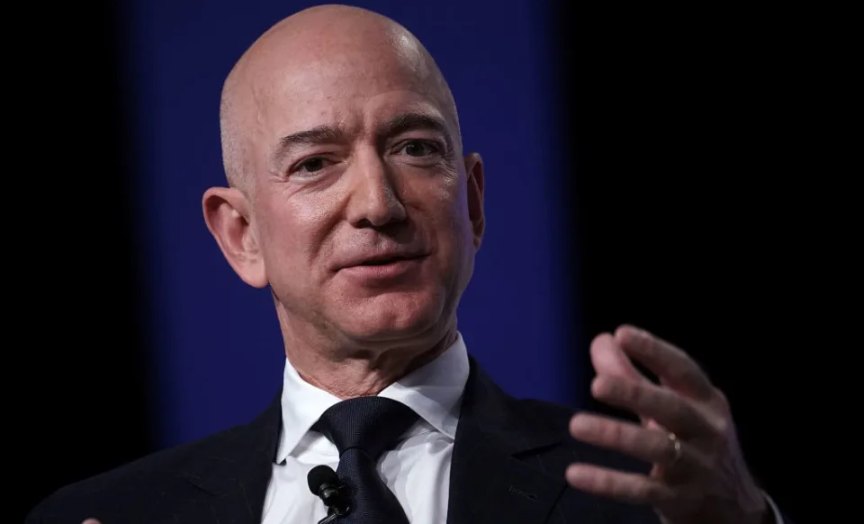
What happens when one of the world’s most successful technology founders decides that AI’s next frontier isn’t text, images, or chatbots, but the physical world?
Five years after stepping down as Amazon CEO, Jeff Bezos is back at the helm of a company. This time, he’s betting that artificial intelligence can help engineers build everything from jet engines and smartphones to skyscrapers far faster than today’s methods allow.
That bet now carries a $41 billion price tag.
Prometheus, one of Bezos’ newest ventures, announced a $12 billion funding round on Thursday, valuing the startup at $41 billion. The company launched less than a year ago with $6.2 billion in funding and has spent much of that time operating outside the spotlight.
“Jeff Bezos is ready to open up about Prometheus, the secretive AI startup he’s leading with former Google X executive Vik Bajaj. In his first CEO role since handing over the reins of Amazon in 2021, the tech billionaire said in an interview that he had raised $12 billion to build an AI “physical world” lab, which is emerging Thursday from stealth, valued at $41 billion,” Semafor reported.
The financing attracted a roster of heavyweight backers, including JPMorgan, BlackRock, Goldman Sachs, DST Global, and Arch Venture Partners. Bezos has personally backed the company and serves as co-CEO alongside Vik Bajaj, a Stanford University School of Medicine professor and former co-founder of Verily, Alphabet’s life sciences research company.
The news comes two months after Bezos recruited Kyle Kosic, a co-founder of xAI and former OpenAI engineer. The hire offered an early clue that Bezos was preparing a serious push into AI infrastructure, one of the industry’s most competitive and capital-intensive arenas.
In an exclusive interview with CNBC from Prometheus’ San Francisco headquarters, Bezos offered the clearest picture yet of what the startup is trying to accomplish.
Inside Prometheus’ Plan to Build an “Artificial General Engineer”
Prometheus is developing AI systems focused on physical-world tasks, including engineering, manufacturing, and drug discovery. The company’s goal is far more ambitious than creating another chatbot or coding assistant. Bezos describes the vision as an “artificial general engineer.”
Instead of training primarily on internet text, Prometheus is building models using data generated from the physical world. The idea is to create AI systems capable of helping engineers design, test, and manufacture products at a pace that would be difficult to achieve through conventional processes alone.
In Bezos’ words: “Something that today was going to take 100 engineers 10 years to build, if you can change that to taking 10 engineers one year to build, you’re just going to get way more things built.”
The concept reflects a broader shift taking place across the AI industry. After years of intense focus on large language models, investors and researchers are increasingly turning their attention to AI systems that can interact with physical environments, scientific research, industrial operations, and advanced manufacturing.
Prometheus appears determined to place itself at the center of that movement.
Bezos declined to provide detailed information about the company’s early products or technical milestones, saying it remains “premature” to discuss specific achievements. Yet he hinted that the startup has already made meaningful progress.
“It’s really quite remarkable,” Bezos said.
Building those systems comes with a substantial price tag. According to Bezos, a significant portion of the newly raised capital will go toward acquiring computing resources required to train Prometheus’ models.
“That is a big chunk of the funding we’ve raised,” he said. “And one of the reasons we’ve had to raise a significant amount of funding is because … what we’re doing is very compute intensive and we need to, you know, create that data.”
The startup has quietly recruited talent from some of AI’s biggest players, including OpenAI, Google DeepMind, and Nvidia. That hiring strategy mirrors a broader trend across the industry as companies race to assemble teams capable of building the next generation of AI systems.
The announcement marks Bezos’ most visible return to an operating role since leaving Amazon’s top job in 2021. It arrives at a time when competition among AI companies is shifting beyond consumer chatbots and into industries that generate trillions of dollars in economic activity.
For Prometheus, the challenge is straightforward to describe but extraordinarily difficult to execute: build AI that can help create real-world products faster, cheaper, and with fewer resources.
If Bezos and his team succeed, the impact could stretch far beyond software and into the factories, laboratories, and engineering firms that shape the physical economy.
Trending Now