Venture Capital & Startup Funding Roundup, May 26, 2026
 Nickie Louise
Posted On May 26, 2026
Nickie Louise
Posted On May 26, 2026
It’s Tuesday, May 26, 2026, and welcome to another edition of the Venture Capital & Startup Funding Roundup. The biggest story in today’s funding tape is not that investors are still pouring money into AI. It’s where that capital is suddenly concentrating.
The largest checks in this window backed companies building the operating layers around intelligence: routing between models, governing autonomous money movement, controlling multi-agent workflows, feeding robotics systems with real-world data, and turning commerce networks into software-defined physical systems. In other words, investors are moving one layer down the stack. They are paying up for the control planes, not just the demos.
That makes today’s mix feel more mature than a typical AI-heavy roundup. Alongside OpenRouter, Catena Labs, Human Archive, Didit, and Canyon Code, the market also backed green chemistry, industrial carbon conversion, and AI-enabled drug development. P2 Science and D-CRBN show that capital is still available for hard, messy industrial problems when the thesis is tied to commercial adoption and supply-chain relevance. Perceptic suggests the same is true in biotech software, where the pitch is no longer “AI for science” in the abstract, but AI inserted directly into pharma decision workflows.
The signal from today’s rounds is that investors want evidence, not posture. Stord came to market with more than $15 billion in GMV across more than 1,000 customers. OpenRouter arrived with 100 trillion tokens processed per month and roughly 8 million users. Didit said it is already profitable and serving more than 2,000 companies. Human Archive said it has more than 1,000 active headsets deployed. That is not seed-market fantasy. It is capital following distribution, usage, and operating leverage.
The Macro Environment: The Picks-and-Shovels Phase of AI
The broader backdrop still matters. Crunchbase reported that global startup funding hit about $300 billion in the first quarter of 2026, driven largely by AI and compute concentration. Today’s deal flow fits that pattern, but with a twist: this is less about frontier model labs themselves and more about the infrastructure that makes those models usable inside enterprises, supply chains, regulated work, and physical systems.
That shift helps explain the investor mix. CapitalG led OpenRouter. a16z Crypto and Acrew backed Catena’s regulated-banking-for-agents thesis. Wing and NVP funded Human Archive’s robotics data pipeline. Cota Capital backed Canyon Code’s orchestration layer for multi-agent applications. Sofinnova led a growth round into green chemistry at P2 Science. This is not a market chasing one narrow AI story. It is a market allocating into bottlenecks that sit between model capability and real economic utility.
The public-private relationship is evident here as well. Private investors are increasingly underwriting businesses that look less like speculative software bets and more like new infrastructure utilities. OpenRouter is becoming a traffic router for AI inference. Stord is trying to become the physical intelligence layer for commerce. Catena wants to become regulated financial infrastructure for autonomous software agents. D-CRBN is selling decarbonization not as carbon virtue, but as feedstock resilience and industrial competitiveness. Those are larger, slower, and stickier categories than consumer AI wrappers.
Geographically, the U.S. still accounted for the largest share of checks in this 12-hour window, especially in commerce infrastructure and AI middleware. Europe, though, showed up where it has been strongest throughout the cycle: climate, industrial deep tech, and scientifically grounded platforms. That split is worth watching. The U.S. continues to produce the largest software and infrastructure checks, while Europe continues to produce companies focused on decarbonization, advanced materials, and regulated technical domains.
Individual Funding Rounds
Stord raises $250 million to build the physical intelligence layer for commerce
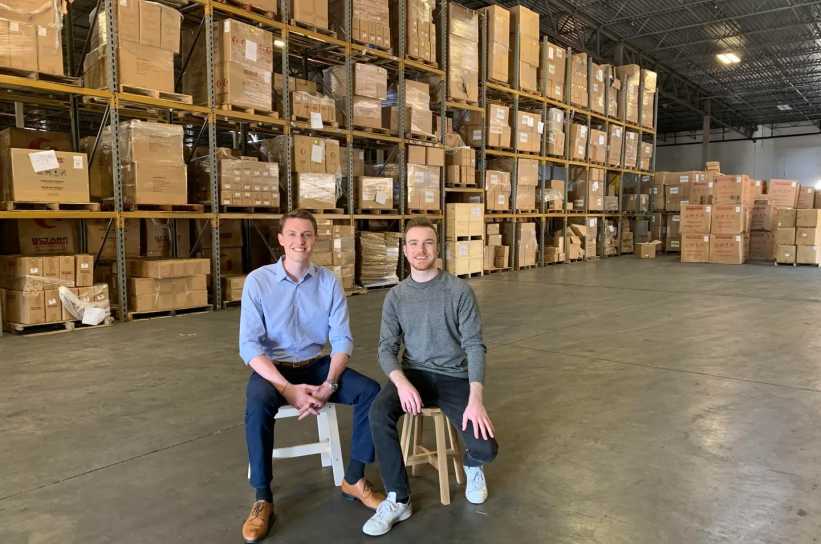
Stord is making a large claim: that commerce infrastructure is no longer just warehouses, transportation contracts, and fulfillment software, but a data-rich execution layer that can be optimized like a model stack. The Atlanta company paired its $250 million Series F with the launch of Stord Labs, aimed at advancing robotics and physical AI across its network. The company said it now handles more than $15 billion in GMV across more than 1,000 customers.
Why investors care is straightforward. Amazon trained the market to expect software-grade certainty from physical logistics. Independent brands want that performance without becoming dependent on Amazon’s stack. Reuters framed the round as a bet that platforms like Stord can give brands the infrastructure to compete with e-commerce giants, while the company itself is positioning its moat around vertical integration, software, and network-level AI. That is a much bigger story than a late-stage logistics raise. It is a bet that physical execution itself becomes programmable.
Funding Details
Startup: Stord
Investors: Existing investors, including Strike Capital, Kleiner Perkins, Founders Fund, Franklin Templeton, Baillie Gifford, G Squared, Bond, and Lux
Amount Raised: $250 million
Total Raised: Not disclosed publicly in the announcement
Funding Stage: Series F
Funding Date: May 26, 2026
Headquarters: Atlanta, Georgia, United States
Sector: Logistics, commerce infrastructure, robotics, physical AI.
OpenRouter raises $113 million to become the control plane for AI inference
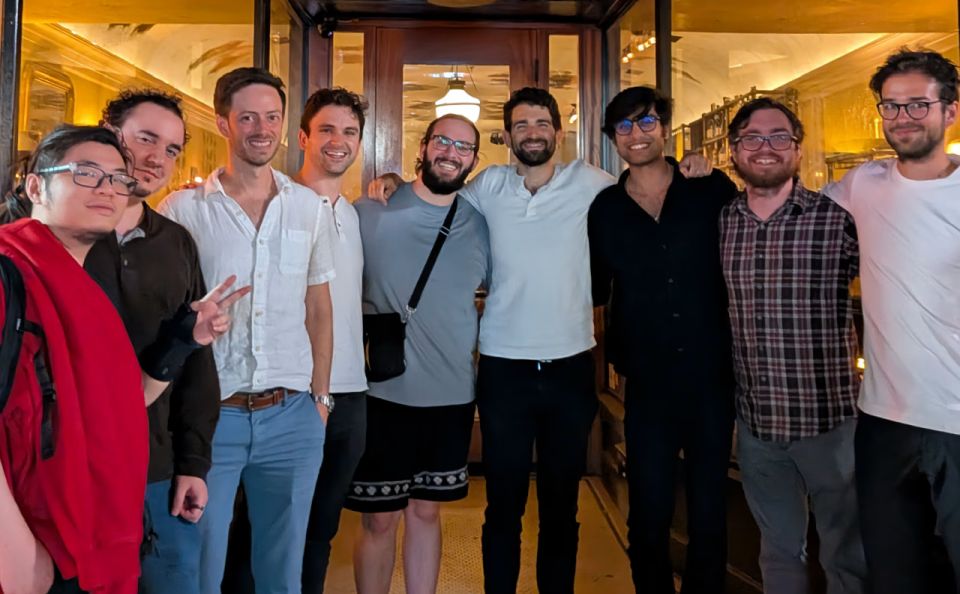
OpenRouter, the AI model exchange that sits between applications and major AI providers, announced Tuesday it has raised a $113 million Series B led by CapitalG, Alphabet’s independent growth fund. The round is one of the clearest signals in today’s market. The company is not training foundation models. It is building the exchange layer that helps enterprises and developers route workloads across more than 400 models from providers including Anthropic, Google, OpenAI, xAI, and DeepSeek. That abstraction layer is becoming valuable because inference has become the center of AI economics, and because enterprises increasingly want optionality rather than single-vendor lock-in.
The traction explains the size of the check. OpenRouter said usage has climbed to 25 trillion tokens per week, or 100 trillion per month. TechCrunch reported that the round values the company at about $1.3 billion post-money, more than double the estimated post-money value from a year earlier. This is what a breakout AI middleware company looks like in 2026: not a chatbot brand, but a traffic router sitting between demand and model supply.
Funding Details
Startup: OpenRouter
Investors: CapitalG; participants include NVentures, ServiceNow Ventures, MongoDB Ventures, Snowflake Ventures, Databricks Ventures, Andreessen Horowitz, and Menlo Ventures
Amount Raised: $113 million
Total Raised: At least $153 million in publicly disclosed Series A and Series B rounds
Funding Stage: Series B
Funding Date: May 26, 2026
Headquarters: New York, New York, United States
Sector: AI infrastructure, inference routing, developer tools.
Catena Labs raises $30 million to build regulated banking infrastructure for AI agents
Catena Labs is one of the more strategically important rounds in this window because it goes after a problem most AI startups still avoid: what happens when autonomous software touches money. The company opened private access to its banking and governance platform for AI agents, disclosed a $30 million Series A, and said it has filed for a National Trust Bank charter. Its thesis is that agents need not only APIs and wallets but also regulated infrastructure, policy enforcement, identity, and auditability.
Investors are betting that finance will be one of the first areas where agentic systems either become real businesses or hit a compliance wall. That makes Catena more than a fintech startup. It is trying to define what “agentic finance” looks like under a banking structure rather than a software-only wrapper. The participation from a16z crypto, Acrew, Coinbase Ventures, General Catalyst, and others shows conviction that the next AI wave will need institutions, not just interfaces.
Funding Details
Startup: Catena Labs
Investors: a16z crypto, Acrew, Breyer Capital, General Catalyst, QED, Oak HC/FT, Fin Capital, Coinbase Ventures, and IDG Capital
Amount Raised: $30 million
Total Raised: $48 million
Funding Stage: Series A
Funding Date: May 26, 2026
Headquarters: Boston, Massachusetts, United States
Sector: Fintech infrastructure, agentic finance, AI governance.
P2 Science raises $23 million to push green chemistry deeper into industrial markets
P2 Science’s $23 million up round is a reminder that industrial climate bets still get funded when they are attached to products customers already buy. The company turns sustainable feedstocks into ingredients and materials, and said the round will help it expand from beauty and personal care into aroma technologies, performance polymers, home care, coatings, and crop care. Sofinnova Partners led, with Emerald Technology Ventures and GS Futures joining a cap table that already includes strategic names such as Chanel, BASF, and dsm-firmenich ventures.
That investor list matters. This is not climate software. It is a chemistry-and-manufacturing bet with commercial buyers already close to the table. Investors appear to prefer businesses in which decarbonization is tied to new-product performance and supply resilience, rather than to carbon accounting alone. P2 fits that mold, which makes this round feel less like a thematic climate allocation and more like a category bet on replacing petrochemical pathways with scalable, higher-margin green chemistry.
Funding Details
Startup: P2 Science
Investors: Sofinnova Partners, Emerald Technology Ventures, GS Futures, Lewis & Clark Partners, dsm-firmenich ventures, Connecticut Innovations, Elm Street Ventures, Chanel, BASF, and Safer Made
Amount Raised: $23 million
Total Raised: Not disclosed publicly in the announcement
Funding Stage: Oversubscribed up round; stage not specified
Funding Date: May 26, 2026
Headquarters: Woodbridge, Connecticut, United States
Sector: Green chemistry, industrial biotech, materials.
D-CRBN raises €17.5 million to turn industrial CO₂ into feedstock
D-CRBN sits at the intersection of climate tech, industrial policy, and materials security. The Antwerp company uses electrified plasma systems to convert CO₂-rich emissions and hydrocarbons into carbon monoxide and syngas, which can then be fed into existing industrial processes for fuels, chemicals, and materials. Its €17.5 million Series A was led by Astaia, with participation from SFPIM and the EIC Fund, and the company also opened a limited secondary close for strategic industrial partners.
This round matters because it reframes decarbonization as an industrial-input problem. Europe does not just need lower emissions; it needs resilient access to key feedstocks without deeper dependence on fossil inputs. D-CRBN’s pitch is attractive because it can integrate with existing industrial systems and generate commercial value from waste streams. That is a cleaner venture story than “reduce emissions someday.” It is decarbonization from a unit economics angle.
Funding Details
Startup: D-CRBN
Investors: Astaia, SFPIM, and the European Innovation Council Fund
Amount Raised: €17.5 million
Total Raised: Not fully disclosed publicly
Funding Stage: Series A
Funding Date: May 26, 2026
Headquarters: Antwerp, Belgium
Sector: Climate tech, industrial decarbonization, advanced materials.
Perceptic raises $12 million to insert AI into pharma decision-making
Perceptic emerged from stealth with a clear enterprise biotech thesis: drug development is not a single workflow, so AI products that attack one narrow slice of it will struggle to become system-level tools inside pharma. The company says it is building an AI operating system for biopharma that connects research, development, and clinical decision-making. Fortune reported that Accel led the $12 million seed round alongside Air Street Capital and Elder Gull, while Air Street said Perceptic is already being used by multiple top-20 pharma companies, including CSL.
This matters because biotech AI funding has recently tilted toward either model-heavy discovery companies or narrow workflow copilots. Perceptic is trying to sit higher in the stack. Its products span external asset scouting, internal knowledge orchestration, and clinical data synthesis. If that works, it gives pharma companies a shared intelligence layer rather than another point solution. That is why this round feels larger than a seed on paper. It is a software-platform bet on how life sciences organizations will make decisions, not just generate hypotheses.
Funding Details
Startup: Perceptic
Investors: Accel, Air Street Capital, Elder Gull, and angels
Amount Raised: $12 million
Total Raised: $12 million
Funding Stage: Seed
Funding Date: May 26, 2026
Headquarters: Not clearly disclosed in the public announcement reviewed
Sector: Biotech software, AI drug development, enterprise life sciences.
CasaPerks raises $15.8 million to push loyalty infrastructure into rent and work
CasaPerks is a less obvious pick than the AI infrastructure names, but the round is revealing. The Austin company raised a $15.8 million seed round for an AI-powered rewards platform spanning renters and employees through CasaPerks and WorksPerks, which it says are built on Anthropic’s Claude. The company said the capital will expand its student housing and multifamily footprint, scale workplace recognition, and deepen its consumer rewards flywheel. It also said revenue grew 10x in 2025 and that it acquired assets from credit-reporting company Tackle.
The broader point is that investors are still willing to back vertical software when the distribution is embedded and the retention loop is measurable. CasaPerks is not trying to be another generic HR or consumer rewards app. It is using property operators and employers as distribution channels and then building a consumer audience on top of that installed base. Whether that becomes a major venture outcome is still an open question, but the structure is more interesting than the category label suggests.
Funding Details
Startup: CasaPerks Technologies
Investors: Lead investors include Longevity Equity, with additional participation from institutional investors and real-estate operators
Amount Raised: $15.8 million
Total Raised: Not disclosed publicly in the announcement
Funding Stage: Seed
Funding Date: May 26, 2026
Headquarters: Austin, Texas, United States
Sector: Proptech, rewards infrastructure, workplace software, AI.
Human Archive raises $8.2 million to supply the training data behind physical AI
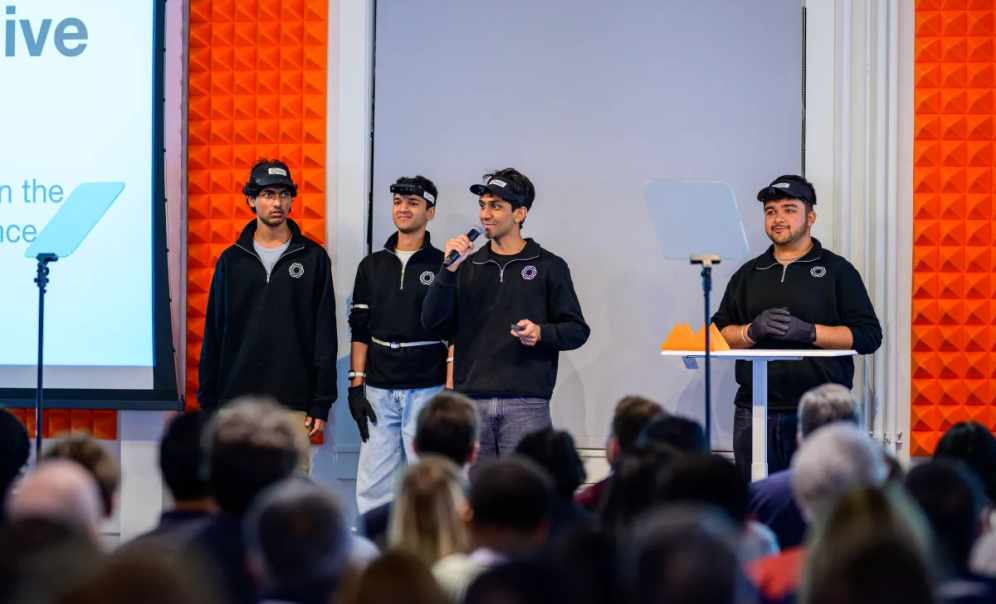
Image Credit: Human Archive
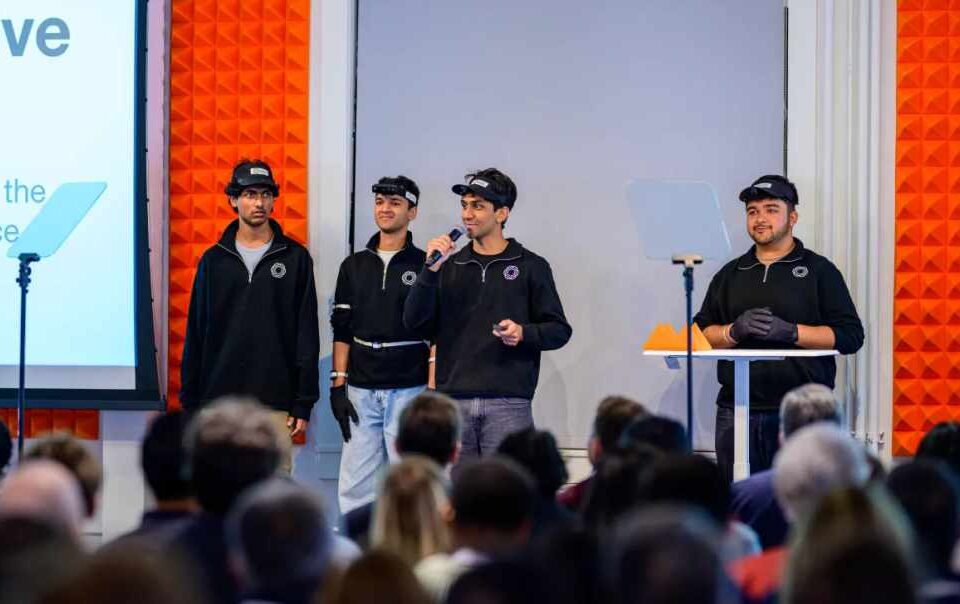
Human Archive said on Tuesday it has raised $8.2 million in funding from Wing Venture Capital, NVP Capital, Y Combinator, and angels from OpenAI, Nvidia, Google, Mercor, AfterQuery, BAIR, SAIL, Brad Boa, and Meta. The Silicon Valley startup’s round stands out because it attacks one of robotics’ least glamorous but most important bottlenecks: real-world training data. The company has more than 1,000 active headsets deployed across multiple locations, collecting egocentric video and other sensor data from workers performing everyday tasks.
Investors are effectively backing the view that physical AI will be constrained less by model architecture than by high-quality multimodal data. Human Archive is trying to become the data supplier for that future by adding tactile gloves, motion-capture suits, wrist cameras, and synchronized RGB-D capture. The business raises real questions around labor economics and consent, but from a venture standpoint, the thesis is simple: if embodied AI is going to scale, someone has to industrialize the pipeline that teaches robots how people actually work.
Funding Details
Startup: Human Archive
Investors: Wing Venture Capital, NVP Capital, Y Combinator, and angels from OpenAI, Nvidia, Google, Mercor, AfterQuery, BAIR, SAIL, Brad Boa, and Meta
Amount Raised: $8.2 million
Total Raised: $8.2 million
Funding Stage: Seed
Funding Date: May 26, 2026
Headquarters: Silicon Valley, California, United States
Sector: Robotics data infrastructure, physical AI, developer infrastructure.
Didit raises $6 million to unify identity verification and fraud controls
Didit’s round is smaller than others in this report, but strategically it fits one of the day’s clearest themes: trust infrastructure for AI and internet-native workflows. The company said it raised $6 million, bringing total funding to $7.5 million. It describes itself as one API for identity and fraud, covering KYC, KYB, transaction monitoring, and wallet screening. The company also said it is profitable, growing more than 30% month over month, and serving more than 2,000 companies.
That combination of early profitability and infrastructure positioning is exactly what a tougher venture market rewards. Identity vendors used to sell point tools. Didit is trying to sell a unified trust layer at a time when AI-generated fraud, synthetic identities, and cross-border compliance all get harder at once. The investor base — including Y Combinator, Pioneer Fund, Orange Collective, and others — looks like a classic seed syndicate backing a company that may grow into a broader regtech and fintech control plane.
Funding Details
Startup: Didit
Investors: Y Combinator, Pioneer Fund, Orange Collective, SaaSholic, Founders Future, Phosphor Capital, Rebel Fund, Lobster Capital, and angels including Tomer London and Taro Fukuyama
Amount Raised: $6 million
Total Raised: $7.5 million
Funding Stage: Seed
Funding Date: May 26, 2026
Headquarters: San Francisco, California, United States
Sector: Identity infrastructure, regtech, fraud prevention, fintech APIs.
Canyon Code raises $5 million to manage the behavior of multi-agent AI apps
Canyon Code may have the smallest round in this group, but it lands in one of the most active parts of the market: tooling for agentic software. SiliconANGLE reported that the startup closed a $5 million pre-seed round led by Cota Capital, with Newbuild Ventures and Blackhorn Ventures also participating. Canyon Code says it is building a workflow intelligence layer that lets enterprises monitor dependencies, memory, scheduling, and policy behavior across multi-agent systems.
This is the kind of company that gets funded when a market moves from experimentation to implementation. Once enterprises deploy multiple agents at once, cost, latency, sequencing, and policy control become operational problems. Canyon Code is trying to be the layer that makes those systems observable and governable. That makes the round small in dollars but important in meaning: venture investors are now underwriting the management stack for agentic AI, not just the agents themselves.
Funding Details
Startup: Canyon Code
Investors: Cota Capital, Newbuild Ventures, and Blackhorn Ventures
Amount Raised: $5 million
Total Raised: $5 million
Funding Stage: Pre-seed
Funding Date: May 26, 2026
Headquarters: Not publicly disclosed in the coverage reviewed
Sector: Developer tools, agent orchestration, AI infrastructure.
What Today’s Funding Activity Reveals
The strongest pattern is capital moving toward coordination layers around AI. OpenRouter handles model selection and inference routing. Catena governs money movement by agents. Didit handles identity and fraud. Canyon Code manages agent workflows. These are all versions of the same bet: as model quality becomes more available, defensibility shifts toward routing, control, compliance, and systems integration.
A second pattern is that “physical AI” is no longer a vague future category. Stord is applying it to logistics execution. Human Archive is building training data for robotics. D-CRBN and P2 Science show that industrial systems and advanced chemistry remain part of the same capital cycle, because the AI boom is colliding with the need for better materials, cleaner feedstocks, and real-world automation. The market is widening from digital cognition toward physical deployment.
A third pattern is that traction metrics are doing more work than vision statements. Investors backed Stord’s GMV and customer base, OpenRouter’s token volumes and user scale, Didit’s profitability, Perceptic’s top-20 pharma footholds, and CasaPerks’ 10x revenue growth. In 2026, big narratives still matter, but they are financed more easily when they come with evidence of adoption.
Comparative Venture Capital Funding
| Startup | Amount Raised | Sector | Funding Stage | Lead Investors | Country |
|---|---|---|---|---|---|
| Stord | $250M | Logistics, commerce infrastructure, physical AI | Series F | Existing investors incl. Strike Capital, Kleiner Perkins, Founders Fund | United States |
| OpenRouter | $113M | AI infrastructure, inference routing | Series B | CapitalG | United States |
| Catena Labs | $30M | Agentic finance, AI governance | Series A | a16z crypto, Acrew | United States |
| P2 Science | $23M | Green chemistry, industrial biotech | Up round | Sofinnova Partners | United States |
| D-CRBN | €17.5M | Climate tech, industrial decarbonization | Series A | Astaia | Belgium |
| CasaPerks Technologies | $15.8M | Proptech, rewards infrastructure, AI | Seed | Lead investors incl. Longevity Equity | United States |
| Perceptic | $12M | AI drug development, biotech software | Seed | Accel, Air Street Capital | Not clearly disclosed |
| Human Archive | $8.2M | Robotics data infrastructure, physical AI | Seed | Wing Venture Capital, NVP Capital | United States |
| Didit | $6M | Identity infrastructure, regtech, fraud prevention | Seed | Backed by YC, Pioneer Fund and others | United States |
| Canyon Code | $5M | Agent orchestration, AI developer tools | Pre-seed | Cota Capital | Not clearly disclosed |
Table compiled from the company announcements and contemporary reporting cited in the deal write-ups above.
Strategic Takeaways for Founders and Investors
For founders, the lesson is that infrastructure is back — but only when it is tied to measurable workflow value. OpenRouter is not winning because “model marketplaces” sound good. It is winning because AI buyers now need routing, cost control, and vendor optionality. Catena is not getting funded because “agentic finance” sounds futuristic. It is getting funded because autonomous money movement creates real governance and regulatory problems. The same logic applies to Didit and Canyon Code. If you are building in AI, the best place to stand may be in the messy layer where models meet budgets, rules, and production systems.
For investors, today’s mix argues for a more selective reading of “AI exposure.” Some of the best-positioned companies may not own a model at all. They may own switching costs, data exhaust, workflow authority, regulated distribution, or physical execution. That is what Stord, OpenRouter, Human Archive, and Perceptic are all chasing from different angles. The new scarcity is not intelligence in isolation. It is intelligence inserted into a high-friction operating environment.
There is also a capital-efficiency lesson in today’s smaller rounds. Didit is already profitable. Human Archive appears to have built investor demand around deployment scale rather than massive burn. Canyon Code raised $5 million, not $50 million, for what is still an early infrastructure layer. In a market where huge AI valuations persist, there is room for disciplined rounds tied to specific bottlenecks and clear enterprise demand.
Conclusion
Today’s funding activity points to a startup market that is becoming more operational and less theatrical. Capital is still flowing aggressively into AI, but it is being allocated to the scaffolding around AI: routing, trust, orchestration, robotics data, regulated money movement, and physical execution. Even the non-AI rounds in this set — notably P2 Science and D-CRBN — fit the same broader story of investors preferring technical platforms that solve bottlenecks inside real industries.
If there is a single takeaway from this 12-hour window, it is that venture money is not simply chasing intelligence. It is chasing control over where intelligence can be used safely, cheaply, and at scale. That is a different market from the one that dominated a year ago, and it favors founders who can turn AI from a capability into infrastructure.
Open Questions and Limitations
This roundup was limited to rounds publicly announced within the last 12 hours as of writing. Where official releases carried precise timestamps, those were used. Where they did not, I relied on timestamped reporting from reputable outlets that surfaced the announcement within the window. I excluded borderline deals when source timing suggested they fell just outside that cutoff.
Not every company disclosed valuation, cumulative funding, or a clearly stated headquarters in its public announcement. In those cases, I marked the field as not disclosed or not clearly disclosed rather than estimate beyond the evidence.