Anthropic and Gates Foundation launch $200M partnership to bring AI to healthcare, education, and underserved communities
 Nickie Louise
Posted On May 14, 2026
Nickie Louise
Posted On May 14, 2026
Artificial intelligence companies keep talking about changing the world. Now two of the biggest names in AI and philanthropy are putting serious money behind that promise. Anthropic and the Gates Foundation announced Thursday a new $200 million partnership focused on bringing AI tools and infrastructure to healthcare, education, scientific research, and underserved communities across the globe.
The four-year initiative combines grant funding, Claude AI usage credits, technical support, and public-interest research projects aimed at places where advanced AI systems often fall short or remain inaccessible.
“We’re partnering with the Gates Foundation to commit $200 million in grant funding, Claude usage credits, and technical support for programs in global health, life sciences, education, and economic mobility over the next four years,” Anthropic said in a statement announcing the partnership.
“This announcement is really core to who we are as a company,” Elizabeth Kelly, who leads Anthropic’s beneficial deployments team, added in a statement.
The announcement arrives at a tense moment for the AI industry. Tech companies are spending hundreds of billions of dollars building models, chips, and data centers, yet concerns continue to grow over job displacement, inequality, language bias, and whether advanced AI systems will primarily benefit wealthy nations and large corporations.
This partnership is trying to push the conversation in another direction.
One of the biggest focus areas involves language accessibility across Africa. Current AI models still struggle with many African languages due to limited training data and poor labeling infrastructure. Janet Zhou, a director at the Gates Foundation, said the initiative plans to support better data collection and labeling efforts that would be publicly released so models across the industry can improve.
The project is not limited to language models. Anthropic and the Gates Foundation are exploring knowledge graphs that could help AI systems better support teachers and students in sub-Saharan Africa and India. The effort is meant to reduce dependence on closed proprietary systems and give governments and institutions more flexibility over how AI tools are used locally.
“The public-goods focus has come from “the needs of different partners and governments, including some of the fears that they may have around proprietary lock-in and sovereignty,” Zhou said.
Healthcare research is another major piece of the partnership. One initiative will give research centers access to Claude AI tools to help identify potential drug candidates for diseases such as HPV and preeclampsia, areas that historically have received less commercial attention from pharmaceutical companies.
Anthropic’s contribution includes support from its technical staff and usage credits for Claude, the company’s flagship AI assistant. The Gates Foundation will contribute grant funding, program development, and operational expertise, according to a Reuters report.
The move follows a separate $50 million partnership announced earlier this year between the Gates Foundation and OpenAI aimed at supporting 1,000 African clinics and communities with AI tools by 2028.
For Anthropic, the initiative reflects an attempt to separate itself from rivals in the increasingly crowded AI race. The startup, backed by Google and Amazon, has seen its valuation surge amid rising demand for generative AI and coding tools. At the same time, the company has tried to position itself as one of the more safety-focused players in the industry.
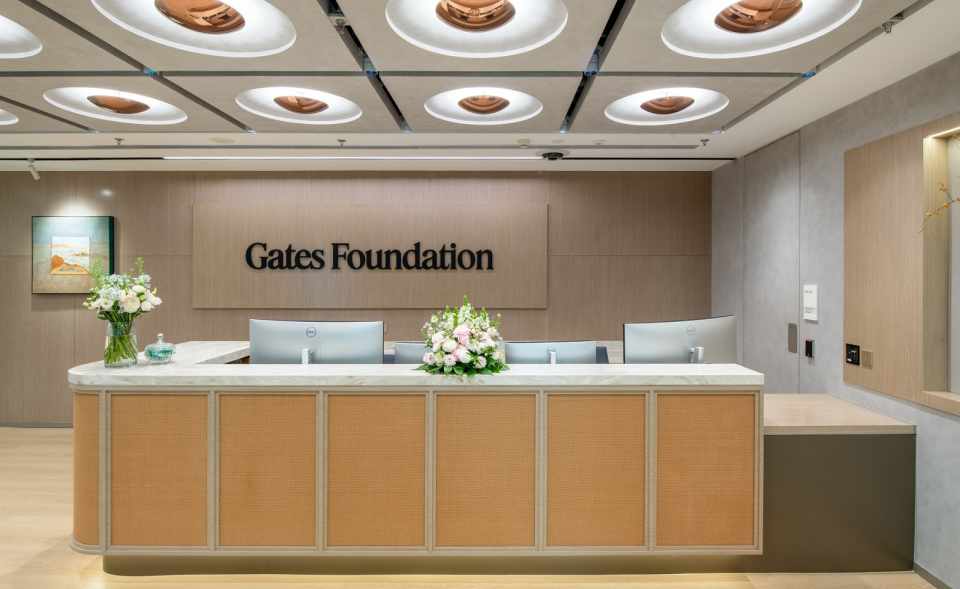
Gates Foundation (Image credit: Gates Foundation)