It’s Tuesday, March 3, 2026, and here are the top tech stories making waves today — from AI and startups to regulation and Big Tech. AI’s infrastructure race is accelerating, and today’s headlines show just how high the stakes have become. From Nvidia locking down photonics supply and Amazon pouring tens of billions into global data centers, to Apple weighing new AI partnerships and Washington tightening chip exports, the battle for compute, scale, and control is entering a more consequential phase.
At the same time, cybersecurity threats are growing more organized, regulators are pushing deeper into data governance, and AI challengers from China are scaling quickly with global ambitions. Taken together, today’s developments point to a tech landscape where raw model capability is no longer enough. The winners will be those who secure power, capital, supply chains, and trust.
Here are today’s 15 top technology news stories you need to know.
Technology News Today
NVIDIA Bets $4B on Photonics to Keep AI Data Centers Scaling
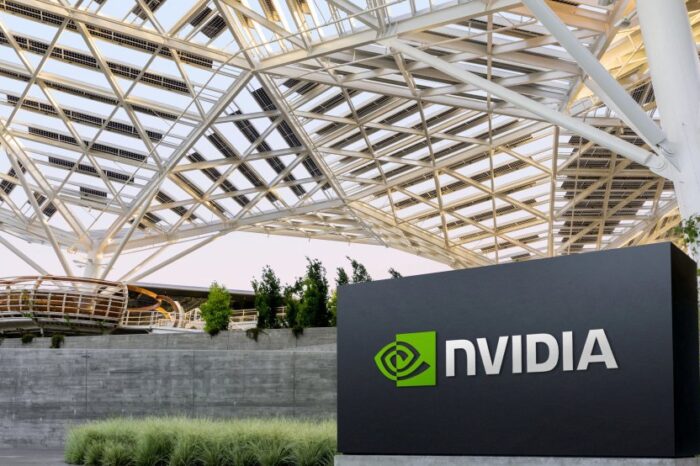
NVIDIA is putting serious money behind a bottleneck the industry can’t “software” its way out of: how fast servers can move data inside AI factories. The company announced $2 billion investments each in photonics suppliers Lumentum and Coherent, paired with multiyear purchasing commitments designed to lock in next-generation optical components for AI networking.
Why now: training and running large models is increasingly constrained by interconnect bandwidth, latency, and power, not just raw GPU compute. Photonics (moving data with light rather than copper) promises higher throughput with better energy characteristics, which matters as AI clusters move toward ever-larger “pods” connected by advanced switches and optical engines.
The bigger signal is strategic. NVIDIA isn’t only selling accelerators anymore; it’s trying to shape the supply chain for the entire AI data center stack, from compute to networking to components. That makes it harder for rivals (and hyperscalers building their own silicon) to compete on total system performance and availability.
Why It Matters: Photonics is becoming core infrastructure for scaling AI, and Nvidia is moving to control critical supply before scarcity becomes a growth limiter.
Source: TechStartups via NVIDIA.
US Weighs New Export Caps on Nvidia’s AI Chips to China
US officials are considering per-customer limits on how many Nvidia H200-class AI accelerators can be exported to any single Chinese buyer, a move that would tighten constraints even if exports are technically permitted under existing rules.
If implemented, the policy would push China’s largest AI players toward a more fragmented supply picture, complicate procurement strategies (including use of intermediaries), and further pressure domestic alternatives. For Nvidia, it would add another layer of uncertainty around a market it has repeatedly tried to keep open through compliant configurations and revised product strategies.
The broader impact lands on everyone building AI infrastructure: export restrictions are no longer just about “yes/no” access — they’re increasingly about volume, allocation, and enforcement. That creates planning risk for cloud providers, model builders, and component suppliers that rely on predictable demand and multi-quarter deployment cycles.
Why It Matters: Tighter export mechanics can reshape global AI capacity buildouts — and accelerate China’s push for domestic AI hardware ecosystems.
Source: Bloomberg.
Amazon’s Data Center Arm Buys George Washington University Campus in Virginia
Amazon Data Services is expanding its physical footprint again, purchasing a George Washington University campus in Virginia — the latest sign that hyperscalers are still hunting for large, power-ready sites to support cloud and AI demand.
Northern Virginia remains one of the most valuable data center corridors in the world, but it’s also increasingly constrained by grid interconnection, permitting timelines, and community resistance tied to power usage and land development. Buying an existing campus can shortcut parts of that process: the land is already developed, infrastructure can be repurposed, and the site may be closer to feasible power and fiber connections than a greenfield build.
Zooming out, big tech’s AI race is turning into a real-estate-and-energy race. The winners won’t just be the companies with the best models; they’ll be the ones that can secure electricity, cooling, and physical capacity at scale — without triggering political backlash.
Why It Matters: AI isn’t only an algorithm’s story anymore — it’s an infrastructure land grab, and Amazon is still buying.
Source: Reuters.
Amazon Commits Nearly $40B to Expand AI Data Center Infrastructure in Spain
Amazon is pledging nearly $40 billion to expand data center infrastructure in Spain, underscoring how aggressively hyperscalers are shifting long-term capacity plans into Europe.
Spain has become increasingly attractive for large-scale compute: available land, improving connectivity, and a policy environment eager to capture “AI industrialization” investment. But the hard constraint remains power. AI data centers require a stable electricity supply and grid upgrades, and the pace of AI-driven buildouts is colliding with Europe’s energy transition goals and local permitting realities.
For startups and cloud customers, additional regional capacity can reduce latency and improve resilience — especially as governments push for data locality, sovereignty controls, and greater scrutiny of cross-border data flows. For Amazon, it’s also a defensive move against rivals expanding their own European footprints.
Why It Matters: Europe’s AI compute map is being redrawn, and Spain is emerging as a major node in the hyperscaler buildout.
Source: The Wall Street Journal.
Apple Explores Using Google’s Cloud AI Infrastructure for a Smarter Siri
Apple is reportedly discussing whether Google’s AI infrastructure could help power a revamped Siri, reflecting the reality that on-device gains alone may not be enough for Apple’s next leap in assistant capability.
The central issue is scale: modern assistants increasingly rely on large-model inference, tool use, and rapid iteration cycles, which are easier to operate in the cloud. If Apple leans on Google for hosting or model infrastructure, it would be a strategic shift — and a delicate one — given Apple’s brand positioning around privacy, vertical control, and independence from rivals.
It also signals how expensive the “assistant wars” have become. Even for Apple, building and operating frontier-grade AI services at a global scale requires massive capex, specialized chips, and a mature AI ops pipeline. Partnering can accelerate time-to-market, but it can also create long-term dependency.
Why It Matters: Siri’s next chapter may hinge less on UI and more on who can deliver reliable, scalable AI inference behind the scenes.
Source: The Verge.
Apple Launches iPhone 17E and Refreshes iPad Air Lineup
Apple rolled out a more budget-friendly iPhone 17E alongside an updated iPad Air lineup, aiming to widen its upgrade funnel while keeping its product stack aligned with the next wave of software and AI features.
The timing matters because consumers are being asked to pay more for devices that increasingly compete on “invisible” improvements: efficiency, camera processing, and on-device intelligence features. A lower-priced iPhone can attract users who have delayed upgrades, while refreshed iPads help Apple defend its share of the tablet market as Windows OEMs and Android vendors lean harder into AI-driven productivity positioning.
For developers and startups, the bigger question is what Apple chooses to standardize across the installed base. If Apple expands local AI capabilities across mid-tier devices, it can unlock new categories of apps that rely on on-device processing without cloud latency or constant connectivity.
Why It Matters: Apple is widening access to its next platform cycle — and that expands the addressable market for AI-forward apps.
Source: Investors.com.
OpenAI Revises Pentagon Deal After Backlash Over Surveillance Risks
OpenAI says it is changing its Pentagon contract after criticism that the agreement appeared rushed and unclear on safeguards. CEO Sam Altman publicly acknowledged that it looked “opportunistic and sloppy,” and the revisions are intended to tighten guardrails on domestic surveillance and on how the technology could be used within government systems.
The dispute highlights a policy gap: AI capabilities are advancing faster than the legal and oversight structures that govern intelligence, data collection, and automated decision-making. OpenAI’s adjustment also lands in the middle of a broader public fight over what limits should exist — not just in principle, but in enforceable contract language that survives leadership changes and shifting national security priorities.
For startups selling into government, this is a warning and an opening. Government AI contracts can scale fast, but reputational risk scales with them. Companies will face increasing demands for auditable constraints, human oversight provisions, and clear red lines on surveillance use cases.
Why It Matters: Defense AI contracts are becoming public trust tests — and contract language is turning into a competitive differentiator.
Source: TechStartups and Financial Times.
Government Shutdown Slows Progress on a Major US Cyber Incident Reporting Rule
A partial US government shutdown is threatening to delay guidance and timelines tied to CISA’s cyber incident reporting rule, leaving companies with less clarity as they build compliance plans.
This matters because incident reporting isn’t just paperwork — it shapes how quickly the government and private sector can coordinate responses, spot patterns across attacks, and issue actionable warnings. But businesses also need certainty: what qualifies as a reportable incident, how quickly they must report, what data must be included, and how the rule will be enforced. Delays can lead to uneven preparation and more last-minute compliance spend.
The broader trend is unavoidable: regulators want faster visibility into breaches that could affect critical infrastructure and national security. When rulemaking stalls, the burden shifts back onto firms to guess where requirements will land — and to overbuild controls as insurance.
Why It Matters: Cyber rules without clear implementation guidance pose risks to both defenders and regulators — and slow collective response readiness.
Source: Bloomberg Law.
California’s Privacy Agency Updates Guidance for Data Broker Deletion Platform
California’s privacy regulator is advancing implementation details for DROP (Delete Request and Opt-out Platform), including how consumer participation and enforcement will work as the program matures.
The key operational takeaway is that data brokers will be expected to integrate with the system and process deletion requests on a defined cadence, moving privacy compliance from “policy statements” into repeatable technical workflows. The agency has also signaled more tooling support, including a sandbox approach to help brokers test integrations.
For startups, this is both a compliance obligation and a market opportunity. As deletion requests become standardized, demand for consent tooling, identity verification, data mapping, and automated deletion pipelines increases. That creates room for privacy infrastructure vendors — while raising the bar for adtech and data resale models that rely on friction and obscurity.
Why It Matters: Privacy enforcement is becoming systematized — and data broker compliance is shifting from legal theory into engineering reality.
Source: IAPP.
ShinyHunters Targets Wealth Management Firms With Fake Support Emails
A new wave of attacks tied to the ShinyHunters cybercrime group is targeting wealth management firms, using deceptive support-style emails to trick employees into handing over credentials or sensitive information.
Wealth management is attractive because it blends high-value targets with fragmented defenses: many firms rely on third-party vendors, legacy systems, and email-heavy workflows, where “client urgency” is the norm. That combination makes social engineering harder to spot and easier to operationalize at scale.
The industry implication goes beyond finance. Attackers are increasingly productizing fraud: repeatable playbooks, convincing templates, and data-driven targeting. That pushes security teams to treat identity and communications controls — DMARC enforcement, hardened helpdesk flows, phishing-resistant MFA, and tighter vendor access — as business-critical infrastructure, not optional IT hygiene.
Why It Matters: Cybercrime is being industrialized, and financial workflows remain among the highest-ROI targets for social engineering campaigns.
Source: Barron’s.
Palo Alto Networks Warns of Elevated Cyber Risk Tied to Iran Conflict Dynamics
Palo Alto Networks’ Unit 42 published a new threat brief outlining elevated cyber risk signals linked to Iran-aligned activity, including phishing, disruptive hacktivism, and campaigns that blend geopolitical events with opportunistic intrusion attempts.
One highlighted vector involves lures that imitate trusted alerting tools and crisis communications — a reminder that conflict-driven uncertainty is a powerful delivery mechanism for malware and credential theft. Unit 42 also reports increased hacktivist noise and claims of disruption, which can complicate response operations by flooding defenders with false positives and undermining credibility.
For enterprises, the lesson is practical: periods of geopolitical escalation tend to amplify risk across sectors, not just defense contractors. Critical infrastructure operators, logistics providers, financial services, and large consumer platforms should treat this as a moment to tighten monitoring, harden identity controls, and rehearse incident response.
Why It Matters: Geopolitical shocks reliably spill into cyberspace — and “event-driven” social engineering is one of the fastest ways attackers scale impact.
Source: Palo Alto Networks Unit 42.
CERN Turns to AI to Pressure-Test Physics Theories
Researchers at CERN are using AI techniques to help re-evaluate assumptions in particle physics, exploring whether machine learning can surface patterns or inconsistencies that humans might miss in complex datasets and competing theoretical models.
This isn’t “AI discovers new physics” hype — it’s AI as an amplifier for scientific scrutiny. Modern particle experiments generate massive volumes of data, and separating meaningful signals from noise is a foundational challenge. Applied well, AI can improve classification, anomaly detection, and hypothesis testing, while forcing researchers to be more explicit about bias, uncertainty, and interpretability.
For the broader tech ecosystem, frontier science remains a proving ground for new compute methods and research tooling. The winners in scientific AI will likely be those who combine strong domain constraints with transparent evaluation — and avoid treating black-box pattern matching as “truth.”
Why It Matters: Scientific AI is shifting from automation to deeper analytical leverage — and that will influence how research institutions justify compute budgets and model governance.
Source: Semafor.
MWC 2026 Spotlights a New Hardware Reality: AI Features Need Better Devices
Mobile World Congress is delivering a clear message: phones, laptops, and wearables are being redesigned around AI workloads, with vendors emphasizing on-device intelligence, battery efficiency, and new interaction patterns.
Across major launches, the theme is capability without constant reliance on the cloud. That means better NPUs, tighter silicon-software integration, and smarter thermal design — because if AI features drain batteries or lag under real use, consumers will ignore them. MWC is also turning into a geopolitical supply-chain showcase, with vendors balancing component sourcing, regional regulations, and AI feature rollouts that must adapt country by country.
For startups building consumer AI products, the opportunity is distribution: as OEMs ship more AI-capable devices, the baseline for “native intelligence” rises. The risk is dependence: if OS vendors bake AI directly into core experiences, many standalone apps will be forced up the stack into specialized workflows.
Why It Matters: Consumer AI is becoming a hardware story — and device-level capabilities will increasingly determine which AI apps win mainstream adoption.
Source: TechRadar.
Musk’s X and xAI Move to Repay $17.5B in Debt as IPO Speculation Builds
Elon Musk’s X and xAI are moving to repay roughly $17.5 billion in debt in full, including the early redemption of $3 billion in high-yield bonds at a premium, according to reporting citing lender communications.
The financial mechanics matter because debt structure influences strategic flexibility. Paying it down can reduce interest burden, improve optics for public markets, and simplify a complex corporate web that has blended social media, AI, and aerospace narratives. It also signals confidence that capital is available — whether from internal cash generation, new financing, or strategic backers — even as markets remain sensitive to AI valuations and cash burn.
For the broader startup ecosystem, it’s another example of how AI companies are increasingly playing by late-stage industrial rules: balance-sheet engineering, credit-market positioning, and IPO-readiness tactics — not just product velocity.
Why It Matters: AI’s biggest players are now optimizing capital structure like megacorps — and that reshapes investor expectations across the sector.
Source: Reuters.
China AI Startup MiniMax Reports 159% Revenue Growth After Hong Kong IPO
Chinese AI startup MiniMax reported a 159% jump in 2025 revenue and detailed ambitions to expand globally following its Hong Kong IPO, positioning itself as a lower-cost alternative to US AI leaders while pushing new multimodal products and an upcoming model release.
The report underscores a broader pattern: China’s top AI firms are leaning on public markets and international revenue to fund scaling, even as they face intense competition at home and persistent constraints around access to leading-edge chips. MiniMax’s results also show the tension in the business model — strong growth alongside significant losses — reflecting the high cost of training, serving, and commercializing frontier-grade models.
For global startups, the competitive pressure is real. Lower-cost model providers can compress pricing in consumer and enterprise AI categories, forcing differentiation through distribution, reliability, product integration, and domain specialization rather than model size alone.
Why It Matters: China’s AI challengers are scaling faster and going global — and their pricing strategies could reshape the economics of AI products worldwide.
Source: Reuters.
That’s your quick tech briefing for today. Follow us on X @TheTechStartups for more real-time updates.