Galux raises $29M Series B to scale AI-driven protein design for drug discovery
 Daniel Levi
Posted On February 9, 2026
Daniel Levi
Posted On February 9, 2026
Galux is building something that drug discovery has chased for decades: the ability to design therapeutic proteins from scratch with speed, accuracy, and confidence. On Monday, the South Korea–based biotech startup said it has raised $29 million in a Series B round, bringing its total funding to $47 million and fueling an AI platform focused on de novo protein design.
The financing arrives as AI-led drug discovery shifts from promise to proof. Investors are no longer betting on demos or slide decks. They are backing platforms that can show real molecules, real structures, and repeatable results. Galux believes it is already there.
The Series B drew support from returning investors InterVest, DAYLI Partners, and PATHWAY Investment, joined by Yuanta Investment, Korea Development Bank (KDB), SL Investment, NCORE Ventures, SneakPeek Investments, Korea Investment & Securities, and Mirae Asset Securities. The mix reflects confidence from both long-term backers and institutions new to the story.
Galux last raised $18 million in a Series A in 2022, which helped the company move its AI systems from theory to production. Since then, the team has focused on one of the hardest problems in biotech: designing antibodies without starting from existing biological templates. That work now sits at the core of its proprietary platform, GaluxDesign.
“Since our initial seed investment, Galux has consistently demonstrated strong technical depth and disciplined execution,” said Sang-gyun Kim, Ph.D, Executive Managing Director at InterVest. “The company’s capability to build a globally competitive AI platform for de novo protein design strengthens our conviction in its technology and its long-term potential to transform drug discovery.”
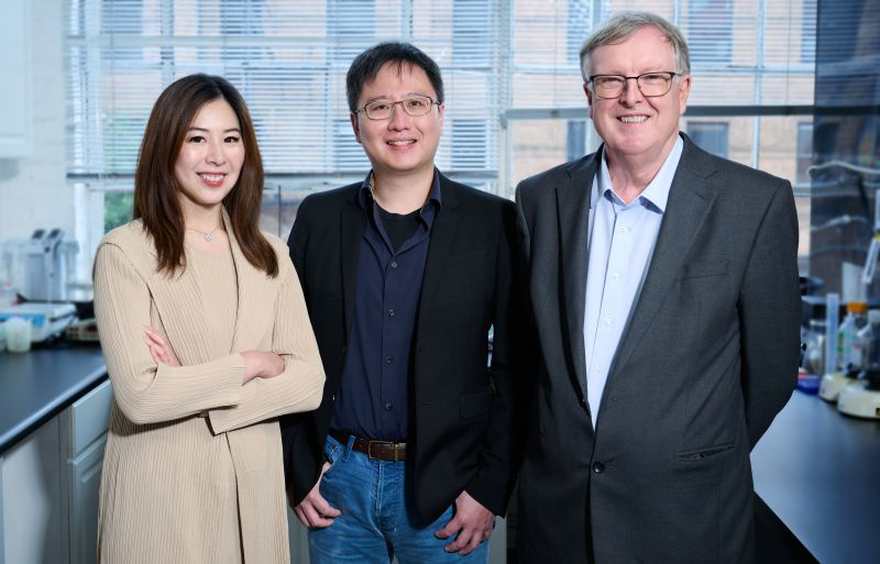
With $29M Series B Funding, South Korea’s BioTech Startup Galux Aims to Take AI-Driven Protein Design Global
Founded in 2020, Galux traces its roots to molecular design research developed over 15 years at Seoul National University. That academic work brought together AI, physics, and chemistry, and earned recognition through strong results in international benchmarks such as the CASP and CAPRI competitions. Building on that foundation, the company is developing a drug design platform that spans protein structure prediction, protein–protein interaction modeling, and protein–ligand interaction prediction, giving it a full-stack approach to computational drug discovery.
At the center of Galux’s pitch is evidence. The company says GaluxDesign has generated high-affinity antibodies against multiple therapeutic targets and that the structures produced by its models closely matched cryo-EM experimental results. For a field often criticized for gaps between prediction and reality, that alignment matters.
The platform blends deep learning models with rigorous experimental feedback from Galux’s in-house wet lab. Each design cycle feeds new data back into the system, sharpening future predictions. The company is now extending its work beyond antibodies to more difficult target classes, including GPCRs and ion channels, areas where conventional drug discovery often stalls.
Partnerships are following. Galux has entered co-development agreements with major Korean pharmaceutical companies, including Celltrion and LG Chem. More recently, it announced a collaboration with Boehringer Ingelheim, a signal that its technology is drawing attention beyond its home market.
The new capital will be used to strengthen the AI platform, expand R&D infrastructure, and advance proprietary programs into deeper preclinical validation. The goal is to open therapeutic paths that have remained out of reach through trial-and-error.
“Rapidly evolving AI technologies are driving a paradigm shift in drug discovery—from empirical discovery to rational drug design,” said Cha-ok Seok, CEO of Galux. “This funding will accelerate the development of next-generation AI that goes beyond binder design to incorporate functional activity and developability, enabling the creation of more robust and therapeutically viable molecules.”
Galux frames its mission in simple terms: use AI and the physics of protein folding to build medicines that nature never made, then prove they work. With fresh funding and growing global partners, the company is betting that rational design is no longer a future concept, but a present-day tool ready for scale.