Washington Post lays off 300 journalists, or 30% of newsroom, as $100 million losses force major overhaul
 Nickie Louise
Posted On February 4, 2026
Nickie Louise
Posted On February 4, 2026
The Washington Post has laid off hundreds of employees amid mounting losses. The shock landed fast. On Wednesday, February 4, 2026, staff at the Washington Post were summoned to a short Zoom call and told to stay home for the day. By the end of that meeting, the picture was clear: roughly 300 journalists, close to a third of the newsroom, were being cut as part of a sweeping reset aimed at stopping losses nearing $100 million a year.
“Employees received an email on Wednesday morning asking them to attend a Zoom meeting at 8.30 am after which they will learn their fate via email,” the Guardian reported.
Executive Editor Matt Murray described the move as a “painful strategic reset.” The overhaul dismantles entire parts of the paper’s identity. The sports department is dissolved in its current form. The books section disappears. The daily podcast “Post Reports” is suspended. Metro and international coverage are reshaped in ways that insiders describe as severe. A small group of sports reporters will shift to the features desk to cover athletics through the lens of culture and society, with a limited team remaining to handle print sports.
“Washington Post Executive Editor Matt Murray and HR Chief Wayne Connell tell employees to stay home for a zoom webinar ahead of “significant actions across the company.” Widely expected layoffs are scheduled to begin today,” New York Times Ben Mullin wrote in a post on X.
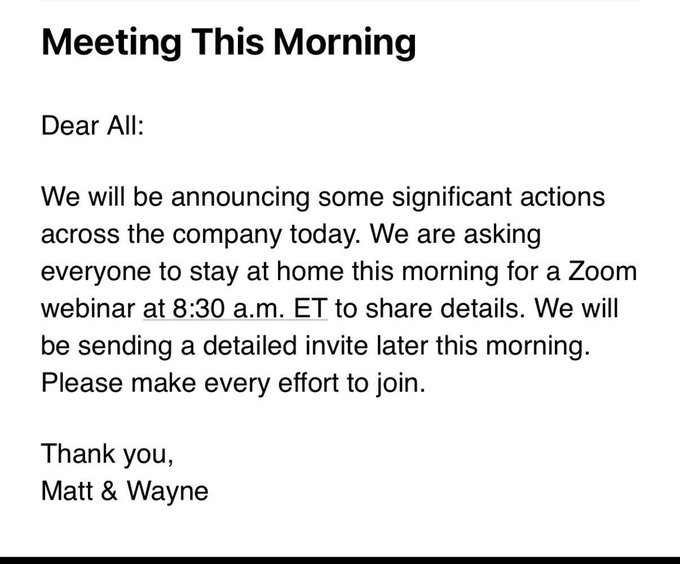
The way the news was delivered stung almost as much as the cuts themselves. Murray and human resources chief Wayne Connell spoke briefly, declined questions, and ended the call. One longtime employee later described the moment as “cowardice,” accusing leadership of avoiding accountability. Journalists raced to file final stories before losing system access, a scramble that underscored how abruptly the decision landed.
Inside the Washington Post Layoffs: 300 Journalists Out, Core Coverage Scaled Back, and a Historic Reset Begins
Inside the newsroom, the mood turned heavy. Some desks had sensed trouble for weeks. Others were blindsided. Metro reporting across Washington, D.C., Maryland, and Virginia faces one of the deepest restructurings, raising concerns about the future of local accountability journalism. International coverage is shrinking, even as conflicts in Ukraine and the Middle East continue to demand sustained attention. Several foreign bureaus will remain open, though with fewer resources and thinner staffing.
The cuts fit a broader strategy pushed by CEO and publisher Will Lewis, who has framed the reset around focusing on politics, national security, and other areas believed to drive subscriptions. Topics viewed as drawing less reader demand are being scaled back or removed entirely. Internal estimates suggest the layoffs reach well beyond ten percent of the newsroom, a sharp contraction for a paper that once prided itself on breadth.
Financial pressure has been building for years. The Post lost about $100 million in 2024 alone. Buyouts and layoffs have followed in waves: 240 staffers accepted buyouts in late 2023, veteran employees were offered exits last year, 54 jobs were cut from the publishing software unit in fall 2024, and around 100 business-side roles vanished in January 2025. The pattern reflects a legacy outlet struggling to hold ground as digital competitors siphon attention and subscribers.
Owner Jeff Bezos, who bought the paper in 2013, oversaw early growth before the contractions set in. His silence this week has drawn attention. In recent days, teams from the White House, foreign, and metro desks sent letters urging reconsideration, arguing that strong reporting depends on collaboration across sections. The Washington Post Guild amplified those pleas on X with #SaveThePost. No response came from Bezos.
Former leaders have spoken out. Ex-editor Marty Baron called the layoffs “among the darkest days in the history of one of the world’s greatest news organizations.” Veteran fact-checker Glenn Kessler suggested the shift reflects Bezos’s attempt to “survive Donald Trump,” pointing to broader political pressures surrounding the paper.
Those pressures have been building. The Post’s opinion section recently pivoted toward “personal liberties and free markets,” a move that led to columnist departures and subscriber anger. The paper also broke a 35-year tradition by declining to endorse Kamala Harris in the 2024 election, a decision that triggered hundreds of thousands of cancellations. Critics inside the newsroom see those choices as accelerants to the current crisis.
Outside the building, the industry is watching closely. Legacy outlets across the country face shrinking ad revenue, rising costs, and audience drift. Talent has already moved from the Post to competitors like The New York Times, The Atlantic, and The Wall Street Journal. One anonymous employee told The Guardian, “It’s an absolute bloodbath.”
The upheaval arrives as the paper replaces its long-standing slogan, “Democracy Dies in Darkness,” with a new internal mission: “Riveting Storytelling for All of America.” For many inside the newsroom, that change feels symbolic. A leaner Post may emerge from this reset, though whether it can maintain its historic ambition with far fewer journalists remains an open question.
Beyond the newsroom, the upheaval carries lessons familiar to startup founders. The Post’s struggle reflects what happens when distribution depends on platforms, costs stay rigid, and audience habits shift faster than institutions can respond. Smaller media startups and independent creators have thrived by keeping teams lean, owning direct relationships with readers, and adapting quickly when the rules change. For builders watching from the outside, the Post’s reset is less a media anomaly than a reminder that brand alone no longer guarantees resilience.
Trending Now

Top Tech News Today, March 25, 2026