Former Google engineer convicted of stealing AI trade secrets in landmark U.S. espionage case
 Nickie Louise
Posted On January 30, 2026
Nickie Louise
Posted On January 30, 2026
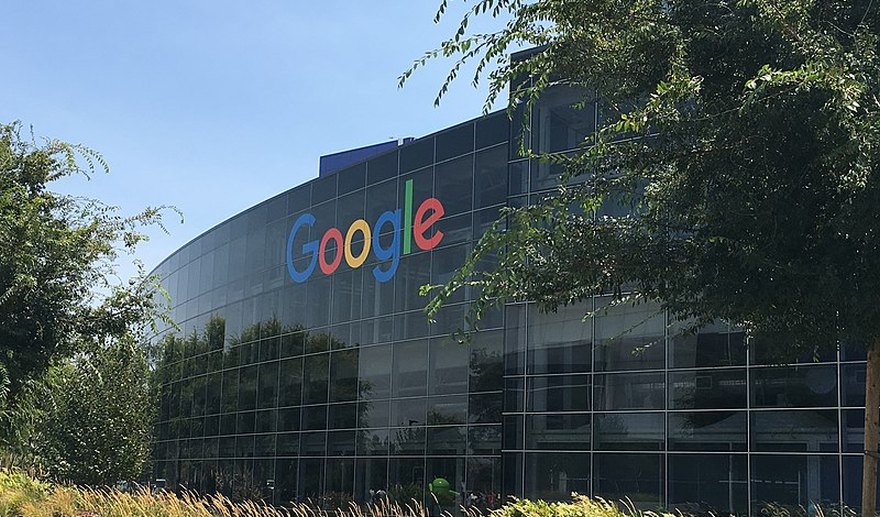
A federal jury in San Francisco has delivered a verdict that lands at the center of the global AI race, the Department of Justice announced Friday.
On Thursday, jurors convicted a former Google software engineer of stealing sensitive AI trade secrets, marking the first U.S. conviction tied directly to artificial intelligence–related economic espionage. Prosecutors say the stolen material was meant to benefit the People’s Republic of China, a charge that places the case squarely within rising tensions over who controls the future of advanced computing.
The defendant, 38-year-old Linwei Ding, who also went by Leon Ding, was found guilty on seven counts of economic espionage and seven counts of theft of trade secrets, according to court documents. The charges stem from the alleged theft of thousands of pages of confidential Google information tied to its internal AI infrastructure.
“In today’s high-stakes race to dominate the field of artificial intelligence, Linwei Ding betrayed both the U.S. and his employer by stealing trade secrets about Google’s AI technology on behalf of China’s government,” said Roman Rozhavsky, assistant director of the FBI’s Counterintelligence and Espionage Division, in a statement Friday. “Today’s verdict affirms that federal law will be enforced to protect our nation’s most valuable technologies and hold those who steal them accountable.”
“In today’s high-stakes race to dominate the field of artificial intelligence, Linwei Ding betrayed both the U.S. and his employer by stealing trade secrets about Google’s AI technology on behalf of China’s government,” said Roman Rozhavsky, assistant director of the FBI’s Counterintelligence and Espionage Division, in a statement Friday. “Today’s verdict affirms that federal law will be enforced to protect our nation’s most valuable technologies and hold those who steal them accountable.”
Ex-Google Engineer Found Guilty of AI Espionage in First U.S. Conviction of Its Kind
The Department of Justice said the case represents the first successful prosecution in the United States involving AI-focused economic espionage. The conviction arrives at a moment when U.S. officials and tech leaders have grown increasingly vocal about the strategic importance of artificial intelligence, particularly as competition with China accelerates.
Google executives have repeatedly warned that AI leadership now carries national security implications. Demis Hassabis, CEO of Google DeepMind, recently told CNBC that Chinese AI models may trail U.S. and Western systems by only a few months, a narrow gap that has fueled urgency across Washington and Silicon Valley.
Ding’s trial unfolded over 11 days in federal court under U.S. District Judge Vince Chhabria of the Northern District of California. Prosecutors traced the alleged theft to a period between May 2022 and April 2023, when Ding was still employed at Google. During that time, the DOJ said, Ding uploaded more than 2,000 pages of internal documents to his personal Google Cloud account.
At the same time, prosecutors said Ding maintained ties with two China-based technology firms and was laying the groundwork to launch his own tech company. Investigators described this overlap as central to the case, arguing it showed intent rather than accidental mishandling of files.
According to the DOJ, the stolen materials went far beyond high-level research notes. They included detailed designs tied to Google’s custom Tensor Processing Unit chips, core components used to train and run large-scale AI models. The files also covered internal graphics processing unit systems and technical details of Google’s SmartNIC, a specialized network interface card designed to support high-speed communication across the company’s AI supercomputers and cloud networks.
Ding’s defense centered on Google’s access controls. His attorney, Grant Fondo, argued that the documents were available to thousands of employees and lacked the secrecy required to qualify as protected trade secrets. “Google chose openness over security,” Fondo told the court, according to Courthouse News Service.
Jurors rejected that argument.
Following the verdict, Google issued a statement thanking prosecutors and the jury. “We’re grateful to the jury for making sure justice was served today, sending a clear message that stealing trade secrets has serious consequences,” said Lee-Anne Mulholland, Google’s vice president of regulatory affairs, in a statement to CNBC.
Ding now faces a steep sentencing window. Each count of trade secret theft carries a possible maximum sentence of 10 years in prison. Each economic espionage charge carries up to 15 years in prison, according to the DOJ. His next court appearance is scheduled for Tuesday.
The conviction adds a new data point to an intensifying debate over how governments, companies, and courts respond when AI research crosses into national security territory. For U.S. prosecutors, the message appears clear: artificial intelligence is no longer treated as just another corporate asset. It now sits among the most closely guarded technologies in the country.