Top Startup and Tech Funding News – December 15, 2025
 Nickie Louise
Posted On December 15, 2025
Nickie Louise
Posted On December 15, 2025
It’s Monday, December 15, 2025, and we’re back with the day’s top startup and tech funding news across geothermal power, quantum computing, enterprise automation, generative AI, fintech, and voice technology. From Seed to Series F, today’s funding rounds highlight firm investor conviction in critical infrastructure, automation-first platforms, and deeptech plays reshaping energy, software, and science.
Fervo Energy led the day with a $462 million Series E to scale firm geothermal power for data centers and grid resilience, followed closely by Harness’s $240 million round to expand AI-driven DevOps automation. Boom Supersonic secured $300 million to fuel both its supersonic jet development and on-site power for AI infrastructure. In comparison, QuEra Computing raised $230 million to bring scalable neutral-atom quantum systems to market. Chai Discovery locked in $130 million to advance generative antibody design, and Serval reached unicorn status with a $75 million Series B to reimagine enterprise IT support using safe AI agents.
Generative voice, creative media, fintech, and civic tech also saw meaningful backing, as investors doubled down on frontier interfaces and applied AI. PolyAI raised $86 million to scale enterprise voice assistants, Octane added $100 million to grow powersports financing, and Mirelo emerged from stealth with $41 million to give AI-generated video content a soundscape. India’s Tagbin rounded out the day with $10 million to scale AI-powered digital infrastructure for governments.
Funding Highlights
- Fervo Energy secured $462 million in a Series E round to expand geothermal energy infrastructure.
- Harness raised $240 million to automate global software delivery with AI agents.
- Boom Supersonic closed $300 million to scale its energy and aviation platforms.
- QuEra Computing landed $230 million to advance quantum computing at scale.
- Chai Discovery raised $130 million for AI-based therapeutic design.
- Serval locked in $75 million to automate IT operations and hit unicorn status.
- Octane secured $100 million to grow digital lending for recreational purchases.
- PolyAI raised $86 million to scale AI-powered voice assistants for enterprises.
- Mirelo emerged from stealth with $41 million to add sound to AI-generated media.
- Tagbin raised $10 million to build civic AI infrastructure in India.
Investor Activity
Today’s funding landscape saw deep participation from multistage VCs, corporate strategics, and climate-forward funds betting on deep infrastructure, AI-native verticals, and enterprise automation. From next-gen geothermal grids to programmable quantum systems and full-stack DevOps orchestration, capital is flowing toward the core systems powering tomorrow’s economy. Here’s the full breakdown of December 15’s most significant startup and tech fundings.
Fervo Energy Raises $462M in Series E Funding for Geothermal Energy Scale-Up
Fervo Energy, a Houston-based geothermal energy startup, has secured an oversubscribed $462 million Series E round to accelerate the rollout of its next-generation geothermal power projects. Led by B Capital (the global fund co-founded by Facebook’s Eduardo Saverin), the funding attracted a broad coalition of climate-tech and traditional energy investors – including tech giant Google – signaling strong confidence in Fervo’s ability to deliver always-on, carbon-free energy. This raise marks one of the largest investments ever in geothermal innovation, positioning Fervo to transition from pilot breakthroughs to utility-scale operations.
Founded in 2017 by CEO Tim Latimer, Fervo is pioneering enhanced geothermal systems (EGS) to deliver baseload clean power for energy-intensive sectors such as AI data centers and grid electrification. Its flagship project, the 500 MW Cape Station in Utah, is on track to deliver an initial 100 MW of firm power in 2026 and scale to 400 MW by 2028. The new capital will be used to complete Cape Station’s build-out and to kick off additional geothermal projects across the Western U.S., including a 115 MW Nevada site where Google is an offtake partner, as Fervo aims to leverage proven oil-and-gas drilling techniques to unlock geothermal at scale.
This Series E round brings Fervo’s total funding to roughly $1.5 billion (including prior equity and project financing). It builds on prior backing from Breakthrough Energy Ventures (Bill Gates’s climate fund), energy incumbents such as Devon Energy, and major institutional investors. The oversubscribed raise underscores bipartisan and cross-industry support for Fervo’s mission. By providing 24/7 renewable power (unlike intermittent wind or solar), Fervo is emerging as a key player in the energy transition, addressing surging demand for firm clean power from data centers and electrification.
Funding Details:
-
Startup: Fervo Energy
-
Investors: B Capital (lead), Google, AllianceBernstein, Breakthrough Energy Ventures, Devon Energy, CPP Investments, DCVC, and others
-
Amount Raised: $462 million
-
Total Raised: Approx. $1.5 billion (including project financing)
-
Funding Stage: Series E
-
Funding Date: December 12, 2025
Harness Raises $240M Series E to Advance AI-Driven Software Delivery

Harness, a San Francisco-based software delivery platform, has raised $240 million in a Series E financing, valuing the company at $5.5 billion post-money. The round was led by Goldman Sachs Alternatives, which provided $200 million in new primary capital, with an additional $40 million from a tender offer by existing backers IVP, Menlo Ventures, and Unusual Ventures. This substantial late-stage funding — in a challenging tech funding market — underscores investor confidence in Harness’s growth and marks a pivotal step as the company eyes a future IPO.
Co-founded in 2017 by CEO Jyoti Bansal (the entrepreneur who previously sold AppDynamics to Cisco for $3.7 billion), Harness offers an AI-powered platform for automating the software development lifecycle. While tools like GitHub’s Copilot help generate code, Harness focuses on everything “after the code” – automating tasks in testing, continuous integration/deployment, security scans, and software release governance. Its platform uses AI agents and a proprietary Software Delivery Knowledge Graph to help engineering teams rapidly deploy code with fewer errors, addressing bottlenecks that arise as AI dramatically increases code output. Harness reports over 50% year-on-year revenue growth and an annual revenue run rate exceeding $250 million, underscoring strong demand for its solutions among enterprises.
With this new funding, Harness plans to accelerate R&D and global expansion. A significant portion of the capital will go toward enhancing the platform’s AI capabilities and expanding the engineering team (including hundreds of hires in its Bengaluru, India, R&D center). The company will also broaden its automated testing and security features and scale its go-to-market efforts in the U.S. and internationally. Harness has raised roughly $570 million in total equity funding, and management indicates this round provides a clear runway to achieve cash-flow positive. By fortifying its balance sheet and bringing in Goldman as a major backer (alongside long-time VCs who showed their support via the tender offer), Harness is well-positioned to continue its category leadership in DevOps automation and prepare for an eventual public listing when market conditions improve.
Funding Details:
-
Startup: Harness
-
Investors: Goldman Sachs Alternatives (lead), IVP, Menlo Ventures, Unusual Ventures (among others participating)
-
Amount Raised: $240 million
-
Total Raised: Approximately $570 million
-
Funding Stage: Series E
-
Funding Date: December 15, 2025
Boom Supersonic Secures $300M Series B to Power AI Data Centers and Supersonic Flight
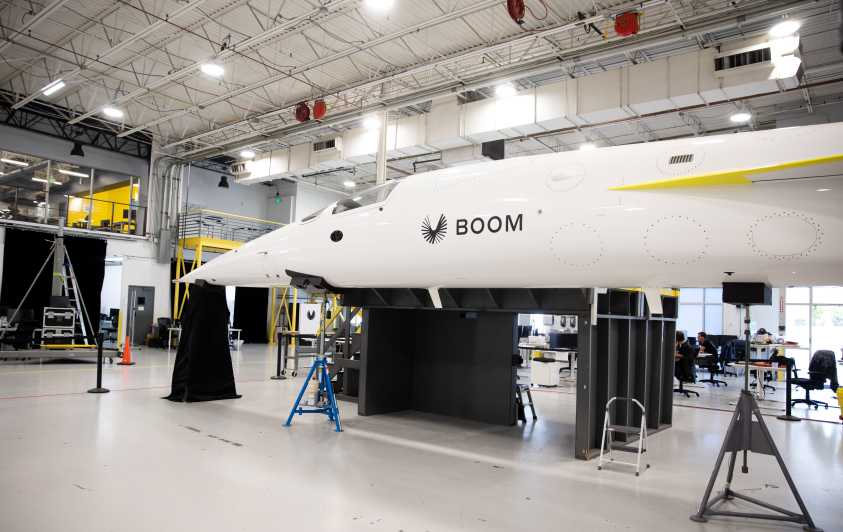
Boom Supersonic, a Colorado-based aerospace startup, has closed a $300 million Series B round that will fuel both its ultrafast aviation ambitions and a new pivot into power generation for AI infrastructure. Darsana Capital Partners led the funding and came in significantly above initial targets – Boom had aimed for $150M but expanded the round due to strong investor demand. The raise values Boom at about $1.5 billion post-money and brings its total funding to over $700 million since its 2016 founding.
Best known for developing the Overture supersonic airliner, Boom recently unveiled a 42-megawatt gas turbine called “Superpower”, designed to supply on-site energy for AI data centers facing massive power needs. The Series B was announced alongside the Superpower launch, highlighting Boom’s strategy to generate near-term revenue from energy tech while continuing the long road of aircraft development. Investors responded enthusiastically: in addition to leading Darsana, the syndicate includes Altimeter Capital, ARK Invest (Cathie Wood’s fund), Bessemer Venture Partners, Robinhood Ventures, and startup accelerator Y Combinator. Their participation reflects confidence in Boom’s dual business model at the intersection of aerospace and the AI boom.
The fresh capital will be used to advance the development of Boom’s Symphony engine and scale up production of Superpower turbines, as well as to keep the Overture airliner program on track. Boom has already secured a $1.25 billion order backlog for the Superpower turbines (with Crusoe Energy Systems ordering 29 units to power data centers). Meanwhile, its Overture jet has 130 aircraft preorders from airlines including United and Japan Airlines, with a 2029 entry into service target. The funding will help Boom expand manufacturing capabilities, conduct engine testing (Symphony prototypes are expected to begin testing in 2026), and navigate the certification process for Overture. By blending an immediate opportunity in energy with its long-term supersonic aviation vision, Boom Supersonic aims to create a self-sustaining financial loop: using turbine sales to subsidize and de-risk the costly development of its airliner. This innovative approach, coupled with a vote of confidence from top investors, could enable Boom to overcome the traditional capital constraints of the aerospace industry.
Funding Details:
-
Startup: Boom Supersonic
-
Investors: Darsana Capital Partners (lead), Altimeter Capital, ARK Invest, Bessemer Venture Partners, Robinhood Ventures, Y Combinator
-
Amount Raised: $300 million
-
Total Raised: ~ $700 million
-
Funding Stage: Series B
-
Funding Date: December 11, 2025
QuEra Computing Lands $230M Series B to Scale Neutral-Atom Quantum Computers
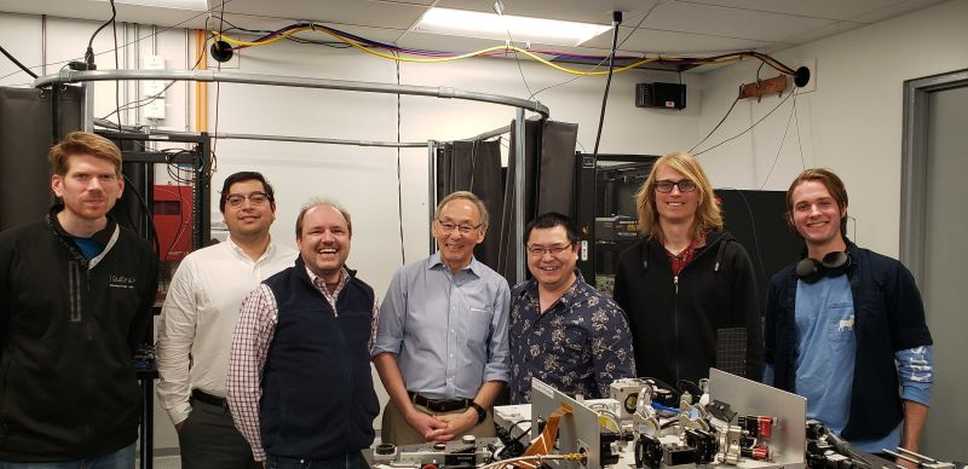
QuEra Computing, a Boston-based quantum computing startup, has raised $230 million in Series B funding to accelerate the development of its neutral-atom quantum computers. The round was co-led by Google’s Quantum AI unit and SoftBank’s Vision Fund 2, bringing QuEra’s post-money valuation into unicorn territory (though undisclosed) and pushing its total funding to approximately $247 million. Also participating were strategic investors like NVentures (NVIDIA’s venture arm) and Valor Equity Partners, along with existing backers including QVT Family Office and Safar Partners. The syndicate’s composition – blending deep-tech VCs, corporate giants, and prior supporters – underscores confidence in QuEra’s technology and its progress to date.
Founded in 2018 by a team of Harvard and MIT scientists, QuEra is a pioneer in neutral-atom quantum computing, an approach that uses arrays of laser-trapped atoms as quantum bits (qubits). This design promises greater scalability: QuEra’s systems have already demonstrated 256-qubit processors (one of the largest of its kind), and the company is targeting thousand-qubit scale with error-corrected, programmable quantum machines. The new funding will be used to expand QuEra’s R&D and manufacturing capabilities, including expanding its Boston facilities and hiring top quantum engineers, as well as to accelerate the productization of its hardware and software stack. A portion of the raise includes a milestone-based tranche (~$60M) that provides QuEra with flexibility to manage capital as it meets technical benchmarks.
Crucially, QuEra has attracted strategic collaboration from industry leaders: Google’s investment hints at potential cross-pollination (even as Google pursues its own superconducting qubits, it sees promise in QuEra’s neutral-atom approach), and NVIDIA’s involvement via NVentures aligns with efforts to integrate quantum co-processors with classical high-performance computing (QuEra’s machines are already being linked with NVIDIA’s GPUs for hybrid quantum-classical simulations). With this Series B war chest, QuEra aims to deliver larger-scale systems capable of tackling problems intractable for classical computers – from complex material simulations to optimization challenges. The strong backing from both tech titans and veteran investors positions QuEra as one of the best-funded independent quantum startups, second only to a few industry leaders, and signals an accelerating race to achieve practical quantum advantage in computing.
Funding Details:
-
Startup: QuEra Computing
-
Investors: Google Quantum AI (co-lead), SoftBank Vision Fund 2 (co-lead), NVentures (NVIDIA), Valor Equity Partners, QVT Family Office, Safar Partners
-
Amount Raised: $230 million
-
Total Raised: ~$247 million
-
Funding Stage: Series B
-
Funding Date: December 10, 2025
Chai Discovery Nets $130M Series B to Transform AI-Driven Drug Design
Chai Discovery, an AI-powered drug discovery startup based in California, has raised $130 million in a Series B round co-led by Oak HC/FT and General Catalyst. The raise values Chai at $1.3 billion, as the young company gains significant backing to advance its “computer-aided design” platform for therapeutic molecules. Remarkably, this Series B comes only three months after Chai’s previous round, highlighting rapid momentum as investors see tangible progress in the long-hyped fusion of AI and biotech.
Founded in 2021 by CEO Josh Meier and President Jack Dent, Chai Discovery is focused on using generative AI and deep learning to design new antibodies and drugs for diseases that have eluded traditional approaches. The company’s latest AI model, dubbed Chai-2, can propose antibody candidates against challenging targets – a breakthrough that Chai’s leadership says has made 2025 “the year things started working” for AI in pharma. With this new infusion of capital, Chai plans to move from research to deployment: 2025 focused on validating its models in-house, while 2026 will focus on integrating these AI tools into pharmaceutical partners’ workflows and advancing the most promising AI-designed drug candidates toward preclinical testing.
In addition to lead investors Oak HC/FT and General Catalyst, the round saw participation from Thrive Capital, Menlo Ventures, and OpenAI (which had backed Chai earlier, making it one of the first startups with OpenAI’s direct investment). Chai Discovery’s total financing now stands at $225 million. The funds will bolster the startup’s computational infrastructure, drug labs, and talent pool – Chai expects to grow its team of biologists and AI researchers to accelerate its pipeline. This large Series B and the credibility of its investors signal renewed optimism that AI can deliver real drug-discovery breakthroughs. If Chai’s models continue to yield viable drug candidates, the company could not only shorten development timelines for new therapies but also validate the broader promise of AI-driven design in medicine.
Funding Details:
-
Startup: Chai Discovery
-
Investors: Oak HC/FT (co-lead), General Catalyst (co-lead), Thrive Capital, Menlo Ventures, OpenAI
-
Amount Raised: $130 million
-
Total Raised: $225 million
-
Funding Stage: Series B
-
Funding Date: December 15, 2025
Octane Fuels Up with $100M Series F to Expand Powersports Financing
Octane, a fintech startup modernizing financing for recreational purchases, has raised $100 million in Series F funding to supercharge its growth. The round was led by Valar Ventures – the New York-based firm’s second time leading an Octane raise – with participation from firms like Upper90 and strategic partners including Huntington Bank and Camping World. The new funding values Octane at approximately $1.3 billion and brings the company’s total equity raised to about $342 million since its 2014 inception.
Headquartered in New York, Octane (Octane Lending Inc.) provides an end-to-end digital lending platform for powersports and outdoor power equipment – think motorcycles, ATVs, boats, and RVs. Its technology streamlines the tedious loan process at dealerships into a fast, seamless experience for buyers and dealers alike. Octane’s in-house lending arm (Roadrunner Financial) has originated over $7 billion in loans, and the company has profitably grown to work with 60+ manufacturer brands and thousands of dealers across the U.S. In an era when many fintechs are struggling to reach profitability, Octane stands out for achieving GAAP net income profitability while still posting strong growth (loan originations in Q3 2025 were 30% higher than the same period in 2024).
With the Series F proceeds, Octane plans to expand beyond its core powersports market into adjacent verticals and further enhance its digital lending platform. The company will invest in new product features that deepen its integration with merchants (for example, improving its financing portal tools for dealerships) and offer customers more flexible payment options. The inclusion of industry partners in this round (a national bank and the nation’s largest RV dealer network) will also help Octane forge new distribution channels. CEO Jason Guss says the capital will enable Octane to “move more quickly on key initiatives” and continue taking market share in both existing and new markets. By reinventing the financing experience for big-ticket leisure purchases, Octane is aiming to become the go-to platform whenever consumers buy “passion purchases” like a jet ski or off-road vehicle – and this latest funding round will accelerate that vision.
Funding Details:
-
Startup: Octane
-
Investors: Valar Ventures (lead), Upper90, Huntington Bank, Camping World, Good Sam, Holler-Classic (among others)
-
Amount Raised: $100 million
-
Total Raised: $342 million
-
Funding Stage: Series F
-
Funding Date: December 15, 2025
PolyAI Raises $86M Series D to Scale Enterprise Voice Assistants
PolyAI, a London-based conversational AI startup, has closed an $86 million Series D round to accelerate the global rollout of its enterprise voice assistant technology. The round was co-led by Georgian and Hedosophia, with significant participation from Khosla Ventures and notable strategic investors like NVentures (NVIDIA’s venture arm) and Citi Ventures. The infusion brings PolyAI’s total funding to over $200 million, strengthening its position as a leading provider of AI voice agents for customer service.
Founded in 2017 by CEO Nikola Mrkšić and colleagues from Cambridge University, PolyAI specializes in AI-powered voice assistants that can hold natural conversations with customers – for tasks ranging from banking support calls to hotel reservations – in more than 45 languages. The company has deployed over 2,000 voice AI systems for 100+ large enterprise clients worldwide, including Marriott, Capital One, and Telefónica. By fielding calls that would otherwise require human agents, PolyAI’s solutions help companies improve service availability and drastically cut costs. A recent independent study by Forrester Research quantified a 391% ROI for PolyAI’s customers, with an average of $10 million in savings per enterprise from reduced call-center workload and faster resolution times.
With its Series D funding, PolyAI plans to scale up R&D and commercial expansion, particularly in North America, Europe, and Asia. The startup will invest in further improving the conversational abilities and emotional range of its voice agents, ensuring they sound increasingly human-like and can handle even more complex queries. It also aims to expand into new industry verticals and use cases for its technology. PolyAI’s backers in this round reflect both confidence in its core technology and interest in its market potential: Georgian and Hedosophia bring growth-stage expertise, Khosla has deep AI domain knowledge, and NVIDIA’s involvement suggests alignment on cutting-edge AI hardware optimization. As enterprises continue to seek AI solutions amid labor shortages and 24/7 service expectations, PolyAI is gearing up – armed with significant new capital – to make AI voice agents a mainstream part of customer engagement globally.
Funding Details:
-
Startup: PolyAI
-
Investors: Georgian (co-lead), Hedosophia (co-lead), Khosla Ventures, NVentures (NVIDIA), British Business Bank, Citi Ventures, and others
-
Amount Raised: $86 million
-
Total Raised: Over $200 million
-
Funding Stage: Series D
-
Funding Date: December 15, 2025
Serval Snags $75M Series B at Unicorn Valuation to Automate IT Support
Serval, a San Francisco-based startup that uses AI to automate IT support and business operations, has raised $75 million in a Series B round led by Sequoia Capital, valuing the company at $1 billion. This milestone valuation – effectively making Serval a new tech unicorn – comes just three months after the company’s previous round in August, reflecting red-hot investor interest in enterprise AI automation. Alongside Sequoia, the round included participation from existing investors Redpoint Ventures, Meritech Capital, and General Catalyst, bringing Serval’s total funding to $127 million to date.
Founded in 2024 by CEO Jake Stauch, Serval has developed an AI-powered platform that handles a wide range of routine support tasks traditionally performed by human IT help desks and support teams. Serval’s AI assistant can resolve employee IT tickets (e.g., troubleshooting software issues or resetting access permissions) and has expanded to automate workflows across HR, finance, and legal departments. The platform features a conversational AI “front end” that interacts with employees to understand their requests, paired with a secure automation builder that translates those requests into actions – an approach the team calls “vibe coding.” By executing only pre-approved workflows, Serval ensures the AI is both powerful and safe, integrating with existing systems or replacing them if clients choose. Early adopters of Serval, including other fast-growing AI startups, report that the platform can autonomously handle more than 50% of IT support tickets, dramatically improving response times and reducing workload.
With the fresh Series B funds, Serval plans to rapidly scale its go-to-market and engineering teams, growing from under 30 employees to over 100 in the next year to meet demand. The company will also enhance its product’s capabilities by adding more complex automation templates and expanding its integration with popular enterprise software. Sequoia Capital’s lead partner on the deal cited Serval’s “powerful customer feedback,” drawing a parallel to the enthusiasm seen in ServiceNow’s early days (the legacy leader Serval aims to disrupt). Achieving a unicorn valuation so early indicates high expectations: investors are betting that Serval’s AI-first approach can redefine the $30B+ IT service management market. As businesses increasingly seek efficiency through automation, Serval is poised with significant capital and top-tier backing to become a category-defining player in the enterprise AI automation space.
Funding Details:
-
Startup: Serval
-
Investors: Sequoia Capital (lead), Redpoint Ventures, Meritech Capital, General Catalyst
-
Amount Raised: $75 million
-
Total Raised: $127 million
-
Funding Stage: Series B
-
Funding Date: December 11, 2025
Mirelo Scores $41M in Seed Funding Round to Give AI-Generated Videos a Voice
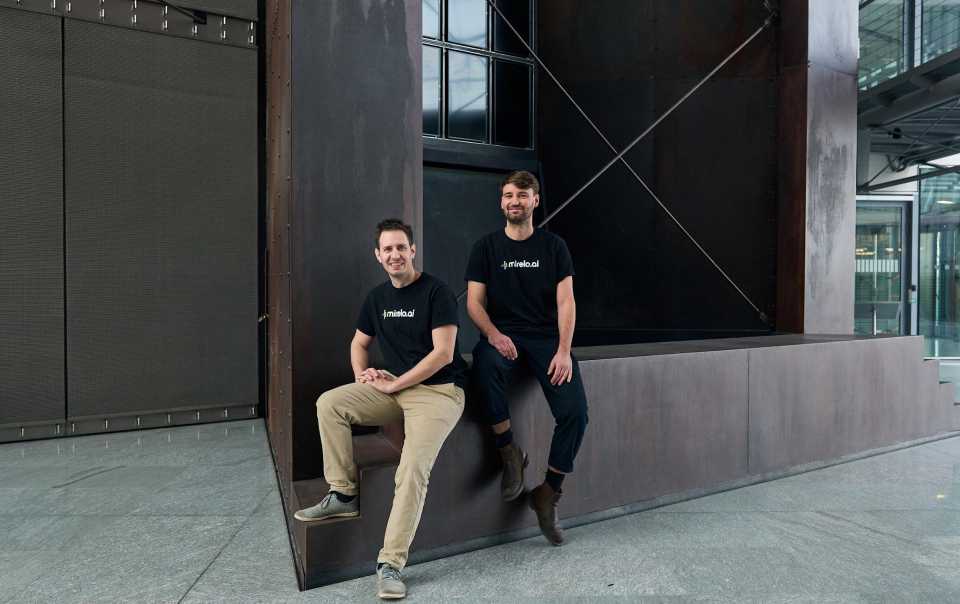
Berlin-based startup Mirelo has emerged from stealth with a $41 million seed funding round co-led by Index Ventures and Andreessen Horowitz (a16z), marking one of Europe’s largest seed rounds in the generative AI sector. At just two years old, Mirelo is building artificial intelligence that automatically adds realistic soundtracks and sound effects to AI-generated videos – essentially giving “silent” AI videos the audio they need to feel complete. The substantial seed funding (bringing Mirelo’s total raise to $44 million, including an earlier pre-seed) will enable the company to scale its team and technology in a nascent field at the intersection of AI and creative media.
Mirelo’s core product, Mirelo SFX, analyzes a video’s visuals and generates perfectly timed sound effects and ambient audio that match on-screen actions. For example, a generative AI video of a beach scene could be automatically outfitted with crashing wave sounds, seagull calls, and wind – all without a human sound designer. This technology addresses a growing demand: AI tools can now create images and videos in seconds, but they often lack audio, which is critical for immersion. By focusing on sound, Mirelo aims to become the go-to solution for creators and companies that need to add high-quality audio to their AI-generated visuals quickly. It’s a differentiation that attracted major VC interest, especially as big players from Sony to Tencent have begun experimenting with AI-driven sound for media. Despite competition, Mirelo’s narrow focus and early traction gave investors confidence, as evidenced by a seed round size usually reserved for more mature startups.
The company was co-founded by CJ Simon-Gabriel and Florian Wenzel, both of whom are AI researchers and musicians. Under their leadership, Mirelo will use the seed capital to recruit top talent in machine learning and audio engineering, likely doubling or tripling its 10-person team in the coming months. Funds will also support continued R&D to improve the fidelity of its sound-generation models and the expansion of Mirelo Studio, its creator-focused platform that could eventually allow users to generate custom soundtracks or even original music for their videos. Investors are optimistic that, as generative video content explodes, Mirelo’s technology will be in high demand to add dimension (sound) to those creations. By solving a “silent problem” in AI media, Mirelo is positioned at the forefront of a new niche – one where this big seed round gives it a considerable head start.
Funding Details:
-
Startup: Mirelo
-
Investors: Index Ventures (co-lead), Andreessen Horowitz (co-lead), Atlantic Labs (early investor)
-
Amount Raised: $41 million
-
Total Raised: $44 million
-
Funding Stage: Seed
-
Funding Date: December 15, 2025
India’s Tagbin Raises $10M in Funding to Scale Experiential Tech and AI Platforms
Gurugram-based Tagbin has raised $10 million in fresh funding to expand its experiential technology business and its AI-driven government platforms. The investment was led by the SageOne Flagship Growth Fund, with participation from prominent Indian angel investors, including Ramesh Damani, Jyotivardhan Sonthalia, and others. This marks the first significant institutional funding for Tagbin, which was founded in 2013 by IIT alumni and has grown to date through bootstrapping and project revenues. The new capital will support Tagbin’s ambitious plans, including scaling its software products and potentially preparing for an IPO by 2027.
Tagbin made its name by designing large-format digital experiences – think interactive museums, immersive exhibitions, and innovation centers. Notably, the company has built high-profile museum installations and experience zones across India, blending physical and digital elements to engage visitors. In recent years, Tagbin has also leveraged this expertise to develop AI-based platforms for government agencies. For instance, it worked with India’s policy think tank, NITI Aayog, to create an AI-powered decision-support system that unifies and analyzes data across ministries, helping policymakers gain insights from previously siloed information. Tagbin is even piloting predictive policing analytics with some state police departments, using AI to identify crime patterns. These enterprise software offerings (marketed under products such as “Workly”) complement its one-off experience projects and generate recurring revenue through SaaS licenses and maintenance contracts.
With the $10M infusion, Tagbin plans to scale its software engineering and product development teams to serve more government and enterprise clients. A portion of the funds will bolster working capital as the company takes on large government tech projects, which often require upfront deployment of resources (and performance guarantees that tie up capital for years). Tagbin’s CEO, Saurav Bhaik, noted that the company surpassed ₹100 crore (approximately $12 million) in revenue last year and is targeting ₹200 crore this year, indicating robust growth. By strengthening its AI platform offerings and expanding into new sectors (potentially smart cities and education tech), Tagbin aims to transform from a project-based agency into a scalable product company. The backing from SageOne and reputed investors not only provides capital but also credibility as Tagbin sets its sights on a potential public listing. In a region where tech startups often focus on consumer apps, Tagbin stands out by straddling creative tech and enterprise AI, and this funding will help it accelerate at that unique crossroads.
Funding Details:
-
Startup: Tagbin
-
Investors: SageOne Flagship Growth Fund (lead); Ramesh Damani, Jyotivardhan Sonthalia, Sanjay Kaul; Kurl-on Group (notable angels)
-
Amount Raised: $10 million
-
Total Raised: $10 million (first major round)
-
Funding Stage: Undisclosed (Growth round)
-
Funding Date: December 15, 2025
Tech Funding Summary Table
| Startup | Investors (Lead and notable investors) | Amount Raised | Total Raised | Funding Stage | Funding Date |
|---|---|---|---|---|---|
| Fervo Energy | B Capital (lead), Google, Breakthrough Energy Ventures | $462M | ~$1.5B | Series E | Dec 12, 2025 |
| Harness | Goldman Sachs Alt. (lead), IVP, Menlo Ventures | $240M | ~$570M | Series E | Dec 15, 2025 |
| Boom Supersonic | Darsana Capital (lead), Altimeter, ARK Invest | $300M | ~$700M | Series B | Dec 11, 2025 |
| QuEra Computing | Google & SoftBank VF2 (co-leads), NVIDIA (NVentures) | $230M | ~$247M | Series B | Dec 10, 2025 |
| Chai Discovery | Oak HC/FT & General Catalyst (co-leads), Thrive, OpenAI | $130M | $225M | Series B | Dec 15, 2025 |
| Octane | Valar Ventures (lead), Upper90, Huntington Bank | $100M | $342M | Series F | Dec 15, 2025 |
| PolyAI | Georgian & Hedosophia (co-leads), Khosla, NVIDIA | $86M | $200M+ | Series D | Dec 15, 2025 |
| Serval | Sequoia Capital (lead), Redpoint, Meritech, Gen. Catalyst | $75M | $127M | Series B | Dec 11, 2025 |
| Mirelo | Index & a16z (co-leads) | $41M | $44M | Seed | Dec 15, 2025 |
| Tagbin | SageOne Fund (lead), Ramesh Damani (angel) | $10M | $10M | N/A (Undisclosed) | Dec 15, 2025 |