Technology News Today – The Latest in Tech, AI & Startup News, December 3, 2025
 Nickie Louise
Posted On December 3, 2025
Nickie Louise
Posted On December 3, 2025

-
AI Safety Index Says Major AI Tech Companies Fall Short of Emerging Global Standards
A new edition of the Future of Life Institute’s AI Safety Index finds that the leading AI companies — including Anthropic, OpenAI, xAI, Meta, and Google DeepMind — are “far short” of emerging global standards for safety and governance. The independent panel behind the report says that while firms are racing to build smarter-than-human systems, none has a credible, detailed plan for controlling them if they go off the rails. The index comes amid growing public concern over AI models linked to self-harm, psychosis, and AI-enabled hacking incidents.
The report also criticizes U.S. regulators for leaving AI firms “less regulated than restaurants,” even as companies invest hundreds of billions of dollars in scaling compute and advancing toward superintelligence. The institute, which has long warned about existential AI risk, cites recent calls by Geoffrey Hinton, Yoshua Bengio, and others for a moratorium on superintelligent AI until enforceable safety frameworks are in place. Some firms, including xAI, have pushed back, accusing “legacy media” of misrepresenting their practices, but have not provided detailed counter-evidence.
Why It Matters: If this safety gap narrative takes hold with lawmakers and investors, it could accelerate binding AI regulation and reshape which AI vendors enterprises are willing to trust.
Source: Reuters.
-
AI Boom Triggers Global Memory Chip and Supply Chain Crunch
The latest reporting on the AI hardware supply chain shows that the generative AI boom is now straining memory chips and related components, echoing and potentially surpassing the pandemic-era semiconductor shortage. Demand for high-bandwidth memory (HBM), solid-state drives, and other data center components has spiked as hyperscalers race to deploy GPU clusters and AI servers. Retailers and wholesalers in hubs like Shenzhen and Tokyo are already limiting customer purchases, with signage warning of inventory constraints for system memory and SSDs.
Analysts say traditional supply-demand models are breaking down because AI data centers consume far more memory per server than legacy cloud workloads, and because a small set of vendors dominate advanced HBM and NAND production. The result is a cascading squeeze: prices for certain memory SKUs are rising, integrators are delaying system shipments, and Big Tech buyers are outbidding smaller cloud and AI startups. If the current pace continues, some predict a multi-year investment wave across memory fabrication, packaging, and testing, with knock-on effects on power infrastructure and logistics.
Why It Matters: AI hardware is becoming a macro-level bottleneck, and persistent memory shortages could slow AI deployment, push prices higher, and further concentrate power in the hands of the largest tech companies.
Source: Reuters.
-
India Walks Back Mandatory Cybersecurity App Order After Big Tech and Privacy Backlash
India’s government has revoked an order that would have forced smartphone makers to preload a state-run cybersecurity app, Sanchar Saathi, on all new devices sold in the country. The mandate, issued privately on November 28, would have required Apple, Samsung, Xiaomi, and others to ship non-removable versions of the app within 90 days. After the directive leaked and triggered criticism from opposition lawmakers, privacy advocates, and phone makers, the communications ministry said pre-installation would no longer be mandatory.
Officials argue the app is designed to help citizens block and track stolen phones. Still, critics warned that mandating a non-removable government app created a potential backdoor for mass surveillance. Apple and Samsung were reportedly preparing to refuse compliance, setting up a potential showdown with New Delhi. The reversal is a rare public U-turn for Prime Minister Narendra Modi’s administration, which had to back down on a strict laptop import licensing regime after industry lobbying. Civil liberties groups welcomed the climb-down but say they are still waiting for a formal legal order and broader reforms around digital rights.
Why It Matters: The episode highlights the tension among cybersecurity, privacy, and industrial policy in the world’s fastest-growing smartphone market—and shows that even large governments can face real pushback from Big Tech and civil society when digital control measures go too far.
Source: Reuters.
-
Amazon Taps Nvidia Tech for Next-Gen AI Chips as Cloud Competition Intensifies, Launches New ‘AI Factories’ Servers
Amazon is making a major push to strengthen its AI infrastructure by adopting Nvidia-designed technology for its next-generation AI compute chips. The move signals a strategic pivot for AWS as demand for high-performance AI hardware surges and cloud providers race to win enterprise AI workloads. The new chip designs will be integrated into upcoming AWS servers, giving customers direct access to accelerated compute optimized for training and running large models.
This step also highlights Amazon’s shift in tone. Instead of relying solely on its in-house Trainium and Inferentia chips, AWS is leaning into Nvidia’s dominant position in AI hardware to avoid losing market share to Microsoft Azure and Google Cloud. With AI startups, Fortune 500 enterprises, and governments all competing for limited compute capacity, Amazon’s decision reflects the reality that cloud platforms now live or die by their access to advanced AI chips—and their ability to deploy them at scale.
For enterprises, AWS is pitching AI Factories as a way to avoid the integration pain of piecing together GPUs, networking, storage, and orchestration themselves. The announcement also underlines how quickly AI data centers are being redesigned around specialized accelerators rather than general-purpose CPUs, with energy efficiency emerging as a major selling point.
Why It Matters: Amazon’s adoption of Nvidia tech reinforces Nvidia’s grip on the AI hardware market while escalating the cloud computing arms race.
Source: Reuters.
-
Marvell Doubles Down on AI Data Centers With $3.25 Billion Celestial AI Deal
Chipmaker Marvell Technology is acquiring photonics startup Celestial AI in a cash-and-stock deal valued at $3.25 billion, a move that significantly expands Marvell’s position in AI data center networking. Celestial builds “photonic fabric” that uses light rather than electrical signals to connect AI accelerators to memory, a key technology for reducing bottlenecks in large-scale AI training clusters. Analysts say the acquisition positions Marvell as a stronger rival to Broadcom and Nvidia in the race to power next-gen AI data centers.
The deal also comes with a strategic twist: Amazon secured a warrant that allows it to buy Marvell shares tied to its purchases of Celestial’s photonics products through 2030, signaling deep alignment with hyperscale data center roadmaps. Photonic interconnects are widely viewed as a critical step to scaling AI systems without blowing past power and thermal limits, and owning more of that stack could translate into higher margins and better bargaining power with cloud customers. Investors responded positively, sending Marvell shares higher on the news.
Why It Matters: The acquisition shows how AI data center build-outs are spawning a new class of infrastructure winners beyond GPU vendors, with photonics and memory bandwidth becoming strategic battlegrounds.
Source: Reuters.
-
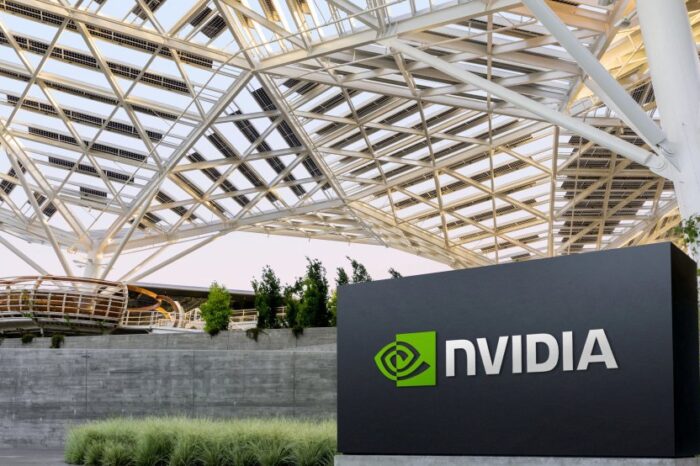
Nvidia Says $100 Billion OpenAI AI Systems Deal Still Not Final
Nvidia’s chief financial officer, Colette Kress, told investors that the chipmaker has yet to finalize its headline agreement to invest up to $100 billion in AI systems for OpenAI. The letter of intent, unveiled earlier this year, would see Nvidia deploy at least 10 gigawatts of AI computing capacity for OpenAI — enough power for more than eight million U.S. homes — in exchange for a large financial commitment from the ChatGPT maker. But Kress said the companies are still working toward a definitive agreement.
The proposed deal has become a flashpoint in debates over “circular” AI financing arrangements, in which major AI labs, cloud providers, and chipmakers cross-invest in one another, potentially concentrating power and risk. Nvidia has said it already has around $500 billion in bookings for its advanced AI chips through 2026, with OpenAI and major cloud providers among its biggest customers. A final deal could deepen the dependency between the world’s most valuable chipmaker and one of the most influential AI startups, even as regulators globally scrutinize AI concentration and infrastructure dominance.
Why It Matters: The unresolved status of the Nvidia–OpenAI megadeal adds uncertainty to the AI infrastructure roadmap and could draw further regulatory attention to how a small group of firms is wiring up the world’s AI compute.
Source: TechStartups via Reuters.
-
Anthropic AI Startup Reportedly Prepares for IPO as Early as 2026
Frontier model startup Anthropic is laying groundwork for a potential initial public offering as soon as 2026, according to reports that it has engaged law firm Wilson Sonsini to prepare for a listing. The Claude developer, backed by Amazon, Google, and multiple venture funds, has told reporters it has not yet made a final decision but aims to nearly triple its annualized revenue by the time an IPO would occur. Rival OpenAI is also signaling interest in a public listing, making the frontier AI lab space a future battleground on public markets.
Anthropic has raised tens of billions of dollars in commitments from strategic backers keen to secure access to its models, positioning it as one of the few labs capable of training trillion-parameter systems. An IPO would not only test investor appetite for unprofitable but fast-growing AI labs, it would also force more transparency around Anthropic’s costs, safety practices, and governance structure — topics that regulators and civil society organizations are watching closely. The timing will depend on market conditions and on whether the current AI funding cycle can sustain its momentum.
Why It Matters: If Anthropic goes public, it could set valuation benchmarks, disclosure norms, and governance expectations for the next wave of large AI startups.
Source: Reuters.
-
CrowdStrike Cybersecurity Startup Lifts Outlook as AI Security Tools Gain Traction
Cybersecurity firm CrowdStrike raised its fourth-quarter revenue forecast above Wall Street expectations, attributing the upside to strong demand for its AI-driven Falcon platform. The company has been rolling out AI detection, triage, and automation features designed to consolidate security operations and replace a patchwork of point products. Management said the AI push is improving margins and helping CrowdStrike win larger platform deals, rather than one-off licenses.
While the stock reaction was modest, analysts highlighted that CrowdStrike’s results show how AI is shifting from buzzword to real budget line in cybersecurity. Enterprises are under pressure to deal with more sophisticated threats, staffing shortages, and sprawling tool sets. Vendors that can genuinely reduce analyst workload by automating triage and incident response are now better positioned to win multi-year contracts. CrowdStrike’s performance will be watched closely by competitors in endpoint, XDR, and SIEM who are racing to infuse AI across their offerings.
Why It Matters: CrowdStrike’s AI-powered growth is an early signal that enterprises are willing to pay for AI security tools that cut complexity and headcount pressure, not just add another dashboard.
Source: Reuters.
-
Chinese Startup LandSpace Emerges as SpaceX’s Most Serious Challenger in Methane Rockets
A new deep-dive on China’s private space sector spotlights LandSpace, a Beijing-based startup that has become SpaceX’s most credible rival in methane-fueled launch vehicles. Founded in 2015 after China opened parts of its space industry to private investment, LandSpace has raised billions of yuan from backers including HongShan (formerly Sequoia China), state-linked funds, and local governments. The company made history in July 2023 when its Zhuque-2 rocket became the world’s first methane–liquid oxygen vehicle to reach orbit, beating SpaceX and Blue Origin on that milestone.
Subsequent funding rounds — including a 1.2 billion yuan (~$170 million) raise in 2020 and a 900 million yuan round from a state advanced-manufacturing fund — have cemented LandSpace’s role in China’s push for independent launch capability. The company is positioning its methane rockets as reusable, lower-cost options for commercial and government customers that want to deploy constellations and AI-enabled remote-sensing payloads. Its progress highlights how China’s space startups are moving beyond small launchers into technologically demanding segments that were once the exclusive domain of U.S. players.
Why It Matters: LandSpace’s rise underscores that the commercial space race is now multipolar, with Chinese startups competing head-on with SpaceX in key propulsion technologies.
Source: Reuters.
-
Eric Schmidt and Xavier Niel Back French AI Voice Startup Gradium
Former Google CEO Eric Schmidt and French telecom billionaire Xavier Niel are among the backers of Gradium, a French AI voice startup that has just raised new funding. Gradium sits in the crowded but fast-growing space of AI speech and media tools, where startups are building synthetic voices, audio dubbing, and voice interfaces for everything from call centers to entertainment. The Bloomberg report frames the investment as part of a broader European effort to build native AI champions rather than relying solely on U.S. and Chinese models and platforms.
For Schmidt, who has been active in AI investing and policy, the Gradium bet reinforces his view that high-quality data, including speech corpora, can support differentiated AI products despite the dominance of a few foundation model providers. For Niel, whose portfolio includes telecom infrastructure and data centers, voice AI is a natural adjacency to broadband and cloud services. Gradium will be expected to show that it can turn star-studded backing into commercial traction across enterprise voice, media localization, and developer APIs.
Why It Matters: The Gradium round highlights how Europe’s AI ecosystem is trying to carve out defensible niches — in this case, AI voice tech — backed by heavyweight investors who want regional alternatives to U.S. AI platforms.
Source: Bloomberg.
-
China’s AI Tech Ambitions Face Long Road to Profitability
A new Bloomberg “Tech In Depth” analysis argues that China’s AI industry is racing ahead in deployment but still faces a long, difficult path to significant profitability. Despite eye-catching demos of humanoid robots, multimodal chatbots, and AI-driven manufacturing, many Chinese AI firms are struggling to monetize products in a domestic market pressured by weak consumer spending and regulatory uncertainty. Local players also face export controls on advanced GPUs and tools, limiting their access to the same high-end hardware enjoyed by Western rivals.
The piece suggests that Chinese AI companies may increasingly rely on government demand, state-backed infrastructure projects, and vertically integrated industrial deployments rather than ad-driven or subscription models standard in the West. Profit pools could develop in areas such as factory automation, surveillance systems, and state-aligned cloud services, but margins may be thinner and more politically constrained. For global investors watching AI valuations, the article is a reminder that “AI everywhere” does not automatically translate to “AI profits everywhere,” especially in markets where capital allocation is guided as much by policy goals as by returns.
Why It Matters: The analysis underscores that AI geopolitics and export controls are not just about security — they also shape where sustainable AI business models can emerge and which markets become long-term profit centers.
Source: Bloomberg.
-
Prediction-Market Startups Become Hot New Fintech and AI-Data Play
Bloomberg’s latest markets feature profiles a wave of prediction-market startups inspired by the growth of platforms like Polymarket and Kalshi. These new entrants are building markets where users can stake money on everything from election outcomes and sports to macroeconomic indicators and tech events. Some are pitching themselves as “information markets” that can generate probabilistic data feeds for hedge funds, corporates, and AI systems that need real-time signals about future events.
Entrepreneurs see an opportunity to blend fintech infrastructure, compliance tooling, and AI to surface more accurate crowd forecasts. But they also face regulatory uncertainty, especially in the U.S., where agencies like the CFTC and SEC are still wrestling with whether prediction markets constitute gambling, derivatives, or a new asset class altogether. The article highlights young founders racing to lock in liquidity, secure crypto and fiat rails, and navigate complex licensing regimes — betting that they can turn speculative trading into a durable data business.
Why It Matters: The prediction-market boom could create a new category of “future data” that feeds into trading algorithms, corporate planning, and AI models — but only if startups can survive the regulatory gauntlet.
Source: Bloomberg.
-
Apple Replaces Head of AI Division Amid Fears It’s Falling Behind in AI Race
Semafor reports that Apple has quietly replaced the head of its artificial intelligence division, a shake-up that comes as investors worry the company is lagging Microsoft, Google, and Meta in generative AI. The new leadership will be tasked with accelerating Apple’s on-device AI roadmap, integrating generative features into iOS and macOS, and figuring out how to compete without compromising the company’s long-standing privacy positioning. The move follows months of criticism that Apple’s AI announcements have felt incremental compared to those of rivals.
The leadership change also raises questions about how Apple will balance custom silicon, on-device models, and potential partnerships with cloud AI providers. While the company has strong hardware and ecosystem advantages, it has been more cautious about releasing creative or open-ended AI tools that could produce controversial outputs. If the new AI chief can deliver meaningful advancements in areas like Siri, photo and video editing, personalization, and developer APIs, it could help convince both Wall Street and consumers that Apple remains a serious AI player, not just a fast follower.
Why It Matters: A more aggressive AI strategy from Apple would reshape the competitive landscape for consumer AI, especially on devices where on-device processing and privacy are key differentiators.
Source: Semafor.
-
IBM CEO Pushes Back on AI Layoff Narrative, Says Tech Job Cuts Stem from Pandemic Over-Hiring
IBM CEO Arvind Krishna is challenging the widely held belief that AI is the primary driver behind the tech industry’s wave of layoffs. In a new interview, Krishna said the most significant factor behind recent job cuts is the massive over-hiring that occurred during the pandemic, when tech companies scaled quickly under the assumption that digital demand would stay elevated. As growth normalized in 2023–2025, firms were forced to recalibrate headcount—not because of AI automation, but because projections proved overly optimistic.
Krishna acknowledged that AI will eventually reshape specific job categories, but he emphasized that today’s workforce reductions reflect operational corrections rather than AI disruption. His comments come as public concern grows over the impact of large-scale AI deployment on jobs, particularly in software engineering, customer support, and operations roles. By reframing the layoff narrative, IBM is pushing for a more nuanced understanding of labor trends—and clarifying that AI is not yet replacing workers at the scale many assume.
Why It Matters: This challenges the dominant narrative around AI-driven job losses and offers a more data-grounded view of tech labor trends.
Source: Economic Times.
-
AI Set to Reshape White-Collar Jobs, With Nearly 12% of US Wage Bill at Risk
A new analysis highlighted by Semafor, drawing on MIT research, argues that AI’s impact on labor is only beginning and will increasingly hit white-collar jobs. While early AI deployments have clustered around programming and computer-science roles, the MIT study estimates that almost 12% of the U.S. labor force — measured as a share of total wages — is exposed to AI automation in the near term. This includes roles in finance, law, marketing, and administrative work where AI can handle text, data analysis, and routine decision-making.
The report suggests that many companies are still in experimentation mode, using AI copilots and chat tools to augment staff rather than replace them. But as models improve and organizations restructure workflows, the line between augmentation and substitution will blur. Workers in higher-paid, information-dense jobs could see tasks unbundled, with AI taking over routine components while human workers focus on client interaction, strategy, or complex judgment calls. The pace and fairness of this transition will depend on retraining programs, corporate choices, and policy responses — all of which are still uncertain.
Why It Matters: The findings suggest that AI will drive a slow-burn reconfiguration of white-collar work and income distribution, challenging the assumption that only manual or low-skilled jobs are at risk of automation.
Source: Semafor
Trending Tech News
1. Tech Giants Raise Nearly $100B in Debt to Finance AI and Cloud Expansion
A sweeping new wave of corporate borrowing is reshaping how major tech companies finance AI growth. According to recent filings, Big Tech firms have collectively raised nearly $100 billion in new debt to fund data centers, GPU clusters, specialized AI chips, and cloud infrastructure. This marks one of the largest debt-financing waves in tech history and underscores how capital intensity has drastically increased as competition expands across AI, cloud, and semiconductors.
Companies that once relied on cash reserves are now tapping into bond markets at scale. Investors have shown a strong appetite for these offerings, viewing AI infrastructure as a long-term growth engine. But analysts warn that the rapid buildup of leverage could introduce new financial risks if AI monetization slows or cloud spending cools. The shift also highlights how AI has become a macroeconomic force—reshaping balance sheets, capital markets, and investment cycles across the world’s largest corporations.
Why It Matters: Tech’s AI expansion is now fueled by massive debt, raising questions about long-term leverage and financial risk in the AI economy.
Source: Reuters.
2. Global Memory-Chip Shortage Hits AI and Consumer Tech as HBM Demand Explodes
AI infrastructure is now colliding head-on with semiconductor supply constraints. A new global shortage of high-bandwidth memory (HBM) and other advanced memory components is spreading across tech supply chains, driven by unprecedented demand from AI data centers and hyperscalers expanding GPU clusters. Chipmakers are struggling to keep pace as AI servers require far more memory per unit than traditional cloud infrastructure, pushing suppliers into 24/7 production cycles.
This tight supply is already affecting multiple sectors. AI companies are facing higher hardware procurement costs and potential delays in model training timelines. Consumer electronics manufacturers are warning that laptop, smartphone, and gaming device launches could be postponed or see higher retail prices due to rising component costs. Analysts note that memory-chip prices have already doubled in specific categories, with suppliers prioritizing AI-related orders at the expense of traditional consumer markets.
Why It Matters: The AI boom is starting to strain global supply chains, raising costs and risking slowdowns across both enterprise and consumer tech.
Source: Reuters.
3. EU Regulators Warn AI Dependence on Big Tech Could Create Systemic Financial Risks
A leading EU banking watchdog has issued a stark warning about the growing dependence of European financial institutions on foreign Big Tech platforms for AI and cloud services. Regulators say banks relying heavily on companies like Amazon, Microsoft, and Google could face systemic risks if failures, outages, or geopolitical conflicts disrupt access to critical infrastructure. This concern has intensified as banks adopt AI-driven risk models, fraud detection systems, and cloud-based core banking platforms.
The warning underscores how deeply intertwined AI and cloud systems have become with financial stability. As more banks outsource essential infrastructure to non-EU providers, regulators are weighing new oversight measures—potentially including contingency planning, diversification requirements, and stricter AI model governance. The debate adds a geopolitical dimension to the AI race and signals that regulatory scrutiny of cloud concentration is about to intensify across Europe.
Why It Matters: AI and cloud concentration is no longer just a tech issue—it’s becoming a systemic financial stability risk for global markets.
Source: Bloomberg.
Closing
That’s your quick tech briefing for today, spanning everything from AI leadership shake-ups and government pushes into cybersecurity to debt-fueled AI infrastructure, chip design alliances, global regulatory pressure, and fresh funding rounds powering next-generation models, hardware, and simulation platforms.
We’ll keep tracking how these developments move the broader landscape across AI infrastructure, cloud ecosystems, cybersecurity, quantum compute, data centers, energy and climate tech, fintech, semiconductors, and the frontier startups building specialized tools that will shape the decade ahead.
The pace is accelerating, the stakes are rising, and the balance of power across compute, data, and AI capability is shifting in real time.
That’s your quick tech briefing for today. Follow us on X @TheTechStartups for more real-time updates.