Jack Dorsey launches Bitchat: A decentralized peer-to-peer messaging app that works without internet
 Nickie Louise
Posted On July 7, 2025
Nickie Louise
Posted On July 7, 2025

Jack Dorsey is back. This time, he didn’t drop a manifesto — he spent his weekend building something most tech founders wouldn’t touch without a dozen VC calls first: a peer-to-peer messaging app called Bitchat that runs entirely over Bluetooth mesh networks.
That means you can message people nearby without Wi-Fi, cell service, or centralized servers. No signup. No identifiers. Just pure, off-grid communication.
Unlike traditional messaging apps, Bitchat skips the internet altogether. No servers. No phone numbers. No email. Messages move directly from one device to another via local Bluetooth connections, allowing people to stay connected even when the internet goes dark.
The beta is already live on TestFlight, and the white paper is up on GitHub. Dorsey shared the project Sunday in a post on X, calling it a personal experiment in “bluetooth mesh networks, relays and store and forward models, message encryption models, and a few other things.”
Bitchat: Jack Dorsey’s New Bluetooth-Based Messaging App Skips Servers, Phone Numbers, and the Internet
“My weekend project to learn about bluetooth mesh networks, relays and store and forward models, message encryption models, and a few other things. bitchat: bluetooth mesh chat…IRC vibes,” Dorsey wrote on X.
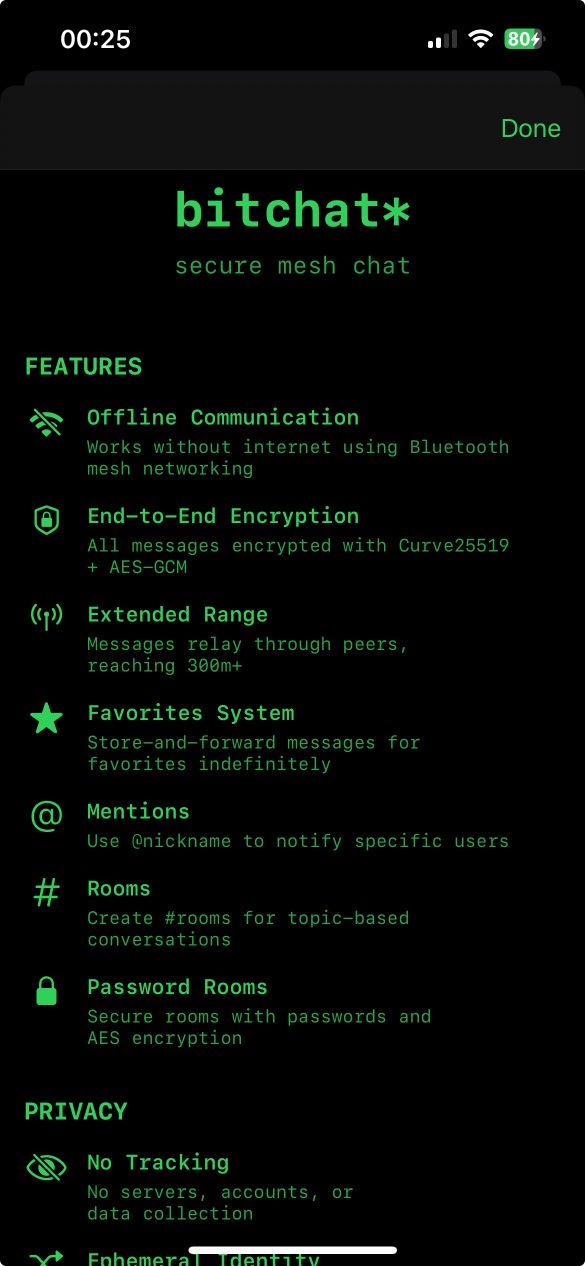
Here’s how it works: phones nearby form local Bluetooth clusters. Messages hop from one device to another as users move through space — kind of like passing digital notes around a room. Certain “bridge” devices link these clusters together, creating a wider mesh. All communication is encrypted and ephemeral by default. Nothing touches the cloud.
Group chats — or “rooms” — can be named with hashtags and protected by passwords. The app also supports store-and-forward messaging, so offline users can still get messages later.
Bitchat echoes the peer-to-peer tools used during the 2019 Hong Kong protests. It’s built to work under pressure — during blackouts, shutdowns, or surveillance.
Future updates will add WiFi Direct support to extend speed and range. But the core idea is clear: communication that’s local, private, and independent.
It fits squarely into Dorsey’s long-running campaign to decentralize everything — from payments to social networks. Like Damus and Bluesky, Bitchat takes another swing at pulling control away from platforms and putting it back in the hands of users.
There’s no big launch fanfare. No buzzwords. Just a weekend project that reflects where Dorsey thinks messaging — and maybe the internet — should be headed.
A year ago, Dorsey announced an expansion of Block’s Bitcoin mining initiative, moving beyond chip design to develop a full-scale mining system aimed at solving key challenges faced by mining operators.