Startup Funding News Today, November 23, 2026: Simplexity Robotics, Acorda, Agon, Sanrise Thera & More
 Nickie Louise
Posted On November 23, 2026
A $100 million bet on Chinese robotics, a $70 million investment in European defense AI, and $55 million for next-generation RNA medicines led the latest startup funding announcements. The three deals show where some of today’s strongest investor conviction lies: in technology that has to work beyond a computer screen, whether on a factory floor, in a defense testing environment, or in a clinical program.
Simplexity Robotics raised $100 million in a pre-Series A round led by Ant Group at a reported $1.6 billion valuation. In London, Agon secured $70 million to build simulation and training systems for autonomous defense technology. Shanghai-based Sanrise Thera closed a $55 million Series B to advance oligonucleotide medicines. Together, those three disclosed rounds account for $225 million in new financing.
The rest of the selection extends across robotic hands, AI-chip cooling, consumer sports robotics, wealth management, digital banking, voice-restoration devices, and financial-crime prevention. The ten announcements span China, the United Kingdom, India, the Philippines, and Australia. Five are Chinese companies, but the selection reflects the strength and timing of the qualifying announcements, not a geographic allocation target.
The funding total needs a qualification: Four rounds were reported directly in U.S. dollars and amount to $238.4 million. Four others were announced in local currencies—₹177 crore, more than RMB 100 million, A$5 million, and £1.8 million—while two did not disclose exact figures. Combining these into a supposedly precise global dollar total would obscure currency conversions and missing data. Today’s story is therefore less about one headline sum and more about what investors are buying.
The Macro Environment: Investors Want AI That Works in the Physical World
The most prominent financings concern different technologies, but they share a practical problem: promising intelligence is not enough. Robots must manipulate real objects repeatedly. Autonomous defense systems need training environments that expose failures before deployment. Drug developers have to turn molecular ideas into results that withstand laboratory and clinical scrutiny. The economic value lies in crossing those gaps, not simply demonstrating a model.
China’s robotics investment is especially visible. Simplexity is building robot models, hardware, and industrial deployment systems; OYMotion sells neural-interface technology and dexterous robotic components; Enhanced Robotics is moving sensing and motion-control technology into consumer sports equipment. These are distinct businesses. Their shared exposure is to the cost of hardware development, manufacturing quality, distribution, and long-term service—expenses that software-only startups can often defer.
Agon’s financing adds a European security dimension. Backing from both venture funds and British government-linked strategic investors reflects demand for domestic capabilities to train and evaluate autonomous systems. Yet simulation can’t replace careful physical testing, and a defense contract isn’t equivalent to recurring commercial revenue. As more money enters this category, buyers will need evidence that simulated performance predicts what systems actually do.
Two other transactions expose the less glamorous infrastructure behind advanced computing. Huahe Jidian is working on diamond-based thermal technology for power-hungry chips, while Sanrise Thera is funding a clinical-stage therapeutic platform. One addresses heat that limits semiconductor performance; the other faces the cost and uncertainty of drug development. Both have technical barriers, but neither can avoid hard commercial proof.
The financing also reaches existing markets with clear spending patterns. Ionic Wealth serves affluent Indian customers, GoTyme’s owners are adding capital to a Philippine digital bank, and Acorda is trying to help banks prevent payment scams. These businesses provide a useful contrast to frontier research: the customers and budgets already exist, while differentiation depends on execution, trust, regulation, and distribution. Monday’s selection does not establish a market-wide fundraising recovery, particularly because several amounts are undisclosed and two investments come from existing corporate owners.
Simplexity Robotics raises $100M to scale embodied AI and industrial robots
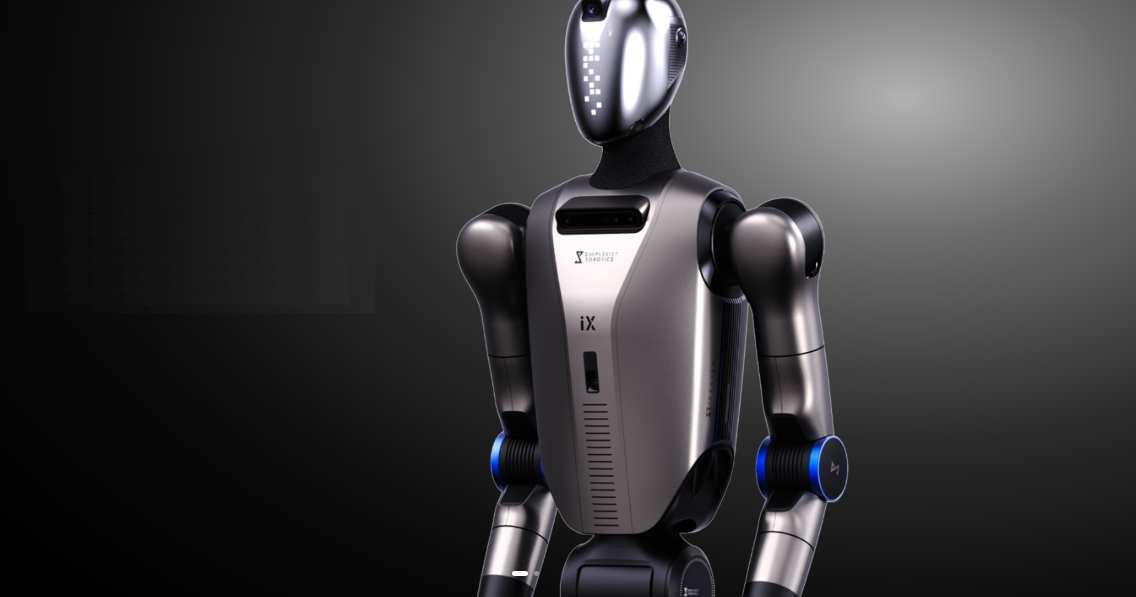
Simplexity Robotics secured $100 million in pre-Series A financing led by Ant Group, with Alibaba Group, Tencent, HongShan Capital, and Lanchi Ventures joining as existing investors. Bloomberg first reported the new financing on November 22 at 6:00 p.m. Eastern time. Chairman and co-founder Wang Kai told the publication the transaction valued the company at $1.6 billion; the report did not confirm the precise pre-money or post-money basis.
The company, founded in 2025 by former Li Auto executives, is building a combination of robot foundation models, machine-learning data systems, and physical hardware. Its products target activities such as moving materials and tending industrial equipment. Simplexity says it delivered its first batch of 100 i7 Pro units earlier this year, a more concrete milestone than a laboratory demonstration, although deliveries alone do not establish customer retention or profitable deployments.
The investment puts recognizable Chinese technology companies behind an effort to bring automation into repetitive industrial work. The challenge is formidable: robots must operate safely across different facilities, and each new application can create demands for fresh training data, specialized components, and maintenance. Investors should watch the number of paying deployments, uptime, and the economics of each installation rather than the valuation alone.
Funding Details
Startup: Simplexity Robotics
Investors: Ant Group (lead); Alibaba Group, Tencent, HongShan Capital, Lanchi Ventures
Amount Raised: $100 million
Total Raised: Previously disclosed approximately RMB 2 billion across earlier rounds, plus the latest $100 million; no currency-reconciled lifetime total
Funding Stage: Pre-Series A, as described in original reporting
Funding Date: November 22, 2026 (first publicly reported within the window)
Headquarters: Hangzhou, China; R&D operations also reported in Beijing, Shanghai, and Suzhou
Sector: Embodied AI / industrial robotics
Valuation: $1.6 billion reported; pre/post-money basis not specified in original report
Agon raises $70M in funding to train and test European defense AI

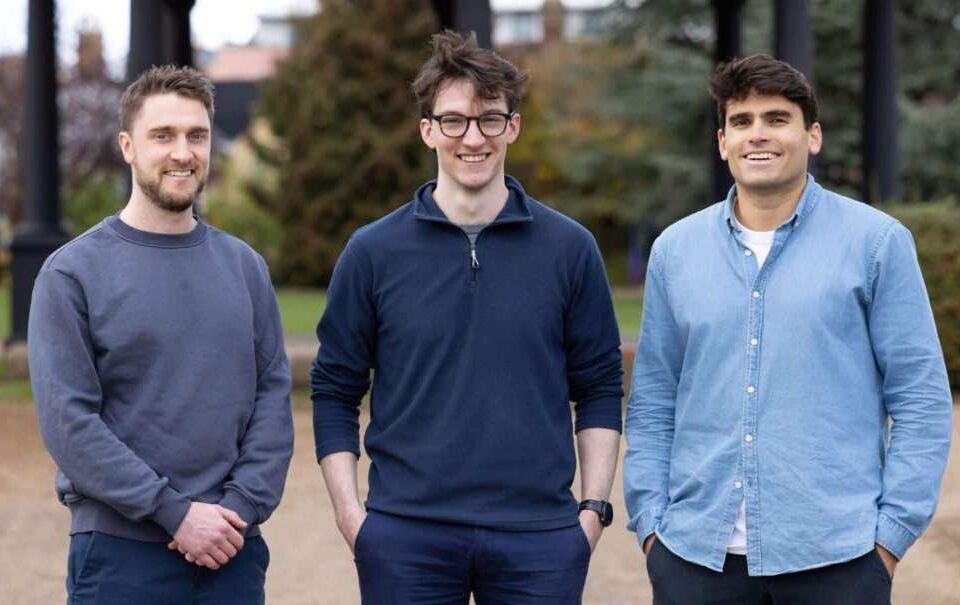
London-based Agon announced a $70 million Series A led by Northzone, taking lifetime financing to $100 million and valuing the company at $450 million. Existing investors include Lakestar, XYZ, Lux Capital, Global Founders Capital, and Speedinvest. The UK Sovereign AI Fund and the National Security Strategic Investment Fund also invested, alongside individual backers including Roelof Botha and Unity founder David Helgason. The company released the news on November 23 at 8:00 a.m. London time, within the reporting window.
Agon is developing a synthetic testing environment in which autonomous defense systems can be trained against changing threats. Founded by Tristam Constant and Junaid Hussain, it has teams in London and Berlin. The intended customers are organizations that must evaluate drones, robots, and other autonomous equipment in situations too expensive, rare, or dangerous to reproduce repeatedly in physical tests.
The business case rests on shortening development cycles and finding failures early. Government-linked investment is a strategic signal, but it does not settle the technical question. Simulation results need to predict real-world performance, and sensitive customers will care about security, independent validation, and who controls the data. That is where Agon will need to convert its impressive early fundraising into durable contracts.
Funding Details
Startup: Agon
Investors: Northzone (lead); Lakestar, XYZ, Lux Capital, Global Founders Capital, Speedinvest, UK Sovereign AI Fund, NSSIF, and individual investors
Amount Raised: $70 million
Total Raised: $100 million
Funding Stage: Series A
Funding Date: November 23, 2026
Headquarters: London, United Kingdom; Berlin office
Sector: Defense AI/simulation / autonomous systems
Valuation: $450 million, company-reported
Sanrise Thera raises $55M in funding to advance RNA-based medicines
Sanrise Thera, also known in Chinese as Angtuo Biopharma, disclosed a $55 million Series B on November 23 in China. Honghui Capital and Longpan Investment jointly led the round, with other institutional and industry investors participating. Existing backer Xingze Capital also participated. No valuation was disclosed.
The Shanghai biotechnology company is developing oligonucleotide medicines—short strands of nucleic acids intended to affect disease processes at the molecular level. Management says its DARGER technology platform supports several differentiated therapeutic programs, with core candidates progressing into clinical development. Those descriptions are company claims about research and pipeline activity; they are not evidence of approved products or successful patient outcomes.
Sanrise illustrates why drug-development funding cannot be judged by software metrics. Money buys scientific experiments, manufacturing work, regulatory preparation, and clinical studies, often long before product revenue is possible. Investors are paying for the possibility that the platform yields multiple viable medicines. The next meaningful proof points will be safety, efficacy, and whether its programs address diseases better than competing therapeutic approaches.
Funding Details
Startup: Sanrise Thera (Angtuo Biopharma)
Investors: Honghui Capital and Longpan Investment (co-leads); Xingze Capital and other undisclosed participants
Amount Raised: $55 million
Total Raised: Not disclosed on a reconciled lifetime basis
Funding Stage: Series B
Funding Date: November 23, 2026 (announced in China; November 22 Eastern time)
Headquarters: Shanghai, China
Sector: Biotechnology/oligonucleotide therapeutics
Valuation: Not disclosed
OYMotion raises undisclosed Series D funding for robotic hands and neural interfaces
OYMotion announced a Series D investment from China Ordnance Shunjing, Changjiang Capital, and Optics Valley-related venture investors on November 23. The company did not release a verifiable exact financing amount in its announcement. Secondary reporting describes a substantial yuan-denominated round, but that description should not be taken as a precise figure. Its previous RMB 150 million Series C1 from March 2026 is a separate transaction and is not included in today’s tally.
The Shanghai company originally developed technologies that interpret muscle and brain signals for medical and assistive products. It now also supplies dexterous robotic hands and sensing systems for embodied AI. OYMotion says its product family serves nearly 200 robotics companies and that its Zhuhai factory has significant annual manufacturing capacity. Those operating figures are company-reported, not independently audited.
Its development shows why component suppliers could benefit from robotics investment without building complete humanoid machines. A sophisticated robotic hand, accurate sensor, or control system can sell to multiple equipment makers. The risk is that highly customized parts may be expensive to manufacture and integrate; investors will want to see sustained orders, gross margins, and how much engineering is required for each new customer.
Funding Details
Startup: OYMotion (傲意科技)
Investors: China Ordnance Shunjing, Changjiang Capital, Optics Valley-linked venture investors, and others
Amount Raised: Not disclosed
Total Raised: Not disclosed; earlier Series C1 was RMB 150 million and is not counted as new
Funding Stage: Series D
Funding Date: November 23, 2026 (China local time)
Headquarters: Shanghai, China
Sector: Robotic components / neural interfaces/rehabilitation technology
Valuation: Not disclosed
Ionic Wealth raises ₹177 crore to expand India’s private wealth services
India’s Ionic Wealth raised ₹177 crore from its parent, Angel One, and existing investors, including business families. The investment brings reported cumulative capital to approximately ₹466 crore since operations began in 2024. The deal was described as additional growth financing rather than a newly labeled venture series. No company valuation was disclosed.
Based in Mumbai, Ionic provides investment and wealth-management services for affluent customers. The company is expanding its service offering and plans to use more technology in client operations and portfolio services. It has reported growth in assets under management and high-net-worth customer relationships, though headline assets under management should not be confused with revenue or profit.
The transaction is notable precisely because it is not a conventional outside-led VC round. Angel One is allocating more capital to a controlled business in a market where trust, regulatory obligations, adviser quality, and customer acquisition can be as important as software. The commercial test is whether larger assets under management translate into recurring fee income without a proportional increase in costs.
Funding Details
Startup: Ionic Wealth
Investors: Angel One (parent) and existing investors, including business families
Amount Raised: ₹177 crore
Total Raised: Approximately ₹466 crore, reported
Funding Stage: Growth equity/parent and existing-investor financing; no series label disclosed
Funding Date: November 23, 2026 (first reported)
Headquarters: Mumbai, India
Sector: Fintech/wealth management
Valuation: Not disclosed
Enhanced Robotics raises over RMB 100M to commercialize AI-powered sports hardware
Shenzhen-based Enhanced Robotics announced a Series B of more than RMB 100 million, led by Guoke Investment, according to Chinese financial reporting released November 23. The proceeds are intended for research, additional manufacturing capacity, and overseas sales and service channels. Other participants in the new round were not identified clearly enough to list as confirmed new investors.
Founded in 2018, the company previously developed rehabilitation exoskeletons before applying its motion-control and sensing expertise to consumer sports equipment. Its Tenniix product is an AI-enabled tennis-training robot that aims to make practice more consistent and less dependent on a human training partner. Earlier backing reportedly included investors such as XbotPark-related funds and HongShan; those historical investments should not be confused with the latest round.
The market proposition is unusually tangible for an AI company: customers can see whether a product delivers useful practice and whether its reliability justifies its price. The harder parts are manufacturing, distribution, repairs, and sustained consumer demand. Expanding abroad could increase sales opportunities, but it could also expose a relatively young product line to costly after-sales obligations and local competition.
Funding Details
Startup: Enhanced Robotics
Investors: Guoke Investment (lead); other latest-round participants not fully disclosed
Amount Raised: More than RMB 100 million
Total Raised: Several hundred million RMB reported historically; exact cumulative amount not independently reconciled
Funding Stage: Series B
Funding Date: November 23, 2026 (China local time)
Headquarters: Shenzhen, China
Sector: AI sports hardware/robotics / motion control
Valuation: Not disclosed
GoTyme Bank raises $13.4M from its owners to support Philippine digital banking
GoTyme Bank received an additional $13.4 million capital injection from its joint-venture owners, according to financing coverage published November 23. Tyme Investments contributed $7.1 million, and JG Summit Holdings contributed $6.3 million. This was shareholder growth capital, not a newly syndicated VC round, and it should be interpreted accordingly.
GoTyme combines a digital banking platform with physical retail distribution in the Philippines. Customers can open accounts through in-store kiosks, giving the bank a distribution channel an app-only rival may lack. The company has reported more than 11 million customers and substantial deposits. Customer accounts and deposits, however, do not translate into earned revenue or profitability.
The investment highlights a common tension in financial technology: gaining customers and deposits can be expensive even after a bank reaches meaningful scale. Existing owners appear willing to finance that transition, but returns depend on credit quality, operating costs, regulatory compliance, and the economics of payments and lending. Unlike Simplexity’s outside-led venture round, this capital is best read as continued owner support.
Funding Details
Startup: GoTyme Bank
Investors: Tyme Investments ($7.1 million); JG Summit Holdings ($6.3 million)
Amount Raised: $13.4 million in shareholder capital
Total Raised: Not disclosed on a fully reconciled lifetime basis
Funding Stage: Shareholder growth-capital injection; not a conventional priced VC series
Funding Date: November 23, 2026 (first reported)
Headquarters: Manila, Philippines
Sector: Digital banking/fintech
Valuation: Not disclosed
Huahe Jidian raises undisclosed Series B+ funding for AI-chip cooling technology
Huahe Jidian, a semiconductor-materials company based in Xiamen, announced Series B+ financing involving Dongshan Industrial Investment, the investment arm of Dongshan Precision, together with Fujian Jintou and Xingzheng Capital. Existing investor Wanjiu Technology also increased its support. The new financing amount and valuation were not disclosed.
The company develops diamond-based heat-management materials and components for high-performance semiconductors. As AI processors become more power-dense, moving heat away from chips is an increasingly difficult engineering challenge. Huahe Jidian describes technologies combining diamond materials with semiconductor packages and cooling systems, and says several products have entered customer validation or production. These technical and commercial milestones are reported by the company.
This shows how demand for AI infrastructure can create opportunities far from model development. Even faster processors offer limited practical value if the packaging and cooling architecture cannot sustain their power requirements. A strategic investor with manufacturing and data-center relationships may help the company reach buyers, but the decisive evidence will be yield, long-term reliability, cost per unit, and repeat orders.
Funding Details
Startup: Huahe Jidian (化合积电; transliterated name)
Investors: Dongshan Industrial Investment, Fujian Jintou, Xingzheng Capital, Wanjiu Technology
Amount Raised: Not disclosed
Total Raised: Not disclosed
Funding Stage: Series B+
Funding Date: November 23, 2026 (China local time)
Headquarters: Xiamen, China
Sector: Semiconductor materials / advanced chip cooling
Valuation: Not disclosed
Laronix raises A$5M in funding to bring voice-restoration devices to more patients
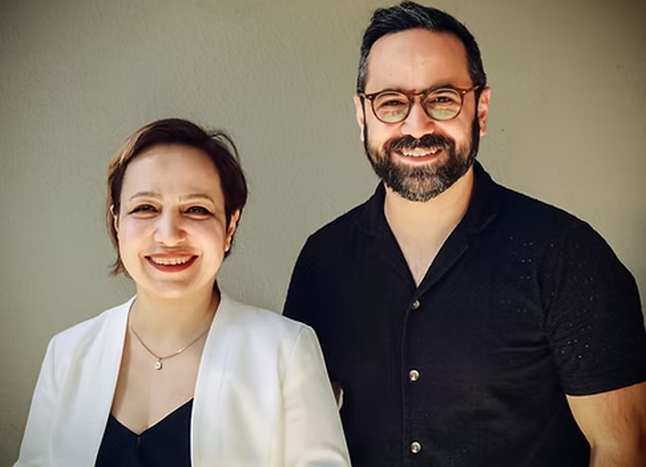
Australian medical-technology startup Laronix has raised A$5 million in pre-Series A funding from Seefeld Investors and 12 Ventures, along with individual investors Kristy Chong, Elaine Saunders, and Peter Blamey. The Brisbane company plans to expand in Australia, the United States, and Europe and advance a next-generation voice-restoration device. Its valuation and lifetime financing were not disclosed.
Founded by siblings Farzaneh and Mousa Ahmadi, Laronix makes technology for people whose ability to speak has been impaired or lost. Its AVA Voice device combines assistive hardware and voice technology. The company says its newer approach can personalize synthesized speech from a short recording and that it has piloted the technology with more than 50 patients and clinicians across ten hospitals. Those figures describe company-reported experience rather than a controlled clinical outcome study.
The commercial appeal is concrete: restoring useful speech can have considerable value to patients and healthcare providers. But medical products must be assessed for usability, patient safety, access, reimbursement, and real-world performance over time. International expansion adds regulatory and distribution requirements, which makes this a hardware-and-healthcare execution challenge rather than simply an AI software release.
Funding Details
Startup: Laronix
Investors: Seefeld Investors, 12 Ventures, Kristy Chong, Elaine Saunders, Peter Blamey
Amount Raised: A$5 million
Total Raised: Not disclosed
Funding Stage: Pre-Series A
Funding Date: November 23, 2026 (Australia local time)
Headquarters: Brisbane, Australia
Sector: Medical technology / assistive devices/voice AI
Valuation: Not disclosed
Acorda raises £1.8M in funding to help banks spot scams before money moves
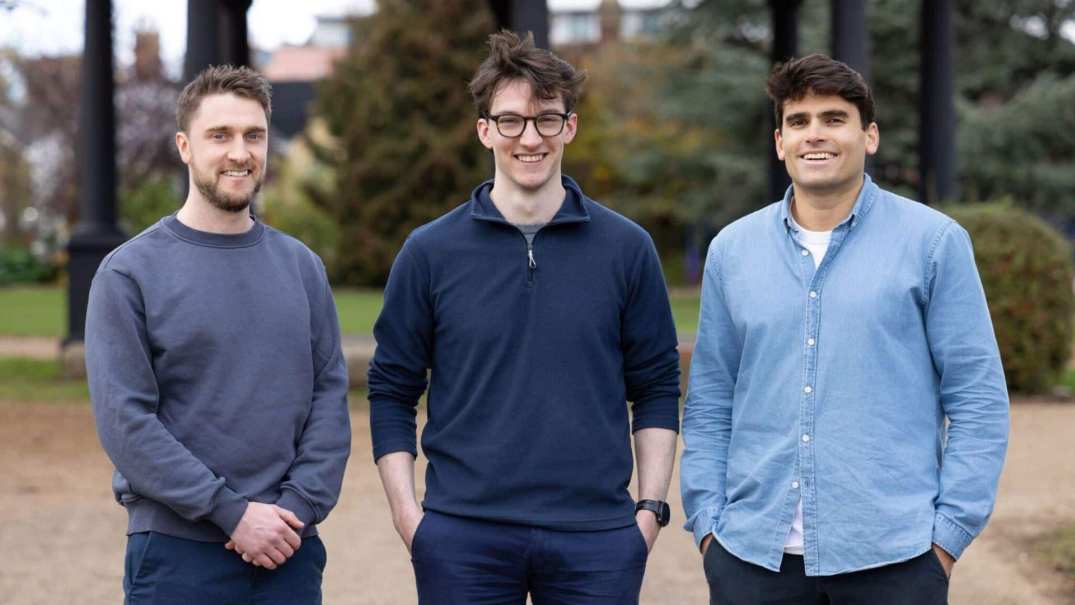
London-based Acorda raised £1.8 million in pre-seed funding led by Concept Ventures. NFG Ventures and individual backers with backgrounds at Monzo, Revolut, Coinbase, and OakNorth also participated. Founded in October 2026 by former Monzo employees Jhamat Mahbubani, Sam Kelsey, and Robert Parrish, the company is developing a shared source of fraud-risk information for banks and payment providers.
The problem is familiar to anyone who has worked in payments: a bank may know a great deal about its customer but relatively little about the person or business receiving the money. Acorda wants participating firms to exchange relevant warning signals before completing a transfer, particularly in scams where victims are persuaded to authorize payments themselves. The company says it is testing the approach with three large payment businesses, but has not published independent trial results or disclosed contracted revenue.
Acorda is one of the smallest raises in the selection, yet the commercial problem is clear and persistent. Its major obstacle may not be machine learning. Fraud data is sensitive, providers have competing incentives, and network effects are difficult to establish before enough institutions participate. The business will need to show it can reduce losses without creating excessive false positives or privacy risks.
Funding Details
Startup: Acorda
Investors: Concept Ventures (lead); NFG Ventures and individual investors from the financial-technology sector
Amount Raised: £1.8 million
Total Raised: £1.8 million publicly disclosed
Funding Stage: Pre-seed
Funding Date: November 23, 2026
Headquarters: London, United Kingdom
Sector: Fintech/payment fraud prevention/cybersecurity
Valuation: Not disclosed
What Today’s Funding Activity Reveals
The physical-AI supply chain is attracting money at several levels. Simplexity works on the whole robot, OYMotion develops hands and sensing systems, Enhanced Robotics commercializes motion-control technology through sports equipment, and Huahe Jidian targets the thermal limits of AI computing hardware. These are not competing versions of one product. They represent different positions in a costly chain from computing to physical action.
Defense and life sciences are financing validation-intensive systems. Agon has to prove the value of simulated training, while Sanrise must demonstrate clinical outcomes. Their capital needs differ, but each depends on evidence that software adoption metrics can’t replace. Large raises can advance development without eliminating technical risk.
Existing distribution offers another route to growth. Ionic has support from Angel One, GoTyme has access to retail kiosks through its owners, and Acorda is trying to build a network among payments companies. None should be valued purely as a generic AI application. Established financial relationships, permissions, and customer access could be more defensible than a software feature.
The disclosed amounts are not directly comparable. Simplexity’s and Agon’s outside-led rounds are different from GoTyme’s owner capital. Two Chinese hardware companies did not publish precise amounts. Four announcements used non-dollar currencies. As a result, reporting a single precise global funding total or claiming a clean percentage of money devoted to robotics would be misleading.
The geographic distribution is a snapshot, not a forecast. Five of the qualifying announcements originated in China, two in the UK, and one each in India, the Philippines, and Australia. This reflects a Sunday-to-Monday reporting window and the verified first disclosures available at the cutoff. It does not, by itself, establish that capital has permanently shifted away from the United States or Europe.
Startup Funding Table
| Startup | Amount Raised | Sector | Funding Stage | Lead/Key Investors | Country |
|---|---|---|---|---|---|
| Simplexity Robotics | $100M | Embodied AI/robotics | Pre-Series A | Ant Group; Alibaba; Tencent | China |
| Agon | $70M | Defense AI/simulation | Series A | Northzone; Lakestar; UK strategic funds | United Kingdom |
| Sanrise Thera | $55M | RNA therapeutics | Series B | Honghui Capital; Longpan Investment | China |
| OYMotion | Not disclosed | Robotic hands / neural interfaces | Series D | China Ordnance Shunjing; Changjiang Capital | China |
| Ionic Wealth | ₹177 crore | Wealth management | Growth equity; stage undisclosed | Angel One; existing investors | India |
| Enhanced Robotics | >RMB 100M | AI sports robotics | Series B | Guoke Investment | China |
| GoTyme Bank | $13.4M | Digital banking | Shareholder capital | Tyme Investments; JG Summit Holdings | Philippines |
| Huahe Jidian | Not disclosed | Semiconductor cooling | Series B+ | Dongshan Industrial Investment; Fujian Jintou | China |
| Laronix | A$5M | Voice-restoration medtech | Pre-Series A | Seefeld Investors; 12 Ventures | Australia |
| Acorda | £1.8M | Payments fraud prevention | Pre-seed | Concept Ventures; NFG Ventures | United Kingdom |
Funding note: The four dollar-denominated disclosures total $238.4 million. That subtotal deliberately excludes the non-dollar rounds and those without exact amounts. GoTyme and Ionic are backed by existing corporate/shareholder investors, not newly assembled outside VC syndicates. Reported valuations are not the same as capital raised.
Strategic Takeaways for Founders and Investors
- Industrial AI needs proof in the field. Simplexity’s initial robot deliveries are worth watching, but buyers and investors should examine paid deployments, uptime, service costs, and how many tasks a robot can handle without expensive retraining.
- Component businesses may be better positioned than the most visible robot brands. OYMotion’s dexterous hands and sensors can potentially reach multiple manufacturers. The opportunity depends on becoming a trusted supplier without letting customization eat into margins.
- Strategic investors can offer distribution and expertise, but require scrutiny. Huahe Jidian’s relationship with Dongshan’s industrial ecosystem may help with manufacturing and customer access. That benefit should be measured through actual contracts and production results.
- Simulated performance needs physical validation. Agon’s training environments could reduce the cost of testing autonomous systems. Their value will ultimately depend on how well they predict real performance and how securely they handle customer data.
- A medical platform is a portfolio of scientific bets, not a finished product. Sanrise’s $55 million provides additional room for clinical development. The relevant milestones are study data and regulatory progress, not the number of potential targets described by a platform.
- Hardware businesses need a plan for the service after the sale. Enhanced Robotics and Laronix sell devices whose value depends on continuing reliability and customer support. International distribution can bring repair, warranty, and compliance costs that are easy to overlook in a pitch deck.
- Corporate-backed financing tells a different story from independent venture funding. Angel One’s investment in Ionic and the owners’ top-up at GoTyme indicate continued strategic support. They do not necessarily establish the price at which outside investors would buy equivalent stakes.
- A customer count is not a profit measure. GoTyme’s scale and Ionic’s managed assets are useful indicators, but the more important questions involve fee income, credit quality, retention, and the marginal cost of servicing each customer.
- For fintech security, the hard problem may be cooperation, not code. Acorda needs banks and payment providers to share useful signals under appropriate safeguards. Until the network has enough participants and independently measured results, fraud reduction remains a proposition to test.
- A precise-looking funding total can create false confidence. With multiple currencies, undisclosed amounts, and different capital structures, it is better to report a clearly defined subtotal than a larger number built from questionable assumptions.
Conclusion
The November 23 funding announcements show investor interest in technologies that must work under demanding real-world conditions. Simplexity is building industrial robots. Agon wants to make autonomous defense systems safer and faster to evaluate. Sanrise is taking RNA medicines through expensive scientific development. Other investors are financing the components, services, and distribution networks that could make advanced technology commercially useful.
It also reminds us that one day’s capital flows cannot establish an industry-wide trend. Several rounds did not disclose exact amounts, and the selection includes shareholder financing alongside conventional venture capital. What is clear is more specific: investors will back difficult technology when they see a credible path from technical capability to measurable customer value.