
Top Tech News Today, November 20, 2026: Anthropic Stock Sinks, Apple’s AI Agent, GTA VI’s $3.79 Billion Debut, Nvidia Subpoena & More
 Nickie Louise
Posted On November 20, 2026
It’s Friday, November 20, 2026, and the tech world is closing the week with record-breaking deals, a Wall Street shakeup, and fresh cybersecurity threats—from Anthropic’s turbulent stock debut and GTA VI’s historic launch to Nvidia’s deepening regulatory troubles and the intensifying global AI race.
The technology industry is closing Friday with a sharp contrast between record-breaking commercial achievements and growing financial uncertainty. Anthropic’s shares have come under heavy selling pressure on their second day of trading, just as the Claude developer completes a historic $119.5 billion financing package. The selloff is raising fresh questions about how investors value frontier AI companies and whether their enormous computing commitments can translate into sustainable profits.
Meanwhile, Grand Theft Auto VI has delivered an extraordinary opening. Rockstar Games confirmed that its long-awaited title generated $3.79 billion in first-day retail sales, exceeding preliminary estimates and establishing a new record for an entertainment launch.
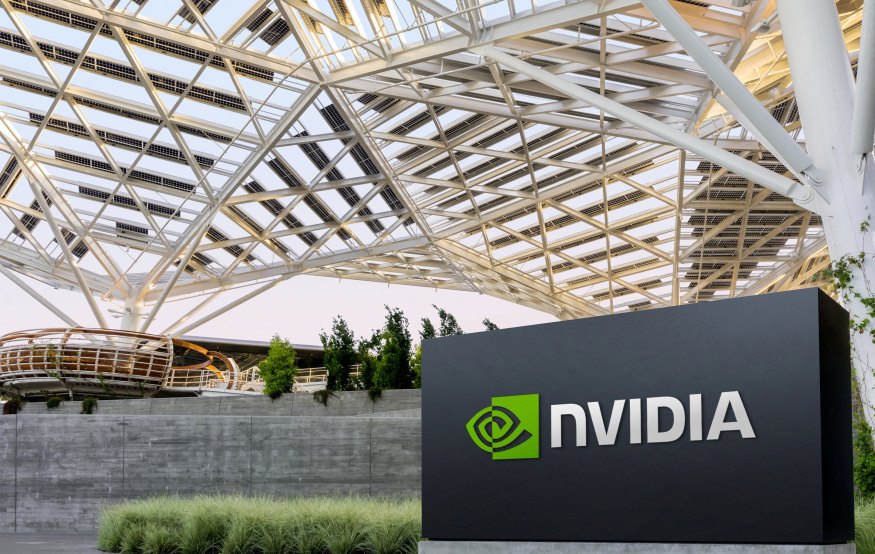
Nvidia is facing another serious challenge. California’s attorney general has subpoenaed the AI chipmaker to investigate whether advanced processors or confidential information reached China and whether the company misled investors. The inquiry adds regulatory pressure to an already difficult leadership transition.
Cybersecurity is also dominating the evening’s headlines. Researchers have disclosed critical vulnerabilities in NGINX, one of the world’s most widely used web servers, including flaws that could allow attackers to execute commands on vulnerable systems. The discovery raises urgent concerns for organizations operating websites, cloud applications, and internet-facing infrastructure.
Elsewhere, Apple is developing an autonomous AI agent that can operate applications, browse websites, and perform complex tasks. Samsung is reorganizing its semiconductor leadership to compete more effectively in AI memory chips, while Google has selected Blue Origin to launch experimental orbital AI computing infrastructure in 2029.
Across the broader industry, Alibaba’s AI cloud business continues growing despite heavy research costs, regulators are tightening controls on mobile software distribution, and startups are introducing new tools for agent-based commerce, data access, and business operations.
Friday’s developments suggest AI is no longer judged solely by technological capability or the amount of money it attracts. Investors, customers, and regulators increasingly want evidence of financial discipline, dependable infrastructure, stronger security, and real-world commercial value.
Here are the 15 biggest technology stories shaping the day.
Anthropic Stock Plunges Toward $83 IPO Price as $119.5 Billion Financing Closes
Anthropic’s shares fell sharply Friday, erasing much of the excitement surrounding the Claude developer’s record-breaking Wall Street debut just one day earlier. The stock declined approximately 13.5% in midday trading to slightly above $84, approaching its $83 initial public offering price. Anthropic opened Thursday at $111.50 and closed its first session at $97.17, giving investors an early indication of the volatility surrounding frontier AI valuations. Despite the selloff, the company said it completed its expanded IPO, including the full exercise of underwriters’ additional share-purchase option. The public offering generated approximately $93.5 billion in gross proceeds, while a separate private placement involving major technology companies raised another $26 billion. Combined gross proceeds reached approximately $119.5 billion.
The financing gives Anthropic enormous resources to expand its computing infrastructure, develop more capable models, and compete for enterprise customers. However, the stock’s sharp decline illustrates how difficult it is for investors to determine how much frontier AI businesses should be worth. Anthropic is growing quickly, but developing and operating advanced models requires substantial ongoing investment. Its public-market performance could influence sentiment toward OpenAI, major semiconductor manufacturers, cloud infrastructure providers, and other AI companies seeking capital. The company has secured an extraordinary amount of financing, but investors are already demanding stronger evidence that revenue growth can support its long-term valuation. Friday’s trading also suggests that enthusiastic IPO demand does not guarantee sustained support for its shares.
Why It Matters: Anthropic’s volatile debut is becoming an early public-market test of whether frontier AI valuations can withstand scrutiny of growth, profitability, and infrastructure spending.
Source: TechStartups via CNBC
Grand Theft Auto VI Shatters Entertainment Records With $3.79 Billion in First-Day Sales
Rockstar Games confirmed Friday that Grand Theft Auto VI generated $3.79 billion in worldwide retail sales on its November 19 launch day, establishing a new record for an entertainment release. The figure significantly exceeds earlier estimates from market research firm Sensor Tower, which had placed opening-day sales at approximately $2.36 billion. Rockstar and parent company Take-Two Interactive reported that 32.5 million copies were sold before release, setting a cross-platform preorder record. The game launched for major consoles after years of anticipation, returning players to Vice City, Rockstar’s fictional interpretation of Miami. GTA VI follows two central characters, Lucia and Jason, in a story involving crime and their relationship. The release marks the first mainline Grand Theft Auto installment in 13 years.
The extraordinary opening demonstrates the commercial strength of major gaming franchises and the growing importance of interactive entertainment. Grand Theft Auto V, released in 2013, generated approximately $1 billion in retail sales during its first three days and has sold more than 230 million copies over its lifetime. GTA VI’s launch could influence console sales, digital distribution revenue, streaming activity, and demand for gaming accessories. For Take-Two, the immediate commercial achievement is substantial, but the longer-term opportunity will depend on sustained sales and future online services. The title also illustrates how major games have become global cultural events capable of attracting audiences and spending at a scale comparable to the largest entertainment releases. Its eventual profitability will depend on development, distribution, marketing, and ongoing operating costs.
Why It Matters: GTA VI’s record launch establishes a new benchmark for commercial entertainment releases and reinforces gaming’s importance in the global digital economy.
Source: Rockstar Games / Take-Two Interactive
Trump Threatens Heavy Taxes on U.S. Companies Building AI Data Centers Overseas
President Donald Trump said Friday that his administration would seek to penalize American technology companies that build data centers outside the United States, potentially creating a major obstacle to international AI infrastructure expansion. Speaking at a White House news conference, Trump said companies constructing computing facilities overseas could face substantial taxes or restrictions. He argued that American AI infrastructure should remain within the country rather than give Chinese competitors access to advanced computing capacity. The remarks came after his diplomatic trip to Asia and followed recently announced American semiconductor export restrictions targeting overseas data-center arrangements. Trump did not provide specific tax rates, enforcement procedures, proposed legislation, or an implementation timetable. He also acknowledged that administration officials had not previously been informed of the proposal.
The announcement introduces another layer of uncertainty for cloud providers and data-center developers expanding internationally. Companies including Amazon, Microsoft, Google, Equinix, and Digital Realty operate infrastructure across multiple countries to serve local customers, reduce network latency, and comply with data residency requirements. Broad restrictions could complicate those operations and affect planned investments. At the same time, domestic data-center projects are facing opposition over electricity consumption, utility costs, water use, and potential environmental impacts. Trump encouraged American communities to negotiate financial benefits from developers rather than reject projects outright. It remains unclear whether the administration can implement the proposed penalties under existing executive authority or would need Congress to act. Until formal measures are introduced, the remarks represent a policy proposal rather than an enforceable restriction.
Why It Matters: The proposed penalties could fundamentally change how American technology companies expand AI computing infrastructure globally, while adding uncertainty to international data-center investment.
Source: Reuters
California Subpoenas Nvidia Over Whether AI Chips or Confidential Information Reached China
California Attorney General Rob Bonta has issued an investigative subpoena to Nvidia, seeking information about whether the semiconductor company or its former CEO, Jensen Huang, allowed advanced chips or confidential information to reach China. The subpoena, announced Thursday and reported extensively on Friday, follows allegations involving Huang’s relationship with a woman suspected by American officials of having connections to Chinese intelligence. California’s investigation will also examine whether Nvidia misled shareholders or the public about potential risks involving semiconductor exports or confidential information. The state has not established that Nvidia violated the law, improperly transferred restricted processors, or compromised corporate information. The subpoena is an information-gathering step, not a formal finding of misconduct.
The investigation introduces another challenge for Nvidia as the company undergoes a major leadership transition following Huang’s resignation. Nvidia’s processors remain central to global AI infrastructure, making export compliance and customer oversight particularly important. The company already operates under extensive federal restrictions governing advanced chip sales to certain Chinese customers. Questions about how equipment reaches end users, including through intermediaries and overseas data centers, could affect relationships with cloud providers and international regulators. Huang has agreed to participate in congressional interviews scheduled for December 1, with Nvidia General Counsel Tim Teter expected to appear the following day. The California investigation will proceed separately from those congressional inquiries. Nvidia has not publicly established that the allegations have merit, and the outcome remains uncertain.
Why It Matters: California’s subpoena increases legal and governance pressure on Nvidia while drawing fresh attention to semiconductor export enforcement and corporate disclosure obligations.
Source: California Department of Justice
Critical NGINX Vulnerabilities Put Millions of Web Servers Under Security Scrutiny
Cybersecurity researchers are urging organizations to update vulnerable NGINX web servers after disclosing ten security flaws, including five serious memory-corruption vulnerabilities collectively known as nginx2root. F5 and the NGINX development team released fixes on November 18, while Cloudflare published additional technical analysis Friday explaining how the weaknesses could affect internet-facing infrastructure. Under certain configurations, unauthenticated attackers could exploit the flaws to crash NGINX processes or execute unauthorized commands on vulnerable servers. Researchers also identified a separate Linux kernel vulnerability that could potentially allow attackers who already obtained code execution to escalate their privileges to root, including from within some container environments. As of Cloudflare’s November 20 analysis, the researchers had not confirmed exploitation of the nginx2root flaws in the wild.
The vulnerabilities are significant because NGINX is widely used to serve websites, manage application traffic, and operate reverse proxies across cloud environments. A successful compromise could affect business applications, stored information, and connected infrastructure. The recommended fixes include NGINX Open Source versions 1.30.7 and 1.31.9, with separate updates for supported NGINX Plus releases. Organizations must examine their configurations because the vulnerabilities do not affect every deployment equally. Cloudflare says properly configured origins protected by its proxy can receive additional protection against certain attack paths, although customers should still install vendor fixes. The discovery also highlights the increasing speed of vulnerability research, including work supported by automated security analysis. Widely deployed infrastructure software remains a particularly attractive target because a single flaw can potentially affect large numbers of organizations.
Why It Matters: The NGINX vulnerabilities illustrate how weaknesses in foundational internet software can create widespread exposure across websites, cloud services, and enterprise infrastructure.
Source: Cloudflare
Signal Blocks AI Assistants From Reading Private Chats, Restricts Screenshots on iPhones
Encrypted messaging platform Signal introduced new privacy protections Friday designed to prevent AI assistants embedded in mobile operating systems from reading private conversations displayed on users’ screens. The company is restricting screenshots in its iPhone app and adding protections on supported Android devices when AI assistants try to access screen content. Signal’s iOS update includes a setting called Block Siri AI, enabled by default, which prevents screenshots inside the application and limits information visible through certain system interfaces. Users can disable the setting if they need screenshot functionality. Signal said the changes respond to the expanding capabilities of operating-system AI agents, which increasingly interact with applications and interpret information visible on devices. The company acknowledged that the protections are incomplete and may not address every way AI systems access information.
The move exposes a growing conflict between AI functionality and the privacy expectations of encrypted communications. End-to-end encryption protects message contents during transmission, but once a conversation appears on a device screen, software with sufficient permissions may be able to read it. Signal argues that operating-system providers need clearer controls that let applications prevent AI agents from accessing sensitive information without disabling unrelated functions. The company has called on Apple, Google, and Microsoft to provide stronger developer protections and greater transparency about what their agents can see. The debate could extend beyond messaging to banking, healthcare, and other applications that handle confidential information. For AI developers, the challenge is offering useful assistance without assuming that permission to operate a device automatically grants access to every piece of information displayed on it.
Why It Matters: Signal’s new protections demonstrate the growing privacy conflict between autonomous AI agents and applications designed to protect sensitive user information.
Source: Signal
Apple Developing Autonomous AI Agent to Control Macs, Browse Websites, and Run Applications
Apple is developing an autonomous AI assistant that can operate computers, navigate websites, use applications, and write software, according to company recruitment materials identified in reporting published Thursday and updated Friday. A job listing sought a senior engineering manager to oversee development of a system that could coordinate tasks across browsers, documents, command-line tools, and application interfaces. The project appears intended to move beyond conventional Siri interactions by letting AI do more complex work on a user’s behalf. The recruitment materials also emphasized privacy and the ability to manage multi-step tasks across different software environments. Bloomberg reported that Apple subsequently removed the listing from its website. Apple has not formally announced the product, disclosed a release date, or publicly demonstrated its capabilities.
The development suggests Apple is preparing to compete more directly with OpenAI, Anthropic, Google, and Meta in the emerging market for computer-use agents. Such systems can potentially perform tasks involving files, documents, scheduling, research, and software development without requiring people to manually operate every application. Apple has advantages in controlling its operating systems, hardware, and privacy architecture, but those advantages also create responsibility for careful permission management. An agent that can operate a computer may encounter confidential messages, personal documents, financial information, and sensitive account credentials. Apple will need to demonstrate that its approach offers useful automation while retaining user control and protecting personal data. The reported project also illustrates the industry’s shift from chat-based assistance toward AI systems that complete tasks across multiple applications.
Why It Matters: Apple’s apparent investment in autonomous computer-use technology could intensify competition over the next generation of desktop interfaces and AI assistants.
Source: Bloomberg
Google Brings Computer-Control Capabilities to Gemini on Mac, Expanding the AI Agent Race
Google has begun rolling out computer-use capabilities in its Gemini application for macOS, allowing the AI assistant to operate supported applications, navigate websites, and complete multi-step tasks on users’ behalf. Announced Thursday, the feature lets Gemini interact with a Mac’s desktop environment rather than limiting its work to conversations inside the assistant. Google says users can choose which applications Gemini may access and monitor actions through a live preview. Potential uses include organizing information, completing forms, preparing documents, and performing tasks that require moving between websites and local software. The initial rollout is available in English to eligible users in the United States. Google has not established that the system can reliably complete every desktop task or interact with all third-party applications.
The launch brings Google further into competition with AI developers seeking to turn conversational assistants into software operators. Computer-use agents are attractive because they may work with existing applications without requiring developers to create specialized integrations for every task. However, that flexibility also introduces security concerns. An agent operating a desktop could encounter confidential files, browser sessions, authentication credentials, or information belonging to other applications. Google is emphasizing user controls and visibility into agent behavior, but businesses must still assess whether they can trust autonomous actions in sensitive workflows. The rollout also arrives as Apple explores changes to application permissions and computer access on macOS. The competing developments suggest desktop AI is entering a phase where permission management, reliability, and user oversight will matter as much as the range of tasks an assistant can perform.
Why It Matters: Gemini’s Mac capabilities bring autonomous AI closer to everyday computer use while raising new questions about privacy, permissions, and dependable task execution.
Source: The Verge
Samsung Names New Memory Chip Leadership as AI Demand Drives Record Semiconductor Profits
Samsung Electronics announced a major leadership reshuffle Friday, appointing Sang Joon Hwang as president and head of its memory business as demand for AI-related semiconductors continues to grow. Hwang previously oversaw memory development, including dynamic random-access memory and high-bandwidth memory, two technologies essential to modern AI accelerators. Samsung also appointed Sangyeun Cho to lead its System LSI business and promoted Jong Myeong Lee to chief technology officer of the Device Solutions division. Won-Joon Choi will lead Samsung’s Mobile eXperience business. The restructuring follows a sharp improvement in the company’s semiconductor earnings, with third-quarter chip profit increasing approximately fifteenfold. Samsung’s existing co-CEOs will retain responsibility for the company’s broader semiconductor and device businesses.
The changes reflect Samsung’s determination to compete more effectively in the semiconductor markets benefiting from AI infrastructure investment. High-bandwidth memory has become especially important as advanced processors require faster access to information during model training and inference. Samsung faces intense competition from SK Hynix and Micron, while its semiconductor manufacturing business continues to challenge TSMC for advanced chip production contracts. The company is also pursuing opportunities in custom processors and next-generation memory systems. Strong demand provides a commercial opportunity, but semiconductor manufacturers must balance capacity expansion with technological requirements and future market conditions. Samsung’s leadership changes suggest that execution in memory development and advanced manufacturing will remain priorities as the AI industry evolves.
Why It Matters: Samsung’s restructuring underscores the growing strategic importance of high-bandwidth memory and advanced semiconductor manufacturing to the global AI infrastructure market.
Source: Samsung Electronics
Google Selects Blue Origin to Launch AI Computing Satellites in 2029
Google has selected Blue Origin’s New Glenn rocket for the first dedicated heavy-lift launch of Project Suncatcher, an experimental initiative exploring whether AI computing infrastructure can operate in space. Announced Thursday, the agreement targets early 2029 for a launch carrying satellites equipped with Google’s Tensor Processing Units. Each satellite is expected to provide computing capacity roughly comparable to a conventional data-center rack. The spacecraft will operate in sun-synchronous orbit, where abundant solar energy could help support electricity-intensive computing workloads. The arrangement is part of Google’s longer-term investigation into alternatives to conventional terrestrial data centers. It does not mean that commercially viable orbital AI infrastructure has already been demonstrated.
Project Suncatcher reflects the enormous challenge of supplying electricity and cooling for expanding AI computing systems. Terrestrial data-center developers face delays involving grid connections, land availability, power equipment, and environmental approvals. Operating processors in orbit could eventually offer access to solar energy without depending entirely on ground-based electricity networks. However, the engineering and financial obstacles are formidable. Satellites must withstand radiation, manage heat in a vacuum, maintain reliable communications, and operate without routine maintenance. Launching and replacing equipment also introduces substantial costs. Google’s collaboration with Blue Origin provides a clearer experimental timetable, but the commercial economics remain uncertain. The project shows how AI’s infrastructure needs are pushing technology companies to explore approaches that once seemed impractical.
Why It Matters: Google’s orbital computing initiative represents an ambitious attempt to address future AI electricity and infrastructure constraints, although its technical and commercial feasibility remains unproven.
Source: Google
Alibaba AI Cloud Revenue Jumps 53% as Model Development Costs Continue Rising
Alibaba’s AI cloud and computing services business reported a 53% increase in quarterly revenue, showing strong demand for advanced computing and AI applications despite substantial model-development spending. The Chinese technology company generated approximately 271.52 billion yuan in total quarterly revenue, up 10% from the previous year. Revenue from external customers using its AI cloud and computing services increased 64%. However, the financial benefits of that growth were offset by expenses associated with Alibaba’s AI research activities. Financial reporting following the results indicated that adjusted operating losses at AI laboratories, including the Qwen model business, reached approximately 10.5 billion yuan. Those losses exceeded the adjusted earnings generated by Alibaba’s cloud and computing operations during the same period.
The results illustrate a challenge facing major AI developers worldwide. Businesses are increasingly willing to purchase computing capacity and AI services, but producing competitive models requires substantial investment in specialized processors, research teams, data centers, and software infrastructure. Alibaba also faces semiconductor restrictions that complicate access to some advanced American hardware. The company is investing in domestic processor development and improving the efficiency of its Qwen models to reduce dependence on imported technology. However, local semiconductor alternatives must still meet demanding performance and manufacturing requirements. Alibaba’s results suggest that commercial demand for AI remains strong in China, but building a sustainable model-development business will depend on controlling costs and converting that demand into durable profits.
Why It Matters: Alibaba’s results show that strong AI cloud revenue growth does not automatically translate into profitability when research and infrastructure expenditures remain exceptionally high.
Source: MarketWatch
Broadcom Issues Emergency VMware vCenter Fix for Critical Authentication Bypass Vulnerability
Broadcom has released security updates to address a critical VMware vCenter authentication bypass vulnerability that could let attackers gain unauthorized access to affected virtualization management systems. The flaw, tracked as CVE-2026-123890, carries a CVSS severity score of 9.8 out of 10 and affects VMware’s Directory Service under vulnerable configurations. Broadcom’s security advisory also addresses other weaknesses involving injection and related software security problems. The company has issued fixes for supported vCenter environments, including updated releases associated with VMware Cloud Foundation. Broadcom says no workaround is available for the critical authentication bypass, making it especially important to install applicable security updates. Organizations should verify their product versions and review the complete vendor guidance before applying changes to production systems.
The vulnerability is significant because VMware vCenter provides centralized management for virtual machines and the infrastructure supporting business applications. An attacker gaining unauthorized administrative access could potentially interfere with multiple workloads rather than compromise only one application. Virtualization platforms frequently operate behind corporate networks, but that does not eliminate exposure where management systems are accessible through compromised credentials, connected systems, or vulnerable interfaces. Security teams should review management-network restrictions, monitoring records, and update status while assessing whether suspicious activity occurred before remediation. The disclosure reinforces a recurring lesson in enterprise security: the software used to administer infrastructure can become an especially valuable target because of its privileged access.
Why It Matters: The VMware flaw highlights the security importance of protecting centralized infrastructure management systems that control large numbers of enterprise workloads.
Source: Broadcom
Google Expands Android Developer Verification Worldwide Starting January 2027
Google confirmed Thursday that it will begin expanding mandatory Android developer verification globally in January 2027, extending identity requirements to developers distributing applications through third-party stores and other sources. The policy builds on a verification system introduced in 2025 and initially enforced in Brazil, Indonesia, Singapore, and Thailand. Google’s upcoming rollout will involve seven major application distributors, including Google Play, Samsung’s Galaxy Store, and stores associated with other Android manufacturers. The company says the system is intended to reduce the distribution of malicious apps and make it harder for repeat offenders to create new developer identities. Enforcement will expand over several months rather than take effect simultaneously across every region. The requirements apply to certified Android devices and cover software distributed outside Google Play as well as through participating official stores.
The policy has created disagreement within Android’s developer community because the operating system has historically supported installation from independent sources. Security advocates argue that verified developer identities can discourage fraud, impersonation, and repeated malware distribution. Critics warn that centralized verification could restrict independent software development or make it more difficult to distribute applications outside commercial marketplaces. Google has introduced alternatives for hobbyist developers and additional procedures that let users install certain unverified applications after acknowledging security warnings. Those options may reduce some restrictions, but they do not fully preserve the previous installation experience. The policy could influence competition among app stores, software distribution services, and independent developers as Android’s security model becomes more closely tied to developer identity.
Why It Matters: Android’s verification expansion could strengthen mobile application security while changing the rules governing independent software distribution across the world’s largest smartphone ecosystem.
Source: Android Developers Blog
F5 Warns of Six Critical BIG-IP Vulnerabilities That Could Allow Remote Code Execution
F5 has issued emergency security fixes for six critical vulnerabilities affecting BIG-IP networking products, warning that certain configurations could allow attackers to disrupt services or execute unauthorized code. NHS England Digital published an advisory Thursday detailing the security problems and identifying affected BIG-IP deployments, including cloud-native and Kubernetes-related products. Some vulnerabilities involve memory handling in components that manage network traffic. An unauthenticated attacker could potentially exploit affected systems by sending specially crafted requests, causing networking processes to crash or allowing code execution under vulnerable conditions. F5 has provided security updates and engineering hotfixes for supported products. Organizations must examine their exact software versions and configurations to determine whether they are exposed.
BIG-IP equipment is widely used to manage application traffic, distribute network loads, and support access to important business services. A successful attack against such infrastructure could affect multiple applications even when their underlying servers remain operational. The vulnerabilities therefore create concerns extending beyond individual networking appliances. Security teams should review vendor advisories, prioritize affected internet-facing deployments, and consider whether temporary exposure controls are necessary while updates are installed. Broad BIG-IP deployment also means remediation can require careful coordination, particularly for hospitals, banks, government agencies, and other organizations where network interruptions can have serious consequences. The latest disclosure illustrates how weaknesses in foundational networking equipment can create significant cybersecurity risks across otherwise unrelated services.
Why It Matters: The BIG-IP vulnerabilities demonstrate why securing network traffic management systems is essential to protecting critical applications and maintaining service availability.
Source: NHS England Digital
AI Wholesale Startup Everful Raises $48.5 Million to Connect Retailers With Chinese Manufacturers
San Francisco- and Singapore-based startup Everful has raised $48.5 million in Series A funding to expand an AI-enabled wholesale sourcing platform connecting retailers with manufacturing partners in China. Vertex Ventures Southeast Asia & India and January Capital led the round, with participation from existing investors Square Peg and Lightspeed. Founded in 2024 by former Alibaba executive Sisi Song and entrepreneur Kevin Han, Everful helps smaller retailers and brands identify suppliers, manage orders, coordinate quality control, and arrange logistics. The company says it works with more than 30,000 factory partners and ships over five million items monthly to customers in more than 60 countries. Its product catalog contains more than 20 million items. Everful expects to approach $100 million in annualized revenue by the end of 2026, although that remains a company projection.
The financing illustrates how AI startups are finding commercial opportunities in established industries rather than focusing exclusively on consumer chatbots. International wholesale sourcing can involve complicated supplier relationships, minimum order requirements, quality inspections, customs procedures, and shipping arrangements. Everful aims to reduce those difficulties by combining software automation with operational services. Its AI tools help identify products, match merchants with manufacturers, and coordinate parts of the sourcing process. However, operating across international supply chains also exposes it to tariffs, shipping disruptions, regulatory changes, and shifting trade relations between China and major export markets. The new financing will support expansion in the United States and Europe, along with additional technology development. Everful’s performance will depend on whether it can maintain service quality and attractive economics as transaction volumes grow.
Why It Matters: Everful’s financing demonstrates growing investor demand for AI businesses that solve recurring operational problems and deliver measurable value to merchants and manufacturers.
Source: TechStartups
That’s your quick tech briefing for today. Follow us on X @TheTechStartups for more real-time updates.