Startup Funding News Today, November 18, 2026: Isomorphic Labs, Genesis AI, Model ML, Science Corporation, VINCUE & More
 Nickie Louise
Posted On November 18, 2026
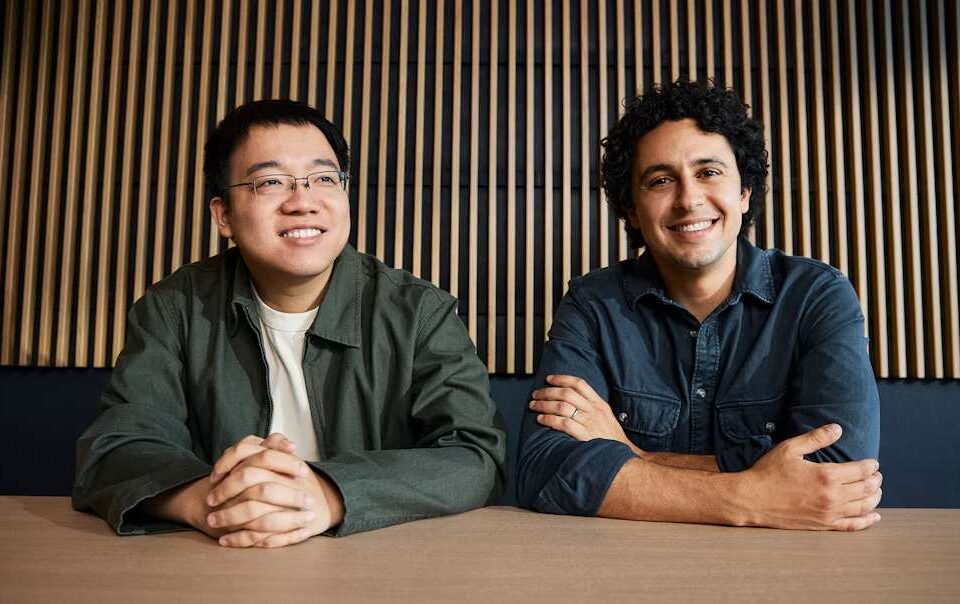
Investors poured more than $6.6 billion into nine startup financings, alongside another C$40 million raised by a Canadian startup. But one deal overshadowed everything else: Isomorphic Labs raised a staggering $5 billion in Series C funding to advance AI-powered drug discovery. The investment alone accounted for roughly 75% of the dollar-denominated funding in today’s roundup, highlighting just how much capital investors are willing to commit to companies using AI to tackle some of medicine’s toughest challenges.
Two other substantial bets broaden the story. Paris-based Genesis AI raised $500 million to develop general-purpose industrial robots, while Science Corporation raised $400 million to commercialize a vision-restoration system and fund next-generation neural interfaces. Together, the three largest announcements represent $5.9 billion, or about 88.8% of the nine dollar-denominated financings selected here.
The less expensive rounds reveal things differently. Model ML raised $250 million for AI agents used by financial professionals; General Flash disclosed $128 million across early financings to produce critical metals; and LanceDB raised $57.5 million for the data infrastructure behind multimodal AI research. Marrow Therapeutics, VINCUE, Compute Desk, and Canada’s Promise Robotics complete the selection.
This is not evidence that capital has become broadly available to startups. It shows investors are prepared to write exceptional checks for specific technologies and commercially defined problems, while the economics of those bets vary enormously.
The Macro Environment: Megarounds Are Funding the Hardest Part of the Technology Stack
Isomorphic Labs’ $5 billion round is an unusually concentrated wager on converting computational progress into medicines. Its technology must eventually generate drug candidates that succeed in clinical trials, a test simulations or preclinical findings alone cannot satisfy. The investment is therefore different in kind from financing an enterprise software product with monthly recurring revenue.
The same distinction appears in robotics and medical devices. Genesis AI is developing hardware, control software, training infrastructure, and specialized robotic hands together, hoping to shorten the path from demonstrations to dependable industrial deployments. Science Corporation already has a CE-marked product available in parts of Europe, but expanding access and developing its more experimental biohybrid interfaces require regulatory, clinical and manufacturing work that software founders rarely face.
The day’s other transactions show investors financing supporting systems, not just headline technologies. LanceDB wants to reduce the time and expense involved in handling image, video, and other AI training data. Compute Desk is attempting to give buyers and lenders transparent prices and hedging mechanisms for GPU capacity. General Flash is trying to localize a difficult industrial processing step in strategically important metals. Those businesses are shaped by physical or financial constraints, not just model performance.
At the application layer, Model ML and VINCUE are selling into industries with existing budgets and recognizable workflows. Banks, consultancies and car dealerships may pay for reliable automation when it reduces the cost of work or improves inventory decisions. But revenue growth, customer adoption and product claims should be evaluated separately from the valuations investors have agreed to pay.
The central market signal is concentration, not uniform exuberance. Three companies account for nearly nine-tenths of the dollar-denominated capital in this report. Funding totals alone cannot establish that smaller AI startups are enjoying the same financing environment, and comparing a gene-therapy developer with an AI-data vendor without considering their milestones would obscure more than it reveals.
Isomorphic Labs raises $5B in funding to bring AI-designed medicines closer to clinical trials

London-based Isomorphic Labs announced a $5 billion Series C funding, co-led by Greenoaks and Sequoia Capital. Andreessen Horowitz participated alongside Alphabet and existing investors including Thrive Capital, MGX, GV, CapitalG, Temasek and the UK Sovereign AI Fund. The company did not disclose a valuation. The financing followed a separate $2.1 billion Series B announced in May 2026, which is not counted again here.
Spun out of Google DeepMind, Isomorphic is building its IsoDDE drug-design system to propose and refine molecules before laboratory development. The company works with pharmaceutical partners including Eli Lilly, Novartis and Johnson & Johnson, while advancing its own programs in oncology and immunology. It says its internal and partnered research has produced encouraging preclinical results, but these claims do not establish safety or efficacy in patients.
Investors are financing the possibility that better computational design can reduce expensive iterations in drug discovery. The decisive milestones will be clinical entry, reproducible results, licensing economics and eventual approval—not the number of candidate molecules a model can generate. The financing gives Isomorphic unusual resources, but the scientific and regulatory risks remain substantial.
Funding Details
Startup: Isomorphic Labs
Investors: Greenoaks and Sequoia Capital (co-leads); Andreessen Horowitz, Alphabet, Thrive Capital, MGX, GV, CapitalG, Temasek, UK Sovereign AI Fund and others
Amount Raised: $5 billion
Total Raised: Not fully reconciled; includes a separate $2.1 billion Series B announced in May 2026
Funding Stage: Series C
Funding Date: November 17, 2026 (7:00 a.m. EST company news release)
Headquarters: London, United Kingdom
Sector: AI drug discovery/biotechnology
Valuation: Not disclosed by the company
Genesis AI raises $500M in funding to build industrial robots capable of dexterous work
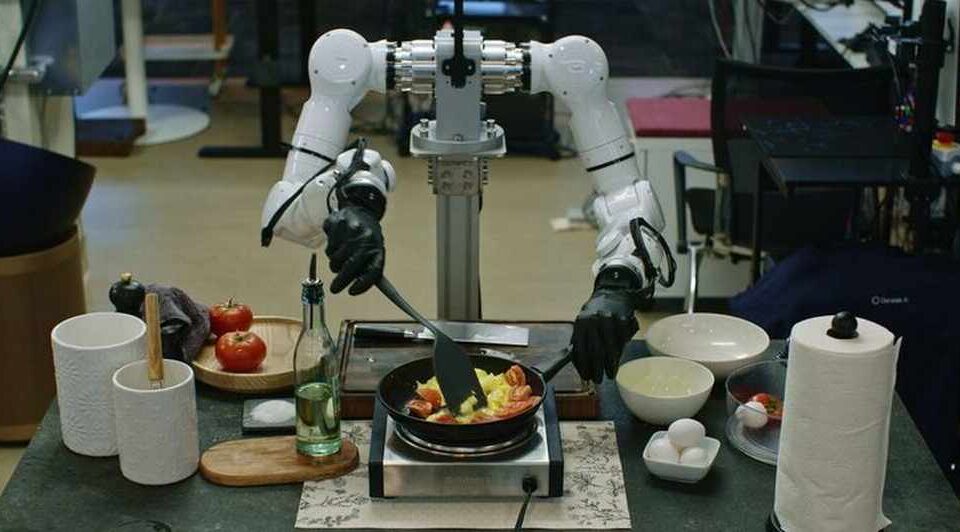
Genesis AI announced a $500 million Series A at a $3.5 billion post-money valuation. Premji Invest, Khosla Ventures and Eclipse co-led the financing; backers also included Nvidia, Bpifrance, AMD Ventures, Samsung Next and several prominent technology executives. Genesis is headquartered in Paris and has a U.S. presence in San Carlos, California.
The startup is building a general-purpose robot called Eno around a wheeled platform with folding body segments and hands designed to manipulate objects. It is developing the robot’s components, control models, simulation systems, and AI training processes together. Genesis has described early customer tests and an LG CNS partnership focused on manufacturing and logistics, with a broader customer rollout targeted for 2027.
Unlike a narrow industrial automation project, a general-purpose robot must operate reliably across tasks that differ in geometry, force, safety requirements, and surroundings. A large investment can fund hardware iteration and data collection, but it cannot replace proof of safe deployments, attractive service economics, or customer willingness to buy at scale.
Funding Details
Startup: Genesis AI
Investors: Premji Invest, Khosla Ventures and Eclipse (co-leads); Nvidia, Bpifrance, AMD Ventures, Samsung Next, Durable Capital Partners and others
Amount Raised: $500 million
Total Raised: Not disclosed on a fully reconciled basis
Funding Stage: Series A
Funding Date: November 17, 2026 (9:00 a.m. EST company news release)
Headquarters: Paris, France; U.S. headquarters in San Carlos, California
Sector: Robotics / physical AI / industrial automation
Valuation: $3.5 billion post-money, company-announced
Science Corporation raises $400M in funding to expand its retinal implant and neural-interface research
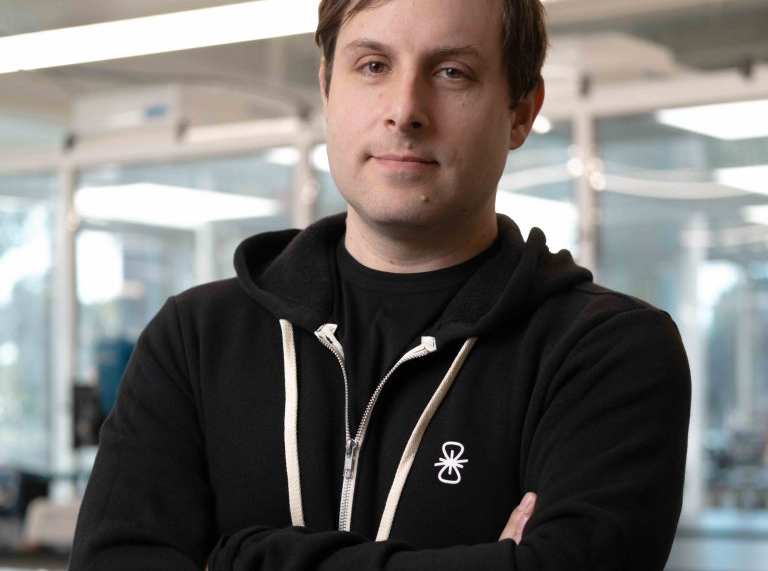
Science Corporation raised a $400 million Series D with participants including Khosla Ventures, the Ackman Oxman Institute, Tenet Healthcare, 885 Capital, Y Combinator and PLC Neurotech. The company says it has raised more than $900 million since its 2021 founding. TechCrunch reported a $3.5 billion valuation based on a person familiar with the financing; Science’s own announcement did not specify that valuation.
Its near-term product is PRIMA, an implant-and-glasses system intended to restore some ability to perceive visual forms for people with certain late-stage retinal diseases. Science says the device has received a European CE mark and is now commercially available in Europe. It is seeking U.S. authorization through the FDA’s Humanitarian Device Exemption route rather than claiming existing FDA clearance. It is also developing biohybrid neural interfaces combining engineered neurons and electronics.
The distinction between a regulated commercial device and experimental neural research matters. PRIMA provides a clearer route to customer and clinical evidence, while biohybrid interfaces are a longer-term technical undertaking. Investors must evaluate patient outcomes, reimbursement, regulatory approvals, and manufacturing quality alongside the science.
Funding Details
Startup: Science Corporation
Investors: Khosla Ventures, Ackman Oxman Institute, Tenet Healthcare, 885 Capital, Y Combinator, PLC Neurotech and others; no lead named in the company announcement
Amount Raised: $400 million
Total Raised: More than $900 million, company-reported
Funding Stage: Series D
Funding Date: November 17, 2026
Headquarters: Alameda, California, United States
Sector: Neurotechnology / medical devices
Valuation: $3.5 billion, reported by TechCrunch; not company-disclosed
Model ML launches from stealth with $250M in funding to automate demanding financial and professional-services workflows
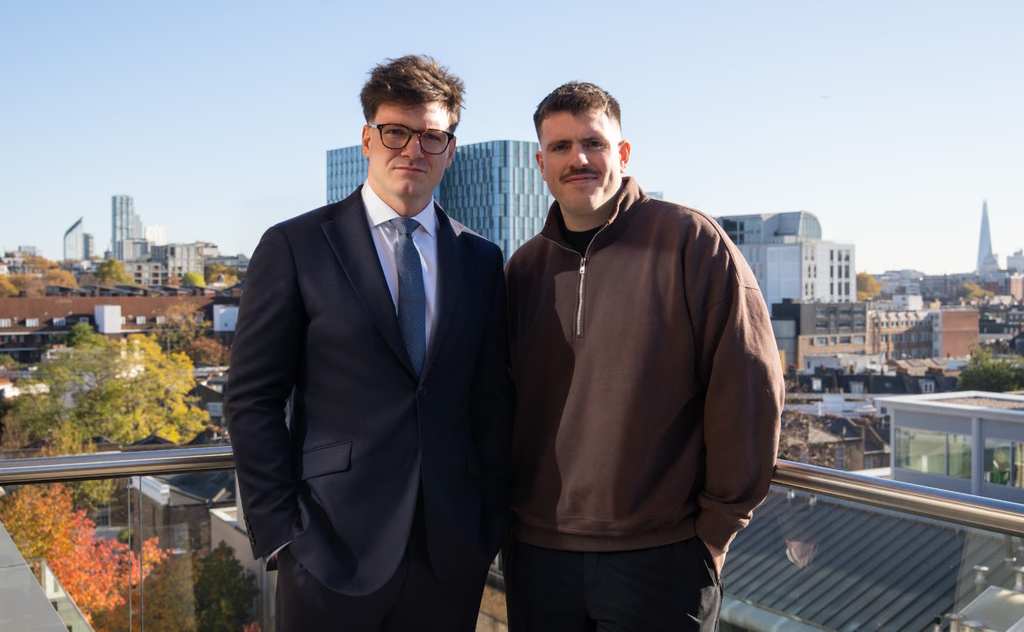
London-based Model ML has emerged from stealth with $250 million in Series B financing at a $1.5 billion valuation, co-led by General Atlantic and QED Investors. Other participants included Evolution Equity Partners, Airtree, Forestay Capital, Y Combinator, FT Partners, Latitude, Inception Fund and 13Books Capital. The company reports $350 million in cumulative funding.
Model ML develops AI agents designed to work with the records, financial models and presentations used by banks, asset managers and consulting firms. Its tools connect to business systems and can prepare analyses, update financial models and draft deal materials. The startup reported 12-fold year-over-year growth in annual recurring revenue and a 26-fold increase in daily active users in the third quarter of 2026; it did not disclose the absolute ARR figure, so those growth rates require context.
The business addresses work that is costly, regulated, and error-sensitive. Its advantage will not come simply from generating a spreadsheet: clients must trust the calculations, maintain data controls and integrate the product into existing review processes. Competition from other financial AI specialists and general-purpose AI providers puts particular pressure on pricing and defensibility.
Funding Details
Startup: Model ML
Investors: General Atlantic and QED Investors (co-leads); Evolution Equity Partners, Airtree, Forestay Capital, Y Combinator, FT Partners, Latitude, Inception Fund, 13Books Capital
Amount Raised: $250 million
Total Raised: $350 million, company-reported
Funding Stage: Series B
Funding Date: November 17, 2026
Headquarters: London, United Kingdom, with New York operations
Sector: Enterprise AI / financial-services software
Valuation: $1.5 billion, company-announced; pre-money/post-money basis not specified
Marrow Therapeutics discloses $173M in funding across two rounds for bone-marrow genetic medicines
Marrow Therapeutics emerged publicly on November 17 with $173 million across two previously undisclosed financings: a $53 million Series A co-led by Scion Life Sciences and venBio and a $120 million Series B led by OrbiMed. Series B participants included RTW Investments, Surveyor Capital, Opaleye, NEXTBio Capital, Affinity Advisors, KKR and other funds. The full $173 million was disclosed together, but should not be described as a single newly closed Series B.
The Watertown, Massachusetts startup is developing technology intended to deliver genetic medicines directly to bone marrow cells. Its lead program, MAR-101, is in preclinical studies aimed at sickle cell disease and beta thalassemia. The candidate is designed to affect the BCL11A pathway and increase fetal hemoglobin, aiming to avoid some of the complexity of cell extraction and manipulation outside the body.
The addressable clinical problem is substantial, but expectations must remain grounded: the company’s lead treatment is not yet an approved or proven human therapy. Investors will have to see whether targeted delivery can achieve sufficient effect without adverse consequences, and whether manufacturing and access costs support a viable alternative to existing treatments.
Funding Details
Startup: Marrow Therapeutics
Investors: Scion Life Sciences and venBio (Series A co-leads); OrbiMed (Series B lead); RTW Investments, Surveyor Capital, Opaleye, NEXTBio Capital, Affinity Advisors, KKR and others
Amount Raised: $173 million across previously undisclosed Series A and Series B financings; $120 million was Series B
Total Raised: $173 million publicly disclosed at launch
Funding Stage: Series A and Series B, first disclosed together
Funding Date: November 17, 2026 (7:00 a.m. EST public disclosure; closing dates not specified)
Headquarters: Watertown, Massachusetts, United States
Sector: Biotechnology / genetic medicines/hematology
Valuation: Not disclosed
General Flash discloses $128M in funding to expand U.S. production of critical metals
General Flash announced $128 million in equity capital raised across its seed and Series A rounds, with investors including Lux Capital, Construct Capital, Overmatch Ventures, GreatPoint Ventures, Pillar VC, Lowercarbon Capital, Ensemble VC, and Ravelin. The Cambridge, Massachusetts company was founded by entrepreneur Ric Fulop and is seeking a new way to make high-purity metals critical to advanced manufacturing and national security.
Its Solid-State Flash Electrolysis process aims to convert metal oxides directly into metals, including tungsten, titanium and other difficult-to-source materials. General Flash says its pilot operation can support 20 metric tons per year and that it is targeting commercial production capacity of 1,000 metric tons annually by summer 2027. Those output and environmental claims require independent industrial validation at commercial scale.
The investor case combines manufacturing economics with supply-chain resilience. Domestic customers may place strategic value on reliable metal sources, particularly in defense and semiconductors. But costs, energy use, product purity, plant reliability and signed customer commitments—not geopolitical interest alone—will establish whether the proposed process works as a commercial business.
Funding Details
Startup: General Flash
Investors: Lux Capital, Construct Capital, Overmatch Ventures, GreatPoint Ventures, Pillar VC, Lowercarbon Capital, Ensemble VC, Ravelin and angels
Amount Raised: $128 million of equity disclosed across seed and Series A rounds
Total Raised: $128 million in the rounds publicly identified at launch
Funding Stage: Seed and Series A, jointly disclosed
Funding Date: November 17, 2026 (8:55 a.m. EST public disclosure; individual closing dates not specified)
Headquarters: Cambridge, Massachusetts, United States
Sector: Critical minerals / industrial processing/manufacturing
Valuation: Not disclosed
VINCUE raises $93M in funding to build AI-driven software for automotive dealerships
Kansas City-based VINCUE announced $93 million in growth capital led by Wavecrest Growth Partners, with existing investor FM Capital participating. The company describes the financing as a growth investment; local reporting calls it a Series C, but the release does not provide a formal series designation. The company has not disclosed a valuation.
VINCUE sells software that helps car dealerships acquire, appraise, price, stock and market vehicles. It is rebuilding its platform around Protos, an AI-focused system intended to connect decisions across a vehicle’s inventory lifecycle. The company reported nearly 100% growth in each of the last two years, without publishing the underlying revenue amounts.
The commercial proposition rests on measurable dealership economics: inventory turnover, gross profit per unit and staff time. An incumbent vendor with customer integrations and specialized operational data may be better positioned than a generic AI application, but VINCUE still needs to show customers realize sustainable gains rather than temporary efficiency improvements during deployment.
Funding Details
Startup: VINCUE
Investors: Wavecrest Growth Partners (lead); FM Capital
Amount Raised: $93 million in growth capital
Total Raised: Not disclosed
Funding Stage: Growth financing; described as Series C in local reporting
Funding Date: November 17, 2026 (7:56 a.m. EST)
Headquarters: Kansas City, Missouri, United States
Sector: Automotive software/enterprise AI
Valuation: Not disclosed
LanceDB raises $57.5M to manage the data used to train multimodal AI
LanceDB raised a $57.5 million Series B co-led by Bessemer Venture Partners and Innovation Endeavors, joined by Theory Ventures, Dimension, Swift Ventures, CRV and Y Combinator. The financing raises the company’s reported cumulative funding to $98.5 million. The San Francisco startup develops tools for storing, querying, transforming and loading the large datasets that increasingly shape AI model development.
Its pitch is that text, images, video and sensor data cannot always be managed efficiently using software built for more conventional analytic databases. LanceDB is promoting an open-source data format and multimodal lakehouse designed to reduce repeated data movement and improve training workflows. It names customers including Netflix, Microsoft AI, Runway, Luma AI and Midjourney, but has not disclosed revenue or customer-level contract values.
Investors are betting that control over how training data is organized may create long-lived infrastructure demand. The risk is competition from cloud platforms, established database vendors and open standards that reduce switching costs. Durable revenue will depend on performance, operational ease, and adoption within production model-development pipelines.
Funding Details
Startup: LanceDB
Investors: Bessemer Venture Partners and Innovation Endeavors (co-leads); Theory Ventures, Dimension, Swift Ventures, CRV, Y Combinator
Amount Raised: $57.5 million
Total Raised: $98.5 million, company-reported
Funding Stage: Series B
Funding Date: November 17, 2026
Headquarters: San Francisco, California, United States
Sector: AI data infrastructure/developer tools
Valuation: Not disclosed
Compute Desk raises $45M to bring financial pricing and hedging to GPU capacity
Compute Desk disclosed a $45 million round led by Lightspeed Venture Partners, alongside Anthology, Hedosophia, Motive Partners, Inovia and other backers. Axios described the investment as a seed round, while the company’s public announcement used the more general term “round.” It did not disclose a valuation or total cumulative funding.
Compute Desk is trying to make GPU capacity easier to price, hedge, and exchange by collecting transaction-based price information and developing benchmarks for different chip classes. It also wants to help buyers and sellers clear contracts that can involve large commitments over several years. The company says it distributes its indexes through partners including Bloomberg and General Index; potential compute-linked derivative contracts remain subject to regulatory and market-development hurdles.
This is an unusual financing thesis built around a real pressure point in AI infrastructure: the future price and availability of computing capacity is uncertain, while customers and financiers are making long-term commitments. Benchmarks can only become valuable if market participants trust the underlying data and transact against them. Exchange liquidity and regulatory approval are not guaranteed by the funding.
Funding Details
Startup: Compute Desk
Investors: Lightspeed Venture Partners (lead); Anthology, Hedosophia, Motive Partners, Crucible, Inovia, Soma Capital, Mythos and others
Amount Raised: $45 million
Total Raised: Not disclosed
Funding Stage: Seed, according to Axios; the company called it a funding round
Funding Date: November 17, 2026
Headquarters: San Francisco and New York, United States
Sector: AI compute infrastructure / financial technology
Valuation: Not disclosed
Promise Robotics raises C$40M in funding to expand robotic manufacturing for homebuilding
Toronto-based Promise Robotics announced a C$40 million Series B led by White Star Capital, with Horizons Ventures, Radical Ventures and PSP Investments participating. The November 17 financing follows a commercial agreement with U.S. homebuilder D.R. Horton covering more than 1,250 homes and the planned opening of a manufacturing facility in Phoenix.
Promise develops automated manufacturing cells that turn building designs into floor, wall, and roof components. Its model is to operate production capacity for homebuilders rather than merely sell them robots. The company says it has more than 2,500 housing units under contract across several markets; that is a backlog claim, not a figure for homes already delivered.
The investment underscores how robotics can be applied to markets constrained by skilled labor, fragmented processes and high coordination costs. Its next test is industrial: opening factories, meeting schedule and quality targets, managing capital expenditure and proving that builders receive repeatable savings. This report keeps the Canadian-dollar amount in its original currency rather than translating it using an unverified exchange rate.
Funding Details
Startup: Promise Robotics
Investors: White Star Capital (lead); Horizons Ventures, Radical Ventures, Public Sector Pension Investment Board (PSP Investments)
Amount Raised: C$40 million
Total Raised: Not disclosed on a fully reconciled basis
Funding Stage: Series B
Funding Date: November 17, 2026 (9:05 a.m. EST)
Headquarters: Toronto, Ontario, Canada; U.S. production expansion planned in Phoenix
Sector: Construction technology/robotics / manufacturing automation
Valuation: Not disclosed
What Today’s Funding Activity Reveals
One deal determines the dollar story. Isomorphic Labs’ $5 billion Series C contributes about 75.2% of the nine U.S.-dollar-denominated announcements. A broad claim that “venture funding surged” without that qualification would mislead readers. Even the next two largest financings, Genesis and Science, are substantially smaller, though significant in their own sectors.
Research, manufacturing, and clinical development remain expensive. Isomorphic, Genesis, Science, Marrow and General Flash are financing multiple years of work involving laboratories, regulated devices, specialized materials or physical hardware. Their cash needs and valuation milestones don’t compare directly with those of asset-light software companies.
Software investors are focusing on context and control. Model ML is embedding AI in finance workflows; VINCUE has dealership-specific information; LanceDB provides infrastructure for multimodal datasets; Compute Desk seeks price information for compute contracts. In these businesses, workflow integration, accurate data, and customer trust could matter more than model novelty.
The geographic picture is mixed but not a global census. Six selected companies are U.S.-headquartered, two are British, one is French, and one is Canadian. This is a significance-ranked selection from one reporting window, not a statement that founders in other regions failed to raise capital. Significant announcements made before the Eastern cutoff were not reclassified as today’s funding simply because later articles repeated them.
New announcements do not always mean new closings. Marrow’s $173 million combines a previously undisclosed Series A and Series B. General Flash’s $128 million similarly spans seed and Series A financings. Those amounts were first publicly disclosed on November 17, but the sources do not establish that every dollar closed during the 24-hour window.
Tech Funding Table
| Startup | Amount Raised | Sector | Funding Stage | Lead/Key Investors | Country |
|---|---|---|---|---|---|
| Isomorphic Labs | $5B | AI drug discovery | Series C | Greenoaks; Sequoia Capital | United Kingdom |
| Genesis AI | $500M | Industrial robotics | Series A | Premji Invest; Khosla Ventures; Eclipse | France |
| Science Corporation | $400M | Neurotechnology | Series D | Khosla Ventures; Tenet Healthcare; others (no lead named) | United States |
| Model ML | $250M | Enterprise AI/fintech | Series B | General Atlantic; QED Investors | United Kingdom |
| Marrow Therapeutics | $173M combined disclosure | Genetic medicines | Series A + B | Scion Life Sciences; venBio; OrbiMed | United States |
| General Flash | $128M combined disclosure | Critical metals | Seed + Series A | Lux Capital; Construct Capital; Overmatch Ventures | United States |
| VINCUE | $93M | Dealership software | Growth financing (reported Series C) | Wavecrest Growth Partners; FM Capital | United States |
| LanceDB | $57.5M | AI data infrastructure | Series B | Bessemer Venture Partners; Innovation Endeavors | United States |
| Compute Desk | $45M | Compute-market infrastructure | Reported seed | Lightspeed Venture Partners | United States |
| Promise Robotics | C$40M | Construction robotics | Series B | White Star Capital; Horizons Ventures; Radical Ventures | Canada |
Funding note: The nine U.S.-dollar-denominated disclosed amounts total $6.6465 billion, plus a separate C$40 million Canadian round. The figure represents capital reported in the selected announcements, not audited cash received on November 17. Marrow and General Flash disclosed multiple earlier financing stages together; VINCUE described its round as growth capital without itemizing security types. No debt facility, secondary share amount, or fundraising target was added separately.
Strategic Takeaways for Founders and Investors
1. Understand what a megadeal does to the average. Isomorphic’s financing dominates this report, so founders should not use today’s headline aggregate as evidence that financing markets have loosened for everyone.
2. Technology validation and business validation are separate. Isomorphic must move from preclinical research to clinical evidence; Genesis must move from robot tests to dependable installations; Science must meet distinct European and U.S. regulatory requirements. Each has a different milestone that can change its economics.
3. Distribution becomes harder to copy when it is embedded in operations. VINCUE’s dealership relationships and Model ML’s institutional integrations may protect businesses from general-purpose AI competitors more effectively than adding another model feature.
4. AI may shift value into supporting infrastructure. LanceDB and Compute Desk address weaknesses that persist even as models improve: preparing large datasets and assessing the price of computing capacity.
5. Capital intensity changes the investment questions. For General Flash and Promise Robotics, production rates, plant costs, uptime and customers under contract matter more than software usage metrics.
6. Don’t confuse a financing announcement with a new cash injection. Marrow and General Flash revealed multiple funding rounds together. Analysts should preserve the historical structure instead of presenting the full amount as a single fresh round.
7. Regulated products must earn trust in stages. Science’s European CE mark is a meaningful achievement but is not U.S. FDA authorization. Likewise, Isomorphic’s positive preclinical findings are not clinical efficacy.
8. Report growth rates with their denominators. Model ML’s 12-fold ARR growth and VINCUE’s reported growth are notable claims, but absolute revenue, customer retention, and gross margins are necessary to assess durability.
9. Robot business models carry different financial risks. Genesis is developing general-purpose systems, while Promise Robotics plans to operate manufacturing capacity for builders. One depends on broad robot deployment economics; the other must manage individual factory utilization and delivery.
10. Proprietary data only matters if customers benefit from it. The specialized information held or generated by Model ML, VINCUE, LanceDB, and Compute Desk must translate into accurate, auditable, lower-cost work to support sustainable pricing.
Conclusion
Today’s funding announcements are defined by a rare $5 billion biotechnology financing, a $500 million industrial robotics investment and a $400 million round for regulated neurotechnology. Beneath those numbers sit smaller but serious bets on the infrastructure, workflows and manufacturing systems that support advanced technology.
The lesson is not that investors have become indifferent to risk. Rather, some are concentrating unusually large amounts of capital where they believe scientific progress, technical difficulty, specialized data, or industry access may create lasting commercial value.
The size of a funding round measures investor conviction. The harder evidence arrives when a medicine works in patients, a robot works in a factory, and a customer keeps paying for the result.