Cambridge AI startup Sqwish Labs raises $3M as its decision models beat OpenAI and Microsoft in benchmark tests
 Daniel Levi
Posted On November 17, 2026
An eight-person AI startup from Cambridge, UK, is taking on some of the biggest names in artificial intelligence, and its latest benchmark results suggest that massive funding isn’t always necessary to compete. Sqwish Labs has raised $3 million in pre-seed funding after its AI decision models outperformed competing systems from OpenAI, Microsoft, and TypeSafe in specialized benchmark tests.
Cambridge Enterprise Ventures, the University of Cambridge’s investment arm, led the round, with Parkwalk participating and Innovate UK supporting. Angel investors include Professor Steve Young, whose voice-technology startup VocalIQ Apple acquired for Siri, and Karthik Tadinada, former COO of fraud-prevention company Featurespace.
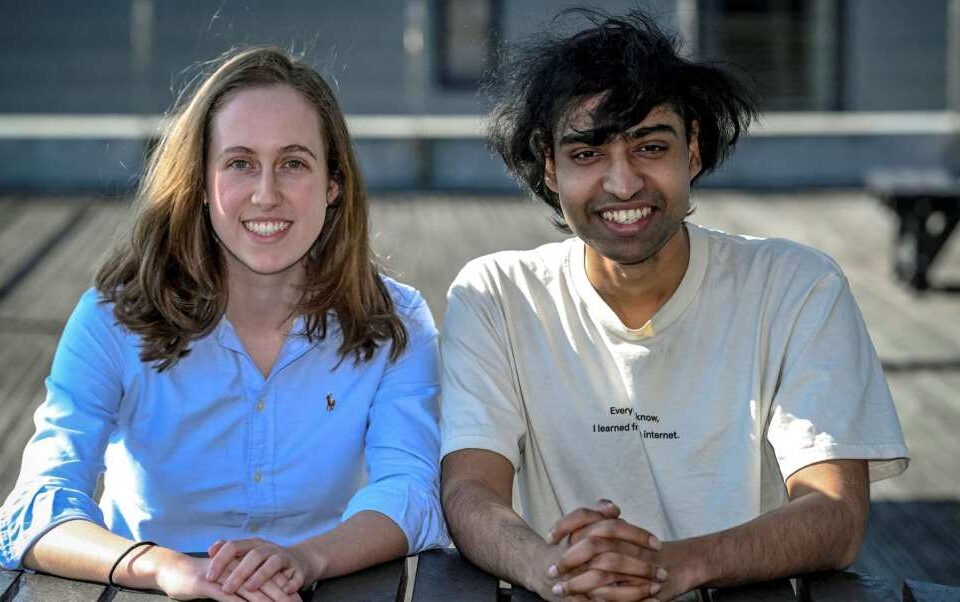
Founded in 2024 by Cambridge graduates Ushnish Sengupta and Federica Freddi, Sqwish Labs has built a family of specialized AI models called kettei. Unlike conventional large language models that generate paragraphs of text, these models focus on making decisions quickly, returning structured answers and confidence scores.
That distinction matters as companies increasingly deploy AI agents that can make thousands of decisions without human intervention.
According to the company’s October 29 benchmark results, its largest model, kettei fat, ranked first for capability among hosted decision models on JevBench, an independent evaluation platform. The model surpassed competing offerings from OpenAI, Microsoft, and TypeSafe in that category.
The results extend beyond text-based decisions. Sqwish says kettei fat ranked first among 64 systems on ImageJevBench, which evaluates decisions involving images, and second on S1MB’s English leaderboard.
These rankings measure performance on defined tasks rather than overall AI intelligence. JevBench evaluates several factors, including accuracy, confidence calibration, speed, and cost. Its rankings can change as new models enter the competition.
Still, the results raise an interesting question: How much computing infrastructure and venture capital does an AI startup really need to compete?
Why Sqwish Labs Is Betting on Smaller AI Models
The timing couldn’t be better for Sqwish Labs. Since TypeSafe introduced Jev in September, decision models have attracted attention from OpenAI, Microsoft, Amazon, Cloudflare, and Perplexity.
The appeal is straightforward. Many AI applications don’t need a large language model to generate a lengthy response every time they make a choice. They need a fast, reliable system that can decide whether to approve a request, select a tool, classify information, or escalate a difficult case.
Sqwish wants its smaller models to handle those routine decisions, leaving more demanding tasks to larger AI systems.
“AI doesn’t need a giant model, or a bigger data center, for every small decision,” said Ushnish Sengupta, co-founder and CEO of Sqwish Labs. “A small, fast model can make most of them for a fraction of the cost and energy, and knows when to ask for help. This funding takes kettei from the top of the leaderboards into the products people use every day.”
The startup claims that pairing kettei with Anthropic’s Claude Opus 5.5 matched the larger model’s accuracy at roughly one-third of the cost in its tests. That comparison remains company-reported and doesn’t establish equivalent performance across other workloads.
Sqwish offers its models through OneHot, a platform where developers can train customized decision systems using their own examples. Two models, kettei core and kettei dot, are available as open weights on Hugging Face, allowing organizations to run them on their own infrastructure.
Pricing starts at $0.02 per million input tokens, according to the company.
Sqwish plans to use the fresh capital to develop its next generation of models, expand OneHot for enterprise customers, and hire additional researchers and commercial staff in Cambridge.
For an AI industry accustomed to enormous funding rounds and sprawling research teams, Sqwish offers a different proposition: The next competitive advantage may come from knowing when a smaller model can do the job.
The bigger test now is whether its benchmark performance translates into reliable decisions for customers operating AI systems in the real world.
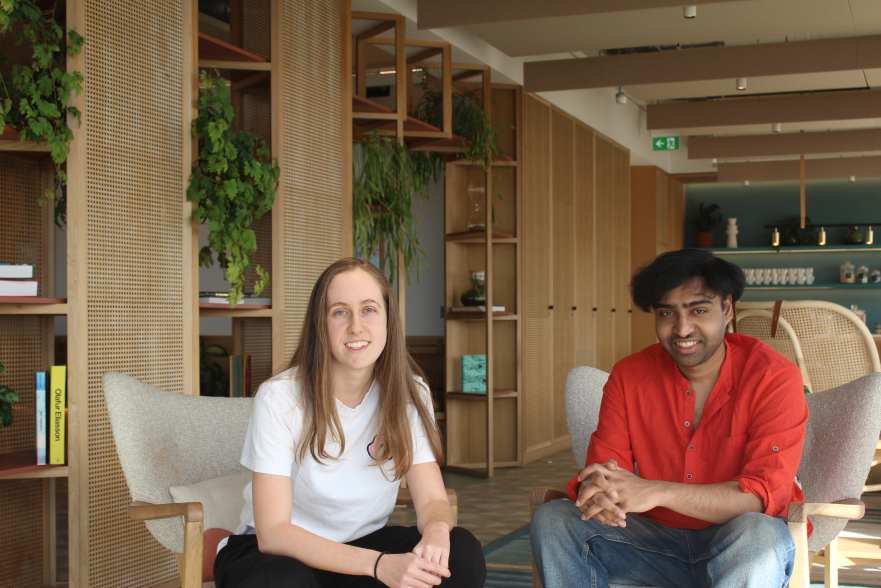
Sqwish co-founders: Federica Freddi and Ushnish Sengupta (CEO)