Startup Funding News Today, November 11, 2026: Alta, Blue J, Mercor, Path Robotics, Clara, Reflect Orbital & More
 Nickie Louise
Posted On November 11, 2026
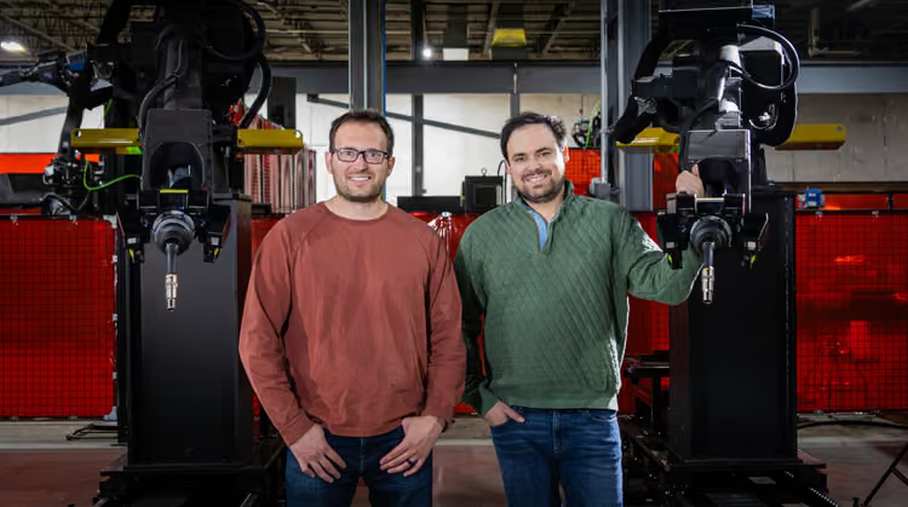
Venture capital poured more than $1.6 billion into 10 major startup financing announcements over the past 24 hours, but the biggest story is where investors are placing their bets. From AI training and industrial robotics to cybersecurity, semiconductor design, and space-based energy technology, the latest deals show investors backing companies that could address some of the most expensive problems created by the rapid adoption of artificial intelligence.
San Francisco-based Mercor led the day with a $750 million Series D at a $20 billion valuation, doubling its valuation from a year earlier. Industrial automation startup Path Robotics followed with a $300 million Series E at a $2.45 billion valuation, while Canadian tax technology company Blue J secured $176 million to expand its AI platform for tax professionals. Together, the three transactions represent $1.226 billion in announced financing, highlighting the concentration of capital among companies with specialized technology and established customer demand.
Investment activity also extended into cybersecurity, healthcare, financial infrastructure, and space technology. Goldman Sachs Alternatives led an $80 million investment in Daylight Security, while Reflect Orbital raised $73.5 million to develop satellites designed to redirect sunlight toward Earth. Latin American fintech Clara secured $65 million in new equity, and Charta Health raised $55 million to reduce medical billing errors. Meanwhile, Alta announced a $47.5 million Series A, Israeli cybersecurity startup Bay disclosed a $37 million Series A, and Britain’s Tendrils Compute raised $30 million to rethink conventional processor architecture.
The 10 selected rounds total $1.614 billion in announced transaction sizes. Mercor accounts for about 46% of that amount, although its financing includes an employee-share tender whose size was not disclosed separately. The total therefore should not be interpreted as $1.614 billion in new operating capital.
The geographic distribution is also notable. Six selected startups are based in the United States, with one each from Canada, Mexico, Israel, and the United Kingdom. Unlike the China-heavy funding announcements earlier in the week, today’s largest verified transactions are concentrated in North America.
The broader investment signal is that AI is creating opportunities far beyond the companies developing foundation models. Investors are financing the workers and data used to train those models, robots that can perform physical tasks, software that protects autonomous agents, and specialized infrastructure designed to make computing and financial transactions more efficient.
The Macro Environment: AI Capital Is Moving Toward Specialized Infrastructure and Measurable Results
The most important development in today’s funding activity is the growing diversity of businesses attracting substantial AI investment.
Mercor provides human expertise used to train and evaluate AI systems. Path Robotics develops intelligent machines that can weld industrial components. Blue J applies AI to complicated tax research and advisory work. Daylight combines AI agents with cybersecurity professionals to investigate threats. These companies operate in different markets, but they share an investment proposition: customers need specialized capabilities that general-purpose AI models do not provide on their own.
The financing environment remains heavily influenced by investors’ expectations for AI adoption. According to Crunchbase figures cited by Reuters, AI-related startups attracted about $102 billion in the third quarter of 2026, representing 64% of global venture capital investment during that period. Today’s deals reflect that concentration, although one day’s activity cannot establish whether investment is accelerating or slowing across the entire market.
Capital is also concentrating in companies with strong positions in specific technology markets. Mercor’s $20 billion valuation reflects market expectations for AI training, evaluation, and specialized professional expertise. Path Robotics’ $2.45 billion valuation reflects interest in bringing AI into manufacturing. Blue J’s valuation above $700 million demonstrates that investors see substantial opportunities in specialized professional software.
However, valuation increases introduce financial expectations that companies must eventually satisfy. Investors will need evidence of customer retention, recurring revenue, gross margins, and defensible competitive advantages. A company growing quickly through expensive computing, human labor, or hardware deployments may face very different profitability challenges from one distributing software through conventional subscriptions.
Strategic investors are another recurring feature. Nvidia participated in Mercor’s financing, Goldman Sachs Alternatives led Daylight’s round, and Microsoft-affiliated venture capital participated in Bay’s funding. These relationships may provide technical expertise, customer access, or commercial opportunities. But participation by a recognizable investor should not be confused with guaranteed revenue or future contracts.
The larger shift is toward AI businesses that can demonstrate specific economic value. Whether reducing industrial labor constraints, improving cybersecurity response times, accelerating tax research, or avoiding medical billing errors, the companies attracting capital are addressing problems with identifiable costs.
That is an encouraging signal for founders building specialized technology. It also reminds us that impressive AI capabilities alone are unlikely to build a durable business.
Mercor raises $750M in funding to expand AI training and enterprise agent evaluation

Mercor has raised $750 million Series D financing at a $20 billion valuation, attracting investment from Benchmark, Felicis, Fundomo, funds affiliated with Apollo, G Squared, General Catalyst, Glade Brook Capital, Nvidia, Salesforce, Sapphire Ventures, StepStone Group, XTX Ventures, and Zoom.
Mercor said the round included an employee-share tender. It did not disclose how much of the $750 million represents primary capital received by the company versus secondary liquidity for employees. The full amount is therefore reported as the announced transaction size rather than confirmed new operating capital.
Founded in 2023, Mercor originally developed technology for matching companies with specialized workers. Its business has evolved into providing human expertise used to train, evaluate, and improve advanced AI systems.
The company maintains a network of more than five million professionals whose specialized knowledge can support model training and evaluation. These experts contribute information about tasks involving fields such as accounting, law, engineering, medicine, and other professional disciplines.
Mercor argues that increasingly capable AI systems still require detailed information about how people perform real work. A language model may generate a convincing legal memorandum, for example, without reliably following a particular law firm’s procedures or understanding its client’s requirements.
Mercor helps companies develop evaluations that measure whether AI agents can complete those tasks correctly. The company is also moving deeper into enterprise AI. Its acquisition of Deeptune provided technology for creating simulated professional environments where AI agents can practice using business applications.
Why investors are backing Mercor
Mercor occupies a potentially valuable position between AI developers, enterprise customers, and professionals with specialized knowledge. As models become more capable, developers need reliable ways to determine whether those models can complete commercially useful work.
Mercor is attempting to provide that evaluation infrastructure. Its business could benefit from demand among both major AI laboratories and enterprises developing specialized internal systems. However, its competitive position depends on maintaining access to high-quality expertise, reliable evaluations, and proprietary information that competitors cannot easily reproduce.
Mercor also faces questions about the economics of combining human labor with AI development. Its $20 billion valuation is about double its October 2025 financing valuation. That increase reflects investor expectations about the company’s future commercial opportunity, not evidence that revenue or profitability has doubled.
Funding Details
Startup: Mercor
Investors: Benchmark, Felicis, Fundomo, Apollo-affiliated funds, G Squared, General Catalyst, Glade Brook Capital, Nvidia, Salesforce, Sapphire Ventures, StepStone Group, XTX Ventures, Zoom
Amount Raised: $750 million announced Series D, including an undisclosed employee-share tender component
Total Raised: Not disclosed on a fully reconciled primary-equity basis
Funding Stage: Series D
Funding Date: November 10, 2026
Headquarters: San Francisco, California, United States
Sector: AI training/model evaluation/enterprise AI infrastructure
Valuation: $20 billion
Path Robotics raises $300M in funding to bring physical AI into industrial manufacturing
Columbus, Ohio-based startup Path Robotics raised $300 million in Series E financing led by Georgian, valuing the company at approximately $2.45 billion. The round attracted participation from investors including Addition, Drive Capital, IronArc, Tiger Global, Yamaha Motor Ventures, D. E. Shaw Ventures, and NAVER Ventures. Path has raised more than $610 million in cumulative financing, according to funding coverage surrounding the announcement.
Path Robotics develops autonomous welding systems for industrial manufacturers. Welding is a demanding manufacturing task because components can vary in shape, position, and condition. Traditional industrial robots often perform best when they repeat the same movements under tightly controlled circumstances.
Path is working to create systems that can adapt to greater variation. Its technology combines sensors, computer vision, robotic hardware, and AI models trained on manufacturing operations. The company has developed systems that can identify welding requirements and adjust their movements during production.
Path is also developing mobile robotic equipment through its Rove platform, extending its approach beyond fixed welding stations.
Why investors see a major opportunity
Manufacturing companies face pressure to increase production capacity while managing labor shortages and operating costs. Welding is particularly relevant because experienced workers require substantial training, and mistakes can affect product quality and safety. Path’s investment proposition is that AI can make difficult industrial tasks more adaptable and reduce the amount of manual programming required.
The company reports that annual recurring revenue has increased approximately 17-fold over the past 18 months. That is a company-reported growth figure, and the announcement does not establish the absolute revenue base.
Path also works with companies serving defense and industrial markets, including Huntington Ingalls Industries and Lockheed Martin. Those relationships are strategically important because manufacturers of ships, vehicles, and other equipment need reliable welding capacity. However, commercial agreements should not be confused with equity financing or realized revenue.
Path must demonstrate that its systems consistently improve output, reduce costs, and satisfy demanding industrial quality standards. Its $2.45 billion valuation reflects expectations that the company can expand beyond welding into other manufacturing activities.
Funding Details
Startup: Path Robotics
Investors: Georgian, Addition, Drive Capital, IronArc, Tiger Global, Yamaha Motor Ventures, D. E. Shaw Ventures, NAVER Ventures, and others
Amount Raised: $300 million
Total Raised: More than $610 million in reported cumulative financing
Funding Stage: Series E
Funding Date: November 10, 2026
Headquarters: Columbus, Ohio, United States
Sector: Industrial robotics / physical AI/manufacturing automation
Valuation: $2.45 billion
Blue J raises $176M in funding to expand AI-powered tax research and advisory software
Toronto-based Blue J raised US$176 million in Series E financing led by JMI Equity. Existing investors Oak HC/FT and Sapphire Ventures participated alongside Intrepid Growth Partners. The transaction values Blue J at more than US$700 million, equivalent to more than C$1 billion.
Founded in 2015, Blue J develops software that helps tax professionals research complex legal and financial questions. Tax research can involve statutes, regulations, court decisions, administrative guidance, and the specific circumstances of individual clients.
Professionals often need to examine multiple sources before reaching a conclusion. Blue J uses AI to analyze relevant materials and produce research outputs supported by references. Its technology is designed for accountants, law firms, and corporate tax departments.
The company is expanding beyond research into workflows involving tax return reviews, responses to government notices, and analysis of business agreements. Blue J says its platform has answered more than 14 million tax questions. It also reports serving more than 6,500 organizations, including major accounting firms and large corporations.
Why investors are backing specialized professional AI
Blue J operates in a market where accuracy and supporting documentation directly influence customer trust. A general-purpose AI system may produce plausible answers, but tax professionals need information they can verify against applicable rules.
Blue J is building its competitive advantage around specialized research content, workflow integration, and professional review. Its platform allows users to inspect supporting sources and make final judgments. The company reports 165% growth in annual recurring revenue over approximately 15 months following its previous financing. That is a company-reported figure and does not disclose absolute recurring revenue.
The latest capital will support further product development and international expansion, including the United Kingdom. However, tax rules differ substantially between jurisdictions, creating additional product development and compliance requirements.
Blue J’s long-term success will depend on accuracy, customer retention, and the ability to expand without weakening the reliability that attracts professional users.
Funding Details
Startup: Blue J
Investors: JMI Equity, Oak HC/FT, Sapphire Ventures, Intrepid Growth Partners
Amount Raised: US$176 million
Total Raised: Not disclosed on a company-reconciled basis
Funding Stage: Series E
Funding Date: November 10, 2026
Headquarters: Toronto, Ontario, Canada
Sector: Enterprise AI/tax technology / professional software
Valuation: More than US$700 million
Daylight Security raises $80M in funding to combine AI agents with human cybersecurity experts
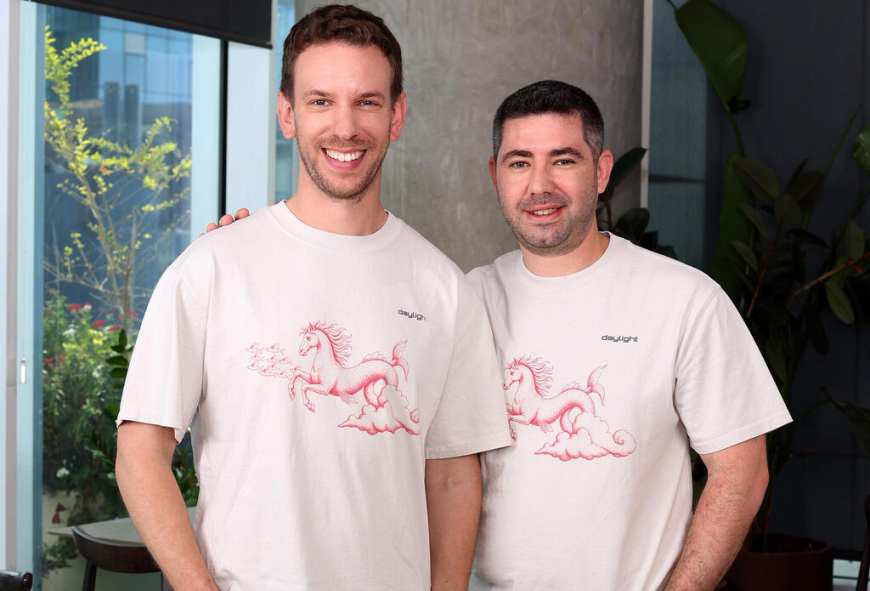
Daylight Security raised $80 million in Series B financing led by Goldman Sachs Alternatives’ growth equity business. Okta Ventures participated as a new investor, alongside existing backers Bain Capital, Craft Ventures, Vintage Partners, and Maple Capital. The financing brings Daylight’s cumulative funding to $120 million.
The Wall Street Journal reported that the transaction values the company at approximately $400 million, citing people familiar with the deal. Daylight did not disclose its valuation independently.
Daylight develops cybersecurity technology that combines automated AI agents with human security specialists. Enterprise security teams must investigate large numbers of alerts generated by cloud systems, employee devices, business applications, and network infrastructure.
Determining which alerts represent genuine threats can consume substantial time. Daylight is working to automate routine investigations while letting experienced security engineers handle more complex decisions. Its platform, Aura, centralizes security information and allows customers to investigate potential incidents using natural-language commands.
The company offers fully managed security operations and services that work alongside internal security teams. Its customers include Lovable, LastPass, Rogo, dLocal, and Miro.
Why the financing matters
Cybersecurity is becoming more complicated as organizations adopt AI agents that can access sensitive systems and perform actions automatically. Those agents can create new opportunities for attackers or introduce risks through incorrect behavior.
Daylight is developing tools intended to investigate conventional security threats alongside risks associated with AI systems. The company claims its approach can contain selected threats up to 10 times faster than traditional managed security providers. That performance figure comes from Daylight and should not be treated as an independently established industry benchmark.
The company also reports revenue growth exceeding 40 times over the past year, although it does not disclose the underlying revenue figures.
For investors, Daylight’s opportunity depends on combining automation with the expertise customers need to trust security decisions. Its challenge will be maintaining accurate threat detection, manageable service costs, and customer confidence as automated systems take on more responsibilities.
Funding Details
Startup: Daylight Security
Investors: Goldman Sachs Alternatives, Okta Ventures, Bain Capital, Craft Ventures, Vintage Partners, Maple Capital
Amount Raised: $80 million
Total Raised: $120 million
Funding Stage: Series B
Funding Date: November 10, 2026
Headquarters: New York, United States, with operations in Israel
Sector: Cybersecurity / AI security operations
Valuation: Approximately $400 million, reported by The Wall Street Journal
Reflect Orbital raises $73.5M in funding to test satellites that redirect sunlight toward Earth
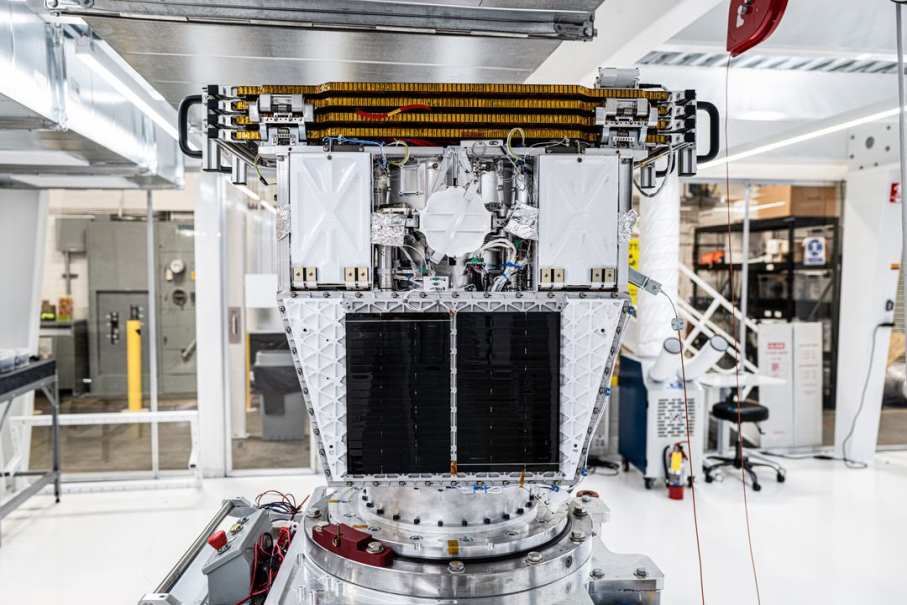
Reflect Orbital raised $73.5 million in new financing to continue developing its proposed system to redirect sunlight from orbit to selected locations on Earth. Existing investors Sequoia Capital, Lux Capital, and Starship Ventures participated alongside new backers including Buckley Ventures, Convective Capital, The Uncommon Group, and Salesforce Ventures.
Reflect said the investment brings its cumulative funding to more than $100 million. A conventional funding-stage designation and valuation were not disclosed.
Based in Hawthorne, California, Reflect Orbital is developing satellites equipped with large deployable reflectors. Its goal is to redirect sunlight toward specific areas after sunset.
The company believes the technology could support solar electricity generation after sunset and provide illumination for industrial operations or emergency response. The concept is ambitious because sunlight reflected from orbit must travel long distances while staying precisely aimed.
Reflect is developing lightweight mirror structures and the spacecraft needed to position and control them. The company says its first orbital demonstration is planned for the second quarter of 2027. That mission is intended to gather data on reflector deployment and performance.
Reflect has not yet demonstrated commercial sunlight delivery from orbit.
Why investors are backing the technology
Reflect’s investment case is tied to growing demand for reliable electricity and alternatives to conventional energy infrastructure.
The company is attempting to provide a service that would extend the usefulness of solar energy systems without requiring electricity to be stored in batteries. However, the technology faces substantial engineering and commercial uncertainty.
The amount of useful illumination delivered, the cost per unit of electricity generated, satellite operating lifetimes, and the number of spacecraft required will determine the conceptis economic viability. Environmental and regulatory considerations also apply.
Large orbital reflectors could affect astronomical observations, nighttime conditions, and other activities that depend on natural darkness. These issues require independent evaluation rather than relying solely on the company’s technical projections.
For investors, the next important milestone is successful orbital testing. A functioning demonstration would establish technical progress, but it would not, by itself, prove the business can deliver electricity at competitive costs.
Funding Details
Startup: Reflect Orbital
Investors: Sequoia Capital, Lux Capital, Starship Ventures, Buckley Ventures, Convective Capital, The Uncommon Group, Salesforce Ventures, and others
Amount Raised: $73.5 million
Total Raised: More than $100 million
Funding Stage: Not disclosed
Funding Date: November 10, 2026
Headquarters: Hawthorne, California, United States
Sector: Space technology/energy infrastructure/satellite systems
Valuation: Not disclosed
Clara raises $65M to expand AI-powered corporate payments across Latin America
Latin American fintech Clara raised $65 million in Series C equity financing, with Citius, Kaszek, and DEG, the development finance institution associated with Germany’s KfW Group, serving as anchor investors. Additional participants included Citi Ventures, Coatue, DST Global Partners, General Catalyst, Monashees, Notable Capital, CMT Digital, Nascent VC, and others.
The company also renewed a separate $40 million growth-financing facility from General Catalyst’s Customer Value Fund. Together, the transactions were announced as a $105 million financing package. Only the $65 million Series C represents newly announced equity financing counted in today’s report. The $40 million facility renewal is not counted as additional venture equity.
Founded in Mexico in 2021, Clara provides corporate payment cards, expense management, and financial software to businesses across Latin America. Its major markets include Mexico, Brazil, and Colombia.
The platform helps companies control employee spending, manage payments, and monitor financial activity. Clara is developing additional AI capabilities to automate expense reviews and let finance teams retrieve information through natural-language requests.
Its technology can evaluate transactions against corporate spending policies. The company reports serving more than 45,000 customers. It also says annualized net revenue has exceeded $100 million and that it has maintained positive EBITDA for more than a year. Those financial figures are company-reported and have not been independently audited in the reviewed disclosures.
Why investors are interested
Corporate payments and expense management are established markets, but many businesses still rely on disconnected financial systems.
Clara is attempting to combine payment infrastructure, expense controls, and automation within a single platform. Its expansion across Latin America also creates opportunities involving regional financial services and cross-border business operations. However, the company must manage different financial regulations, payment systems, and customer requirements across countries.
Its commercial advantage will depend on customer retention, transaction economics, product reliability, and the ability to distribute additional services to existing customers. Clara is placing particular emphasis on expansion in Brazil.
The financing is significant because it combines investor interest in AI automation with a business that already reports substantial payment operations and revenue. Nevertheless, its equity financing and credit arrangements should be assessed separately when evaluating dilution, liquidity, and future financial obligations.
Funding Details
Startup: Clara
Investors: Citius, Kaszek, DEG, Citi Ventures, Coatue, DST Global Partners, General Catalyst, Monashees, Notable Capital, CMT Digital, Nascent VC, and others
Amount Raised: $65 million Series C equity; separate $40 million facility renewal excluded from equity total
Total Raised: Not disclosed on a fully reconciled equity-only basis
Funding Stage: Series C
Funding Date: November 10, 2026
Headquarters: Founded in Mexico City; major operations in Brazil and across Latin America
Sector: Fintech / corporate payments/expense automation
Valuation: Not disclosed
Charta Health raises $55M in funding to reduce errors and denials in medical billing
Charta Health raised $55 million in Series B financing led by Insight Partners. Existing investors Madrona, Bain Capital Ventures, and South Park Commons participated alongside QuantumLight. The round brings Charta’s cumulative funding to approximately $85 million.
Based in San Francisco, Charta develops AI software that reviews medical records and evaluates the accuracy of healthcare billing information. Medical billing involves translating information about patient care into standardized codes used for insurance claims. Those records can include complex clinical notes, lab results, diagnoses, and treatment details. When documentation is incomplete or codes are inaccurate, insurance claims may be denied, delayed, or challenged.
Charta aims to reduce these problems by reviewing underlying medical information before claims are submitted. Its platform analyzes records against coding guidelines, payer rules, and organizational requirements. The company works with healthcare providers and insurers. Customers include American Family Care, Grow Therapy, and Pediatric Associates.
Why investors are financing medical billing infrastructure
Healthcare organizations spend substantial amounts of time and money reviewing and correcting claims. Those expenses create an opportunity for technology that improves accuracy before payment disputes occur.
Charta’s approach differs from products focused solely on appealing rejected claims. The company is attempting to identify problems earlier in the process. It reports double-digit reductions in claim denial rates for selected customers. That figure is company-reported and may vary across healthcare organizations. However, the technology also introduces risks.
Medical documentation is complex, and incorrect automated interpretations could affect reimbursement, compliance, or patient records. Charta must demonstrate that its software consistently follows appropriate clinical and billing standards.
For investors, the opportunity depends on measurable reductions in administrative costs while maintaining accuracy and regulatory compliance.
Funding Details
Startup: Charta Health
Investors: Insight Partners, Madrona, Bain Capital Ventures, South Park Commons, QuantumLight
Amount Raised: $55 million
Total Raised: Approximately $85 million
Funding Stage: Series B
Funding Date: November 10, 2026
Headquarters: San Francisco, California, United States
Sector: Healthcare AI / medical billing/revenue cycle technology
Valuation: Not disclosed
Alta raises $47.5M in funding to develop blockchain infrastructure for institutional finance

Alta raised $47.5 million in Series A financing led by Index Ventures, with participation from GV, Blackbird Ventures, Square Peg, and Capital49. Alta also disclosed $32.5 million in previously completed seed financing, bringing cumulative funding to $80 million. The $80 million figure is cumulative. Today’s funding total includes only the new $47.5 million Series A.
Based in San Francisco with operations in Melbourne, Alta is developing blockchain infrastructure for regulated financial institutions. The company is targeting applications involving payments, foreign exchange, treasury management, and tokenized financial assets.
Traditional international payment systems often involve multiple intermediaries and settlement processes. These arrangements can create delays and require financial institutions to hold funds across multiple accounts.
Alta is developing infrastructure that lets assets and information move more efficiently between organizations. Its technology combines blockchain architecture with privacy controls, identity systems, and programmable compliance rules. The company says financial technology provider Airwallex is an early design partner. Alta is also developing infrastructure intended to support payments initiated by AI agents.
Why investors are backing the company
Blockchain technology has attracted substantial investment over the years, but privacy, compliance, and integration requirements have constrained widespread adoption by regulated financial institutions.
Alta is attempting to address those barriers directly. Its proposed architecture allows transactions to be verified while protecting selected sensitive information. That could help financial institutions that cannot publicly disclose customer balances, identities, or transaction details.
However, the company faces competition from established payment providers, blockchain networks, and other financial infrastructure startups. Its commercial success will depend on regulatory compatibility, transaction costs, reliability, and institutional adoption.
The Airwallex relationship offers a potential path to commercial deployment, but planned product capabilities should not be mistaken for completed transaction volumes or established profitability.
Funding Details
Startup: Alta
Investors: Index Ventures, GV, Blackbird Ventures, Square Peg, Capital49
Amount Raised: $47.5 million
Total Raised: $80 million
Funding Stage: Series A
Funding Date: November 10, 2026
Headquarters: San Francisco, California, United States, with operations in Melbourne, Australia
Sector: Financial infrastructure/blockchain / programmable payments
Valuation: Not disclosed
Bay raises $37M in funding to protect enterprises from risky actions by AI agents
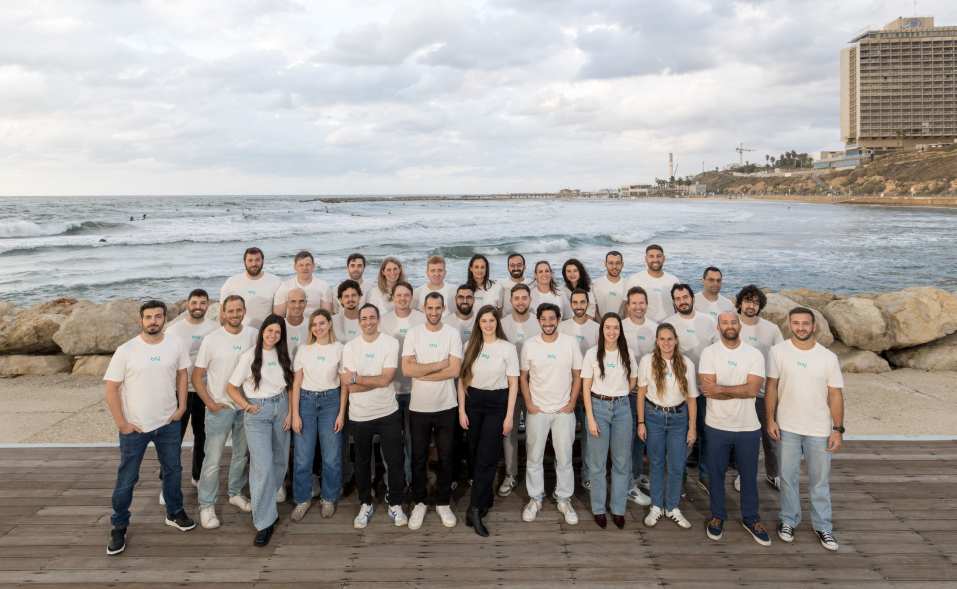
Israeli cybersecurity startup Bay raised $37 million in Series A financing led by Battery Ventures. The company also disclosed a previously completed $13 million seed round led by YL Ventures and Striker Venture Partners. Together, the transactions represent $50 million in cumulative funding. Investors associated with the financing include Micron Ventures and Microsoft’s M12 venture capital arm.
Bay develops security technology designed to monitor and control actions performed by AI agents. As businesses give automated systems access to files, applications, and computing infrastructure, those agents may receive permissions that allow them to perform consequential tasks.
For example, an AI coding assistant might try to modify production settings or access information beyond what is required for an assigned task. Traditional security systems may not always distinguish between legitimate automation and unsafe behavior.
Bay is trying to address that problem by evaluating proposed actions before they execute. Its technology monitors AI agents across employee devices, cloud environments, and business applications. Bay’s customers include Micron, Peloton, ClickUp, and Wix.
Why investors see a new security opportunity
Many AI security products focus on the information users send to models or the content models produce. Bay is concentrating on the actions agents take after generating their responses. That distinction matters because an apparently harmless instruction can lead to an inappropriate system modification if an agent has excessive permissions.
Bay’s proposed advantage comes from monitoring those actions within the customer’s environment. However, the company must show its technology can accurately identify unsafe behavior without preventing legitimate work. Excessive warnings or blocked actions could reduce productivity. Insufficient controls could leave customers exposed to security incidents.
For investors, the opportunity depends on whether organizations adopt AI agents widely enough to create demand for specialized runtime security. The company must also compete with established cybersecurity vendors developing similar capabilities.
Funding Details
Startup: Bay
Investors: Battery Ventures, Micron Ventures, M12, and other participants; previous seed investors include YL Ventures and Striker Venture Partners
Amount Raised: $37 million in new Series A; previous $13 million seed disclosed separately
Total Raised: $50 million
Funding Stage: Series A
Funding Date: November 10, 2026
Headquarters: Tel Aviv, Israel
Sector: Cybersecurity / AI agent security/enterprise software
Valuation: Not disclosed
Tendrils Compute raises $30M in funding to rethink conventional CPU architecture

British semiconductor startup Tendrils Compute raised $30 million in financing led by Benchmark. Investors included Visionaries Club, the UK Sovereign AI Fund, FR8, Antimatter, Cloudberry, Conviction, Embassy Ventures, SV Angels, and individual backers. The financing has been described as seed-stage investment. A valuation was not disclosed.
Based in Cambridge, Tendrils is developing a different approach to general-purpose computing. Modern central processing units have evolved over decades, retaining compatibility with software and architectural decisions made for earlier processor generations. That compatibility has commercial advantages, but it can also complicate efforts to redesign computing systems around newer workloads.
Tendrils is developing processors designed for extensive parallel computation. The company envisions chips containing thousands of cores that can operate simultaneously. Its work also includes Vine, an open-source programming language being developed alongside the proposed hardware architecture.
The goal is to design software and processors together rather than adapting new hardware to existing programming assumptions.
Why the investment is strategically significant
Semiconductor innovation has increasingly focused on specialized accelerators, particularly GPUs used for AI workloads.
Tendrils is pursuing a different question: whether general-purpose computing itself can be redesigned around parallel execution. If successful, the approach could create opportunities involving computational efficiency and performance. However, the technical and commercial challenges are substantial.
New processors require software tools, compiler support, manufacturing partnerships, and applications that use the architecture effectively. Developers often resist adopting unfamiliar computing systems unless the performance benefits justify the transition.
Tendrils has not disclosed a commercial chip shipment schedule or existing production deployments. Its latest financing supports research and engineering rather than expanding an established semiconductor manufacturing business.
For investors, the opportunity is potentially significant, but the company’s competitive position remains largely to be demonstrated.
Funding Details
Startup: Tendrils Compute
Investors: Benchmark, Visionaries Club, UK Sovereign AI Fund, FR8, Antimatter, Cloudberry, Conviction, Embassy Ventures, SV Angels, and individual investors
Amount Raised: $30 million
Total Raised: Not disclosed
Funding Stage: Seed, as reported
Funding Date: November 10, 2026
Headquarters: Cambridge, United Kingdom
Sector: Semiconductors/processor architecture/computing infrastructure
Valuation: Not disclosed
What Today’s Funding Activity Reveals
1. AI investment is becoming more specialized
Mercor, Blue J, Daylight, Charta, and Bay are addressing distinct problems created or influenced by AI adoption.
Mercor provides human expertise and evaluation infrastructure.
Blue J specializes in tax research.
Daylight automates security investigations.
Charta analyzes medical documentation.
Bay evaluates the actions performed by AI agents.
These businesses are not direct substitutes for one another. Their opportunities depend on expertise, customer integration, and performance within specialized markets.
2. Physical AI is attracting substantial financial commitments
Path Robotics’ $300 million Series E demonstrates investor interest in applying AI to manufacturing. Its systems must perform physical tasks reliably rather than generate digital content. That distinction creates additional requirements involving hardware, sensors, safety, and maintenance. However, it can also establish competitive advantages through engineering expertise and operational data.
Path’s financing suggests investors see opportunities in industrial tasks that conventional automation has struggled to perform economically.
3. Cybersecurity investors are targeting the risks created by autonomous software
Daylight and Bay represent two different approaches to AI-related security.
Daylight combines automated detection with human security engineers.
Bay focuses on the actions AI agents are permitted to perform. Both address concerns that become more important as businesses give automated systems greater operational responsibilities. The emerging opportunity is not simply to monitor what AI systems say, but to control what they can do.
4. Enterprise AI is moving closer to financial accountability
Blue J and Charta address workflows with identifiable economic costs.
Tax professionals spend time researching and preparing advice.
Healthcare organizations spend money reviewing claims and correcting billing errors. If AI can reduce those expenses without compromising quality, customers have a clearer reason to adopt it. That creates opportunities for startups that can demonstrate measurable financial benefits.
5. Alternative computing architectures are attracting early-stage capital
Tendrils Compute is pursuing a technically ambitious approach to processor design.
Its funding is much smaller than Mercor’s or Path Robotics’, but its potential implications extend beyond a single application.
The company is questioning longstanding assumptions about how general-purpose processors should operate. However, early financing does not establish that its proposed architecture will achieve competitive commercial performance.
6. Space technology investment remains open to unconventional ideas
Reflect Orbital’s $73.5 million financing illustrates investor willingness to support ambitious engineering concepts.
The company’s proposed orbital reflectors could have useful applications if they operate as intended. However, technical feasibility, environmental effects, regulatory requirements, and commercial economics remain unresolved. Its financing demonstrates investor conviction in a research direction, not proof of a working energy business.
7. Financial infrastructure is adapting to automated transactions
Clara and Alta are targeting different parts of financial operations.
Clara provides existing corporate payment and expense management services while adding automation.
Alta is building infrastructure for financial institutions that may support tokenized assets and automated transactions.
Both could benefit from companies using more software to manage financial decisions. However, financial institutions require dependable controls, regulatory compliance, and clear accountability. Those requirements may become sources of differentiation for providers that implement them successfully.
8. The day’s capital is concentrated in a small number of companies
Mercor’s $750 million and Path Robotics’ $300 million represent $1.05 billion, or approximately 65% of the $1.614 billion in announced transaction sizes.
Adding Blue J brings the three largest rounds to $1.226 billion, approximately 76% of the total. The headline financing figure should not be interpreted as evidence that every startup sector is attracting similarly large investments.
9. Strategic investors are participating across the technology supply chain
Nvidia invested in Mercor.
Goldman Sachs Alternatives led Daylight’s financing.
Microsoft-affiliated M12 participated in Bay.
Financial institutions and specialized venture firms are also backing Alta, Clara, and Blue J. These investments indicate interest in technologies relevant to the investors’ existing businesses or markets. However, commercial benefits and financial returns remain uncertain.
10. Financing disclosures require careful interpretation
Several announcements include figures that are not directly comparable.
Mercor’s $750 million transaction includes employee-share liquidity.
Clara’s $105 million announced package includes only $65 million in new equity and a separate $40 million facility renewal.
Alta’s $80 million cumulative funding includes $32.5 million raised previously.
Bay’s $50 million cumulative total includes a previously undisclosed $13 million seed round.
Those distinctions materially affect any attempt to calculate new venture capital startups received during the reporting period.
Funding Table
| Startup | Amount Raised | Sector | Funding Stage | Lead/Key Investors | Country |
|---|---|---|---|---|---|
| Mercor | $750M, including undisclosed employee tender | AI training/model evaluation | Series D | Benchmark, Felicis, Nvidia, General Catalyst | United States |
| Path Robotics | $300M | Industrial robotics / physical AI | Series E | Georgian, Addition, Drive Capital, Tiger Global | United States |
| Blue J | US$176M | Tax technology/enterprise AI | Series E | JMI Equity, Oak HC/FT, Sapphire Ventures | Canada |
| Daylight Security | $80M | Cybersecurity / AI security operations | Series B | Goldman Sachs Alternatives, Okta Ventures | United States |
| Reflect Orbital | $73.5M | Space technology/energy infrastructure | Not disclosed | Sequoia Capital, Lux Capital, Salesforce Ventures | United States |
| Clara | $65M equity; separate $40M facility renewal | Corporate payments/fintech | Series C | Citius, Kaszek, DEG | Mexico |
| Charta Health | $55M | Healthcare AI / medical billing | Series B | Insight Partners, Madrona, Bain Capital Ventures | United States |
| Alta | $47.5M | Blockchain / institutional financial infrastructure | Series A | Index Ventures, GV, Blackbird Ventures | United States |
| Bay | $37M | AI agent security/cybersecurity | Series A | Battery Ventures, Micron Ventures, M12 | Israel |
| Tendrils Compute | $30M | Semiconductors/processor architecture | Seed, reported | Benchmark, Visionaries Club, UK Sovereign AI Fund | United Kingdom |
Funding totals: Today’s total funding transactions represent $1.614 billion in announced round sizes. The figure includes an undisclosed secondary component in Mercor’s financing and therefore is not an exact total of newly available operating capital.
Excluding Mercor, the other nine announced rounds total $864 million. The daily funding total excludes Clara’s renewed $40 million financing facility, Alta’s previously completed $32.5 million seed financing, and Bay’s previously completed $13 million seed investment.
Strategic Takeaways for Founders and Investors
1. Specialized expertise can become valuable AI infrastructure. Mercor is building a business around the human knowledge required to train and evaluate advanced models. Founders should consider whether proprietary expertise, evaluation methods, or industry-specific workflows can establish advantages beyond access to general-purpose models.
2. Industrial AI must prove itself through physical performance. Path Robotics is addressing manufacturing tasks with measurable operating costs. Its ability to expand will depend on welding quality, equipment reliability, customer utilization, and production economics.
3. Professional AI products need verifiable outputs. Blue J operates in a field where incorrect answers can have financial and legal consequences. Its emphasis on supporting sources and professional review illustrates why accuracy and accountability can influence enterprise purchasing decisions.
4. Security should follow the actions performed by AI agents. Daylight and Bay demonstrate growing investor interest in controlling autonomous software. Founders developing AI agents should consider permissions, monitoring, incident response, and human approval mechanisms early in product development.
5. Healthcare automation must improve accuracy, not simply processing speed. Charta’s opportunity depends on reducing medical billing errors without introducing new compliance risks. Investors should evaluate denial rates, coding accuracy, audit outcomes, and customer savings rather than relying exclusively on workflow automation claims.
6. Unconventional technology requires equally strong commercial evidence. Reflect Orbital is pursuing a potentially significant new capability, but it has not demonstrated commercial sunlight delivery. Investors should assess technical milestones, regulatory approvals, environmental impacts, and eventual unit economics separately.
7. AI-enabled financial services must operate within established controls. Clara and Alta are developing different forms of automated financial infrastructure. Their products must balance efficiency with security, compliance, and clear transaction authorization.
8. Financial performance matters more than the size of a funding package. Clara reports more than $100 million in annualized net revenue and positive EBITDA. Those figures provide useful operating context, although they remain company-reported. Investors should distinguish business performance from the size of associated equity and credit facilities.
9. Hardware and software should be evaluated together. Tendrils is developing a new processor architecture alongside a programming language intended to use that hardware. The opportunity depends on whether the combined system provides advantages sufficient to justify adoption.
10. Corporate investors can strengthen a startup’s commercial position. Nvidia’s involvement in Mercor and Microsoft’s venture investment in Bay may provide industry expertise and commercial relationships. However, participation alone does not establish customer demand or future revenue.
11. Founder and employee liquidity should be separated from business financing. Mercor’s employee tender illustrates an important distinction in late-stage startup transactions. Money used to purchase existing shares can benefit employees and shareholders without increasing the company’s operating cash by the same amount.
12. Valuation growth is not proof of sustainable economics. Mercor’s $20 billion valuation, Path Robotics’ $2.45 billion valuation, and Blue J’s valuation above $700 million reflect investor expectations. Customer retention, margins, revenue quality, and the cost of continued growth will determine whether those expectations are justified.
Conclusion
November 11’s startup funding activity reveals a venture market committing substantial capital to companies addressing the practical requirements of artificial intelligence and advanced technology.
Mercor’s $750 million Series D demonstrates investor confidence in the infrastructure needed to train and evaluate increasingly capable AI systems. Path Robotics’ $300 million Series E reflects demand for intelligent machines that can perform difficult manufacturing tasks. Blue J’s $176 million financing shows how specialized professional software can attract significant investment when it addresses established customer needs.
The remaining transactions reinforce the broader pattern.
Daylight and Bay are developing different approaches to cybersecurity in an increasingly automated workplace. Charta is tackling medical billing errors. Clara and Alta are modernizing financial infrastructure, while Tendrils is rethinking the architecture of general-purpose computing.
Reflect Orbital represents a different kind of investment: a technically ambitious attempt to create an entirely new infrastructure service.
These businesses face different challenges. Some must expand established software operations, while others must show their technology works reliably in physical or highly regulated environments. What connects them is an investment thesis centered on solving problems that become more important as technology adoption increases. The largest rounds show strong investor conviction, but they also create higher expectations.
For founders, the lesson is that technical differentiation matters most when it produces measurable advantages for customers. For investors, the challenge is determining which companies can maintain those advantages as competition increases and the cost of building sophisticated technology continues to rise.
Today’s funding announcements show where investors believe future value will be created. The companies’ operating results will determine whether that value actually materializes.