Top Tech News Roundup for Today, November 9, 2026: Nvidia’s $200B Wipeout, Google’s TPU 8tx, Anthropic IPO, Tesla Refunds & More
 Nickie Louise
Posted On November 9, 2026
TechStartups Daily Global Technology Digest | Monday Evening Edition
It’s Monday, November 9, 2026, and the tech industry is closing the day with another stunning contradiction: Wall Street staged a powerful comeback, but Nvidia, the company at the heart of the AI boom, watched more than $200 billion in market value disappear amid an investigation involving CEO Jensen Huang. The Nasdaq surged 2.7%, while Nvidia fell more than 4%, raising fresh questions about leadership and national security at the world’s most influential AI chipmaker. **The big question: Can the tech giants keep pushing AI forward while convincing investors and regulators that the risks are worth taking?**
The financial stakes remain enormous. Anthropic is pressing ahead with plans for a potentially historic IPO despite mounting concerns about AI valuations. Meanwhile, French investment firm Ardian has assembled €1 billion to invest across the semiconductor supply chain, while European defense startup Onodrim has secured $300 million to acquire and develop aerospace and industrial manufacturers.
But the physical infrastructure behind AI is encountering new limits. Norway has temporarily stopped accepting new electricity grid reservations for data centers as proposed computing demand strains available capacity. Google, meanwhile, has unveiled two specialized versions of its latest AI processors, targeting secure enterprise computing and applications that require substantially more memory.
The competition is also spreading into creative software and consumer technology. Adobe and Disney announced a partnership to develop proprietary generative AI models using Disney’s intellectual property, while WordPress.com owner Automattic launched Spacefast, a platform for publishing applications built with AI coding assistants.
Autonomous transportation is facing its own challenges. Tesla announced plans to refund Cybertruck deposits as it shifts manufacturing priorities toward its Cybercab robotaxi. Federal regulators have also opened a new review of Waymo vehicles following reports that some continued passing stopped school buses despite a previous software update.
Cybersecurity and corporate accountability remain in focus. Researchers reported active exploitation of a recently patched OpenSSH vulnerability affecting certain Linux systems, while a federal judge allowed a lawsuit challenging Anthropic’s marketing of premium Claude subscriptions to proceed.
The larger story is becoming clearer: AI is still attracting extraordinary capital, but technical capability alone is no longer enough. Investors, regulators, and customers are demanding stronger security, clearer economics, and greater accountability.
Here are the 15 biggest technology stories that shaped the day.
Nvidia Loses More Than $200 Billion in Market Value as Jensen Huang Investigation Deepens
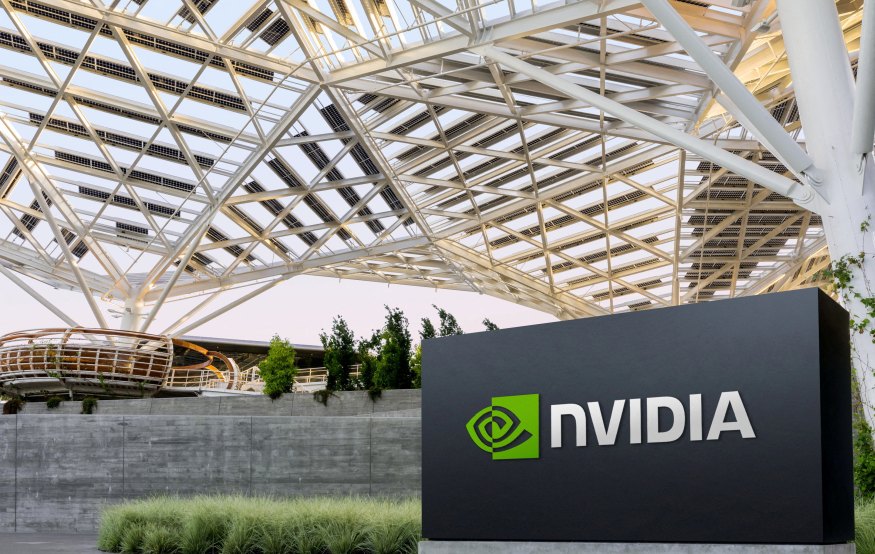
Nvidia shares fell about 4.4% Monday after the company launched an independent investigation into allegations that a foreign intelligence operation targeted CEO Jensen Huang. The decline erased more than $200 billion in market capitalization even as the broader technology market rallied. Nvidia’s board announced the investigation Sunday, appointing a committee of independent directors supported by outside legal counsel. The review follows reporting that Huang had a personal relationship with a business executive whom U.S. intelligence officials allegedly suspected of gathering information for China. Huang acknowledged the relationship in communications with employees and said he would cooperate fully with the investigation. Nvidia emphasized that its board currently has no reason to believe company secrets or U.S. national security information were compromised. The allegations remain under investigation and have not been established as proven espionage.
The controversy creates unusual uncertainty for a company whose leadership has become closely associated with the development of modern AI computing. Huang has played a central role in Nvidia’s product strategy, customer relationships, and international expansion. Reports also raised questions about business relationships involving Singapore-based data-center operator Megaspeed and whether U.S. authorities properly handled earlier concerns about semiconductor exports. China has rejected the spying allegations. Nvidia’s board has publicly expressed confidence in Huang, and the company has not announced any leadership change. Nevertheless, the investigation introduces governance and reputational risks at a time when Nvidia is already dealing with export restrictions and growing scrutiny of AI infrastructure spending. Investors will be watching for findings from the independent review rather than treating unverified allegations as established facts.
Why It Matters: Nvidia’s investigation introduces substantial leadership and national-security uncertainty for a company whose processors underpin much of the global AI industry.
Source: Nvidia; Associated Press
Nasdaq Surges 2.7% as Wall Street Rebounds From AI Selloff, Even as Nvidia Slides
U.S. stocks staged their strongest rally since April on Monday, recovering part of last week’s technology-led losses as falling oil prices eased inflation concerns. The Nasdaq Composite gained 2.7%, or 673.71 points, closing at 25,253.14. The S&P 500 advanced 2.3% to 7,549.94, while the Dow Jones Industrial Average added approximately 1,104 points to close at 52,389.75. Smaller companies also participated in the rebound, with the Russell 2000 gaining 3.1%. The recovery followed a turbulent week in which investors sold technology stocks over concerns that post-election regulatory pressure could delay data-center construction and undermine AI infrastructure valuations. Nvidia was a notable exception to Monday’s rally, declining amid its leadership investigation.
The market’s mixed performance illustrates how investors are distinguishing between broad economic conditions and risks affecting individual AI companies. Brent crude fell about 5.8% after diplomatic developments reduced fears of additional disruption involving Iran, easing concerns about energy costs and inflation. Lower energy prices can benefit businesses and consumers, but the decline does not resolve the long-term electricity requirements of AI data centers. Large cloud providers and semiconductor manufacturers continue pursuing substantial infrastructure investments, while lenders and shareholders increasingly question the returns on those commitments. Nvidia’s decline during an otherwise strong session also shows that company-specific governance issues can outweigh favorable market conditions. Monday’s rebound should not be interpreted as proof that the AI selloff has ended. It does, however, demonstrate that investor confidence remains sensitive to changing expectations about energy prices, regulation, and technology profitability.
Why It Matters: Wall Street’s rebound shows that technology valuations remain sensitive to broader economic conditions even as investors become more selective about AI-related risks.
Source: Associated Press
Norway Suspends New Data Center Grid Reservations as AI Electricity Demand Overwhelms Capacity
Norway’s national electricity grid operator Statnett announced Monday that it is temporarily suspending new grid-capacity reservations for data centers as rapid expansion threatens the secure operation of the country’s power system. The restrictions also affect certain applications involving technical approval of new facilities. Statnett expects to lift the temporary measures no later than August 1, 2027, after developing additional rules governing large electricity consumers. The operator disclosed that approximately 800 megawatts of data-center demand is currently connected to Norway’s grid. Developers have already reserved another 4,200 megawatts, while 9,100 megawatts sits in the capacity queue. Additional inquiries account for approximately 18,000 megawatts. For perspective, Norway’s maximum national electricity demand is slightly above 25,000 megawatts.
The announcement represents one of the clearest examples yet of how AI infrastructure expansion can collide with national electricity planning. Norway has attracted data-center developers because of its energy resources and comparatively cool climate. However, large computing facilities place substantial and continuous demands on electricity systems, and the technical characteristics of that demand can complicate grid management. Government officials are considering a licensing framework that could prioritize facilities supporting essential domestic services, including healthcare, emergency communications, and defense. The suspension does not automatically disconnect existing facilities or cancel every previously approved project. Instead, it introduces uncertainty for developers hoping to secure new capacity. Companies may ultimately need to provide dedicated electricity generation or accept more demanding technical requirements. Norway’s decision could influence policy discussions in other countries facing similar pressure from large AI projects.
Why It Matters: Norway’s decision demonstrates that electricity availability and grid stability are becoming major constraints on AI data-center expansion, even in countries with substantial energy resources.
Source: Statnett
Google Launches TPU 8tx and TPU 8i Max to Challenge Nvidia in Secure Enterprise AI and Long-Context Computing
Google unveiled two specialized configurations of its eighth-generation Tensor Processing Unit technology Monday, expanding its AI hardware portfolio as competition with Nvidia intensifies. The new TPU 8tx targets confidential computing, allowing organizations to process sensitive information with additional hardware-level security protections. The TPU 8i Max is designed for demanding AI applications requiring large context windows and substantial memory capacity. Google says the latter combines two TPU 8i chips in a single package, delivering twice the compute capacity, static memory, and high-bandwidth memory bandwidth of a standard TPU 8i. The company emphasized that the products are specialized system configurations rather than completely new processor architectures. Their introduction brings Google’s eighth-generation TPU lineup to four configurations within a single year.
The expansion reflects growing differences in how enterprises use AI. Training large models, serving interactive chatbots, and operating autonomous agents can require different combinations of computing resources, memory, security, and software. Applications processing confidential government or financial information may prioritize hardware isolation, while agents working across large codebases or lengthy documents may need more memory. Google also announced software improvements intended to reduce idle computing costs and make TPUs easier to use through familiar development tools such as PyTorch. These changes could reduce the barriers that have historically favored Nvidia’s software ecosystem. However, Google’s performance claims largely come from its own evaluations, and customers will need to assess pricing and reliability under real workloads. Commercial adoption will also depend on availability and compatibility with existing applications.
Why It Matters: Google’s TPU expansion gives enterprises more specialized AI infrastructure options while increasing competitive pressure on Nvidia across security-sensitive and memory-intensive workloads.
Source: Google Cloud
Anthropic Presses Ahead With Planned IPO as Investors Reconsider $1.5 Trillion Valuation
Anthropic is moving forward with preparations for its anticipated public offering (IPO) despite renewed volatility in AI-related stocks, as major investors reassess the company’s potential valuation. The Claude developer has reportedly scheduled meetings with institutional investors and is targeting a Nasdaq listing under the symbol ANT as early as the week of November 16. According to Wall Street Journal reporting published Monday, the company is working with Goldman Sachs and Morgan Stanley to set an offering price that balances strong investor demand with the risk of an overly ambitious valuation. Earlier discussions centered on approximately $1.5 trillion, but some prospective investors now favor a lower figure. The company has not announced a final offering price, share count, or proceeds target. The anticipated listing remains subject to market conditions and could be postponed.
The IPO would represent an important financial test for the frontier AI industry. Anthropic has reported extraordinary commercial growth through Claude, its coding tools, and enterprise services, but its computing commitments and operating costs remain substantial. Public-market investors will have to evaluate whether future revenue can support long-term infrastructure obligations, including leases and other agreements extending for many years. Recent declines in AI-related equities have increased scrutiny of businesses whose valuations depend on continued rapid growth. The company also faces competition from OpenAI, Google, Meta, and other developers with different funding structures and distribution advantages. A successful offering could strengthen Anthropic’s financial position and provide a valuation benchmark for the broader industry. However, a prominent IPO does not eliminate the underlying challenge of converting high demand into dependable cash flow and profits.
Why It Matters: Anthropic’s planned listing could establish a major public-market benchmark for frontier AI economics as investors reassess the valuations and infrastructure commitments of leading model developers.
Source: The Wall Street Journal
Tesla to Refund Cybertruck Deposits as Musk Confirms Production Will End in 2027 to Make Way for Cybercab
Tesla will refund deposits to some Cybertruck customers after CEO Elon Musk confirmed the company plans to end production of the electric pickup around mid-2027. In a Monday post on X, Musk said Tesla would attempt to produce as many outstanding orders as possible before closing the line in approximately eight months. He argued that the company had more orders than it could fulfill during that period and that some customers would therefore receive refunds. Tesla has not disclosed how many deposits it will return or their total value. Musk defended the decision to discontinue the Cybertruck, saying it was driven by the potential value of expanding Cybercab production rather than a lack of profitability. His explanation reflects the company’s position, not independent evidence of the vehicle program’s financial performance.
The decision marks a substantial strategic shift for Tesla. Introduced with expectations of becoming a major product in the electric pickup market, Cybertruck has sold far fewer vehicles than Musk initially projected. Industry data cited in recent reporting showed U.S. sales fell 48% to approximately 20,237 vehicles during 2025, well below earlier ambitions of hundreds of thousands annually. Tesla is now focusing more on autonomous transportation and robotics, including its Cybercab robotaxi. Shifting manufacturing capacity may allow the company to prioritize a product it believes offers stronger long-term returns. However, the commercial economics of robotaxis remain uncertain, particularly as regulators examine the safety of autonomous driving systems. For customers, the immediate concern is whether Tesla will fulfill their Cybertruck orders. For investors, the development raises broader questions about Tesla’s evolving product strategy.
Why It Matters: Tesla’s Cybertruck decision signals a shift in manufacturing priorities toward autonomous transportation while highlighting the risks of large hardware investments based on ambitious demand forecasts.
Source: CBS News
Adobe and Disney Announce Custom AI Model Partnership for Theme Parks, Studios, and ESPN
Adobe and The Walt Disney Company announced a multiyear partnership Monday to develop proprietary generative AI models using Disney’s intellectual property, expanding their relationship across entertainment production, theme parks, and sports media. Adobe will serve as an official AI innovation partner and provide technology including Firefly, Firefly Foundry, Premiere, and Photoshop, along with engineering and research support. Disney’s creative teams will use customized models designed around approved characters, environments, visual styles, and other proprietary material. Walt Disney Imagineering is already experimenting with sketch-to-image technology that converts early drawings into rendered visual concepts for theme park development. The partnership will also support The Walt Disney Studios’ StudioLAB and ESPN’s Edge Innovation Center. Financial terms were not disclosed.
The agreement shows how large media companies are approaching AI differently from businesses that rely on general-purpose image generators. Disney controls extensive collections of intellectual property and maintains strict requirements for visual consistency, brand protection, and production quality. Customized models may let its teams explore concepts faster while reducing some repetitive work. However, AI-generated materials still require human review, particularly when they involve established characters or commercially sensitive projects. The companies say creative professionals will remain central to the process. Beyond theme park design, Adobe and Disney plan to explore applications in film production, post-production, visual effects, and sports archives. The partnership could strengthen Adobe’s enterprise AI business while giving Disney additional tools to manage complex creative workflows. Its financial and operational impact will depend on actual deployment and measurable improvements in production efficiency.
Why It Matters: The Adobe-Disney partnership demonstrates how companies with valuable intellectual property are developing customized AI models rather than relying exclusively on general-purpose generative tools.
Source: Adobe Newsroom
U.S. Opens New Investigation Into 2,895 Waymo Robotaxis Over School Bus Safety Violations
The National Highway Traffic Safety Administration has opened a recall query covering 2,895 Waymo vehicles after receiving reports that robotaxis continued passing stopped school buses despite a previous software update intended to address the problem. The investigation was disclosed Monday and concerns Waymo vehicles encountering buses displaying flashing red lights or extended stop arms. Federal regulators previously reviewed incidents in which autonomous vehicles failed to respond appropriately to these signals. Waymo issued a voluntary recall and deployed a software remedy in November 2025. However, NHTSA said the majority of reported incidents occurred after that remedy was installed. The agency will now examine whether the update adequately corrected the underlying defect and investigate why reports continued. A recall query is an investigation, not a completed finding that every affected vehicle remains defective.
The investigation raises important questions about how autonomous vehicle companies validate software fixes. A robotaxi may perform successfully across millions of miles while still failing in specific situations where safety requirements are unusually strict. Stopped school buses present a particularly sensitive case because their warning signals are designed to protect children entering or leaving vehicles. Waymo operates commercial robotaxi services in several American cities and is pursuing additional geographic expansion. Regulators must therefore determine whether the problem is isolated to particular scenarios or indicates a broader weakness in the vehicle’s perception and decision-making systems. The company also faces other safety investigations, including a separate incident involving a child near a school in California. The latest review demonstrates the importance of evaluating autonomous systems after software changes rather than assuming a deployed update has resolved every underlying risk.
Why It Matters: The Waymo investigation highlights how difficult it is to ensure autonomous driving systems reliably correct safety problems before expanding commercial operations.
Source: Reuters
Automattic Launches Spacefast to Host AI-Built Apps as WordPress Owner Expands Beyond Publishing
Automattic, the company behind WordPress.com, announced Monday that it has launched Spacefast, a hosting and deployment platform designed for applications created with AI coding tools. The service lets users build websites and software with assistants such as ChatGPT, Claude, Cursor, and other supported systems, then deploy them on managed infrastructure. Spacefast provides services including databases, authentication, file uploads, email capabilities, analytics, and content delivery. Users can also connect existing Git repositories instead of starting with a new AI-generated project. The platform was developed internally and tested through an earlier limited rollout before its public launch. Automattic is positioning Spacefast as a way to simplify the work of turning an AI-generated prototype into an operational application.
The launch reflects a major change in how software products are being created. AI coding assistants have made it easier for founders and nontechnical users to produce working interfaces, but deploying and maintaining those applications can still require substantial knowledge of databases, hosting, security, and infrastructure. Automattic wants to supply those services through a platform that works with multiple AI assistants rather than requiring customers to use a single model. Its existing experience operating WordPress infrastructure could provide advantages involving hosting, scalability, and customer support. However, the new service faces competition from established deployment platforms and newer AI-native app builders. Customers will also need reliable controls over data access, application security, and operating costs. For founders, Spacefast could reduce some technical barriers to launching software, but it does not eliminate the need to validate customer demand or maintain applications after deployment.
Why It Matters: Spacefast expands the infrastructure available to AI-assisted software builders and signals Automattic’s effort to compete beyond its traditional WordPress publishing business.
Source: Automattic
Meta Expands AI Age Detection Worldwide to Automatically Place Teenagers Into Safer Instagram Accounts
Meta announced Monday that it is expanding AI-powered age estimation across Instagram worldwide, allowing the company to identify users it believes are teenagers even when they registered using an adult birth date. Accounts identified as belonging to people between 13 and 17 will automatically receive Teen Account protections, including stricter privacy settings, limits on unsolicited messages, and restrictions affecting certain content. Meta says the system examines account information and behavioral signals rather than relying exclusively on the birth date entered during registration. The company is also expanding similar age-estimation capabilities on Facebook and plans to introduce them globally on Threads later this year. In Australia, Meta has begun using Apple’s age-range information as another way to evaluate users’ ages. The rollout builds on earlier deployments and commitments associated with consumer protection settlements.
The expansion comes amid growing regulatory scrutiny of social media platforms and their effects on children. Governments increasingly expect technology companies to demonstrate that age-related safeguards work even when users provide inaccurate information. AI-based estimation could reduce the need to collect government identification from every customer, but it introduces concerns about false classifications, privacy, and transparency. Adults incorrectly identified as teenagers may need to provide additional evidence to restore ordinary account settings. Meta says U.S. parents will receive additional information explaining how the system operates and how to correct inaccurate age information. The company must also distinguish users younger than 13, who generally are not eligible to maintain ordinary Instagram accounts, from teenagers who may use the service under additional safeguards. The initiative could influence how competing platforms approach age assurance.
Why It Matters: Meta’s global rollout shows how AI-based age estimation is becoming part of mainstream social media safety and regulatory compliance.
Source: Meta
Onodrim Raises $300 Million in Funding at $1.3 Billion Valuation to Acquire European Defense Manufacturers
European defense technology company Onodrim Industries announced Monday that it has raised $300 million in Series A financing at a $1.3 billion valuation. Lux Capital led the investment, with participation from General Catalyst, Lakestar, Altimeter, Strike Capital, 137 Ventures, 8090, Expeditions, and other investors. The round follows approximately $45 million in earlier seed financing. Based in Amsterdam, Onodrim intends to acquire controlling stakes in established European businesses operating in aerospace, defense, and industrial manufacturing. Rather than building a single defense product, the company wants to combine existing suppliers into a larger industrial group supported by additional capital, technology, and management expertise. The newly announced investment provides financing for that strategy, but Onodrim has not disclosed a complete list of acquisitions completed in the round.
The company’s approach reflects growing concern about Europe’s ability to manufacture defense equipment quickly enough to meet demand. Many smaller aerospace and industrial suppliers possess specialized engineering capabilities but face constraints involving capital, production capacity, and customer acquisition. Onodrim believes acquiring and developing these companies over a long investment horizon could help address those limitations. Its strategy differs from conventional venture investing, where companies typically seek rapid growth through proprietary technology, and from private equity arrangements focused on eventual resale. However, combining industrial businesses creates challenges involving manufacturing standards, procurement cycles, regulatory approvals, and operational integration. Successful execution will depend on whether the company can acquire appropriate businesses at reasonable valuations and improve their performance. The financing demonstrates how investors are increasingly treating European defense manufacturing as a technology and industrial development opportunity.
Why It Matters: Onodrim’s funding highlights growing investor demand for businesses that can expand Europe’s defense manufacturing capacity through acquisitions and technology-driven operational improvements.
Source: Onodrim Industries
Ardian Raises €1 Billion for Semiconductor Investment Platform as AI Reshapes Chip Supply Chains
French investment manager Ardian announced Monday that it has raised €1 billion for a dedicated semiconductor investment platform focused on companies operating across the global chip supply chain. The platform includes about €700 million in fund commitments, plus additional co-investments. Ardian Semiconductor will target businesses involved in chip design, manufacturing equipment, testing, materials, and related technical services, with a primary focus on Europe and additional opportunities in North America and Asia. The investment firm has already completed four transactions involving VSORA, centrotherm, Synergie CAD, and Ion Beam Services. Those businesses operate in different parts of the semiconductor industry, from AI inference accelerator design to specialized manufacturing equipment. The €1 billion represents capital assembled for an investment strategy, not a single financing round received by one startup.
The launch reflects a major shift in how investors approach semiconductor exposure. While Nvidia, AMD, and major memory manufacturers attract much of the attention surrounding AI infrastructure, producing advanced chips depends on a large ecosystem of smaller specialized companies. These suppliers provide equipment, testing systems, engineering services, and materials required to manufacture increasingly sophisticated processors. Ardian believes some of those businesses can benefit from structural growth while facing less direct competition than companies attempting to develop general-purpose AI accelerators. However, semiconductor investing remains exposed to technological changes, capital-intensive manufacturing, and fluctuations in customer demand. The platform also supports Europe’s broader effort to strengthen domestic semiconductor capabilities. Its future returns will depend on acquisition prices, operational performance, and whether AI-driven chip demand remains strong across multiple parts of the supply chain.
Why It Matters: Ardian’s €1 billion platform demonstrates growing institutional interest in the specialized businesses supporting semiconductor production and Europe’s technological independence.
Source: Ardian
Federal Judge Allows Lawsuit Over Anthropic’s Claude Max Subscription Advertising to Proceed
A U.S. federal judge has allowed significant portions of a proposed class-action lawsuit against Anthropic to proceed, rejecting the company’s attempt to dismiss claims that its Claude Max subscription advertising misled customers. The dispute concerns Anthropic’s marketing of premium plans offering five or 20 times more usage than its lower-priced Claude Pro subscription. Plaintiffs argue that reasonable consumers could interpret those descriptions as promising five or 20 times more usage across an entire month, rather than primarily within shorter usage windows. Anthropic maintains that its advertising accurately describes the service and that it discloses additional usage restrictions to customers. U.S. Magistrate Judge Alex Tse concluded that the competing interpretations could not be resolved at the dismissal stage. The ruling allows claims involving deceptive advertising, negligent misrepresentation, and breach of contract to continue while dismissing some other allegations.
The dispute matters because usage-based AI subscriptions are becoming increasingly important to both consumers and professionals. Developers face substantial costs when customers use advanced models for long coding sessions, research, or automated tasks. Subscription plans often therefore include multiple layers of limits involving time windows, model availability, and total consumption. Those restrictions can be difficult for customers to interpret, particularly when marketing emphasizes simple usage multiples. The lawsuit does not establish that Anthropic deceived customers; the underlying allegations remain to be proven. It does, however, highlight the importance of explaining meaningful service limitations clearly before customers purchase expensive plans. As AI products become embedded in professional workflows, unexpected usage restrictions can affect productivity and purchasing decisions. The eventual outcome could influence how subscription-based AI companies communicate capacity limits.
Why It Matters: The Anthropic lawsuit raises important questions about transparency in AI subscription pricing and how companies explain usage restrictions to paying customers.
Source: Reuters
Hackers Exploit OpenSSH ‘SSHole’ Vulnerability to Bypass Authentication on Certain Linux Systems
Cybersecurity researchers warned Monday that attackers have begun exploiting a recently patched OpenSSH authentication bypass vulnerability affecting certain Linux environments. The flaw, tracked as CVE-2026-123158 and nicknamed SSHole, arises from an interaction involving OpenSSH and the musl C library under specific configurations without Pluggable Authentication Modules. On affected systems, an unusually long password can trigger behavior that causes the authentication process to incorrectly accept a password-protected or otherwise restricted account. Researchers demonstrated that passwords between 257 and 1,024 characters could be used in certain vulnerable configurations. The issue can affect systems based on Alpine Linux and related environments, including some embedded and container-focused installations. It does not establish that every OpenSSH deployment is vulnerable.
Security firms WatchTowr and Previdian reported exploitation attempts during the weekend, with early activity primarily attributed to botnets and cryptocurrency miners. Previdian observed 20 attempts originating from 13 unique IP addresses across nine countries between November 6 and November 8. Successful exploitation could give attackers access to accounts that administrators intended to restrict, including privileged accounts in certain configurations. OpenSSH and affected operating system maintainers have released fixes, and administrators are being urged to upgrade promptly. Security specialists also recommend reviewing authentication logs and restricting password-based access where appropriate. The vulnerability demonstrates how subtle differences between software components can undermine security controls even when each component is widely used. Its appearance in active attacks shows why organizations need to examine their systems’ specific configuration rather than relying solely on a product’s reputation.
Why It Matters: Active exploitation of SSHole highlights the risk of authentication flaws affecting Linux infrastructure used by cloud providers, developers, and businesses operating internet-facing systems.
Source: SecurityWeek
Marble Imaging Raises €6 Million to Build European Satellite Constellation for Defense and Earth Observation
German space technology startup Marble Imaging announced Monday that it raised an additional €6 million, led by Cherry Ventures, to accelerate development of a commercial Earth-observation satellite constellation. The financing extends an earlier €5.3 million seed round led by High-Tech Gründerfonds, bringing the combined seed financing to €11.3 million. Based in Bremen, Marble Imaging is developing satellites intended to capture very-high-resolution images of the Earth’s surface for defense, infrastructure, environmental monitoring, and other applications. The company says its first satellite has completed preflight testing and is scheduled for launch in early 2027. It aims to build a constellation of approximately 30 satellites by 2030. Those milestones remain development plans, not evidence that the complete network is already operational.
The investment reflects growing European interest in controlling access to strategically important Earth-observation information. Governments and businesses use satellite imagery to monitor infrastructure, detect environmental changes, evaluate security threats, and respond to disasters. However, high-resolution imagery can depend on commercial providers based outside Europe, potentially creating availability concerns during international crises. Marble wants to combine its own spacecraft with AI-powered analytics that turn images into useful operational information. The company reports existing commercial relationships and plans to expand satellite capacity as financing becomes available. However, deploying a constellation requires repeated successful launches, dependable satellite operations, ground infrastructure, and continuing customer demand. The new funding will support its first mission and subsequent development, but achieving its long-term ambitions may require significant additional investment.
Why It Matters: Marble Imaging’s financing supports Europe’s efforts to develop more independent Earth-observation infrastructure while creating opportunities for AI-assisted geospatial analysis.
Source: Marble Imaging
That’s your quick tech briefing for today. Follow us on X @TheTechStartups for more real-time updates.