Finnish startup Vensum Power raises €9M to cut energy losses, targets AI data centers
 Daniel Levi
Posted On November 6, 2026
AI data centers are consuming electricity at a staggering rate, but generating more power isn’t the only answer. Now, a promising Finnish startup is betting the industry can use the electricity it already has better by tackling an overlooked problem: energy lost before it reaches the machines that need it.
Today, Vensum Power announced it has raised €9 million in Series A funding to scale its software-defined power conversion technology, which aims to reduce electricity losses and help businesses get more usable energy from existing infrastructure. The company plans to bring its technology into mass production in 2027, with AI data centers emerging as its next major opportunity.
The funding round was co-led by Lifeline Ventures, Larsen & Toubro Group, and Eviny Ventures, bringing Vensum Power’s total capital raised to €15.2 million. Existing investors Grid.vc and Harjavalta Ventures participated in the round.
Founded in 2018 and based in Espoo, Finland, Vensum Power is tackling an often-overlooked problem in the electricity supply chain: energy lost during power conversion.
Electricity rarely travels directly from the grid to the equipment that uses it. Along the way, it must be converted between alternating current and direct current or adjusted to different voltage levels. Each conversion can waste energy, often as heat.
Those losses may seem small individually, but they add up quickly in facilities operating around the clock. For AI data centers packed with power-hungry computing equipment, even modest efficiency improvements could translate into meaningful electricity savings.
Vensum Power believes its software-controlled converters can help address that problem.
Unlike conventional systems that may operate most efficiently within a narrower range of conditions, Vensum’s technology is designed to maintain high efficiency as electrical loads fluctuate. The company says its approach lets more available electricity reach the equipment that needs it.
The potential applications extend beyond AI infrastructure. Vensum initially plans to serve electric vehicle charging networks, battery energy storage systems, and direct-current microgrids.
Why Vensum Power is betting on AI data centers
The timing reflects a growing problem facing the technology industry. AI companies are investing heavily in computing infrastructure, yet access to electricity is becoming a major obstacle to building and operating new data centers.
Much of the industry’s attention has focused on securing additional generation capacity, expanding grids, and developing new energy sources. Vensum is approaching the challenge from another direction: improving how efficiently electricity moves through existing systems.
Peter Nisula, CEO of Vensum Power, said the new financing marks the company’s transition from technology development to industrial-scale manufacturing.
“The question in data centers is no longer only how powerful the chips are, but how efficiently the used electricity actually reaches them. Thanks to the software-defined approach, our converters operate consistently at extremely high efficiency even with rapidly changing loads,” Nisula said in the funding announcement.
The company’s strategy comes with significant technical and commercial hurdles.
Power conversion equipment must satisfy demanding reliability requirements, particularly in data centers where electrical failures can disrupt expensive computing operations. Customers will need convincing evidence that the technology delivers measurable savings under real operating conditions.
Vensum has not disclosed detailed, independently verified efficiency results, major data center customers, or a valuation for its latest funding round.
Its immediate priority is manufacturing. The startup expects to begin mass production through manufacturing partners in 2027, initially serving EV charging, energy storage, and DC microgrids. AI data centers represent a subsequent expansion opportunity rather than an established commercial market.
The investment also brings industrial expertise into Vensum’s shareholder base. Larsen & Toubro operates across engineering and technology, and Eviny has longstanding experience in renewable energy and electricity infrastructure.
For Vensum, those relationships could prove valuable as it attempts to move from promising technology to commercially viable hardware.
The broader opportunity is compelling. AI infrastructure is creating enormous demand for electricity, but adding new generating capacity takes time and money. Using existing capacity more effectively could offer another way to ease the pressure.
For a startup with roughly 20 employees, the challenge is now turning an engineering advantage into a product customers can trust at scale.
If Vensum can deliver on its efficiency claims and manufacturing plans, it could find a place in an AI infrastructure market increasingly defined by how much electricity companies can secure and how much they can actually use.
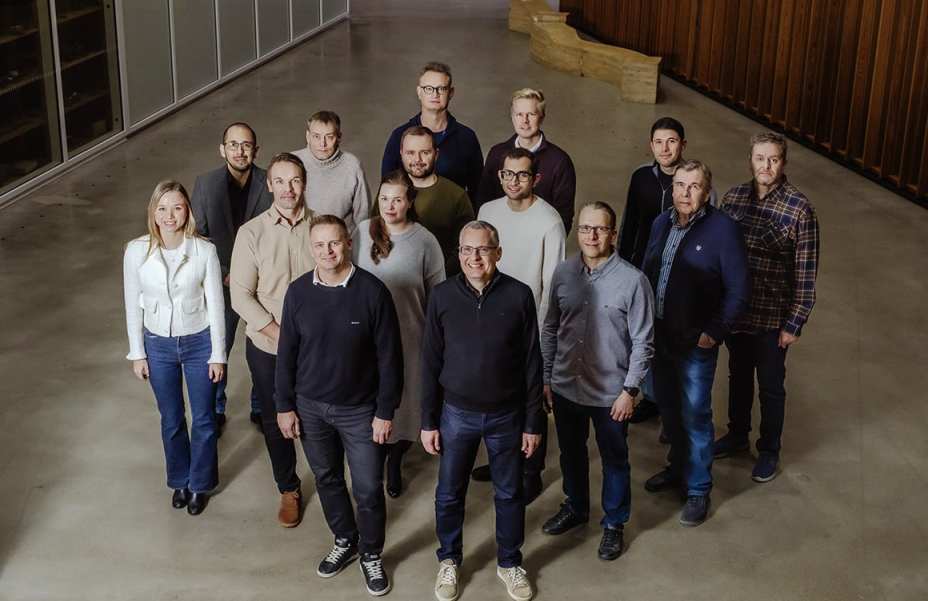
Vensum Power (Image credit: Vensum Power)