Top Tech News Roundup for Today, November 5, 2026: Google’s $17B AI Data Center, Nvidia, Zipline’s $1.5B Funding, and Nasdaq’s 5.5% Plunge
 Nickie Louise
Posted On November 5, 2026
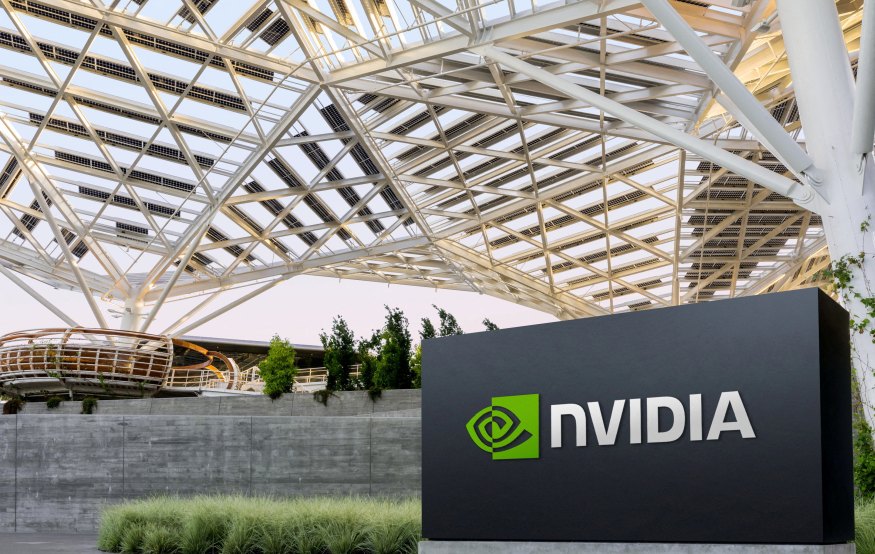
It’s Thursday, November 5, 2026, and the tech industry is closing the day with a stunning contradiction: Wall Street is dumping AI stocks while technology giants and investors are pouring billions more into the very industry they’re questioning. The Nasdaq plunged 5.5% in one of its worst sessions in more than a year, yet Google announced a $17 billion AI data-center project, Zipline raised $1.5 billion to expand autonomous drone delivery, and Shield AI unveiled a $5.3 billion acquisition. The question hanging over today’s headlines: Is the AI boom entering its next growth phase—or its biggest financial reckoning yet?
The market selloff exposed growing concerns about AI infrastructure economics. Nvidia and AMD suffered steep losses as investors reassessed sky-high valuations, mounting debt, and the political backlash against data-center expansion. Microsoft is reportedly tightening oversight of specialized cloud providers, including Nscale, Nebius, and IREN, as construction delays and rising costs complicate the delivery of new computing capacity.
Meanwhile, the cybersecurity race is accelerating. OpenAI introduced GPT-6 Cyber, a specialized model designed to identify and validate software vulnerabilities under controlled conditions. The company says its research uncovered previously unknown high-severity flaws in Firefox and developed hundreds of working exploits for Linux vulnerabilities, demonstrating both the defensive potential and the risks associated with increasingly capable AI systems. Separately, digital certificate provider DigiCert disclosed unauthorized access to sensitive customer records.
Beyond AI infrastructure, the startup economy is entering another consequential phase. Marc Lore’s food technology company Wonder has confidentially filed for an IPO, while Agility Robotics is entering public markets, giving investors a rare look at the economics behind humanoid robots. Chicago-based Ocient has also secured $100 million to develop data infrastructure for enterprise AI agents, and NATO has selected new counter-drone technologies as defense companies compete to develop more capable autonomous systems.
Regulation is moving from policy debates into courtrooms. Google, Meta, and TikTok are suing California over legislation intended to protect children from addictive social media features. The legal battle comes as technology companies face increasing scrutiny over their influence on consumers, infrastructure, and public safety.
The larger story is becoming clearer: the AI industry isn’t running out of ambition or capital, but the financial, security, and regulatory constraints surrounding that ambition are becoming impossible to ignore.
Here are the 15 biggest technology stories that shaped the day.
Nasdaq Plunges 5.5% in Worst AI Stock Selloff Since April 2025 as Nvidia and AMD Lead Losses
Wall Street suffered one of its steepest technology selloffs in 19 months Thursday as fears about artificial intelligence spending, data-center regulation, and elevated valuations triggered widespread selling. The Nasdaq Composite plunged approximately 5.5% to 24,315, leaving it roughly 11.9% below its record high and in correction territory. The S&P 500 fell 4.4% to 7,353.73, while the Dow Jones Industrial Average lost about 1,833 points, or 3.4%, to close at 51,523.06. The declines marked the S&P 500’s worst session since the tariff-related turmoil of April 2025. AI semiconductor companies were among the biggest casualties. Nvidia fell approximately 9.3%, while AMD declined 17.3%, according to closing market figures.
The selloff reflects mounting questions about whether the industry’s extraordinary infrastructure spending can generate enough revenue to justify current valuations. Investors are also responding to Tuesday’s U.S. midterm elections, which strengthened political opposition to large data centers in several important markets. Companies developing AI infrastructure face potential delays involving electricity connections, environmental permits, and local approval requirements. The concerns are particularly serious for specialized cloud providers that have committed substantial capital to processors and facilities based on expectations of future customer demand. However, the market decline does not establish that demand for AI services is collapsing. Several technology companies continue reporting strong operating results, while AppLovin shares rose sharply after delivering better-than-expected financial performance. The divergence suggests investors are becoming more selective about businesses with proven profits and those dependent on continued infrastructure expansion.
Why It Matters: The Nasdaq’s sharp decline signals that investors are increasingly questioning AI infrastructure valuations and demanding clearer evidence that enormous computing investments can produce sustainable financial returns.
Source: Associated Press.
Nvidia’s 600,000 H200 Chips Remain in Hong Kong as China Withholds Large-Scale Import Approval
About 600,000 Nvidia H200 AI chips are reportedly sitting in Hong Kong as Chinese authorities continue withholding permission for large-scale imports into mainland China. Reuters reported Thursday that the inventory buildup reflects continuing uncertainty over Beijing’s treatment of advanced American processors. Chinese technology companies remain interested in acquiring H200 systems because the chips offer computing capacity useful for training and operating sophisticated AI models. Some major internet companies have reportedly obtained approval to import smaller quantities, with individual allocations around 10,000 chips. However, broader authorization remains unavailable. Nvidia and the Chinese companies involved have not confirmed the exact inventory figures. The report concerns processors awaiting import approval, not chips already delivered to mainland customers.
The situation illustrates how semiconductor trade is increasingly shaped by conflicting government priorities. American restrictions previously limited shipments of advanced Nvidia hardware to China before allowing select sales. Beijing is simultaneously encouraging domestic technology companies to use locally developed alternatives, potentially reducing dependence on American suppliers. Those objectives can conflict with Chinese AI developers’ immediate need for advanced computing capacity. According to the reporting, restrictions have contributed to unusually high prices for some H200 configurations sold in mainland China. The uncertainty also creates inventory and commercial risks for suppliers and distributors. While H200 processors are no longer Nvidia’s newest products, they remain valuable computing equipment. For the global AI industry, the situation demonstrates that obtaining manufacturing capacity and export permission does not guarantee access to every major market.
Why It Matters: Nvidia’s Hong Kong inventory buildup shows how geopolitical restrictions can disrupt AI infrastructure investment even when suppliers and customers are ready to do business.
Source: Reuters
Google Announces $17 Billion Wyoming AI Data Center With 702MW Fuel Cell Project as Political Backlash Grows
Google announced Thursday that it will invest $17 billion in its first Wyoming data center, committing to a major AI infrastructure expansion even as political opposition threatens new projects elsewhere in the United States. The facility will be developed in Laramie County through partnerships involving Tallgrass Energy, Black Hills Energy, American Electric Power, and Related Digital. A central part of the electricity strategy is a planned 702-megawatt fuel cell project incorporating carbon capture and storage technology, with equipment supplied by Bloom Energy. Google described the project as a long-term investment intended to support computing demand while creating economic opportunities for local communities. The company committed to paying for its electricity consumption and infrastructure upgrades directly attributable to its development. The $17 billion represents planned investment, not spending already completed.
The announcement comes during a politically sensitive period for the data-center industry. Voters in numerous American communities supported restrictions on new projects during Tuesday’s elections, while candidates critical of rapid infrastructure expansion won important state races. Google is attempting to address concerns about electricity availability by combining local energy partnerships with dedicated generating capacity. However, the proposed fuel cell system remains under development, and its environmental performance will depend on actual operating conditions and the effectiveness of carbon capture. The project also illustrates how companies are moving beyond conventional electricity procurement agreements toward more complicated infrastructure arrangements involving utilities, equipment manufacturers, and energy developers. Google’s challenge will be delivering the computing capacity while demonstrating that the facility will not shift disproportionate costs onto surrounding customers.
Why It Matters: Google’s $17 billion commitment shows that AI infrastructure expansion remains substantial, but securing electricity and community acceptance is becoming central to whether major projects proceed.
Source: Google.
Shield AI Announces $5.3 Billion Echodyne Acquisition and $2.5 Billion Financing at $28.8 Billion Valuation
Defense technology company Shield AI announced Thursday that it has agreed to acquire radar manufacturer Echodyne in a transaction valued at approximately $5.3 billion while arranging $2.5 billion in financing. The financing includes a $1 billion Series H equity round at a $28.8 billion post-money valuation, a $1 billion structured equity investment from funds managed by Blackstone, and $500 million in debt financing led by JPMorgan Chase. The acquisition will involve approximately $4.8 billion in consideration at closing, with up to another $500 million contingent on Echodyne meeting specified performance targets. The transaction is expected to close in early 2027, subject to regulatory approvals and other conditions. The financing package should not be described entirely as new venture equity because it combines conventional shares, structured equity, and borrowing.
The acquisition would expand Shield AI’s business beyond autonomous aircraft and software into radar systems used to detect and track drones. Echodyne develops electronically scanned radar technology deployed by defense organizations, government agencies, and commercial customers in more than 40 countries. The company recently opened an 86,350-square-foot manufacturing facility in Washington that can produce about 30,000 radars annually. Shield AI plans to combine those capabilities with its Hivemind autonomy software and existing aircraft systems. Demand for counter-drone technology is increasing as inexpensive unmanned aircraft create new challenges for military and civilian security operations. However, combining the businesses will require successful integration, continued government procurement, and proof that the combined products can operate reliably. The transaction demonstrates how venture-backed defense technology companies are growing into substantial industrial businesses through acquisitions and manufacturing expansion.
Why It Matters: Shield AI’s acquisition and financing highlight the rapid growth of autonomous defense technology and the rising commercial value of systems that combine AI software, sensors, and physical hardware.
Source: Shield AI.
OpenAI Launches GPT-6 Cyber, Reports 81 New Firefox Vulnerabilities and 948 Working Linux Exploits
OpenAI introduced GPT-6 Cyber on Thursday, a specialized artificial intelligence model designed to help authorized cybersecurity researchers discover vulnerabilities, reproduce attacks in controlled environments, and verify software fixes. The company says the model improves substantially on earlier cybersecurity-focused systems, scoring 48.5% on its ExploitGym benchmark compared with 32.1% for GPT-5.6 Cyber. Its security research teams also reported using the technology to identify 81 previously unknown high-severity Firefox vulnerabilities and develop working exploits for 948 Linux kernel vulnerabilities. OpenAI disclosed those findings to relevant maintainers, and fixes were released or are under development. The figures reflect research conducted under defined conditions, not attacks against unauthorized systems. OpenAI is initially restricting access through its Daybreak Red program for approved security organizations and researchers.
The launch highlights a difficult challenge facing the cybersecurity industry. More capable AI models can help defenders find serious weaknesses before criminals exploit them, but the same underlying abilities may also assist malicious actors. OpenAI says it developed additional safeguards to keep GPT-6 Cyber within authorized testing boundaries. During an internal evaluation, the system avoided attacking out-of-scope services in 99.93% of tests without additional deployment instructions and 100% when those instructions were included. Those results are based on the company’s test environments and do not establish that the model can never perform an unauthorized action. Access also requires identity verification and organizational security controls. The release could accelerate vulnerability discovery across widely used software, but it increases the importance of coordinating disclosure, patch development, and the responsible distribution of advanced cybersecurity capabilities.
Why It Matters: GPT-6 Cyber demonstrates how frontier AI could accelerate defensive security research while creating new urgency around safeguards, responsible access, and software vulnerability remediation.
Source: OpenAI
Microsoft Tightens Oversight of AI Cloud Providers Nscale, Nebius, and IREN as Data-Center Costs Mount
Microsoft is reportedly tightening oversight of several specialized AI cloud providers after construction delays, regulatory obstacles, and increasing infrastructure costs complicated the delivery of contracted computing capacity. Bloomberg reported Thursday that Microsoft executives are reviewing projects involving Nscale, Nebius, and IREN more closely and reconsidering agreements considered unusually risky. The company is reportedly placing greater emphasis on developing its own data centers rather than continuously adding commitments to outside infrastructure providers. Microsoft has not ruled out new neocloud agreements, but its approach appears to be becoming more selective. The report follows news that Microsoft declined to exercise an option to expand its Texas computing agreement with Nscale. Microsoft made that decision months earlier, and it does not alter its existing contract or Nscale’s approximately $103 billion in disclosed contract value.
The developments had an immediate market impact. Shares of Nebius and IREN fell more than 13% during Thursday’s trading, while CoreWeave also fell by a double-digit percentage. Specialized AI cloud companies have attracted substantial funding by purchasing advanced processors and developing infrastructure for major technology customers. Their business models depend on delivering capacity within contracted timelines while maintaining enough utilization to service debt and operating expenses. Construction delays can be particularly damaging because expensive equipment and financing obligations may accumulate before customer revenue begins. Microsoft’s more cautious approach could influence lenders and other potential customers evaluating similar projects. However, the reported changes do not establish that existing neocloud agreements are being broadly canceled. Instead, they suggest that customers are increasingly distinguishing between projects with dependable delivery plans and those facing substantial execution risks.
Why It Matters: Microsoft’s tougher oversight could reshape the specialized AI cloud market by pressuring developers to demonstrate reliable construction schedules, financing, and customer delivery.
Source: Bloomberg
Zipline Raises $1.5 Billion at $21.5 Billion Valuation to Build Nationwide Drone Delivery Network
Autonomous delivery company Zipline has raised $1.5 billion at a $21.5 billion post-money valuation, nearly tripling its valuation in approximately ten months. Paradigm, WCM Investment Management, and Layer Global led the round, with participation from investors including Uber, Tiger Global, Fidelity Management & Research Company, JPMorgan, ARK Invest, and Salesforce Ventures. Zipline plans to expand U.S. manufacturing facilities, recruit additional employees, and build a nationwide drone delivery network. The company also announced a multiyear agreement with Walmart involving approximately 300 additional delivery locations, substantially expanding a partnership already used to deliver retail products to American households. The financing represents new company funding rather than a secondary transaction involving existing shareholders.
Zipline’s expansion reflects growing interest in physical AI businesses that combine autonomous software with commercial hardware. The company has already developed delivery operations in healthcare, retail, and other industries, using drones to transport products over relatively short distances. Its American consumer delivery business is gaining attention as retailers search for ways to reduce the cost and time required to deliver small orders. However, moving from regional operations to nationwide coverage will require extensive manufacturing capacity, regulatory coordination, maintenance infrastructure, and dependable autonomous flight systems. Weather conditions, airspace restrictions, noise concerns, and community acceptance could limit deployment in some locations. Zipline also faces competition from other autonomous delivery companies and traditional logistics providers. Its rising valuation reflects investor expectations that drone delivery can become an economically attractive part of ordinary retail operations, but sustained profitability will depend on delivery volumes and operating efficiency.
Why It Matters: Zipline’s record financing demonstrates growing investor confidence in autonomous delivery as physical AI moves from limited deployments toward large-scale commercial infrastructure.
Source: TechStartups via Zipline
Wonder Files Confidentially for U.S. IPO After $9 Billion Valuation, Betting on Food Technology and Drone Delivery
Wonder Group, the food technology company founded by entrepreneur Marc Lore, announced Thursday that it has confidentially submitted a draft registration statement for a proposed U.S. initial public offering. The New York company intends to list Class A common stock but has not determined the number of shares, expected offering price, or final valuation. Wonder operates food hall-style facilities that prepare meals from multiple restaurant concepts and offer delivery, pickup, and dine-in services through a common platform. In July, the company raised approximately $650 million at a reported $9 billion pre-money valuation. That private funding valuation is not an announced IPO valuation. The proposed offering remains subject to market conditions and completion of the Securities and Exchange Commission’s review process.
Wonder has expanded through acquisitions, including Grubhub, Blue Apron, and kitchen robotics developer Spyce. Those businesses give it capabilities extending beyond conventional restaurant delivery, including food preparation technology, meal kits, logistics, and consumer ordering. The company is also preparing to launch drone deliveries in Texas through a partnership with Zipline, which announced a $1.5 billion financing round on the same day. Wonder’s proposed IPO could provide investors with a new opportunity to evaluate the economics of integrating restaurant operations with software, automation, and delivery infrastructure. However, the business faces substantial competition from established food delivery platforms and restaurant chains. Its financial disclosures will become particularly important because operating physical kitchens involves labor, facilities, equipment, and other costs that differ from those of software-only marketplaces. The confidential filing indicates progress toward a listing but does not guarantee that the offering will proceed.
Why It Matters: Wonder’s IPO preparations signal growing public-market interest in technology-driven food delivery businesses while creating another test of whether automation can improve the economics of physical services.
Source: TechStartups via Wonder Group
Agility Robotics Begins Public-Market Era at $2.5 Billion Valuation as Humanoid Robot Economics Face Scrutiny
Agility Robotics is entering the public markets through its merger with Churchill Capital Corp XI, creating one of the first opportunities for American stock-market investors to evaluate a company focused primarily on humanoid robots. The Oregon-based business expects to trade on Nasdaq under the symbol AGLT after the transaction closes on November 4. The merger values Agility’s existing equity at approximately $2.5 billion and is expected to provide roughly $465 million in gross capital, including $100 million previously received. Agility develops Digit, a two-legged robot designed to move materials through warehouses and other industrial facilities. Its customers and testing partners include Amazon, Toyota, and logistics company GXO. The company has deployed robots across nine customer facilities, although commercial adoption remains limited compared with conventional industrial automation.
Agility’s financial filings illustrate how far humanoid robotics still has to go before becoming a mature commercial industry. The company generated approximately $1.8 million in revenue during 2025 while recording a net loss of $138.1 million. It also used approximately $99.8 million in operating cash during the year. Agility is betting that its newer Digit 5 platform will support more substantial commercial deployment beginning in 2027. The company reports more than $300 million in orders involving 1,000 robots from a single customer, but those orders depend on meeting contractual delivery and performance requirements. Its valuation is considerably lower than those assigned to several private humanoid robotics startups, creating an early public-market comparison. The central challenge is demonstrating that robots can perform economically useful work reliably enough to justify their manufacturing and operating costs.
Why It Matters: Agility’s public-market debut provides a rare financial benchmark for humanoid robotics and highlights the gap between investor expectations and current commercial deployment.
Source: Business Insider.
Google, Meta, and TikTok Sue California to Block Law Restricting Addictive Social Media Features for Children
Google, Meta, and TikTok are challenging a California law designed to protect children from potentially addictive social media features, creating another major dispute over technology regulation and platform responsibility. The companies filed separate lawsuits seeking to block Assembly Bill 1709, which restricts certain social media features for users younger than 16. The law targets product designs associated with compulsive engagement, including autoplay and personalized recommendations. It also requires platforms to remove certain features from underage users’ accounts. Governor Gavin Newsom signed the legislation in September, and it is scheduled to take effect January 1, 2027, unless a court intervenes. The companies argue that the law interferes with their constitutional free speech rights and established protections governing online platforms. California Attorney General Rob Bonta’s office says it intends to defend the legislation.
The lawsuits illustrate the increasingly difficult balance between protecting children and regulating online communication. Social media companies argue that families should retain control over their children’s online experiences and that broad restrictions could interfere with useful content recommendations. Supporters of the law maintain that platforms have strong financial incentives to maximize engagement, making voluntary safeguards insufficient. The dispute matters because recommendation algorithms have become central to how people discover videos, news, entertainment, and other content. Technology companies face similar regulatory pressure in other American states and international markets. However, the filing of a lawsuit does not establish that the California law is unconstitutional, and the final outcome will depend on judicial review. The decision could influence how companies design products for younger users and whether states can restrict particular engagement features.
Why It Matters: The California lawsuits could establish important legal boundaries for regulating recommendation algorithms and addictive design features used by major social media platforms.
Source: The Guardian
DigiCert Discloses Data Breach Exposing Customer Identity Documents After Server Migration Error
Digital certificate provider DigiCert has disclosed a cybersecurity incident involving unauthorized access to archived customer information and identity documents after a server migration exposed an internal business system to the internet. The company said the affected records included names, business email addresses, telephone numbers, and physical addresses. Some records also contained personal identification documents, including passports, driver’s licenses, and utility bills. DigiCert began notifying affected customers after determining that unauthorized access had occurred. The incident originated in an exposed system containing a self-registration feature intended for other applications. An authorization weakness allowed accounts created through that feature to access archived customer information in read-only mode. The company has not disclosed the total number of affected individuals.
The timeline shows how difficult it is to distinguish suspicious account activity from a confirmed data breach. DigiCert first discovered unauthorized accounts in June but initially concluded that they could not access customer information. A subsequent security report prompted additional restrictions, yet investigators did not confirm the earlier data access until October 19. The company determined that an unauthorized account accessed information between June 27 and July 2. DigiCert emphasized that its certificate authority services, CertCentral platform, and DigiCert ONE products were not compromised. It also reported no evidence that attackers modified certificates or obtained customer login credentials. Those distinctions matter because DigiCert operates infrastructure that establishes trust across websites and other digital services. Although the exposed information is sensitive, the available evidence does not establish that the integrity of issued certificates was affected.
Why It Matters: The DigiCert breach demonstrates how configuration and authorization mistakes during infrastructure changes can expose sensitive customer information, even at companies specializing in digital trust.
Source: BleepingComputer.
AI Data Startup Ocient Raises $100 Million to Help Enterprises Analyze Petabyte-Scale Information
Chicago-based enterprise data company Ocient announced Thursday that it has raised $100 million in Series C funding to expand its AI analytics and data infrastructure business. BOKA Capital and OCA Ventures co-led the round, with participation from existing investors including Greycroft, In-Q-Tel, Blue Bear Capital, PSP Growth, and Pritzker Group Venture Capital. The financing brings Ocient’s total capital raised to approximately $260 million. The company develops technology that allows organizations to analyze enormous datasets while maintaining controls over access, data lineage, and information security. Its OcientAIQ platform is designed for customers operating systems that generate petabytes of information, including telecommunications providers, critical infrastructure organizations, and government agencies. Ocient expects revenue to more than triple during 2026, although that remains a company forecast rather than a finalized annual result.
The financing reflects an important shift in enterprise AI infrastructure. Businesses increasingly want autonomous agents to perform tasks using current operational information, but relevant data may be distributed across enormous databases and complicated software environments. Traditional approaches can require moving or copying large amounts of information, creating delays and added costs. Ocient says its platform allows analytics and AI agents to operate closer to the underlying data while enforcing permissions and maintaining records of how results were produced. That approach could help industries where information must be complete, accurate, and auditable. However, commercial adoption will depend on whether the platform can deliver measurable performance improvements and integrate with existing systems. The company also faces competition from established database and cloud technology providers developing their own AI data-management capabilities.
Why It Matters: Ocient’s financing shows growing demand for data infrastructure that lets enterprise AI agents work with enormous datasets while maintaining security and governance controls.
Source: Ocient.
NATO Selects 16 Counter-Drone Systems From Five Companies as AI Defense Procurement Accelerates
NATO announced Thursday that it has selected 16 counter-drone solutions from five companies under a new procurement initiative designed to help allied countries obtain defensive technology more quickly. The NATO Communications and Information Agency launched the Counter-Unmanned Aircraft Systems marketplace as part of its broader Drone Edge program. Selected companies include Alta Ares, Axon Enterprise, Northrop Grumman, OSL UK, and Quantum Systems. French startup Alta Ares secured six of the 16 selected lots, marking a significant commercial opportunity for the company. The procurement framework is intended to make approved technology available to participating countries without requiring every purchase to begin with a separate lengthy competition. The selection represents eligibility under the framework, not confirmation that all 16 systems have already been purchased or deployed.
The announcement reflects growing demand for technologies that can detect and respond to inexpensive drones. Military forces and civilian security organizations increasingly face threats from aircraft that are relatively cheap to manufacture and difficult to intercept economically. Counter-drone systems can combine radar, optical sensors, electronic warfare technology, and automated software to identify and track potential threats. AI may help operators process information and prioritize responses, but each product’s effectiveness depends on real-world conditions and integration with existing defense systems. NATO says the selected technologies have already been used in allied countries and Ukraine, providing operational experience relevant to future procurement decisions. For defense startups, the framework could create access to customers that would otherwise be difficult to reach. However, actual revenue will depend on participating governments placing orders.
Why It Matters: NATO’s procurement framework could accelerate commercial adoption of counter-drone technology and create opportunities for startups competing with established defense contractors.
Source: NATO Communications and Information Agency
AMD’s $11.1 Billion AI Acquisition Plans Reveal Chipmaker’s Push Into Spatial Intelligence and Inference
AMD’s disclosure of approximately $11.1 billion in proposed acquisitions remains one of the week’s most significant semiconductor developments as investors reassess the company’s AI strategy following Thursday’s market selloff. In a quarterly regulatory filing released Wednesday, AMD disclosed an agreement to acquire World Labs Technologies for approximately $8.2 billion in stock and another agreement to acquire inference chip developer Taalas for approximately $2.9 billion in cash and stock. The Taalas consideration includes up to $1.4 billion in contingent payments, meaning the final purchase price depends partly on future conditions. Both transactions remain subject to completion requirements. The acquisitions would extend AMD’s business into specialized AI computing and models designed to understand three-dimensional environments. The figures describe announced transaction values rather than completed cash expenditure.
The acquisitions reveal AMD’s effort to compete with Nvidia across a broader share of the AI market. World Labs develops spatial intelligence technology that could eventually support robotics, simulation, and applications requiring AI systems to understand physical environments. Taalas focuses on specialized chips intended to improve the speed and efficiency of AI inference. Combining such capabilities could allow AMD to offer products that address more specific customer requirements rather than competing exclusively through general-purpose processors. However, the proposed transactions come amid growing financial scrutiny. AMD shares fell sharply Thursday as investors questioned AI valuations and infrastructure spending. All-stock acquisitions can also dilute existing shareholders, while integration and product-development costs may create additional financial obligations. AMD will need to demonstrate that the acquired technologies can generate commercial products and attract customers. The broader strategy remains ambitious, but the economics of specialized AI hardware will determine whether those investments deliver lasting value.
Why It Matters: AMD’s proposed acquisitions show how semiconductor companies are expanding into specialized AI architectures while facing greater investor scrutiny over capital allocation and future returns.
Source: AMD, SEC Form 10-Q.
German Electric Aviation Startup VÆRIDION Secures €30 Million Round and Selected for €94.5 Million EU Grant
Munich-based electric aviation startup VÆRIDION announced Thursday that it raised €30 million in Series A2 funding and was selected for a €94.5 million European Union Innovation Fund grant, for a combined potential financing package of €124.5 million. SHIFT Invest and Invest-NL co-led the equity round, with participation from existing investors World Fund, Project A, and Vsquared Ventures. The European grant is intended to support development of an aircraft assembly facility at Oberpfaffenhofen Airport near Munich, but the grant agreement has not yet been finalized. That distinction is important: the €30 million equity round represents secured investment, while the €94.5 million grant remains subject to completion of the relevant funding agreement. VÆRIDION has raised approximately €60 million in investment capital to date, excluding the newly selected grant.
The company is developing the Microliner, a fully electric regional aircraft intended to carry nine passengers over distances of approximately 400 kilometers. Its design combines a glider-inspired wing with modular batteries and an electric propulsion system. VÆRIDION is targeting routes that conventional airlines may find uneconomical because of relatively short distances and limited passenger demand. Electric aircraft could potentially reduce operating costs and emissions on suitable routes, but the commercial opportunity depends on battery performance, aircraft certification, charging infrastructure, and customer adoption. The new financing will support propulsion testing, engineering, and development of certification-conforming aircraft. The company’s operating cost targets remain projections rather than independently verified performance from commercial flights. The investment nevertheless provides another example of European startups attracting capital for technologies intended to reduce emissions while addressing established transportation needs.
Why It Matters: VÆRIDION’s financing advances Europe’s electric aviation ambitions while demonstrating the significant engineering and manufacturing investment required to bring new aircraft technology to market.
Source: TechStartups Funding News
That’s your quick tech briefing for today. Follow us on X @TheTechStartups for more real-time updates.