Startup Funding News Today, October 29, 2026: Braid, Casap, FuriosaAI, Upwind, Foundry Robotics, Plato & More
 Nickie Louise
Posted On October 29, 2026
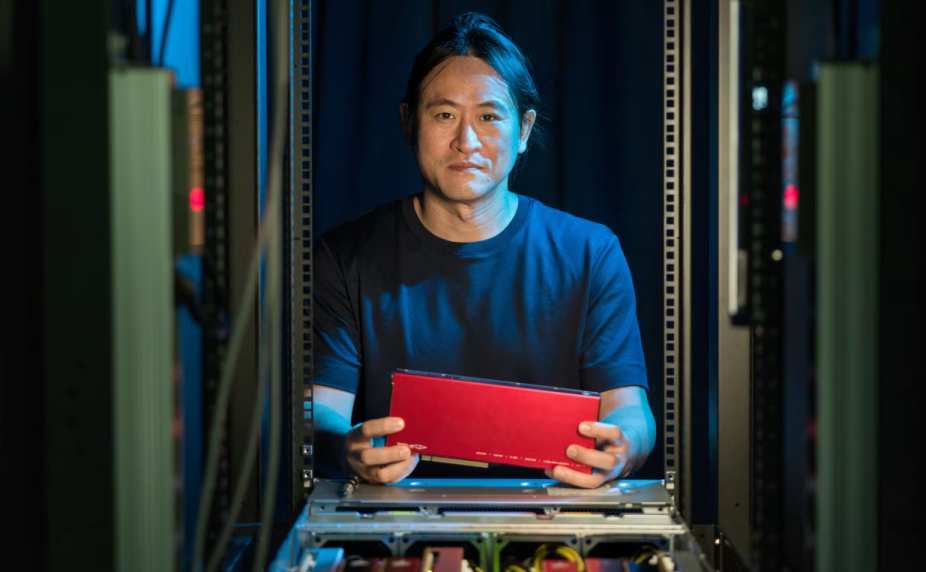
AI chips, cloud cybersecurity, autonomous manufacturing, and enterprise automation attracted some of the largest startup investments announced over the past 24 hours, with investors committing more than $1.3 billion across 10 selected financing rounds. South Korean semiconductor startup FuriosaAI led the announcements, completing a $620 million Series D at a $2.9 billion valuation. San Francisco-based Upwind Security followed with a $400 million Series C at a $3.8 billion valuation, while Foundry Robotics raised $100 million to expand autonomous manufacturing capacity in the United States.
Together, FuriosaAI and Upwind account for approximately 78% of the $1.3025 billion represented by today’s 10 selected financing announcements. That concentration tells an important story. Investors are directing substantial capital toward companies addressing expensive problems in AI computing and cybersecurity, while smaller transactions reveal opportunities in robotics, financial services, industrial materials, space technology, and specialized enterprise software.
The day’s funding activity also highlights a growing distinction between companies building AI technology and those applying it to specific business operations. Casap raised $56 million to automate financial disputes and other banking processes. Broccoli AI disclosed a $30 million Series B to expand its AI services for plumbing, electrical, and HVAC contractors. Plato secured $16 million to create simulated workplaces where AI agents can learn and be evaluated before operating in real businesses. Meanwhile, Dutch startup Braid raised $38 million to help companies embed mobile connectivity directly into their products. PR Newswire
Physical technology remained a significant investment theme. Rendezvous Robotics secured $20 million to develop spacecraft that can assemble themselves in orbit. American Advanced Materials raised $12.5 million to advance domestic titanium production. In financial services, Sava emerged from stealth with $10 million to modernize trust administration. These investments are smaller than the headline AI rounds, but they address specialized markets where engineering expertise, regulatory requirements, and established customer relationships may create advantages that are difficult to reproduce. PR Newswire
The Macro Environment: Investors Are Financing the Infrastructure Behind AI’s Commercial Expansion
Today’s startup funding announcements reveal a market increasingly concerned with the economics of deploying technology at scale. FuriosaAI is developing processors to reduce the electricity and computing costs of AI inference. Upwind is addressing the security risks created by increasingly complicated cloud environments and autonomous software. Foundry Robotics is building manufacturing facilities designed around robotic assembly. These companies serve different customers, but their investment cases share an important characteristic: each is attempting to solve a constraint that becomes more significant as technology adoption increases.
FuriosaAI’s financing is particularly relevant to the competition surrounding AI infrastructure. Nvidia remains the dominant supplier of advanced AI processors, but the economics of running trained models have created opportunities for specialized alternatives. Training requires enormous computing resources, but inference creates recurring demand every time an application generates a response. For enterprises operating large numbers of AI applications, power consumption, processor utilization, and total cost of ownership can determine whether a deployment is commercially attractive. FuriosaAI’s challenge is to demonstrate that its specialized hardware offers meaningful advantages under production workloads, not merely selected benchmarks.
Cybersecurity investment reflects another consequence of AI adoption. As companies deploy more applications, cloud services, and automated agents, security teams must protect more interconnected systems. Upwind’s $400 million round suggests investors see substantial value in tools that identify threats using information about applications while they are operating. The company’s reported revenue growth and valuation increase indicate strong investor interest, although the absence of disclosed absolute revenue limits comparisons with other cybersecurity businesses.
The physical economy is attracting capital through a different investment model. Foundry Robotics, Rendezvous Robotics, and American Advanced Materials are developing technologies that depend on manufacturing, mechanical systems, materials processing, or operation in demanding environments. Software growth metrics alone cannot evaluate their prospects. Equipment costs, production yields, customer qualification, safety, and capital requirements will influence their eventual returns.
The broader signal is that venture investors are backing both sides of technological adoption: infrastructure that makes advanced technology possible and applications that turn it into measurable work. But the distribution remains uneven. Two large financings dominate today’s total, while the remaining eight companies account for $282.5 million. The evidence points to selective investor conviction, not uniformly abundant capital across the startup market.
FuriosaAI raises $620M in funding to scale AI inference chips and challenge established computing economics
Seoul-based FuriosaAI announced the completion of a $620 million Series D financing at a $2.9 billion post-money valuation. The round includes $280 million from South Korea’s National Growth Fund, approximately $110 million from international investors, and additional participation from Korean financial institutions and existing shareholders.
International backers include Infinitum, Jericho Capital, QUDA Capital, Cisco Investments, NeoFort Holding, and Worldline Capital. Returning investors include Naver, DSC Investment, Korea Development Bank, Nextrans, and Kakao Investment.
Founded in 2017, FuriosaAI designs processors optimized for AI inference, the process through which trained models generate responses. Its second-generation processor, RNGD, is available as a 180-watt accelerator card and in server configurations containing multiple accelerators.
The company says RNGD entered mass production in January 2026. It expects to produce approximately 20,000 cards during 2026 and has secured manufacturing and memory capacity to more than double that output in 2027.
FuriosaAI has identified deployments involving Samsung SDS and LG Group. The company is also developing a third-generation accelerator with partners including Broadcom.
Why investors are backing an alternative to Nvidia
FuriosaAI is targeting an increasingly expensive component of AI deployment: the cost of generating responses. Large language models require considerable computing resources, and their operating costs can increase substantially when applications serve large numbers of users or autonomous agents perform repeated tasks.
FuriosaAI argues that processors designed specifically for inference can be more efficient than general-purpose graphics processors. Its technical claims require evaluation under comparable workloads, including software compatibility, model performance, latency, and overall system costs.
The company must also overcome a significant ecosystem challenge. Nvidia benefits from an established software platform, extensive developer adoption, and relationships with major cloud providers. Building a competitive processor is only part of the problem. Customers also need dependable software, support, supply availability, and confidence in future product development.
The financing has a geopolitical dimension. South Korea’s National Growth Fund is supporting a domestic semiconductor company in a market dominated by a small number of international suppliers.
Funding Details
| Field | Details |
|---|---|
| Startup | FuriosaAI |
| Investors | National Growth Fund of Korea, Infinitum, Jericho Capital, QUDA Capital, Cisco Investments, NeoFort Holding, Worldline Capital, Naver, and others |
| Amount Raised | $620 million, completed Series D |
| Total Raised | Not disclosed on a fully reconciled lifetime basis |
| Funding Stage | Series D |
| Funding Date | October 28, 2026, completion announcement |
| Headquarters | Seoul, South Korea |
| Sector | AI semiconductors/inference infrastructure |
| Valuation | $2.9 billion post-money |
Upwind raises $400M in funding to expand cloud security as AI agents create new enterprise risks
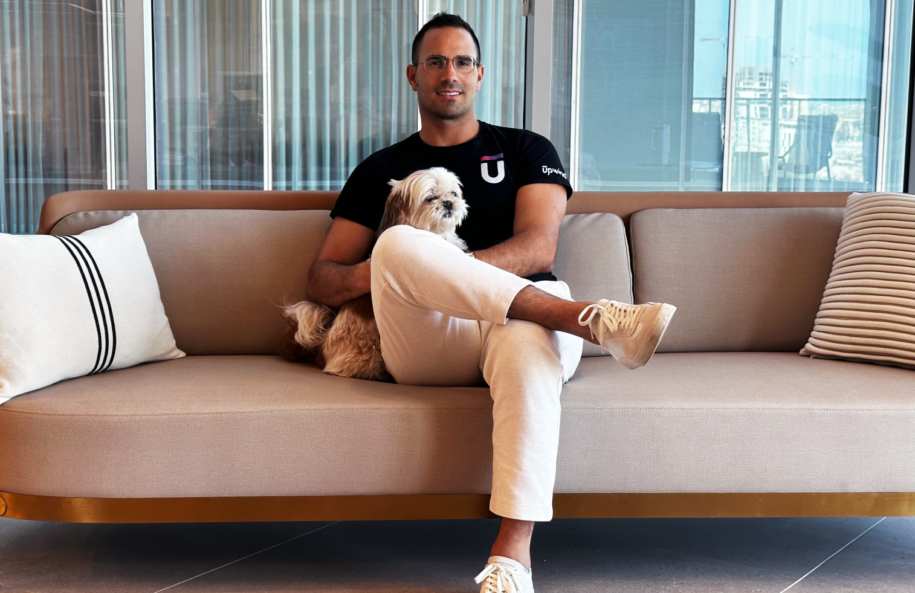
San Francisco-based Upwind Security raised $400 million in Series C financing at a $3.8 billion valuation, led by Bessemer Venture Partners. The round included Canapi Ventures and returning investors Cyberstarts, Greylock Partners, Craft Ventures, Salesforce Ventures, TCV, and others. The company’s valuation increased from the $1.5 billion reported during its Series B earlier this year.
Founded in 2022 by Amiram Shachar and fellow entrepreneurs, Upwind develops cloud security software that analyzes applications and infrastructure while they are operating. Its technology helps organizations distinguish urgent security threats from lower-priority alerts.
That difference matters because large cloud environments can generate enormous volumes of security information. Traditional security tools may identify vulnerabilities without providing enough context to determine which ones present an immediate danger. Upwind attempts to address that problem by connecting security findings with information about running applications, network activity, and cloud workloads.
The company says revenue has quadrupled during 2026, although it has not disclosed the absolute revenue figure in its latest announcement. Its customers include major enterprises across financial services, technology, manufacturing, and other industries.
The investment reflects growing concern about how organizations will secure AI agents that interact with databases, applications, and sensitive systems. An agent with extensive permissions may create risks that differ from those associated with a conventional software application.
Upwind is trying to position itself as a security platform that can manage both established cloud threats and those associated with autonomous software. Its competitive challenge is substantial. Established cloud security providers already serve many of the same enterprise customers.
For investors, the important question is whether Upwind can convert rapid growth into durable revenue while maintaining meaningful technical differentiation.
Funding Details
| Field | Details |
|---|---|
| Startup | Upwind Security |
| Investors | Bessemer Venture Partners, Canapi Ventures, Cyberstarts, Greylock Partners, Craft Ventures, Salesforce Ventures, TCV, and others |
| Amount Raised | $400 million |
| Total Raised | More than $800 million, based on disclosed prior financing |
| Funding Stage | Series C |
| Funding Date | October 28, 2026 |
| Headquarters | San Francisco, California, United States |
| Sector | Cloud cybersecurity / AI security |
| Valuation | $3.8 billion |
Foundry Robotics raises $100M in funding to build autonomous factories for defense and industrial manufacturing
California-based Foundry Robotics raised $100 million in Series A funding led by Marlinspike Partners, with participation from Khosla Ventures, Red Glass Ventures, SE Ventures, Wing VC, Axiom Ventures, Hanabi, and Zero Shot Fund. The company announced the financing alongside the expansion of its manufacturing operations into a 130,000-square-foot facility in Emeryville, California.
Founded by Adarsh Kulkarni and Emmanuel Lamacchia, Foundry develops and operates factories designed around AI-powered robotic assembly. Its approach differs from companies that simply sell industrial robots.
Foundry intends to operate the manufacturing facilities itself, providing customers with assembly capacity through a manufacturing-as-a-service model. The company targets complex products including drones, underwater vehicles, satellite components, industrial equipment, and computing infrastructure. Its technology combines robotic assembly cells, software, and experienced manufacturing personnel.
Foundry says its software improves as robots perform additional assembly tasks, potentially allowing equipment to be reconfigured for different products. The opportunity is particularly relevant to manufacturers that need to move from design to production without building dedicated factories. However, the company’s model is capital-intensive. Owning and operating manufacturing facilities creates requirements involving equipment, maintenance, labor, quality control, and customer utilization.
For investors, Foundry’s value depends on whether it can make manufacturing capacity more flexible and economical than conventional approaches. Its existing facility and reported customer relationships provide an operating foundation, but the company must demonstrate consistent production quality and attractive financial returns as it expands.
Funding Details
| Field | Details |
|---|---|
| Startup | Foundry Robotics |
| Investors | Marlinspike Partners, Khosla Ventures, Red Glass Ventures, SE Ventures, Wing VC, Axiom Ventures, Hanabi, Zero Shot Fund |
| Amount Raised | $100 million |
| Total Raised | Not disclosed |
| Funding Stage | Series A |
| Funding Date | October 28, 2026 |
| Headquarters | Emeryville, California, United States |
| Sector | Industrial robotics / autonomous manufacturing / defense technology |
| Valuation | Not disclosed |
Casap raises $56M to automate financial disputes and banking operations
New York-based Casap raised $56 million in Series B financing led by Base10 Partners, with strategic participation from Experian and Synchrony. Existing investors Emergence Capital and Lightspeed Venture Partners also participated. The financing brings Casap’s cumulative funding to $90 million, following a $25 million Series A announced approximately one year earlier.
Casap develops AI software for financial institutions, initially focusing on fraud investigations and payment disputes. When consumers dispute transactions, banks must investigate the circumstances, review supporting information, communicate with customers, and determine appropriate actions. These processes can involve several internal systems and substantial administrative work.
Casap is developing agents that gather information, apply institutional policies, and complete parts of these workflows. The company says its software maintains records of actions taken and allows human employees to intervene when additional judgment is required. Casap reports that revenue increased tenfold following its previous financing.
The company is now expanding into additional financial-services operations, including customer complaints and collections. These growth figures are company-reported, and the company did not disclose absolute revenue. Experian and Synchrony are strategically important because both institutions operate in markets directly affected by fraud, credit information, and consumer financial services.
For investors, Casap’s commercial opportunity comes from reducing the cost and time required to complete financial processes. However, automated decisions involving consumer finances demand accuracy, accountability, and regulatory compliance.
The company’s long-term advantage will depend on whether its technology delivers measurable savings without increasing financial, legal, or reputational risks for customers.
Funding Details
| Field | Details |
|---|---|
| Startup | Casap |
| Investors | Base10 Partners, Experian, Synchrony, Emergence Capital, Lightspeed Venture Partners |
| Amount Raised | $56 million |
| Total Raised | $90 million |
| Funding Stage | Series B |
| Funding Date | October 28, 2026 |
| Headquarters | New York, United States |
| Sector | Financial technology/enterprise AI/banking operations |
| Valuation | Not disclosed |
Braid raises $38M in funding to help companies embed mobile connectivity into their products
Netherlands-based Braid raised $38 million in Series A financing led by Octopus Ventures, with participation from KPN Ventures, the investment arm of Dutch telecommunications operator KPN. The company, previously known as Next Communications, disclosed the financing on October 28. The transaction represents its first external financing since the business was founded in 2023.
Braid develops software that allows businesses to offer mobile connectivity without building their own telecommunications infrastructure. Its platform connects companies to a network of mobile carriers through a common API. That enables businesses to introduce branded mobile services, including eSIM connectivity, within existing applications. For example, an airline could offer mobile data to passengers, while a financial-services company could bundle connectivity with another product.
Braid says its platform connects to more than 600 carriers across more than 200 countries and serves about 90 enterprise customers. The company also reports that it is profitable and generating positive cash flow. These figures are company-reported. The commercial opportunity reflects the increasing importance of connectivity within digital products.
Businesses may want to provide mobile services without negotiating individual agreements with operators or developing specialized telecommunications systems. Braid is attempting to become the infrastructure provider behind those offerings. Its investor group is notable because KPN has direct industry experience and established telecommunications relationships.
However, Braid operates in a competitive market involving connectivity aggregators, established telecom companies, and specialized eSIM providers. Its long-term advantage will depend on carrier access, service reliability, pricing, integration quality, and customer retention.
Funding Details
| Field | Details |
|---|---|
| Startup | Braid, formerly Next Communications |
| Investors | Octopus Ventures, KPN Ventures |
| Amount Raised | $38 million |
| Total Raised | $38 million in disclosed external financing |
| Funding Stage | Series A |
| Funding Date | October 28, 2026, initial disclosure |
| Headquarters | The Hague, Netherlands |
| Sector | Telecommunications infrastructure / embedded connectivity/enterprise software |
| Valuation | Not disclosed |
Broccoli AI raises $30M in funding to automate customer calls and bookings for home-service businesses
San Francisco-based Broccoli AI disclosed a $30 million Series B financing led by Khosla Ventures, with participation from investors including Y Combinator and Operator Partners. The announcement also revealed an earlier $22 million Series A, completed approximately nine months before the latest round.
Today’s funding total includes only the $30 million Series B. The previously completed Series A is excluded, even though it was publicly disclosed for the first time alongside the newer financing. Fortune reported that Broccoli is valued at approximately $300 million post-money, citing a person familiar with the transaction. The company declined to confirm the valuation.
Founded by AJ Jain and Aditya Ketkar, Broccoli develops AI agents for plumbing, electrical, HVAC, roofing, and other home-service businesses. Its software answers incoming calls, schedules appointments, follows up on estimates, and interacts with existing contractor-management systems.
The company targets a problem that can directly affect revenue. A contractor may lose business when customers call outside operating hours or when employees cannot respond quickly to inquiries. Broccoli attempts to reduce those missed opportunities.
The startup says more than 1,500 businesses use its technology, including Ace Hardware Home Services, Mr. Electric, and Any Hour Group. It also reports that revenue has tripled since the Series A and that its workforce has grown substantially.
For investors, Broccoli offers a relatively specific measure of value: whether its software helps contractors book more jobs and reduce administrative costs.
But customer-service automation also presents operational risks. Incorrect bookings, misunderstood requests, and poor customer interactions can damage relationships. Broccoli must demonstrate that its agents handle routine work effectively while escalating complicated situations to human employees.
Its competitive position will depend on integration with contractor software, industry-specific knowledge, and measurable improvements in customer economics.
Funding Details
| Field | Details |
|---|---|
| Startup | Broccoli AI |
| Investors | Khosla Ventures, Y Combinator, Operator Partners |
| Amount Raised | $30 million in newly disclosed Series B; earlier $22 million Series A excluded from today’s total |
| Total Raised | Approximately $53.5 million, including previously reported seed financing |
| Funding Stage | Series B |
| Funding Date | October 28, 2026, public disclosure |
| Headquarters | San Francisco, California, United States |
| Sector | Vertical AI / customer-service automation/home services |
| Valuation | Approximately $300 million post-money, reported by Fortune but not company-confirmed |
Rendezvous Robotics raises $20M to build spacecraft that assemble themselves in orbit
Colorado-based Rendezvous Robotics raised $20 million in seed financing co-led by MaC Venture Capital and Toyota Ventures. The round included the University of Michigan Endowment, Astera, Industrious Ventures, Aurelia Foundry, ATX Venture Partners, and Mana Ventures.
Rendezvous is developing modular spacecraft designed to connect with one another after reaching orbit. Traditional satellites and spacecraft are constrained by the dimensions of launch vehicles.
Large structures must either fit within a rocket’s payload enclosure or be assembled using complicated deployment systems. Rendezvous proposes a different approach. Its spacecraft modules are designed to join together autonomously, potentially allowing operators to construct larger structures after launch.
The company also wants its systems to separate and reconfigure when operating requirements change. Rendezvous plans a demonstration mission in 2028 involving seven independent spacecraft modules that will assemble into a larger structure, separate, and reconnect in a different configuration. That mission remains planned, not completed.
The investment is significant because modular spacecraft could eventually offer greater flexibility for satellite operators and space infrastructure developers. Potential applications include communications systems, space-based sensors, and structures that are difficult to launch as complete assemblies.
However, the company faces demanding technical challenges involving autonomous movement, guidance, structural connections, and operation in orbit. For investors, the opportunity is substantial but still early in validation.
Funding Details
| Field | Details |
|---|---|
| Startup | Rendezvous Robotics |
| Investors | MaC Venture Capital, Toyota Ventures, University of Michigan Endowment, Astera, Industrious Ventures, and others |
| Amount Raised | $20 million |
| Total Raised | Not disclosed on a fully reconciled lifetime basis |
| Funding Stage | Seed |
| Funding Date | October 28, 2026 |
| Headquarters | Golden, Colorado, United States |
| Sector | Space technology / autonomous systems/spacecraft engineering |
| Valuation | Not disclosed |
Plato raises $16M to create simulated workplaces for training AI agents
San Francisco-based Plato Technologies raised $16 million in Series A financing led by Nava Ventures, with participation from Gradient Ventures, Transpose Platform, and Mustafa Suleyman, CEO of Microsoft AI, investing personally. The round brings Plato’s cumulative funding to $19 million.
Founded in 2025 by Robert Farlow and Pranav Putta, Plato develops simulated environments that help AI developers train and evaluate agents. Its technology recreates business workflows involving customer support, finance, accounting, human resources, and healthcare administration.
The company addresses a problem created by the transition from AI systems that answer questions to systems expected to complete work. An AI agent learning to perform a purchasing task might accidentally spend money or modify real business records. Training directly in production systems can therefore create financial and operational risks.
Plato develops environments where agents can practice those tasks without affecting real customers or systems. Its simulations can be reset and reused, allowing developers to compare how models perform under similar conditions. The company also evaluates whether an agent follows requirements, not just whether it achieves a desired result. For example, completing a purchase should not count as success if the agent exceeds an authorized budget.
The investment reflects demand for better AI training and evaluation infrastructure. However, simulated environments can introduce their own limitations. Models may perform well in controlled conditions but not show equivalent reliability in real businesses.
Plato must show that training performance translates into useful improvements under actual operating conditions. Its potential advantage lies in the quality of its simulations, industry-specific information, and relationships with AI developers.
Funding Details
| Field | Details |
|---|---|
| Startup | Plato Technologies |
| Investors | Nava Ventures, Gradient Ventures, Transpose Platform, Mustafa Suleyman |
| Amount Raised | $16 million |
| Total Raised | $19 million |
| Funding Stage | Series A |
| Funding Date | October 28, 2026 |
| Headquarters | San Francisco, California, United States |
| Sector | AI infrastructure/model training/simulation and evaluation |
| Valuation | Not disclosed |
American Advanced Materials raises $12.5M to restore domestic titanium production
Mountain View-based American Advanced Materials raised $12.5 million in seed financing led by Amity Ventures, with participation from Human Capital, Anti Fund, and Powerset. American Advanced Materials is developing industrial manufacturing operations focused initially on titanium sponge, a material used in aerospace, defense, and other advanced applications.
Founded in 2025 by Alex Liegl and Diego Represas, the company wants to establish domestic production capacity for specialized industrial materials. Its first planned facility will use the established Kroll process to manufacture titanium sponge. The company is also developing capabilities to produce zirconium oxychloride, a material used in nuclear energy and advanced manufacturing.
The strategic opportunity centers on supply-chain dependence. The United States has substantial downstream titanium manufacturing capabilities but relies on foreign suppliers for important upstream materials.
American Advanced Materials is attempting to address that gap. The company says it has signed letters of intent representing more than $1 billion in potential future material purchases. Those agreements are not equivalent to binding purchase orders, recognized revenue, or guaranteed factory utilization. That distinction matters because the company’s industrial facilities have not yet reached commercial production.
The $12.5 million seed financing will support engineering, design, and team expansion. American Advanced Materials expects to raise additional project financing to construct and operate its first commercial facility.
For investors, the opportunity combines industrial demand with geopolitical interest in domestic supply chains. But the company must still secure construction capital, establish competitive manufacturing costs, and convert preliminary customer interest into firm commercial commitments.
Funding Details
| Field | Details |
|---|---|
| Startup | American Advanced Materials |
| Investors | Amity Ventures, Human Capital, Anti Fund, Powerset |
| Amount Raised | $12.5 million |
| Total Raised | $12.5 million in disclosed financing |
| Funding Stage | Seed |
| Funding Date | October 28, 2026 |
| Headquarters | Mountain View, California, United States |
| Sector | Advanced materials / industrial manufacturing / critical minerals |
| Valuation | Not disclosed |
Sava raises $10M to modernize trust administration using AI and regulated financial infrastructure
New York-based Sava emerged from stealth with $10 million in seed financing led by Gradient Ventures, with participation from Y Combinator, SV Angel, Instacart co-founder Max Mullen, Orange Collective, SurgePoint Capital, and several individual investors. Alongside the funding, the company also introduced Sava Trust Company, a Nevada-chartered corporate fiduciary.
Founded by Nimit Maru and Rush Sadiwala, Sava develops software intended to simplify the creation, funding, and ongoing administration of trusts. Trusts are legal arrangements through which assets are held and managed according to defined instructions. They can support estate planning, asset management, and intergenerational wealth transfer. However, establishing and administering trusts often requires substantial coordination among attorneys, financial advisers, trustees, and beneficiaries.
Sava is attempting to reduce the administrative burden through technology while providing regulated fiduciary services. The company’s business model combines software automation with an operating entity authorized to perform trustee functions. That combination is commercially interesting because trust administration involves responsibilities that cannot be reduced to generating documents or answering questions. Trustees must follow governing instruments, maintain records, handle assets appropriately, and satisfy legal obligations.
For investors, the opportunity comes from making a traditionally labor-intensive service more accessible and efficient. However, Sava must demonstrate that its technology can improve administrative productivity without compromising fiduciary judgment, legal compliance, or client trust.
Its potential competitive advantage may come from combining software capabilities with regulated operating infrastructure. The business also faces established trust companies, financial institutions, and emerging estate-planning technology providers.
Funding Details
| Field | Details |
|---|---|
| Startup | Sava |
| Investors | Gradient Ventures, Y Combinator, SV Angel, Max Mullen, Orange Collective, SurgePoint Capital, and others |
| Amount Raised | $10 million |
| Total Raised | $10 million in disclosed financing |
| Funding Stage | Seed |
| Funding Date | October 28, 2026 |
| Headquarters | New York, United States |
| Sector | Financial technology/wealth management/trust administration |
| Valuation | Not disclosed |
What Today’s Funding Activity Reveals
1. AI infrastructure and cybersecurity dominate the financial totals
FuriosaAI and Upwind account for approximately $1.02 billion of the $1.3025 billion represented by today’s selected rounds.
Both companies address problems that become more important as businesses deploy additional AI applications.
FuriosaAI is focused on computing efficiency.
Upwind focuses on security across increasingly complex infrastructure.
Their investments suggest substantial institutional interest in technologies that support AI adoption beyond the underlying models. However, the financing structures differ, and FuriosaAI’s round includes commitments that were previously reported during its fundraising process. The headline total should therefore be understood as the size of the announced financings, not an exact measure of newly committed capital during a single day.
2. Investors are distinguishing AI capabilities from completed business outcomes
Casap, Broccoli AI, and Sava are addressing administrative work in specific industries.
Casap targets banking disputes.
Broccoli handles customer communication and scheduling for contractors.
Sava is automating aspects of trust administration.
The common commercial proposition is that customers may pay for work completed rather than simply access to software capabilities. But the quality of those outcomes remains important. A financial dispute resolved incorrectly can create regulatory exposure. An incorrectly booked contractor can lose a customer. A trust administered improperly can create legal and financial consequences.
The investment opportunity is therefore linked to accuracy and dependable execution, not automation alone.
3. Physical technology is attracting capital across several industries
Foundry Robotics, Rendezvous Robotics, and American Advanced Materials represent different approaches to physical technology.
Foundry is developing autonomous manufacturing capacity.
Rendezvous is researching modular spacecraft assembly.
American Advanced Materials is preparing to manufacture specialized industrial materials.
These businesses require different levels of capital and operate on different development timelines. But their opportunities depend on engineering capabilities, production expertise, and physical infrastructure.
Investors must evaluate technical performance alongside manufacturing economics.
4. Strategic investors are participating in markets they understand
Cisco Investments participated in FuriosaAI’s financing.
Experian and Synchrony backed Casap.
Toyota Ventures co-led Rendezvous Robotics’ seed round.
KPN Ventures invested in Braid.
These investors operate in industries closely connected to their portfolio companies’ products. Their involvement may provide market knowledge, relationships, or technical expertise. However, strategic investment should not automatically be treated as a commercial purchase commitment. The value of these relationships depends on actual collaboration and customer activity.
5. Specialized infrastructure can create opportunities outside conventional AI software
Braid’s financing demonstrates that infrastructure businesses do not need to operate in AI to attract significant venture investment. The company is attempting to make telecommunications connectivity easier for other businesses to distribute.
Its potential advantage depends on carrier relationships, integrations, reliability, and pricing. That represents a different type of defensibility from companies primarily dependent on model capabilities.
6. The largest valuations are attached to infrastructure and security businesses
Upwind disclosed a $3.8 billion valuation.
FuriosaAI announced a $2.9 billion valuation.
Broccoli AI was reportedly valued at about $300 million, although the company did not confirm that figure.
Most other selected startups did not disclose valuations. The available information suggests investors are assigning substantial value to companies addressing AI infrastructure and cybersecurity.
But without comparable financial statements, revenue multiples, margins, and growth rates, today’s transactions do not establish a broader private-market valuation trend.
7. Geographic concentration should be interpreted carefully
Eight selected companies are headquartered in the United States.
Braid is based in the Netherlands, while FuriosaAI is based in South Korea.
The geographic distribution reflects the selected transactions first disclosed or formally completed during the reporting period. It does not establish that venture capital activity is permanently shifting toward any particular region.
The appropriate conclusion is narrower: during this reporting window, the most significant verified announcements were concentrated in American companies, alongside one exceptionally large Korean semiconductor financing and a notable Dutch connectivity investment.
Startup Funding Table
| Startup | Amount Raised | Sector | Funding Stage | Lead/Key Investors | Country |
|---|---|---|---|---|---|
| FuriosaAI | $620M, completed financing | AI semiconductors/inference infrastructure | Series D | National Growth Fund of Korea, Infinitum, Cisco Investments, Naver | South Korea |
| Upwind Security | $400M | Cloud cybersecurity / AI security | Series C | Bessemer Venture Partners, Canapi Ventures, Greylock, Salesforce Ventures | United States |
| Foundry Robotics | $100M | Autonomous manufacturing / industrial robotics | Series A | Marlinspike Partners, Khosla Ventures, SE Ventures | United States |
| Casap | $56M | Financial technology/enterprise AI | Series B | Base10 Partners, Experian, Synchrony, Emergence Capital | United States |
| Braid | $38M | Embedded connectivity/telecom infrastructure | Series A | Octopus Ventures, KPN Ventures | Netherlands |
| Broccoli AI | $30M | Vertical AI / home-service automation | Series B | Khosla Ventures, Y Combinator, Operator Partners | United States |
| Rendezvous Robotics | $20M | Space technology / autonomous systems | Seed | MaC Venture Capital, Toyota Ventures | United States |
| Plato Technologies | $16M | AI training/simulation infrastructure | Series A | Nava Ventures, Gradient Ventures, Transpose Platform | United States |
| American Advanced Materials | $12.5M | Advanced materials / industrial manufacturing | Seed | Amity Ventures, Human Capital, Anti Fund | United States |
| Sava | $10M | Trust administration / financial technology | Seed | Gradient Ventures, Y Combinator, SV Angel | United States |
| Total | $1.3025B |
Strategic Takeaways for Founders and Investors
1. AI infrastructure investments must be justified through operating economics. FuriosaAI’s opportunity depends on reducing the cost of running AI applications. Investors should examine performance under representative workloads, power consumption, software compatibility, and total infrastructure cost rather than relying solely on processor specifications.
2. Security becomes more valuable as software receives greater autonomy. Upwind’s financing reflects demand for tools that help organizations understand threats across cloud systems and AI workloads. Founders developing AI agents should treat permissions, monitoring, and operational security as core product requirements.
3. Commercial manufacturing needs different financial assumptions from software. Foundry Robotics and American Advanced Materials face substantial capital requirements involving facilities, equipment, and production capabilities. Investors should examine utilization, customer commitments, production costs, and the financing required to reach commercial scale.
4. Vertical AI products should demonstrate measurable customer outcomes. Casap and Broccoli AI are trying to automate work customers already pay employees to do. Assess their commercial value through completed tasks, cost savings, accuracy, and customer retention rather than the number of AI features offered.
5. Regulatory responsibilities can support differentiation but increase execution costs. Sava combines AI software with fiduciary services. Casap operates in financial processes with compliance requirements. These companies may develop advantages through specialized knowledge and operational infrastructure, but mistakes can create liabilities that ordinary software companies may not face.
6. Distribution relationships matter as much as technical capabilities. Braid relies on telecommunications integrations and enterprise customer relationships. Casap has strategic investors connected to financial services. Successful commercial expansion will depend partly on how effectively these companies use established industry networks.
7. Physical AI requires evidence from demanding environments. Foundry’s robotic assembly systems must perform reliably in manufacturing operations. Rendezvous Robotics must demonstrate autonomous spacecraft assembly in orbit. Technical demonstrations are useful milestones, but investors should distinguish them from repeated commercial performance.
8. AI training infrastructure needs validation against real-world tasks. Plato is developing simulations that allow agents to practice business workflows. Its opportunity depends on whether improved simulation results translate into better performance in actual customer environments. Founders building evaluation tools should focus on predictive validity, not merely benchmark scores.
9. Nonbinding commercial interest should never be presented as revenue. American Advanced Materials reports letters of intent representing more than $1 billion in potential future purchases. Those documents indicate prospective demand but do not establish guaranteed sales. Investors should distinguish preliminary customer interest from binding contracts, recognized revenue, and actual production.
10. Funding totals require careful treatment of previously disclosed capital. FuriosaAI’s latest announcement completes a financing process whose substantial commitments were already reported. Broccoli AI disclosed two rounds together, but only the newer Series B qualifies for today’s total. These distinctions matter for understanding how much financing activity is genuinely new and how much reflects later disclosure of earlier transactions.
Conclusion
October 29’s startup funding announcements reveal a venture market placing substantial capital behind the infrastructure, security systems, and specialized technologies needed to support increasingly sophisticated business operations.
FuriosaAI’s completed $620 million Series D reflects the commercial and geopolitical importance of AI computing infrastructure. Upwind Security’s $400 million financing shows investor confidence in cybersecurity as cloud environments grow more complex and AI agents take on greater operational responsibilities.
Foundry Robotics is pursuing autonomous manufacturing, while Rendezvous Robotics and American Advanced Materials are developing technologies connected to space infrastructure and industrial supply chains.
Casap, Broccoli AI, Plato, and Sava are targeting specialized business processes where automation must deliver reliable results. Braid offers a different infrastructure opportunity by helping companies incorporate telecommunications services into existing products.
The funding totals are heavily concentrated in two companies, and part of FuriosaAI’s completed financing had been reported before this announcement. Those qualifications matter when interpreting the day’s activity.
The broader investment pattern is nevertheless clear.
Investors are financing businesses that address the practical limitations of technological adoption: computing costs, security risks, manufacturing capacity, operational complexity, and industry-specific requirements.
The companies that justify these investments will be those that convert their technical capabilities into measurable customer value while demonstrating that the economics of delivering that value can support sustainable growth.