Bloomberg Analysts See Cloud Gaming Pushing Home Consoles Toward a Niche
 Daniel Levi
Posted On October 26, 2026
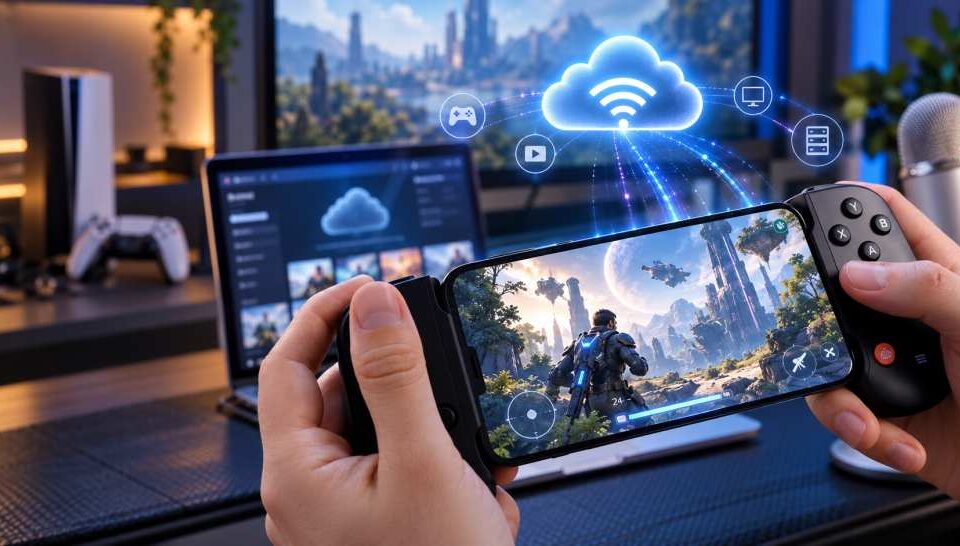
Bloomberg Intelligence projects that cloud gaming will grow into a $38 billion market by 2035, potentially pushing traditional home consoles into a niche segment as more games move to cloud-based platforms. According to Bloomberg News reporter Vlad Savov, the research, led by Bloomberg Intelligence analyst Nathan Naidu, suggests that dedicated gaming consoles could eventually become “just one of many access points” for players as cloud gaming adoption increases.
Filming a game in one place and streaming it to any screen has run for well over a decade at online casinos with live dealer tables, where a real croupier is filmed in a studio, and the video is sent to a phone or laptop. The player’s device does little more than show the picture and send back a choice. Console games demand far more from the connection, and analysts expect the compute behind them to move off the device over the next decade.
Xbox Is Forecast to Keep 40% of Cloud Gaming
Xbox Cloud Gaming is forecast to hold roughly 40% of the market, with Microsoft’s service estimated to have streamed about 220 million hours of gameplay in the September quarter. Nvidia has the technical edge with GeForce Now, in the analysts’ view, and the report notes that GPUs are the most effective hardware for both AI and 3D graphics work. Sony is expected to fare better than other console makers thanks to its PlayStation Plus ecosystem and the PlayStation Portal, while the analysts see Nintendo, which has treated streaming as peripheral, as poorly positioned.
Naidu does not write the hardware off. “Consoles will remain relevant for avid players seeking premium performance,” he said.
Game Libraries May Matter More Than the Box
If the screen matters less, more of the value is likely to sit with whoever owns the games and the servers that run them. Live dealer games at online casinos offer a clear example, with the studio, the cameras and the staff all sitting with the supplier. One table can reach players on an iPhone, an Android handset or a laptop at the same moment.
A streamed console game is a harder product to deliver. It has to answer every button press within milliseconds, while a live table only needs a clear picture and a registered bet before the next hand.
As streaming grows, the cost of the servers behind a game library may come to matter more than the price of the box under the TV. Microsoft and Sony have spent years building those subscription catalogs, which could give both a head start in the business that travels to any screen.
Spare GPU Capacity Could Make Streaming Cheaper Late This Decade
The economics depend on the same chips driving the AI boom. The research finds that demand from AI data centers is pushing computing prices up for now, but the analysts expect GPU oversupply in the final years of this decade to bring those prices down.
Amazon’s interest in one startup this month points to how much that compute is worth to the largest buyers. Techstartups reported on October 12 that Amazon is in talks to acquire Decart for about $7 billion, a startup whose software helps AI workloads run across chips from competing manufacturers. The same report lists gaming among the possible uses for Decart’s real-time video models, which would put a cloud provider’s chips to work on the kind of graphics a streamed game depends on.
Ads Could Bring Cloud Gaming to Emerging Markets Early Next Decade
Analysts expect advertising to be the lever that opens emerging markets early next decade. A player who has never owned a console could stream a large game on a phone, with ads covering the cost that a hardware purchase would otherwise carry. For publishers, that would open markets where the price of a console has kept players out, using the phones those players carry every day.
Live casino studios have streamed tables to phone screens for more than a decade, and the stream they send is light, a card dealt on camera and a bet sent back. Ad-funded cloud gaming would be aiming at similar phones with a far heavier stream, and the analysts’ timeline gives mobile networks in those markets until early next decade to be ready to carry it.