Startup Funding News Today, October 20, 2026: Neolix, Dream Labs, Prism Data, Tolan, ZAP Surgical & More
 Nickie Louise
Posted On October 20, 2026
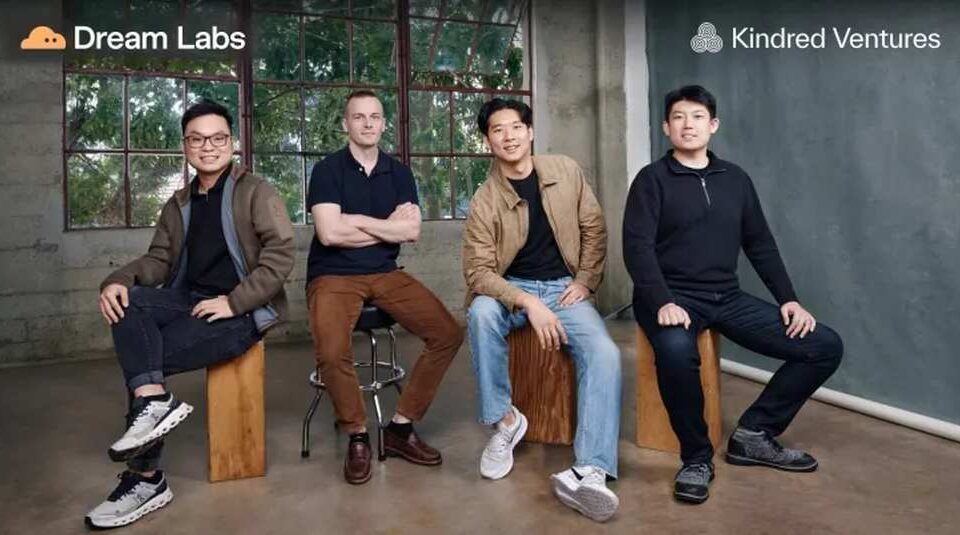
More than $2.2 billion in startup financing was announced globally over the past 24 hours, with investors placing their largest bets on AI semiconductors, autonomous delivery vehicles, robotics, and enterprise software. Tenstorrent led the activity with a $1.5 billion Series E at a $6.2 billion valuation, while Chinese autonomous delivery company Neolix secured nearly $400 million to expand its driverless logistics network. San Francisco-based Town raised $108 million at a $1 billion valuation, and robotics startup Dream Labs secured $90 million in seed financing to develop AI systems that can control different types of robots.
The investments reveal a venture market increasingly divided between companies building AI infrastructure and those trying to make it useful in commercial environments. Tenstorrent is developing alternatives to established AI computing architectures. Neolix is deploying autonomous vehicles for last-mile delivery. Dream Labs is working on software that could allow robots to perform tasks without being programmed individually. Town is building AI assistants that coordinate work across entire organizations.
Healthcare and financial technology also attracted significant investment. ZAP Surgical Systems secured $36 million for robotic radiosurgery, while Tolan raised $30 million for its AI companion platform. Prism Data announced a $20 million Series A to expand cash-flow-based credit underwriting, and Sunlight AI emerged with $17.4 million to help independent medical practices manage their operations. In Europe, Manchester-based Rezzil raised $10 million for sports technology, while London-based XRlabs secured $8.4 million for AI-assisted surgical software
The nine rounds with precisely disclosed dollar amounts total $1.8198 billion. Adding Neolix’s financing, described as nearly $400 million, brings the indicative total to approximately $2.22 billion. Tenstorrent and Neolix account for roughly 86% of that amount, illustrating how a few exceptionally large transactions can dominate daily venture funding statistics.
Seven of the selected companies are headquartered in the United States, two in the United Kingdom, and one in China. This geographic distribution differs markedly from Monday’s early-morning funding picture, reflecting the major American and European announcements from the previous business day.
The Macro Environment: Investors Are Financing AI Infrastructure and Commercial Execution
The largest transactions show that investors remain willing to commit enormous amounts of capital to companies addressing fundamental computing and automation problems. Tenstorrent’s $1.5 billion financing is particularly significant because it competes in a semiconductor market dominated by Nvidia and other established suppliers. Its strategy combines processors, complete computing systems, open-source software, and licensable intellectual property. Investors are effectively financing an alternative technology ecosystem, not simply another chip design.
Neolix represents a different investment thesis. Rather than waiting for a future market to emerge, the Chinese company is attempting to expand a commercial network of autonomous delivery vehicles already operating across numerous cities. The financing reflects confidence that driverless logistics can move from localized deployments into a larger transportation business. But the economics remain demanding: vehicles must be manufactured, maintained, insured, operated safely, and integrated into customers’ delivery networks. Large deployment figures alone do not establish profitability.
Dream Labs and Town highlight how investment is shifting from AI models toward systems capable of performing tasks. Dream Labs wants robots to interpret instructions and act in physical environments. Town wants AI assistants to coordinate activities across employees, applications, and external contacts. Both companies are attempting to solve problems that become more important as basic model capabilities improve. Their commercial success will depend on reliability, integration, and customer trust rather than model performance alone.
The smaller financing rounds reinforce that pattern. Prism Data is using financial transaction histories to improve credit decisions. Sunlight AI is combining software with operational services for physicians. XRlabs is integrating computer vision into surgical workflows, while ZAP Surgical is expanding a medical-device business with equipment already used in patient care. These companies operate in markets where regulatory requirements, proprietary information, physical equipment, or established relationships can create advantages that are difficult for new entrants to reproduce.
Capital concentration is also notable. Tenstorrent and Neolix together account for approximately $1.9 billion of the day’s indicative $2.22 billion total. That does not mean the entire venture market is surging with investment. It indicates that exceptionally large financings remain available to companies with strong strategic positioning, ambitious capital requirements, or demonstrated commercial traction. For investors, the relevant question is whether the expected returns justify the capital needed to reach scale.
Tenstorrent raises $1.5B in funding to expand AI chip manufacturing and open computing infrastructure
Santa Clara-based Tenstorrent raised $1.5 billion in Series E financing at a $6.2 billion post-money valuation, making it the largest verified startup funding announcement in today’s report. The round was led by Trace Capital and Innovation X, with participation from ARK Invest, Fidelity Management & Research, Morgan Stanley, T. Rowe Price, SanDisk, Cadence Ventures, Tether Investments, Eclipse, Protagonist, Maverick Silicon, and other investors.
Tenstorrent announced the financing on Monday, October 19, saying the proceeds would support volume manufacturing of its Galaxy computing systems and international commercial expansion.
Led by CEO Jim Keller, Tenstorrent develops AI processors, servers, workstations, software, and licensable chip intellectual property. Keller previously held senior chip-design positions at Apple, AMD, and Tesla. His experience is particularly relevant because Tenstorrent is trying to compete across several layers of the computing industry at once.
Its products are based around an architecture that incorporates RISC-V processors and Tenstorrent’s proprietary Tensix AI computing cores. The company provides computing systems for organizations running AI models while also licensing processor designs to customers developing their own chips.
That combination distinguishes Tenstorrent from companies focused exclusively on selling accelerator hardware.
Why investors are financing an alternative to Nvidia’s ecosystem
The financing comes as companies and governments seek greater control over AI computing infrastructure.
Nvidia’s hardware and software ecosystem remains deeply established, but customers increasingly have reasons to investigate alternatives. Those include cost, supply availability, software compatibility, deployment flexibility, and the desire to own more of their computing technology.
Tenstorrent is pursuing that opportunity through an open-source software strategy and a business model spanning chips, complete systems, and intellectual property licensing. The company says its technology supports deployments ranging from individual developer workstations to large AI computing clusters.
Tenstorrent also licenses RISC-V CPU and AI processor technology to companies including Samsung and LG. The $1.5 billion financing gives Tenstorrent substantial resources to manufacture systems and support more customers.
However, the investment also raises expectations. The company must prove its products can deliver competitive performance and economics across real AI workloads, not just technical demonstrations.
Software compatibility will be particularly important. A processor can offer attractive hardware characteristics but still struggle commercially if developers must substantially rewrite applications or abandon established tools.
Tenstorrent’s long-term opportunity depends on convincing customers that its architecture provides enough performance, flexibility, or economic benefit to justify adopting a different computing platform.
Funding Details
- Startup: Tenstorrent
- Investors: Trace Capital, Innovation X, ARK Invest, Fidelity, Morgan Stanley, T. Rowe Price, SanDisk, Cadence Ventures, Tether Investments, Eclipse, Protagonist, Maverick Silicon, and others
- Amount Raised: $1.5 billion
- Total Raised: At least $2.19 billion across its latest two major disclosed rounds; complete lifetime total not independently reconciled
- Funding Stage: Series E
- Funding Date: October 19, 2026
- Headquarters: Santa Clara, California, United States
- Sector: AI semiconductors / RISC-V computing / AI infrastructure
- Valuation: $6.2 billion post-money
Neolix raises nearly $400M to expand autonomous delivery vehicles worldwide
Beijing-based Neolix Technologies raised nearly $400 million in Series E financing, one of the largest investments announced in China’s autonomous driving industry this year. Boyu Capital and an unnamed national-level Chinese investment fund co-led the round.
Other investors include Alibaba’s AEF NextGen fund, Monolith Capital, Granite Asia, Vertex Growth, GAC Capital, and several additional financial and strategic investors. Existing shareholders, including Stone Venture and Trustar Capital, also participated.
The company develops Level 4 autonomous delivery vehicles designed to transport goods without a human driver under specified operating conditions. Its vehicles are used in express delivery, urban logistics, retail distribution, and other commercial transportation applications.
Unlike autonomous passenger vehicles, which must meet the safety requirements and expectations of carrying people, Neolix focuses on goods delivery. That narrower application provides a different commercial opportunity. Delivery businesses operate on relatively predictable routes, handle repeatable tasks, and face continuing pressure to reduce transportation expenses.
Autonomous delivery moves beyond pilot programs
Neolix says it has deployed more than 30,000 autonomous delivery vehicles across over 300 cities in more than 20 countries. The company also reports that its vehicles have accumulated more than 260 million kilometers of autonomous operation.
Those figures are company-reported and should not be interpreted as proof that every deployment operates profitably. Nevertheless, the scale is significant.
Neolix is attempting to build a transportation network in which vehicles, operating software, customer relationships, and real-world driving data reinforce one another. Its growing deployment base generates additional information about road conditions, delivery operations, and vehicle performance.
That information can potentially improve its autonomous driving systems and help reduce operating costs. The latest investment will support expansion of its global operations and further development of its autonomous driving technology.
Neolix has also been expanding internationally, including commercial activity and trials in parts of the Middle East, Europe, and Asia. The company says cumulative financing has surpassed RMB 10 billion, equivalent to more than $1.4 billion at approximate exchange rates.
For investors, the central question is whether deployment scale can translate into profitable unit economics. Autonomous vehicles must compete with existing delivery methods on total operating cost, reliability, availability, maintenance, insurance, and customer service.
Regulatory requirements also vary considerably between countries and cities.
Neolix’s financing reflects substantial investor confidence, but the next challenge is turning a large autonomous vehicle network into a financially durable logistics business.
Funding Details
- Startup: Neolix Technologies
- Investors: Boyu Capital, an unnamed Chinese national investment fund, Alibaba AEF NextGen, Monolith Capital, Granite Asia, Vertex Growth, GAC Capital, Stone Venture, Trustar Capital, and others
- Amount Raised: Nearly $400 million
- Total Raised: More than RMB 10 billion, according to the company
- Funding Stage: Series E
- Funding Date: October 20, 2026
- Headquarters: Beijing, China
- Sector: Autonomous vehicles/robotics/logistics technology
- Valuation: Not disclosed
Town raises $108M at $1B valuation to build AI assistants that work across entire teams
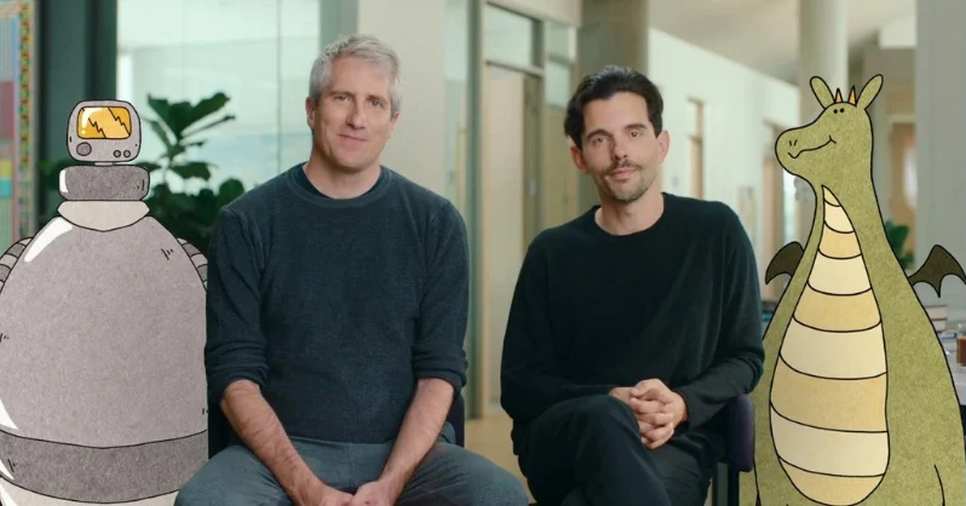
San Francisco-based Town raised $108 million in Series B financing at a $1 billion valuation, with Forerunner Ventures and Menlo Ventures co-leading the round. Andreessen Horowitz and First Round Capital participated alongside Better Tomorrow Ventures, Precedent, Scribble Ventures, Serena Ventures, Sparked Ventures, and several angel investors.
The financing follows a $55 million Series A announced when Town launched publicly in June 2026. Town is developing AI assistants that coordinate work between employees. The company’s product assigns each user an assistant called a Townie.
A Townie connects to the employee’s email, documents, calendar, and work applications. It learns information about the user’s projects, professional relationships, and responsibilities. The distinguishing feature is that these assistants can communicate with one another.
For example, an assistant working for a sales executive could request updated financial information from another employee’s assistant and use that information to prepare materials.
Town says its assistants can also communicate with customers, partners, and job candidates outside an organization.
AI assistants become a coordination layer
Town is betting that workplace AI will become more valuable when assistants can coordinate tasks across teams. A personal assistant may help an employee write documents or summarize meetings.
But most business processes involve multiple people, approvals, applications, and information sources. The challenge is moving work through those systems while preserving appropriate access controls. Town says its assistants request permission when needed and operate based on the information each user is authorized to share.
The company also says it does not use customer data to train models by default. Town reports that paying teams increased ninefold since July, while paying customers grew fourfold.
It also says annual recurring revenue reached seven figures within weeks of its public launch. Those are company-reported metrics, and the absolute current revenue figure was not disclosed. The investment is significant because Town has reached a $1 billion valuation only months after becoming publicly available.
That valuation suggests investors expect team-based AI assistants to become a major software category. However, Town faces competition from Microsoft, Google, and other companies already deeply integrated into workplace communication and productivity software.
Its success will depend on whether it can coordinate complex tasks more effectively than assistants built directly into existing enterprise platforms.
Funding Details
- Startup: Town
- Investors: Forerunner Ventures, Menlo Ventures, Andreessen Horowitz, First Round Capital, Better Tomorrow Ventures, Precedent, Scribble Ventures, Serena Ventures, Sparked Ventures, and angels
- Amount Raised: $108 million
- Total Raised: At least $163 million across its disclosed Series A and Series B
- Funding Stage: Series B
- Funding Date: October 19, 2026
- Headquarters: San Francisco, California, United States
- Sector: Enterprise AI / AI agents/workplace automation
- Valuation: $1 billion
Dream Labs raises $90M in seed funding to develop AI models that control different robots
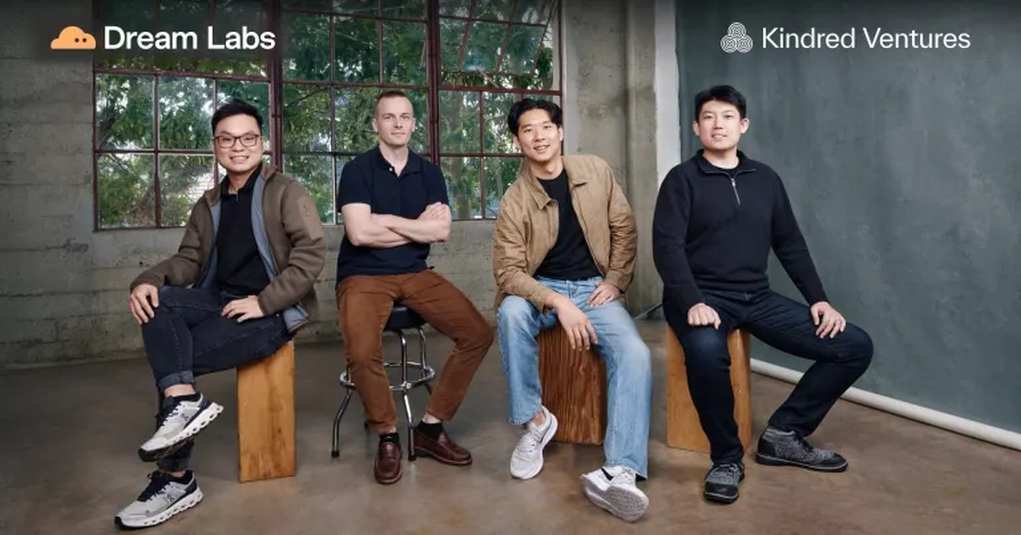
San Francisco-based Dream Labs raised $90 million in seed financing led by B Capital, with participation from Kindred Ventures, A.Capital, Unusual Ventures, SV Angel, Wing VC, Scribble Ventures, and several individual investors. The company announced the financing on October 19 alongside the launch of Dream API, a developer interface designed to connect AI models directly to robotic hardware.
Dream Labs was founded by researchers who previously worked on robotics and AI systems at Nvidia. The founding team includes Joel Jang, Yunhao Ge, Scott Reed, and You Liang Tan. Its primary technology is a robot foundation model designed to translate visual information and natural-language instructions into physical actions.
Instead of programming a robot separately for every task, Dream Labs wants developers to provide an instruction and allow its model to determine how the robot should move. The company says its technology can operate across different robotic hardware platforms. It has announced relationships with more than 20 hardware partners.
A $90 million seed round reflects the cost of physical AI
Dream Labs is working on one of robotics’ most difficult technical problems. Industrial robots excel at repetitive tasks in controlled environments. But they often struggle when objects change position, environments become unfamiliar, or tasks require flexible manipulation.
Developing a model that can transfer learned behavior between different robots could substantially change how robotics systems are deployed. Dream Labs is building that capability through world-action models that connect observations of the physical environment with actions.
Its Dream API is intended to make those capabilities accessible to robot developers without requiring them to build specialized AI systems independently. The company has demonstrated capabilities involving relatively inexpensive robotic arms. However, early demonstrations do not establish that the system can reliably perform complex tasks across industrial environments.
A robot’s hardware, sensors, grippers, and operating conditions can substantially affect its ability to complete a task. The unusually large seed round reflects the computing and research resources required to train models for physical environments.
For investors, Dream Labs represents a bet that robotics could eventually develop a software ecosystem that supplies intelligent behavior independently of hardware. That would create a market analogous in some respects to cloud-based AI services, but with substantially greater physical reliability and safety requirements.
Funding Details
- Startup: Dream Labs
- Investors: B Capital, Kindred Ventures, A.Capital, Unusual Ventures, SV Angel, Wing VC, Scribble Ventures, and individual investors
- Amount Raised: $90 million
- Total Raised: $90 million disclosed
- Funding Stage: Seed
- Funding Date: October 19, 2026
- Headquarters: San Francisco, California, United States
- Sector: Physical AI/robotics foundation models / autonomous systems
- Valuation: Not disclosed
ZAP Surgical raises $36M in funding to expand robotic radiosurgery for brain disorders
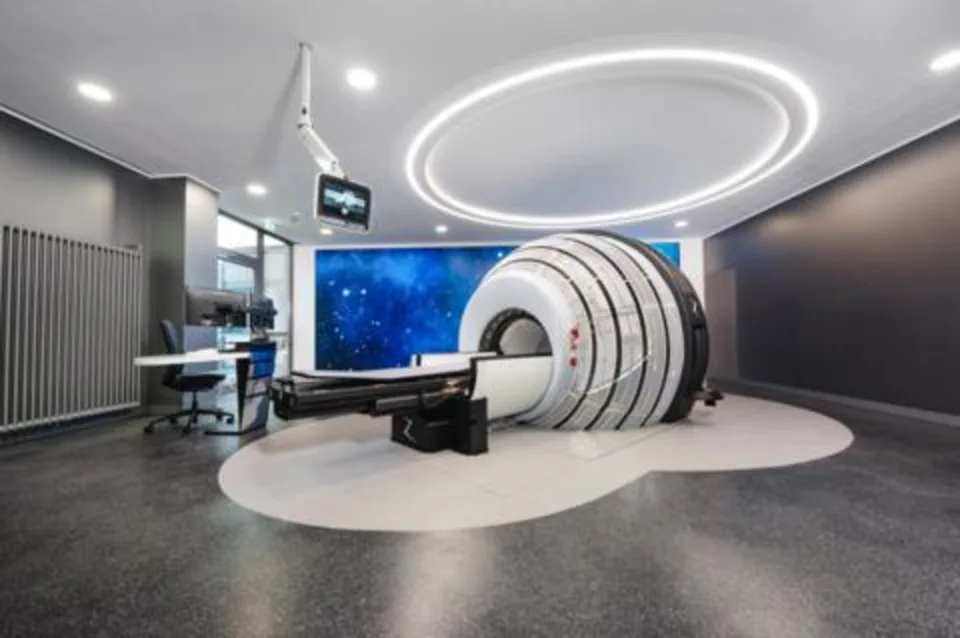
San Carlos-based ZAP Surgical Systems secured $36 million in financing led by Catalio Capital Management, with continued support from Baheal, the company’s strategic partner in China. ZAP plans to use the investment to expand the commercial availability of its radiosurgery systems and support further research involving neurological conditions.
Founded in 2014 by neurosurgeon John R. Adler, ZAP develops medical equipment for non-invasive treatment of certain brain conditions. Its ZAP-X system uses a gyroscopic structure to direct highly focused radiation at targeted areas inside the brain.
The technology is designed to treat conditions such as brain tumors and other intracranial lesions without requiring a conventional surgical incision. ZAP-X also incorporates shielding intended to reduce the need for a traditional radiation-treatment vault, subject to facility requirements. That design could make radiosurgery available to hospitals and medical practices that would otherwise face substantial infrastructure expenses.
Medical robotics requires years of clinical and commercial development
ZAP reports that it has shipped its 50th ZAP-X system and that nearly 10,000 patients have received treatment using its technology. Those figures indicate commercial progress, although shipped systems should not automatically be equated with installed, operational systems.
The company is also investigating radiomodulation, an experimental approach involving targeted radiation exposure for certain neurological and psychiatric applications. Potential uses under investigation include treatment-resistant depression and addiction.
Those applications should be distinguished from the company’s established radiosurgery business. Investigational uses require appropriate clinical evidence and regulatory authorization. ZAP’s financing reflects an investment in a business that already manufactures complex medical equipment and serves healthcare customers.
Unlike an early-stage robotics startup working primarily on prototypes, ZAP must expand production, clinical adoption, distribution, and service capabilities. The commercial challenge involves selling sophisticated equipment to hospitals while demonstrating that its technology can deliver clinical and economic benefits.
For investors, its installed customer relationships, technical expertise, and regulatory experience may represent meaningful barriers to entry.
Funding Details
- Startup: ZAP Surgical Systems
- Investors: Catalio Capital Management, Baheal
- Amount Raised: $36 million
- Total Raised: Not disclosed on a fully reconciled basis
- Funding Stage: Growth financing; formal series designation not disclosed
- Funding Date: October 19, 2026
- Headquarters: San Carlos, California, United States
- Sector: Medical robotics/radiosurgery / medical devices
- Valuation: Not disclosed
Tolan raises $30M to turn AI companions into personal assistants
San Francisco-based Tolan raised $30 million in financing led by Union Square Ventures, with participation from existing investor Khosla Ventures. The startup develops an AI companion application centered on animated characters that maintain ongoing conversations with users.
Tolan’s product differs from conventional AI assistants that focus primarily on answering questions or completing professional tasks. Users interact with personalized digital characters that remember previous conversations and build ongoing conversational relationships.
The company is also introducing practical assistant capabilities. According to Union Square Ventures, users have begun relying on Tolans for activities such as grocery planning, organizing family events, and managing everyday tasks. That development is central to the company’s commercial strategy.
Rather than introducing an AI assistant as another productivity tool, Tolan is building engagement through companionship and gradually expanding into useful services.
Engagement becomes a distribution strategy
Union Square Ventures says more than 250,000 people are expected to interact with their Tolans during October. The company also reports more than 70 million conversations over the previous year. Those are investor-reported engagement figures. They do not disclose how many users pay for the service or how much revenue each customer generates.
Nevertheless, the activity helps explain the investment. Consumer AI businesses often face substantial competition and customer acquisition costs. Tolan is attempting to differentiate through character design, persistent memory, and emotional engagement.
If users return frequently, the company may have additional opportunities to introduce paid services. But AI companionship also raises questions involving user privacy, emotional dependence, and transparency about the nature of interactions.
The company must ensure that its product does not misrepresent itself as a human relationship or encourage harmful dependence. Its commercial success will also depend on subscriber retention, inference costs, and whether assistant features provide measurable value.
For investors, Tolan represents a bet that consumer AI can build enduring brands around personalized experiences rather than general-purpose chat interfaces.
Funding Details
- Startup: Tolan
- Investors: Union Square Ventures, Khosla Ventures, and other existing backers
- Amount Raised: $30 million
- Total Raised: Approximately $60 million reported; complete lifetime funding not independently reconciled
- Funding Stage: New financing round; formal stage not disclosed in the lead investor’s announcement
- Funding Date: October 19, 2026
- Headquarters: San Francisco, California, United States
- Sector: Consumer AI / AI companions / personal assistants
- Valuation: Not disclosed
Prism Data raises $20M to improve credit decisions using bank transaction data
New York-based Prism Data raised $20 million in Series A financing led by Story Ventures, with participation from FINTOP Capital, Core VC, Obvious Ventures, 1st & Main Growth Partners, and Mana Ventures. The financing brings total reported funding to more than $25 million.
Prism announced the investment alongside expanded adoption of its cash-flow underwriting technology. The New York-based startup develops software that helps financial institutions evaluate borrowers using bank account transactions. Traditional credit scores primarily reflect information about borrowing and repayment history.
Prism’s approach incorporates information about income, spending, savings, and other financial activity. The company argues that this information can help lenders assess risk more accurately, particularly when borrowers have limited conventional credit histories.
That could matter for consumers who earn income from contract work, run small businesses, or have financial circumstances that traditional credit reporting does not fully capture.
Financial data becomes a competitive advantage
Prism says three of the five largest U.S. fintech lenders and six of the ten largest digital banks use its technology. Its products are also distributed through companies including Equifax, Plaid, and LexisNexis. The startup reports that API usage increased more than 100-fold over two years.
These are company-reported figures, but they indicate substantial adoption among financial technology providers. Prism is also introducing a transaction-analysis engine called REFRACT.
The company says it trained the technology using a proprietary dataset containing more than 30 billion bank transactions. The system is designed to classify financial activity more accurately, including distinguishing income from borrowed funds and transfers from purchases.
For investors, Prism’s competitive advantage may come from the combination of transaction data, model performance, regulatory experience, and established distribution relationships. However, lending models operate in a highly regulated environment.
Prism and its customers must consider consumer privacy, data accuracy, explainability, and fair-lending requirements. Better predictive performance does not eliminate the need to test whether a model produces unfair or legally problematic outcomes.
The investment reflects growing demand for financial intelligence built from real transaction behavior rather than traditional credit reporting alone.
Funding Details
- Startup: Prism Data
- Investors: Story Ventures, FINTOP Capital, Core VC, Obvious Ventures, 1st & Main Growth Partners, Mana Ventures
- Amount Raised: $20 million
- Total Raised: More than $25 million
- Funding Stage: Series A
- Funding Date: October 19, 2026
- Headquarters: New York, United States
- Sector: Fintech/credit underwriting / financial data analytics
- Valuation: Not disclosed
Sunlight AI raises $17.4M to help independent physicians manage medical practices

New York-based Sunlight AI announced $17.4 million in seed funding, led by Lan Xuexhao, founder of Basis Set Ventures. Other participants include Sofeon Ventures, Social Leverage, Actions Capital, Overlook Ventures, Early Light Ventures, and several healthcare investors and entrepreneurs.
The company announced its public launch, alongside the acquisition of Bradford Medical Associates. Sunlight develops technology and services intended to help independent physicians manage the business operations of their medical practices.
Physicians face administrative responsibilities involving billing, insurance claims, reimbursements, staffing, scheduling, and financial reporting. Many practices depend on several software vendors and outside service providers to complete that work.
Sunlight wants to consolidate those functions into a coordinated operating system that combines AI, software, and human expertise. Its founder, Sina Chehrazi, previously founded healthcare benefits technology company Nayya.
Healthcare consolidation creates an opportunity for operating software
Sunlight’s investment thesis is connected to the financial pressures facing independent medical practices. Physicians must manage administrative costs while negotiating with insurers, maintaining clinical quality, and operating within complex reimbursement systems.
Those pressures can encourage practices to join larger healthcare organizations. Sunlight is trying to offer an alternative by giving independent physicians access to technology and operational support that may otherwise be easier to get within a large hospital network.
The company’s acquisition of Bradford Medical Associates is significant because it signals a strategy that extends beyond software development. Sunlight is also acquiring operating capabilities and relationships with medical practices.
That approach could improve its understanding of customer needs and give it more control over service delivery. But it introduces additional complexity. A business combining software, acquisitions, and professional services may require more capital and management resources than a conventional SaaS company.
The company must also demonstrate that its technology can improve collections, reduce administrative expenses, and support physicians without compromising patient care or regulatory compliance.
For investors, the opportunity lies in building a technology-enabled operating business within a large healthcare services market.
Funding Details
- Startup: Sunlight AI
- Investors: Lan Xuexhao, Sofeon Ventures, Social Leverage, Actions Capital, Overlook Ventures, Early Light Ventures, and other investors
- Amount Raised: $17.4 million
- Total Raised: $17.4 million disclosed
- Funding Stage: Seed
- Funding Date: October 19, 2026
- Headquarters: New York and Miami, United States
- Sector: Healthcare technology / medical practice management/enterprise AI
- Valuation: Not disclosed
Rezzil raises $10M to expand VR sports training and movement intelligence
Manchester-based Rezzil raised $10 million in strategic growth financing, backed by footballer Jobe Bellingham, sports performance coach Phil Kenyon, and existing strategic investors including the Premier League and Simba Investments.
The fresh capital infusion will support international expansion, product development, and hiring. Founded by Adam Dickinson, Andy Etches, and Gareth Thatcher, Rezzil initially developed virtual-reality technology for professional football training.
Its software allows athletes to practice scenarios and evaluate movement in simulated environments. The company has since expanded into sports broadcasting, gaming, and analytical technology. Professional sports organizations and broadcasters, including the BBC, have used its tools.
Rezzil is now positioning its technology around what it calls movement intelligence. The concept involves collecting and analyzing information about how athletes move, react, and perform.
Sports data creates opportunities beyond training
Rezzil’s investment is significant because the company has established relationships with sports organizations, athletes, and media companies. Those relationships provide access to customers and applications that newer competitors may find difficult to replicate.
Sports training is one potential market. Broadcast visualization, interactive gaming, coaching, and athlete performance analysis offer additional opportunities.
The company is expanding its North American operations and has opened an office in Chicago. It also plans to increase its workforce to approximately 100 employees over the next year. The involvement of prominent athletes and sports organizations may help Rezzil reach additional customers. However, celebrity investment does not itself establish commercial success.
The company must demonstrate that its technology provides measurable value to teams, broadcasters, or consumers. Its longer-term competitive position could depend on proprietary movement data, sports relationships, technology licensing, and distribution.
For investors, Rezzil represents an opportunity to build a specialized technology platform within the broader sports economy.
Funding Details
- Startup: Rezzil
- Investors: Jobe Bellingham, Phil Kenyon, Premier League, Simba Investments, and other strategic investors
- Amount Raised: $10 million
- Total Raised: Not disclosed
- Funding Stage: Strategic growth financing
- Funding Date: October 19, 2026
- Headquarters: Manchester, United Kingdom
- Sector: Sports technology / virtual reality/movement analytics
- Valuation: Not disclosed
XRlabs raises $8.4M in funding to bring AI-assisted surgical intelligence into operating rooms
London-based XRlabs raised $8.4 million in seed financing led by Playground Global, with participation from Eka Ventures. The investment will support engineering, clinical research, regulatory development, and expansion into additional hospitals.
Founded by practicing neurosurgeon Dr. Ali Haddad, XRlabs develops software that uses computer vision and AI to assist surgical teams. Its technology combines information from live surgical video, medical imaging, and operating-room equipment.
The goal is to help surgeons access relevant anatomical and procedural information during an operation. XRlabs is developing SurgicalOS, a software system intended to work with existing surgical technologies rather than requiring hospitals to replace all their equipment.
The company has also developed technologies involving surgical visualization and planning.
AI moves closer to clinical decision-making
XRlabs says its technology has been used in more than 100 surgical cases across several countries. Those deployments include research applications and clinical collaborations. However, SurgicalOS remains in development and should not be presented as a broadly approved commercial surgical system.
The financing will help XRlabs pursue additional clinical evidence and regulatory pathways in the United Kingdom, Europe, and the United States. The company is also using Nvidia technology, including Jetson Thor and healthcare-related AI development tools, to support real-time computing.
Former Medtronic CEO Omar Ishrak has joined XRlabs as board chair. His experience in medical technology may help the company address the clinical, regulatory, and commercial requirements involved in selling software to hospitals.
For investors, XRlabs represents a bet that surgical AI can become an additional software layer within existing operating-room infrastructure. That could reduce the capital requirements associated with manufacturing complete surgical robots.
But the company’s commercial opportunity depends on demonstrating accuracy, safety, compatibility with hospital equipment, and measurable benefits for clinicians.
Clinical validation and regulatory approval will remain major milestones.
Funding Details
- Startup: XRlabs
- Investors: Playground Global, Eka Ventures
- Amount Raised: $8.4 million
- Total Raised: At least $10.7 million across its disclosed pre-seed and seed rounds
- Funding Stage: Seed
- Funding Date: October 19, 2026
- Headquarters: London, United Kingdom; additional office in Palo Alto, California
- Sector: Surgical AI / medical imaging/healthcare technology
- Valuation: Not disclosed
What Today’s Funding Activity Reveals
Today’s funding activity is dominated by two unusually large transactions, but the smaller investments reveal several important trends that are easy to miss when focusing on capital totals alone.
First, AI computing remains one of venture capital’s most capital-intensive investment categories.
Tenstorrent’s $1.5 billion Series E reflects the enormous financial requirements of designing processors, building manufacturing systems, building software ecosystems, and competing with established semiconductor companies.
The company is addressing a market in which technical success requires significant capital long before revenue can reach comparable scale.
That creates a competitive environment where access to financing is itself an important advantage.
However, funding scale does not guarantee commercial success. The ability to manufacture reliable products and persuade customers to adopt an alternative architecture remains central.
Second, physical AI is attracting capital at different stages of commercialization.
Neolix and Dream Labs illustrate the distinction.
Neolix has deployed thousands of vehicles and is attempting to expand an existing autonomous logistics network.
Dream Labs is developing more general-purpose robotic intelligence and has begun offering its technology through an API.
One investment is primarily about expanding a commercial operating system.
The other focuses on developing capabilities that could eventually be useful across many robotic platforms.
Both depend on AI, but their risks and milestones differ considerably.
Third, enterprise AI is moving from individual productivity toward coordinated execution.
Town’s financing suggests investors see opportunities in systems that manage work across people and applications.
An AI assistant that summarizes a document may improve one employee’s productivity.
A system that coordinates information, permissions, approvals, and tasks across an organization could potentially affect a much larger portion of business operations.
That opportunity also introduces greater security and reliability requirements.
Fourth, healthcare AI investment is extending into infrastructure and operations.
ZAP Surgical, Sunlight AI, and XRlabs operate in different parts of the healthcare industry.
ZAP manufactures equipment used to deliver radiosurgery.
Sunlight combines software and administrative services for medical practices.
XRlabs is building software that integrates with surgical environments.
These companies demonstrate that healthcare technology investment is not concentrated exclusively on drug discovery or diagnostic AI models.
Demand also exists for products that improve how healthcare organizations operate and deliver services.
Fifth, proprietary data continues to attract investor interest.
Prism Data’s financing is connected to its experience analyzing financial transactions and its access to large datasets.
Rezzil’s business involves information about athletic movement and performance.
Neolix collects operating data from autonomous vehicles.
These datasets differ substantially, but each could help improve specialized products.
Commercial value depends on data quality, usage rights, relevance, and the ability to turn information into better outcomes.
Simply accumulating data is not sufficient.
Sixth, consumer AI investment is developing outside conventional productivity software.
Tolan’s financing demonstrates continued investor interest in AI products built around personal engagement.
The company is attempting to create a consumer relationship that begins with conversation and expands into practical assistance.
That approach differs from enterprise AI software, where purchases are generally justified through productivity, cost savings, or operational performance.
Consumer AI companies must establish their own retention and monetization economics.
Seventh, investor concentration is as important as sector concentration.
The two largest rounds account for roughly 86% of the indicative funding total.
Removing Tenstorrent and Neolix leaves approximately $319.8 million across the remaining eight companies.
That is still meaningful investment activity, but it presents a very different picture from the headline total exceeding $2.2 billion.
The distinction matters when evaluating whether venture capital is broadly expanding or concentrating in a relatively small number of companies.
Startup Funding Table
| Startup | Amount Raised | Sector | Funding Stage | Lead/Key Investors | Country |
|---|---|---|---|---|---|
| Tenstorrent | $1.5B | AI semiconductors/infrastructure | Series E | Trace Capital, Innovation X, ARK Invest, Fidelity | United States |
| Neolix | Nearly $400M | Autonomous delivery/robotics | Series E | Boyu Capital, national investment fund, Alibaba AEF NextGen, Vertex Growth | China |
| Town | $108M | Enterprise AI / AI agents | Series B | Forerunner Ventures, Menlo Ventures, a16z, First Round Capital | United States |
| Dream Labs | $90M | Physical AI/robotics models | Seed | B Capital, Kindred Ventures, Unusual Ventures | United States |
| ZAP Surgical | $36M | Medical robotics / radiosurgery | Growth financing | Catalio Capital Management, Baheal | United States |
| Tolan | $30M | Consumer AI / AI companions | Not disclosed | Union Square Ventures, Khosla Ventures | United States |
| Prism Data | $20M | Fintech/credit underwriting | Series A | Story Ventures, FINTOP, Core VC, Obvious Ventures | United States |
| Sunlight AI | $17.4M | Healthcare operations / AI | Seed | Lan Xuexhao, Sofeon Ventures, Social Leverage | United States |
| Rezzil | $10M | Sports technology/movement analytics | Strategic growth financing | Premier League, Simba Investments, Jobe Bellingham | United Kingdom |
| XRlabs | $8.4M | Surgical AI / medical technology | Seed | Playground Global, Eka Ventures | United Kingdom |
Strategic Takeaways for Founders and Investors
1. Open computing architectures are attracting serious capital
Tenstorrent’s financing shows that investors see room for alternatives to established AI computing platforms.
For founders developing semiconductor technology, the opportunity is broader than manufacturing a faster chip.
Customers also need software compatibility, developer tools, reliable supply chains, and support for complete computing systems.
Investors should evaluate those capabilities alongside processor performance.
2. Commercial operating data can become an advantage in autonomous systems
Neolix’s extensive delivery network may provide information that smaller competitors cannot easily reproduce.
Its vehicles operate in different environments and encounter real traffic, weather, and delivery conditions.
That experience could improve autonomy systems and operating efficiency.
However, investors should evaluate deployment data alongside revenue per vehicle, utilization, maintenance expenses, and the cost of human intervention.
3. Robotics software could develop separately from robotics hardware
Dream Labs is attempting to supply intelligent behavior through software that works across different robots.
If the approach proves reliable, robot manufacturers could potentially access increasingly capable AI without developing all the underlying models themselves.
That would create opportunities for companies focused on robotic software infrastructure.
But founders must demonstrate that their technology works outside controlled environments and across different hardware configurations.
4. Enterprise AI must manage permissions and accountability
Town’s approach depends on assistants exchanging information and completing tasks across an organization.
That requires safeguards around confidential information, access rights, approvals, and operational responsibility.
For founders, these capabilities may become important competitive advantages.
For investors, product demonstrations should be supplemented with evidence that customers trust the system enough to use it for meaningful work.
5. Specialized medical technology still requires clinical evidence
ZAP Surgical and XRlabs illustrate two approaches to medical technology.
ZAP is expanding a commercial hardware business.
XRlabs is developing software intended to work with equipment hospitals already use.
Both require clinical expertise, regulatory planning, and evidence that their products improve care delivery.
A technically impressive product does not automatically translate into hospital purchasing decisions.
6. Proprietary data matters most when it improves measurable outcomes
Prism Data’s transaction-analysis technology aims to improve credit decisions.
Rezzil uses movement information to support sports performance and related applications.
Neolix relies on operating data to improve autonomous driving.
Investors should ask whether the information produces results that competitors cannot achieve with more accessible datasets.
For Prism, that could mean better credit-risk assessment.
For Rezzil, it could mean useful performance insights.
For Neolix, it could mean safer or more economical vehicle operation.
7. AI companions face a different commercial test from workplace assistants
Tolan and Town both develop AI assistants, but their customers and economic incentives differ.
Town must persuade businesses that coordinated assistants improve productivity.
Tolan must establish recurring consumer engagement and convert that interest into sustainable revenue.
The difference matters because retention, customer acquisition, pricing, and operating costs will be measured differently.
8. Healthcare services can create advantages beyond software
Sunlight AI is combining technology with operational support and acquisitions.
That strategy may give it deeper insight into medical practice workflows than a software-only provider.
However, it also increases operating complexity.
Investors should examine whether the business can deliver measurable financial improvements to practices while maintaining service quality.
9. Strategic relationships can accelerate commercialization
Tenstorrent has licensing relationships with major technology companies.
Rezzil has connections to sports organizations and athletes.
ZAP Surgical has a strategic partner supporting its business in China.
These relationships can provide distribution, technical feedback, or market access.
But founders should distinguish strategic endorsements from binding customer commitments.
Commercial validation requires actual adoption and recurring economic value.
10. Large funding rounds should be evaluated against capital requirements
Tenstorrent and Neolix demonstrate why a company’s financing amount should be considered alongside its business model.
Chip manufacturing and autonomous vehicle deployment require substantial capital.
A large funding round may support major commercial expansion without necessarily providing a long runway relative to operating expenses.
For investors, the questions include capital efficiency, future financing requirements, gross margins, and the milestones the new investment is expected to achieve.
Conclusion
October 20’s startup funding activity reveals a venture market making substantial commitments to companies attempting to solve the technical and operational problems behind AI adoption.
Tenstorrent’s $1.5 billion Series E dominates the financial totals, reflecting investor confidence in alternative AI computing architectures. Neolix’s nearly $400 million financing shows that autonomous delivery is attracting large-scale capital as companies attempt to expand beyond limited deployments.
Town and Dream Labs represent two emerging directions for AI: software that coordinates work across organizations and models that translate instructions into physical robotic actions.
The remaining investments extend across healthcare, fintech, consumer AI, sports technology, and medical devices.
Prism Data is turning bank transaction histories into lending intelligence. Sunlight AI is helping physicians manage the business side of healthcare. ZAP Surgical and XRlabs are developing technologies for surgical environments, while Rezzil and Tolan are exploring specialized consumer applications.
These investments don’t mean all startups can raise capital easily. The day’s funding remains heavily concentrated in a few companies.
But the broader pattern is meaningful.
Investors are financing businesses that control difficult parts of the technology economy: computing architecture, autonomous operating networks, proprietary data, specialized clinical systems, and the software required to coordinate increasingly capable AI.
The next major competitive advantage may belong to companies that can make these systems work reliably and economically at scale, rather than those that simply demonstrate what AI can do.