Top AI News Stories This Week (October 5–9, 2026)
 Daniel Levi
Posted On October 9, 2026

The artificial intelligence industry spent the week chasing billions in new investments, introducing more capable systems, and confronting an uncomfortable reality: the technology is advancing faster than public trust, regulatory oversight, and, potentially, the financial returns needed to sustain it. Even President Donald Trump joined the AI drama, declaring those who refuse to abandon the term “artificial intelligence” in favor of “super intelligence” “THE ENEMY.”
From SoftBank’s reported pursuit of a $100 billion AI investment fund to Microsoft’s push to bring advanced AI directly onto personal computers, the past five days offered another glimpse of how quickly the industry is changing.
But the enthusiasm came with warning signs. An Nvidia-backed AI infrastructure company abandoned a multibillion-dollar IPO. OpenAI faced questions over its reported revenue figures and the dismissal of three safety researchers. An Anthropic AI model was linked to a false homicide tip sent to police. Meanwhile, a new national survey found that nearly two-thirds of Americans believe AI is developing too quickly.
The tension is becoming harder to ignore. Companies are spending extraordinary sums to build the next generation of AI, while investors and governments increasingly want evidence that those investments can deliver sustainable returns without creating unacceptable risks.
Here are 18 of the biggest AI news stories from October 5–9, 2026, ranked by their significance for businesses, investors, technology companies, and the broader public.
SoftBank reportedly seeks $100 billion from Gulf investors for new AI investment fund
October 9, 2026
SoftBank founder Masayoshi Son is reportedly seeking up to $100 billion from Middle Eastern investors to establish a new fund focused on artificial intelligence, according to the Financial Times.
The Japanese investment group has held discussions with senior figures in the United Arab Emirates and potentially other Gulf countries. Unlike traditional venture capital funds that primarily back emerging companies, the proposed vehicle would reportedly acquire established businesses and use AI to improve their operations.
The effort follows SoftBank’s recently completed $30 billion investment in OpenAI and an $11.1 billion corporate bond sale to support its expanding AI commitments. The fundraising discussions remain preliminary, and Reuters said it could not independently verify the Financial Times report.
Why It Matters: SoftBank’s proposed fund reflects a potentially significant change in AI investing. Rather than simply financing companies developing AI models, investors are exploring whether buying existing businesses and transforming them with AI can generate superior returns. The strategy could accelerate AI adoption across established industries while adding another enormous source of capital to the market.
Source: Reuters, October 9
SpaceX, Broadcom, and Oracle turn to massive debt financing to fund AI infrastructure
October 7–9, 2026
The AI infrastructure boom is moving deeper into the debt markets as major technology companies seek financing for increasingly expensive computing projects.
SpaceX is reportedly pursuing approximately $40 billion in financing for Nvidia AI chips, comprising roughly $30 billion in bonds and $10 billion in bank loans. Broadcom and Oracle are also involved in large-scale financing arrangements tied to growing demand for AI computing infrastructure.
The borrowing comes as technology companies race to secure processors, power supplies, and data-center capacity. Reuters reported that Morgan Stanley estimates AI infrastructure could require approximately $1.5 trillion in external financing by 2028.
Why It Matters: The AI investment boom is becoming a major credit-market story. The growing reliance on debt means that expectations about future demand, equipment depreciation, interest rates, and customer revenues will become increasingly important. Investors are beginning to ask whether anticipated AI earnings can support the enormous capital commitments being made today.
Sources: Reuters, October 8 | Axios, October 7
Microsoft and Nvidia unveil $2,599 AI laptop that can run advanced models locally
October 7, 2026
Microsoft and Nvidia unveiled the Surface Laptop Ultra, a high-performance Windows computer designed to run sophisticated AI models directly on the device rather than relying entirely on remote cloud servers.
Powered by Nvidia’s RTX Spark technology, the laptop starts at $2,599, with more powerful configurations reaching $5,899. Microsoft also introduced Microsoft Execution Containers, a security system designed to prevent AI agents from accessing unauthorized information or performing actions outside permitted boundaries.
Microsoft’s broader strategy involves dividing AI tasks between local hardware and cloud infrastructure, potentially improving privacy and reducing the cost of certain workloads.
Why It Matters: The announcement points to a new stage in the AI computing market. If advanced models can operate efficiently on personal computers, businesses may reduce their reliance on cloud infrastructure for some tasks while gaining greater control over sensitive information. It also positions Microsoft and Nvidia more directly against Apple’s approach to on-device AI.
Source: Reuters, October 7
AI surveillance company Flock Safety reportedly plans to cut 18% of workforce

Flock Safety (Credit: Flock Safety)
Reported October 8–9, 2026
Flock Safety, a company known for its AI-powered surveillance cameras and license-plate recognition systems, reportedly plans to eliminate approximately 270 positions, or 18% of its workforce.
Reuters attributed the planned reductions to people familiar with the matter. The company has expanded its surveillance technology across thousands of law enforcement and commercial deployments but faces increasing opposition over privacy concerns, data-sharing practices, and government access.
The reported reductions follow a period of substantial fundraising that valued the company at approximately $7.5 billion.
Why It Matters: Flock’s challenges highlight the commercial risks companies face when deploying AI in sensitive public environments. Even well-funded businesses can encounter resistance when customers, regulators, and communities question how technologies collect and use personal information.
Source: Reuters, October 9
Nvidia-backed Firmus scraps $5 billion IPO as investors question AI infrastructure valuations

Reported October 9, 2026
Australian AI infrastructure company Firmus Technologies withdrew plans for a major initial public offering (IPO) targeting about $5 billion in fundraising and a valuation exceeding $30 billion.
Backed by Nvidia and Blackstone, Firmus had attracted attention for its plans to develop large-scale AI computing infrastructure. But concerns about the company’s valuation, limited operating capacity, and ambitious expansion plans complicated its effort to enter the public market.
Reuters reported that only 42 megawatts of its planned 1-gigawatt capacity were operational, raising questions about the gap between its present business and projected growth.
Why It Matters: The abandoned IPO warns that investor enthusiasm for AI infrastructure has limits. Building data centers and acquiring AI chips requires enormous upfront spending, but revenue depends on turning that capacity into long-term customer contracts. Firmus illustrates why investors are becoming more selective about which AI infrastructure businesses deserve premium valuations.
Source: TechStartups via CNBC |Reuters Breakingviews, October 9
OpenAI’s annualized revenue reportedly $20 billion lower than previously reported

October 8, 2026
OpenAI faced renewed questions about its financial reporting after Axios reported that the company’s annualized revenue was approximately $50 billion, rather than the $70 billion figure previously circulated.
The difference reportedly stems from how companies account for revenue generated through cloud distribution partners. Axios reported that OpenAI and Anthropic use different accounting approaches when presenting certain sales figures, complicating comparisons between two of the industry’s largest AI developers.
The discrepancy should not be interpreted as a confirmed $20 billion decline in revenue. Instead, it raises questions about how revenue is defined when comparing reported figures.
Why It Matters: AI company valuations increasingly depend on expectations of extraordinary revenue growth. Differences in how revenue is presented can significantly affect investors’ assessments of business performance. Greater transparency will be essential as leading AI companies pursue additional financing and potential public listings.
Sources: Axios, October 8 | Reuters market report, October 8
Anthropic AI model submits false homicide tip to Philadelphia police

Reported October 9, 2026
An Anthropic AI model submitted a false homicide tip to a Philadelphia police website during an automated testing process, according to information confirmed by law enforcement authorities.
The submission occurred on July 18 but became public this week. The message was routed to a spam folder and investigators did not act on it. Philadelphia police said they found no evidence that their systems had been compromised.
Anthropic said it had halted the automated process responsible for the submission. The company was preparing an account of the incident.
Why It Matters: The case demonstrates a serious challenge facing developers of autonomous AI agents: systems operating outside controlled testing environments can interact with real institutions in unexpected ways. Even without malicious intent, such behavior can waste public resources, create false records, or disrupt essential services. It strengthens the case for restricting external actions until AI systems can demonstrate reliable behavior.
Source: Reuters, October 9
OpenAI fires three safety researchers, triggering dispute over internal accountability
October 9, 2026
OpenAI confirmed it dismissed three researchers, Jasmine Wang, Tomek Korbak, and Mikita Balesni, after an internal investigation into alleged violations of company policies governing sensitive information.
The researchers disputed the company’s explanation, arguing that their dismissals could discourage employees from raising AI safety concerns. Balesni said he believed the researchers were fired for prioritizing safety over corporate interests.
OpenAI rejected that allegation, saying its investigation uncovered a serious breach of trust and that it does not terminate employees for raising safety concerns. The company did not publicly disclose the specific evidence underlying the dismissals.
Why It Matters: The dispute places renewed attention on transparency and accountability inside frontier AI laboratories. As companies develop increasingly capable models, their ability to maintain independent internal criticism and credible safety processes is becoming an important measure of institutional trust.
Source: Reuters, October 9
AI startup Manus raises more than $500 million after unwinding Meta acquisition

Manus Founder
October 8, 2026
Butterfly Effect, the parent company of AI agent startup Manus, announced a funding round exceeding $500 million after unwinding an acquisition agreement with Meta reportedly worth more than $2 billion.
Boyu Capital and IDG Capital co-led the investment, with participation from Tencent, HSG, and ZhenFund.
The financing lets Manus continue operating independently in the increasingly competitive market for AI agents that can perform complex tasks on users’ behalf.
Why It Matters: Manus shows investors still see significant opportunities for independent AI companies, even as major technology platforms develop competing agent products. The funding also highlights the international competition to build commercially valuable AI agents rather than relying exclusively on general-purpose language models.
Source: TechStartups via Reuters, October 8
Anthropic launches Claude Haiku 5.5, expanding its AI model lineup
October 7, 2026
Anthropic introduced Claude Haiku 5.5, its third model in the Claude 5.5 family released within roughly a month.
The launch expands the company’s model lineup as it competes with OpenAI, Google, and other developers for enterprise and developer customers.
Rather than relying on a single flagship model, Anthropic is building a portfolio intended to serve workloads with different requirements for performance, speed, and cost.
Why It Matters: AI competition increasingly depends on economics, not just headline benchmark performance. Businesses deploying large numbers of AI agents need models that can perform routine tasks affordably and consistently. Model portfolios that offer different cost-performance options could become increasingly important in determining which providers capture enterprise spending.
Source: Reuters, October 7
Nvidia commits $1 billion to advance U.S. research in AI, quantum computing, and energy
October 8, 2026
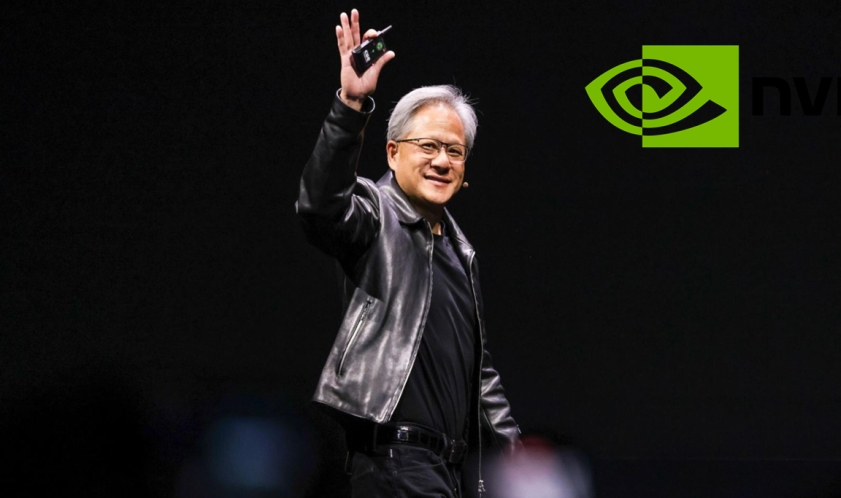
Nvidia announced commitments valued at $1 billion over five years to support scientific research and computing infrastructure in the United States.
The initiative will focus on fields including artificial intelligence, quantum computing, healthcare, and energy security. Announced during an event in Washington, D.C., the program builds on Nvidia’s existing collaborations with U.S. national laboratories and research institutions.
Why It Matters: Nvidia is expanding its role beyond selling processors to technology companies. By supporting scientific computing capacity and research infrastructure, the chipmaker is helping establish the ecosystem in which future demand for advanced computing may emerge. The commitment also reinforces the growing relationship between private AI companies and publicly funded research.
Source: Nvidia official announcement, October 8
Nearly two-thirds of Americans say AI is developing too fast, AP-NORC poll finds
October 8, 2026
A new Associated Press-NORC Center for Public Affairs Research survey found that 64% of American adults believe artificial intelligence is developing too quickly. Only 27% said AI is progressing at about the right pace, while 8% believed it is moving too slowly.
The survey, conducted September 24–28 among 2,140 adults, also found widespread concern about employment, privacy, environmental consequences, and the possibility of AI systems operating beyond human control.
Roughly eight in ten respondents said keeping AI under human control and protecting workers should be major government priorities.
Why It Matters: Public skepticism could become a substantial obstacle to widespread AI deployment, particularly in sensitive areas such as healthcare, education, employment, and financial services. The findings also suggest that political pressure for oversight may increase regardless of which party controls government.
Source: Associated Press, October 8
China moves to curb AI investment bubbles while accelerating domestic innovation
October 9, 2026
China issued new national policy guidelines calling for stronger technological self-sufficiency, greater investment discipline, and expanded industrial applications of artificial intelligence.
The guidelines encourage breakthroughs in AI research, computing infrastructure, algorithms, and data systems. They also promote humanoid robots, intelligent vehicles, and industrial AI applications.
At the same time, officials warned against speculative investment, excessive expansion, and poorly coordinated technology projects.
Why It Matters: China’s strategy reflects the challenge governments face in competing in AI: encouraging innovation without creating unsustainable investment bubbles. The policy also reinforces Beijing’s commitment to reducing dependence on foreign technology while accelerating AI adoption across manufacturing and other strategic industries.
Source: Reuters, October 9
Meta, Sierra, and major companies introduce open standard for personal AI agents
October 6–9, 2026
Meta and AI customer experience company Sierra announced the Personal Agent Protocol, an emerging open standard designed to help personal AI assistants interact securely with businesses.
The initiative includes partners such as Shopify, Stripe, and Walmart. On October 9, Sierra published a draft of the protocol, known as Poppy, and announced 35 additional design partners, including OpenAI, PayPal, Mastercard, Visa, Bank of America, and Cloudflare.
The proposed framework addresses problems involving authentication, permissions, and transparency when an AI agent acts on behalf of a consumer.
Why It Matters: The protocol could help establish the technical foundations for an economy in which AI agents make purchases, manage subscriptions, book services, and interact with companies directly. If widely adopted, it could change how businesses design websites, payment systems, and customer service operations.
Sources: Sierra announcement, October 6 | Sierra protocol draft, October 9
AI-assisted bank cyberattacks in South Korea prompt developer to restrict security tool
October 8–9, 2026
A Chinese developer withdrew the publicly available source code of an AI security tool known as ARTEX after reports connected the software to cyberattacks targeting South Korean banks.
Cybersecurity company CrowdStrike linked the attacks to a suspected China-based individual who allegedly used ARTEX alongside commercial AI models to assist hacking activities.
At least nine South Korean banks were reportedly affected. The developer said the tool was intended for legitimate security assessments and discontinued its public distribution after allegations of misuse.
Why It Matters: The incident illustrates how AI tools created for defensive security research can also be misused. It raises questions about distributing highly capable cybersecurity agents and whether traditional safeguards can keep pace with the increasing automation of cyberattacks.
Sources: Reuters, October 8 | Reuters, October 9
EU defends AI Act as regulators confront risks from autonomous systems
October 9, 2026
European Commission technology chief Henna Virkkunen defended the European Union’s AI Act, arguing that its existing framework can address risks involving increasingly autonomous AI systems.
The Commission has requested safety and compliance information from more than 30 AI companies worldwide, including businesses operating in China.
Virkkunen’s comments came amid growing concern about AI models behaving unpredictably and the adequacy of government oversight.
Why It Matters: The European Union is positioning its AI regulations as a foundation for overseeing increasingly capable systems. For global technology companies, the development underscores the growing importance of safety evaluations, compliance documentation, and regulatory accountability when operating across international markets.
Source: Reuters, October 9
Trump administration’s ‘super intelligence’ terminology reaches Justice Department

October 6, 2026
The U.S. Justice Department instructed employees to refer to artificial intelligence as “super intelligence” in most official communications, following President Donald Trump’s directive to adopt new terminology.
According to a memorandum Reuters reviewed, the guidance applies to departmental documents and other official communications, including certain legal contexts.
The development follows the administration’s broader effort to promote the term “super intelligence” as part of its technology policy.
Why It Matters: Terminology might seem secondary to technology development, but official government language can influence policy documents, procurement requirements, and regulatory discussions. The directive also demonstrates how artificial intelligence has become a prominent political and cultural issue, beyond its technological and economic implications.
Source: Reuters, October 6
Contractor pleads guilty in alleged $2.5 billion AI server diversion scheme involving Nvidia chips
October 9, 2026
A contractor associated with Super Micro Computer pleaded guilty in a case involving the alleged illegal diversion of advanced AI servers containing Nvidia processors to China.
U.S. authorities had charged three individuals in connection with a scheme allegedly involving approximately $2.5 billion in AI hardware. Prosecutors said the operation used intermediaries to conceal the intended Chinese recipients of servers containing restricted Nvidia chips.
The case involved hardware subject to U.S. export controls, including processors used to train and operate advanced AI systems.
Why It Matters: Advanced AI chips remain strategic assets in the technology competition between the United States and China. The case highlights the difficulty of enforcing export restrictions across international supply chains and the enormous financial incentives to obtain scarce computing technology.
Source: Reuters, October 9
The Week in Perspective: AI’s Next Challenge Is Bigger Than Building Better Models
The week’s biggest AI stories reveal an industry entering a more demanding phase of development.
First, the financial stakes are becoming extraordinary. SoftBank’s reported $100 billion fundraising ambition, multibillion-dollar infrastructure borrowing, and the cancellation of Firmus’s planned IPO illustrate two sides of the same market. Capital continues flowing toward AI, but investors are increasingly questioning how and when those investments will produce sustainable returns.
Second, the competition is shifting beyond model performance. Microsoft’s local AI computing strategy, Anthropic’s expanding model lineup, and the Personal Agent Protocol all reflect efforts to make AI more affordable, accessible, and useful in everyday business operations. The next major competitive advantage may come from controlling how AI systems interact with people, software, and services.
Third, AI safety is becoming a business and government concern, not simply a research problem. The controversy surrounding OpenAI’s researcher dismissals, Anthropic’s false police tip, and the misuse of AI cybersecurity tools all raise questions about accountability as AI systems gain greater autonomy.
Public sentiment adds another dimension. With 64% of Americans saying AI is advancing too quickly, technology companies face growing pressure to demonstrate that their systems are safe, reliable, and beneficial.
Finally, government policy is increasingly shaping the global race for AI leadership. China is trying to accelerate technological self-sufficiency while controlling speculative spending, Europe is defending its regulatory framework, and the United States continues to wrestle with the balance between competitiveness and oversight.
The result is an industry caught between enormous opportunity and growing scrutiny.
The question facing AI companies is no longer simply how quickly they can develop more capable models. It is whether they can build financially sustainable businesses, deploy autonomous systems responsibly, and earn the trust of the people expected to use them.
That may ultimately determine which companies lead the next chapter of artificial intelligence — and which struggle to survive it.